Which damper do you have?
There are two common designs, and they get stuck for different reasons.
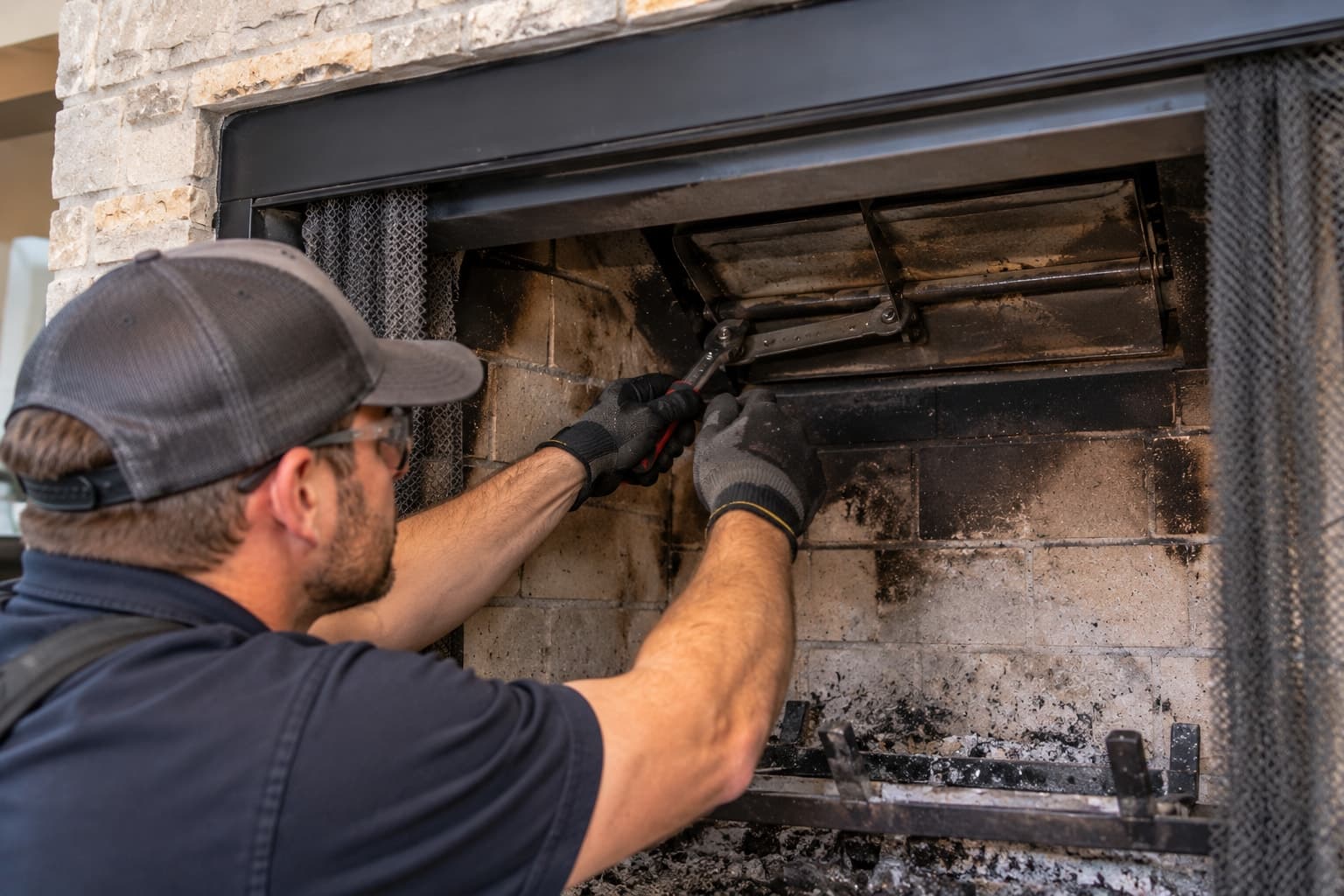
- Throat damper: a metal plate just above the firebox opening, worked by a handle, lever, rotating knob or poker hook. Masonry fireplaces are required to have a metal damper at least 8 inches above the opening that can be operated from the room (FBC-R R1001.7.1). Factory-built fireplaces have their own damper built into the unit.
- Top-sealing damper: a spring-loaded lid mounted at the top of the flue, usually added later. A stainless cable runs down the flue to a handle or bracket on the firebox wall. Pulling the cable closes the lid against a gasket; releasing it lets the spring open it.
Possible causes, most likely first
01Rust and scale
- What you may notice
- Handle is stiff or frozen, orange flakes on the firebox floor, a grinding feel when it moves.
- How it’s confirmed
- Looking at the plate edges, pivots and frame with a light; rust usually means water is reaching the damper from above.
02Warped plate
- What you may notice
- Damper moves but won’t close flat, light or air visible at one edge, a plate that rocks.
- How it’s confirmed
- Checking the plate against its frame for gaps and distortion from heat.
03Debris or nests on the damper
- What you may notice
- Twigs, leaves or droppings falling when the handle moves, a damper that stops partway, bird sounds.
- How it’s confirmed
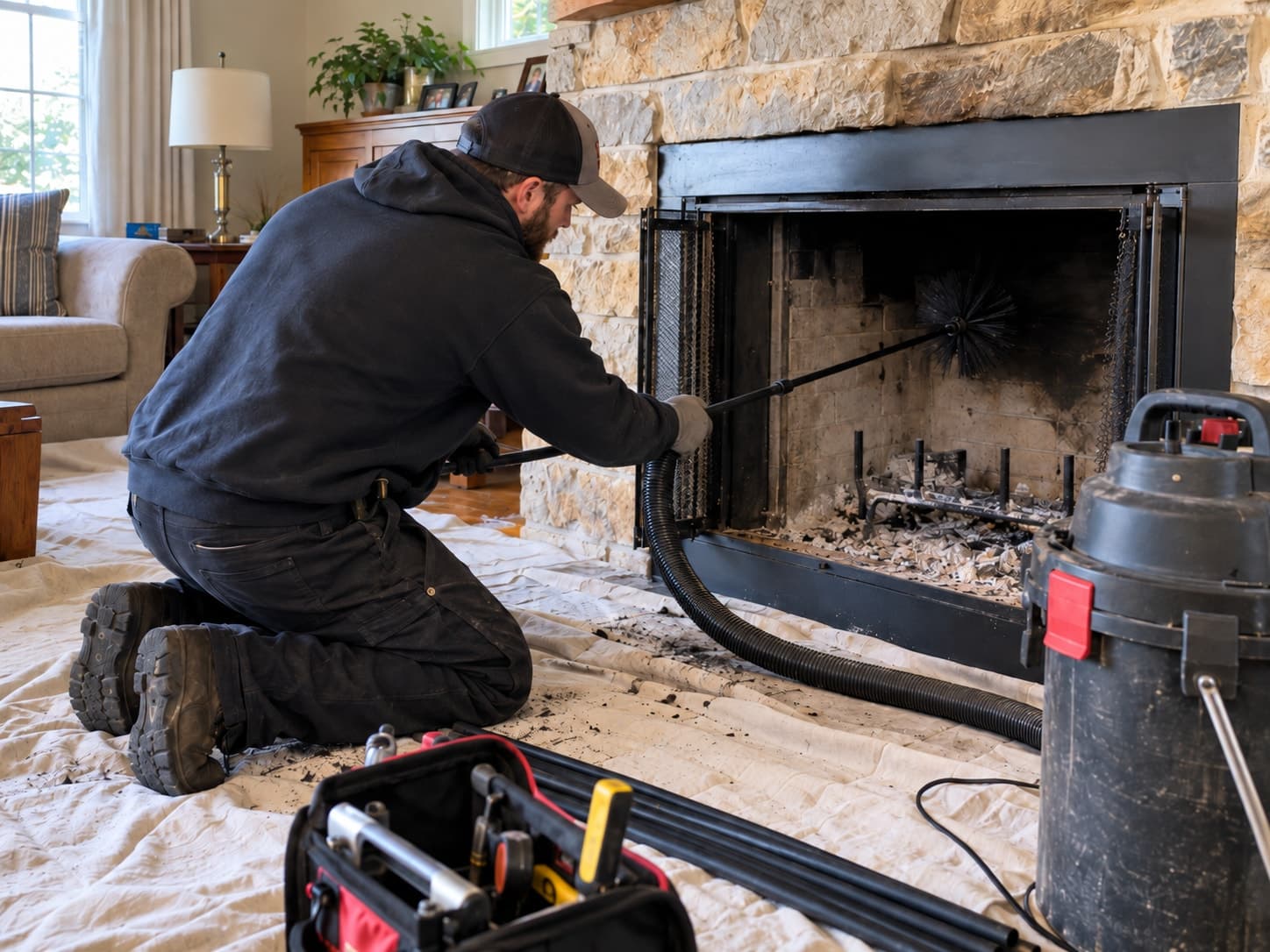
- Looking at the smoke shelf above the plate; material is cleared during a sweep once it is legal to remove.
04Broken handle, chain or linkage
- What you may notice
- Handle moves freely but the plate doesn’t, a chain that hangs loose, a knob that spins.
- How it’s confirmed
- Tracing the linkage from the handle to the plate to find the break.
05Top-sealing damper cable or spring
- What you may notice
- Lid won’t close when the cable is pulled, won’t open when released, or the handle won’t lock into its bracket.
- How it’s confirmed
- Checking the cable, its clamp and bracket in the firebox, then the lid, spring and gasket from the roof.
06Frame out of position
- What you may notice
- Damper opens but won’t seat, cracks in the brick around the damper frame.
- How it’s confirmed
- Looking at how the frame sits in the masonry; a rusting frame can swell and shift.
07Creosote buildup (fireplaces that are used)
- What you may notice
- Black, sticky or crusty deposits on the plate and edges, a smoky smell.
- How it’s confirmed
- Checking deposits on the damper and in the smoke chamber; removed with a cleaning.
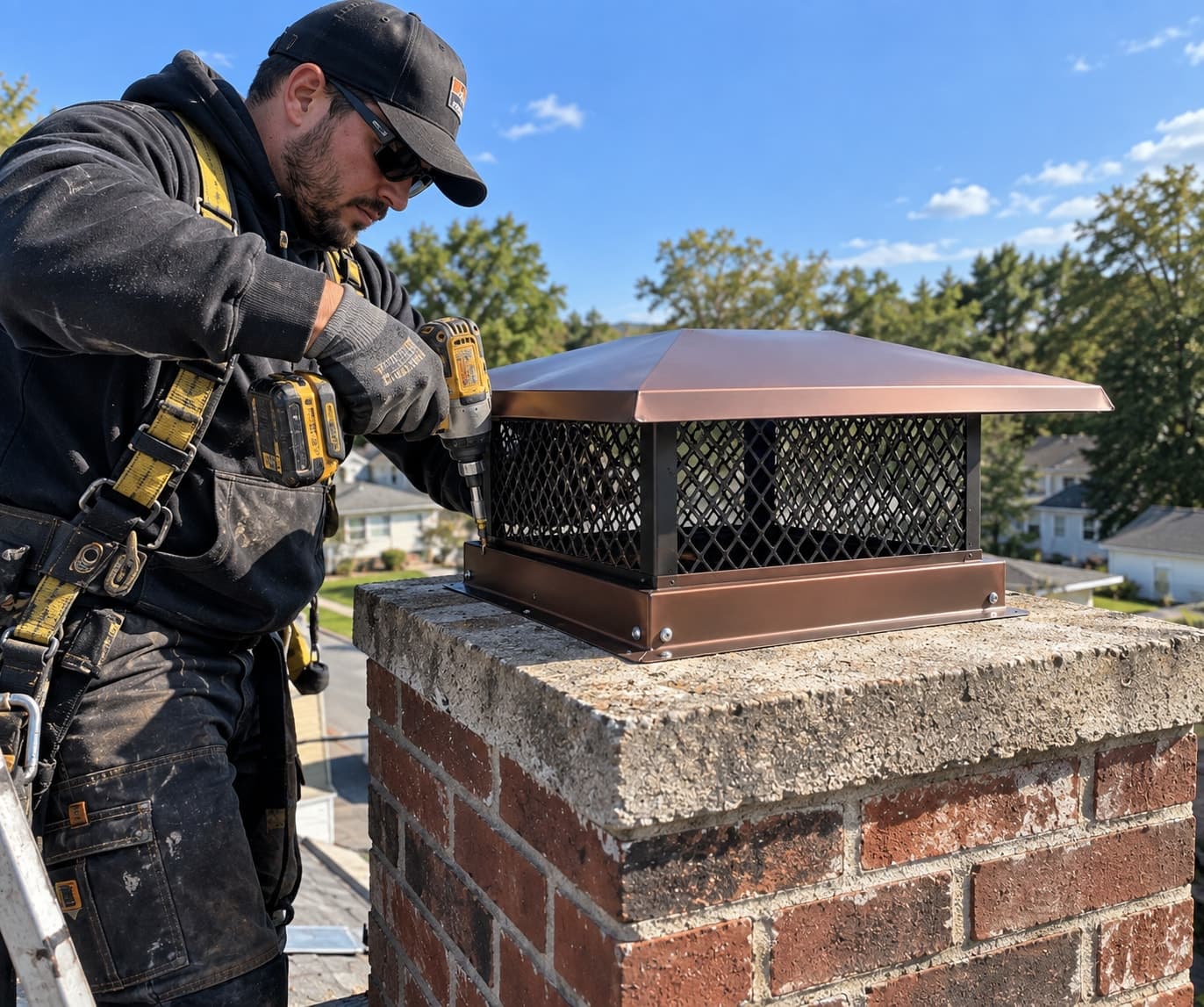
Rust is worth a second look because it rarely starts at the damper. Water from a missing or damaged cap, or from a leaking chimney top, runs down onto the plate. A properly fitted chimney cap keeps rain and debris off the damper in the first place.
Safe checks you can do
Make sure the fireplace is cold
No fire in the last day, and no warm ashes. Wear eye protection; rust and soot fall when you look up.
Look before you move anything
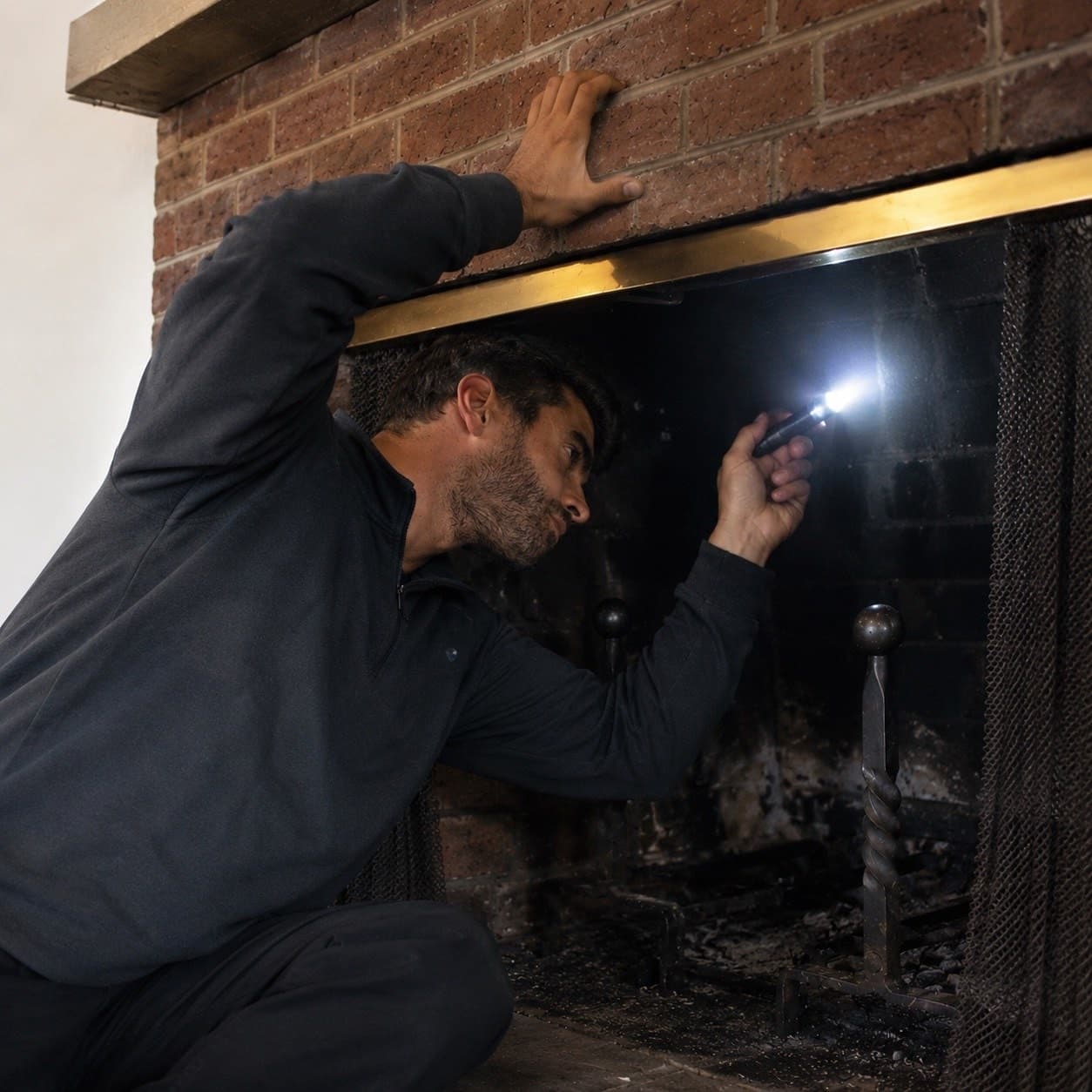
Shine a flashlight up past the opening. See whether the plate is open, closed or partway, and whether anything is sitting on it.
Try gentle hand pressure only
Work the handle slowly back and forth. If it doesn’t move with moderate pressure, stop. A seized pivot or frame can crack the masonry around it if forced.
For a top-sealing damper, check the bottom end
Make sure the cable is attached, the clamp is tight and the handle sits properly in its bracket. Leave the lid and spring at the top of the chimney to a technician.
Never force it, and never burn with it closed
Don’t hammer, pry or lever a stuck damper, and don’t drive the plate open with a poker. And don’t light a fire, or even burn a few papers, with the damper closed or partly closed: smoke and carbon monoxide come straight into the room. One manufacturer’s manual puts it plainly: a closed damper overfires the fireplace and spills smoke and flames into the room (Majestic BE36/BE42 manual, PDF).
Stuck open or stuck closed: what each costs you
| Feature | Stuck open (or won’t seal) | Stuck closed |
|---|---|---|
| Main effect | The chimney is an open hole in the house | The fireplace can’t be used |
| Air conditioning | Cooled air escapes up the flue whenever the AC runs | No loss through the flue |
| Humidity and odor | Humid outside air and chimney smells are pulled into the room | Much less, if the plate still seals |
| Insects and animals | An easy path into the house from the flue | Blocked at the damper |
| Risk if you light a fire | None from the damper itself | Smoke and carbon monoxide into the room |
| Urgency | Worth fixing soon, especially before summer | Fix before the next fire |
Main effect
- Stuck open (or won’t seal)
- The chimney is an open hole in the house
- Stuck closed
- The fireplace can’t be used
Air conditioning
- Stuck open (or won’t seal)
- Cooled air escapes up the flue whenever the AC runs
- Stuck closed
- No loss through the flue
Humidity and odor
- Stuck open (or won’t seal)
- Humid outside air and chimney smells are pulled into the room
- Stuck closed
- Much less, if the plate still seals
Insects and animals
- Stuck open (or won’t seal)
- An easy path into the house from the flue
- Stuck closed
- Blocked at the damper
Risk if you light a fire
- Stuck open (or won’t seal)
- None from the damper itself
- Stuck closed
- Smoke and carbon monoxide into the room
Urgency
- Stuck open (or won’t seal)
- Worth fixing soon, especially before summer
- Stuck closed
- Fix before the next fire
In a climate where the air conditioner runs most of the year, a damper stuck open quietly costs you every day, while a damper stuck shut only matters on the few evenings you want a fire. A leaky damper is also one of the most common reasons behind a musty or smoky fireplace smell in humid weather.
Red flags
- Rust that has eaten holes in the plate or frame.
- Cracks in the brick around the damper frame, or bricks falling from above the opening.
- Smoke coming into the room during a fire even though the damper looks open, which can mean the plate has dropped or the flue is blocked (see why a fireplace smokes into the room).
- A top-sealing damper lid that is loose, bent or missing after a storm.
- Active bird or animal activity above the damper.
What a professional diagnosis involves
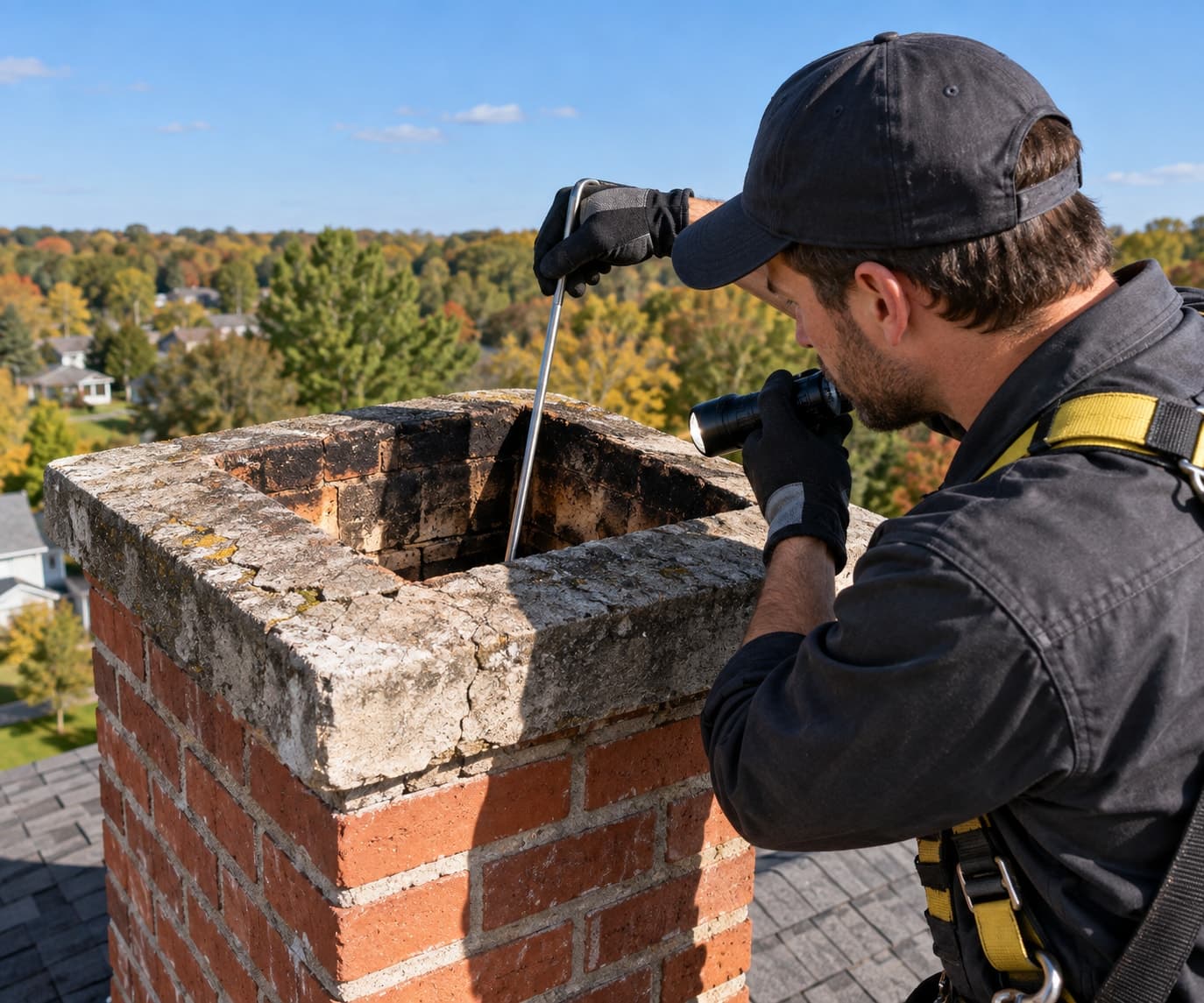
A technician looks at the damper from below and, for top-sealing dampers, from the roof. The plate, frame, pivots and linkage are checked for rust, distortion and wear, and the smoke shelf and flue for debris, creosote and water. That is usually done as part of a chimney and fireplace inspection, because the cause of a rusted damper is often at the top of the chimney.
| Finding | Usual fix |
|---|---|
| Light rust, plate and frame sound | Clean, free and adjust the damper |
| Broken handle, chain or cable | Replace the linkage or cable |
| Debris or old nest on the smoke shelf | Remove it during a sweep, once no active nest is present |
| Warped or rusted-through plate (masonry) | Replace the damper or add a top-sealing damper |
| Worn damper in a factory-built unit | Replace with the manufacturer’s part for that model |
| Top damper won’t seal | Replace the gasket, spring or lid as needed |
For how the repair and replacement options compare, see our damper repair and replacement page. If the damper is caked with deposits, a fireplace and chimney sweep often frees it along the way.
Freeing, repairing or replacing it
| Damper problem | Where it’s fixed |
|---|---|
| Rusted, warped or broken throat damper | damper repair or replacement |
| Water rusting it from above | a chimney cap and leak repair |
| Blocked by debris or a nest | a sweep |
A top-sealing damper is often the lasting fix in a humid climate; top-sealing vs throat damper compares the two. Local: damper and firebox repair in Sanford or fireplace repair in Altamonte Springs.
References (4)
Facts and figures on this page come from these references.