Short answer
A top-sealing damper seals far tighter than a throat damper because it closes the flue at the top with a gasket, which keeps out humid air, rain and animals. It isn’t right everywhere: gas logs often require a damper fixed open, and factory-built fireplaces only take the damper their manufacturer allows.
What a damper does
With a fire burning, the damper must be fully open so smoke can rise. With the fireplace idle, the damper closed reduces the air flowing through the chimney in either direction. In Central Florida that means less air-conditioned air leaving and less warm, humid air coming in, which is also what carries chimney odors into the room.
Masonry chimney and fireplace, cutaway
- 1Chimney cap. Metal lid with mesh sides over the flue opening. Keeps rain, debris and animals out.
- 2Crown. The concrete or mortar top of the masonry, sloped to shed water away from the flue.
- 3Flue liner. Clay tile or metal lining that carries smoke up and protects the masonry from heat.
- 4Flashing. Metal that seals the joint between the chimney and the roof.
- 5Brick & mortar. The chimney structure. Mortar joints and brick faces absorb water when they wear.
- 6Smoke chamber. The sloped transition that funnels smoke from the firebox into the flue.
- 7Damper. Metal plate at the throat (or a sealing lid on top) that closes the flue when not in use.
- 8Firebox. Where the fire burns. Firebrick laid in heat-resistant mortar.
- 9Hearth. Non-combustible floor extension in front of the fireplace opening.
The two main types
| Feature | Throat damper | Top-sealing damper |
|---|---|---|
| Location | In the throat, just above the firebox | At the top of the flue, often combined with a cap |
| Construction | Cast-iron or steel plate on a frame | Hinged lid with a gasket, opened by a stainless cable |
| Seal | Metal on metal; rarely airtight, worse as it warps or rusts | Gasketed; much tighter |
| Keeps out | Some airflow | Airflow, rain, animals and debris |
| Flue when closed | Open to outside air above the damper | Closed at the top, so the flue stays at room temperature |
| Common problems | Rust, warping, broken handle, stuck plate | Cable or spring wear, gasket aging |
Location
- Throat damper
- In the throat, just above the firebox
- Top-sealing damper
- At the top of the flue, often combined with a cap
Construction
- Throat damper
- Cast-iron or steel plate on a frame
- Top-sealing damper
- Hinged lid with a gasket, opened by a stainless cable
Seal
- Throat damper
- Metal on metal; rarely airtight, worse as it warps or rusts
- Top-sealing damper
- Gasketed; much tighter
Keeps out
- Throat damper
- Some airflow
- Top-sealing damper
- Airflow, rain, animals and debris
Flue when closed
- Throat damper
- Open to outside air above the damper
- Top-sealing damper
- Closed at the top, so the flue stays at room temperature
Common problems
- Throat damper
- Rust, warping, broken handle, stuck plate
- Top-sealing damper
- Cable or spring wear, gasket aging
Why top-sealing dampers are popular in Florida
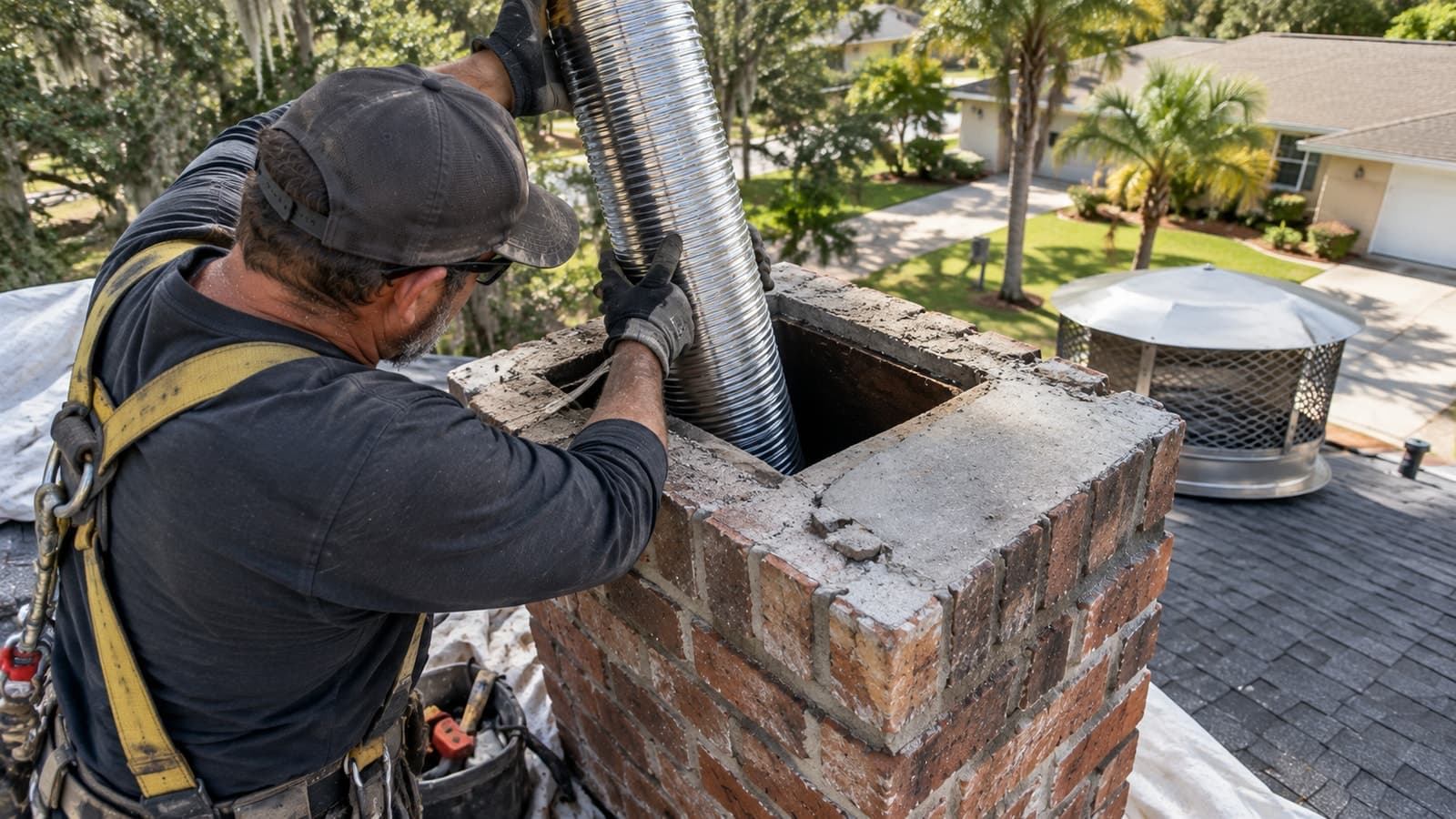
A throat damper leaves the whole flue open to outdoor air, so humid air settles in the chimney and meets the cool air of the house at the damper, where metal rusts and odors collect. A top-sealing damper closes the flue at the top, so the column of air inside stays close to indoor conditions. It also keeps rain off the old throat damper, which is often already rusted. See how Florida humidity affects chimneys for the full picture.
Where a top-sealing damper isn’t the answer
- Gas logs in a wood-burning fireplace: many log sets require the damper to be fixed partly open. Don’t fit a damper that can close fully unless the log manufacturer permits it.
- Factory-built fireplaces: the damper is part of the listed unit, and aftermarket top dampers are only used where the fireplace manufacturer allows them.
- Crowded chimney tops: multi-flue chimneys or unusual flue shapes may need a custom solution.
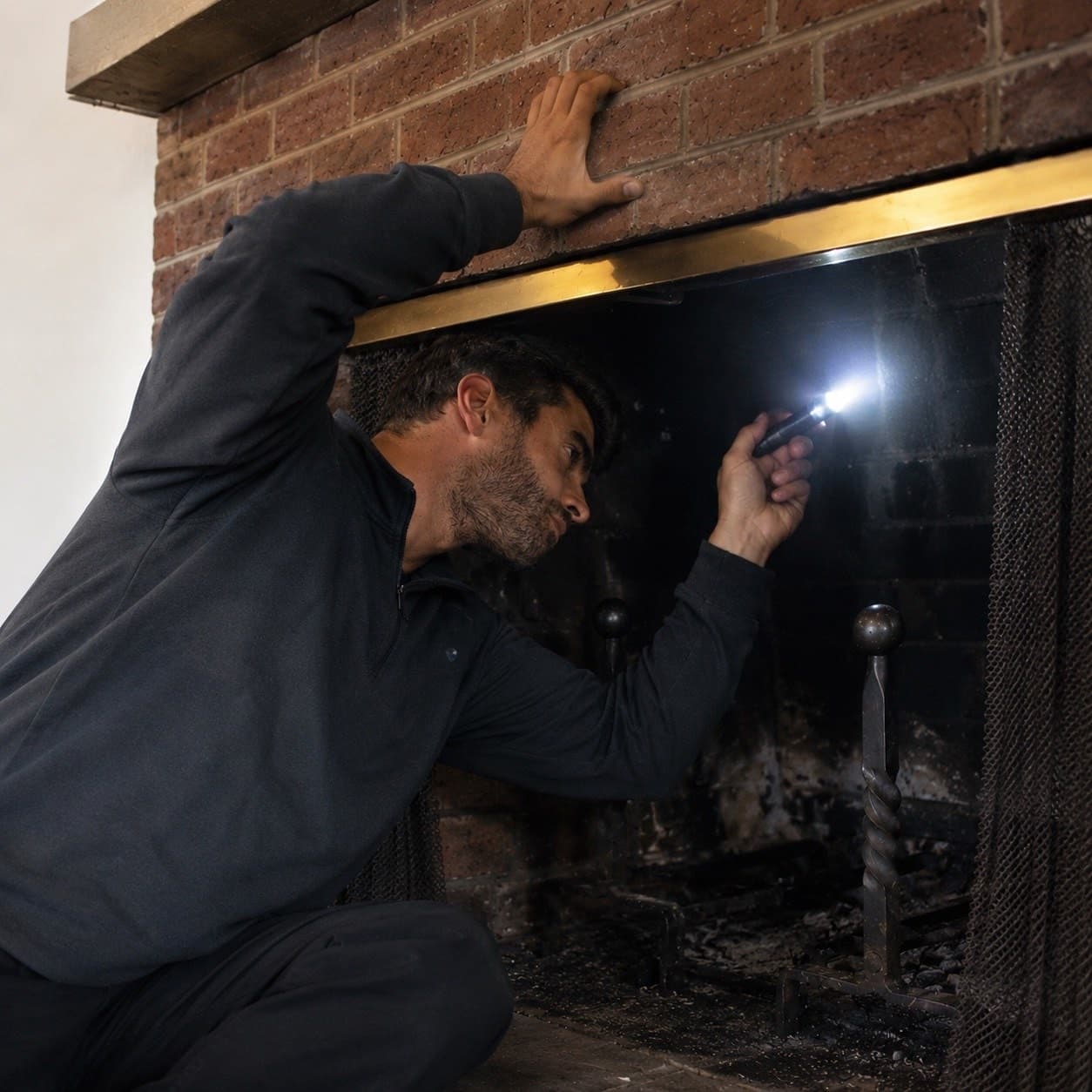
Signs your damper needs attention
- The handle moves but the plate doesn’t, or it won’t stay open. See a stuck fireplace damper.
- You feel air or smell the chimney with the damper closed. See air coming from the fireplace.
- Rust flakes on the firebox floor.
- Smoke spills into the room even with the damper fully open.
Throat damper repair, replacement and top-sealing damper installation are covered under chimney damper repair.
Damper problems often show up as symptoms first: a draft coming from the fireplace and a chimney that smells when it’s humid are both linked to how well the damper seals. For where the damper sits among the other parts, see parts of a chimney, and for the rest of the Florida humidity picture, how humidity affects chimneys.