On this page
- Tempered vs ceramic glass
- Broken fireplace glass: what to do first
- Doors that won’t close and worn gaskets
- Glass and door parts for prefab fireplaces
- Repair the doors or replace the set?
- Using fireplace doors safely
- Doors, AC loss and humid odors
- What affects the cost of fireplace door work
- Gaskets, clips and the parts around the glass
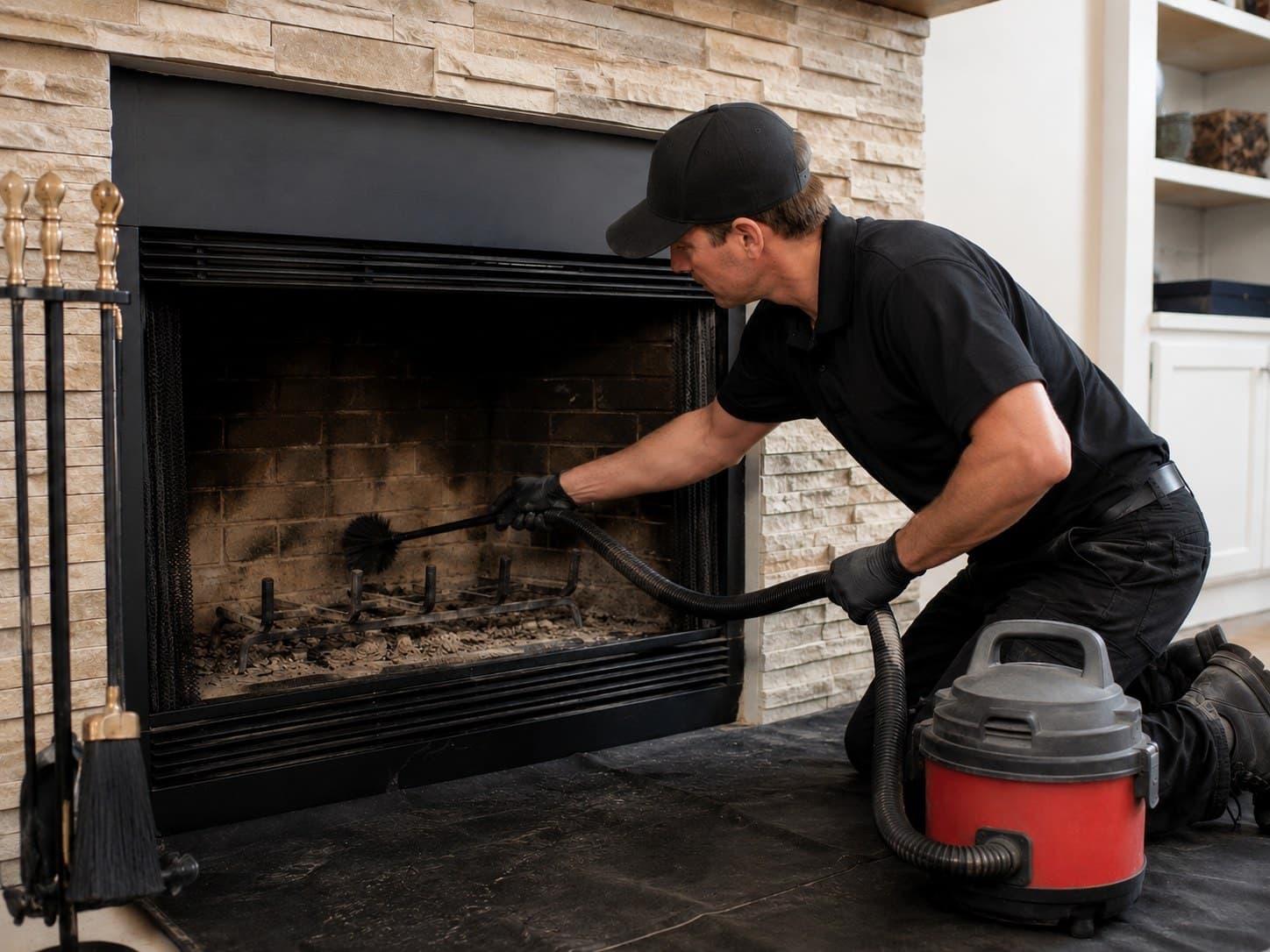
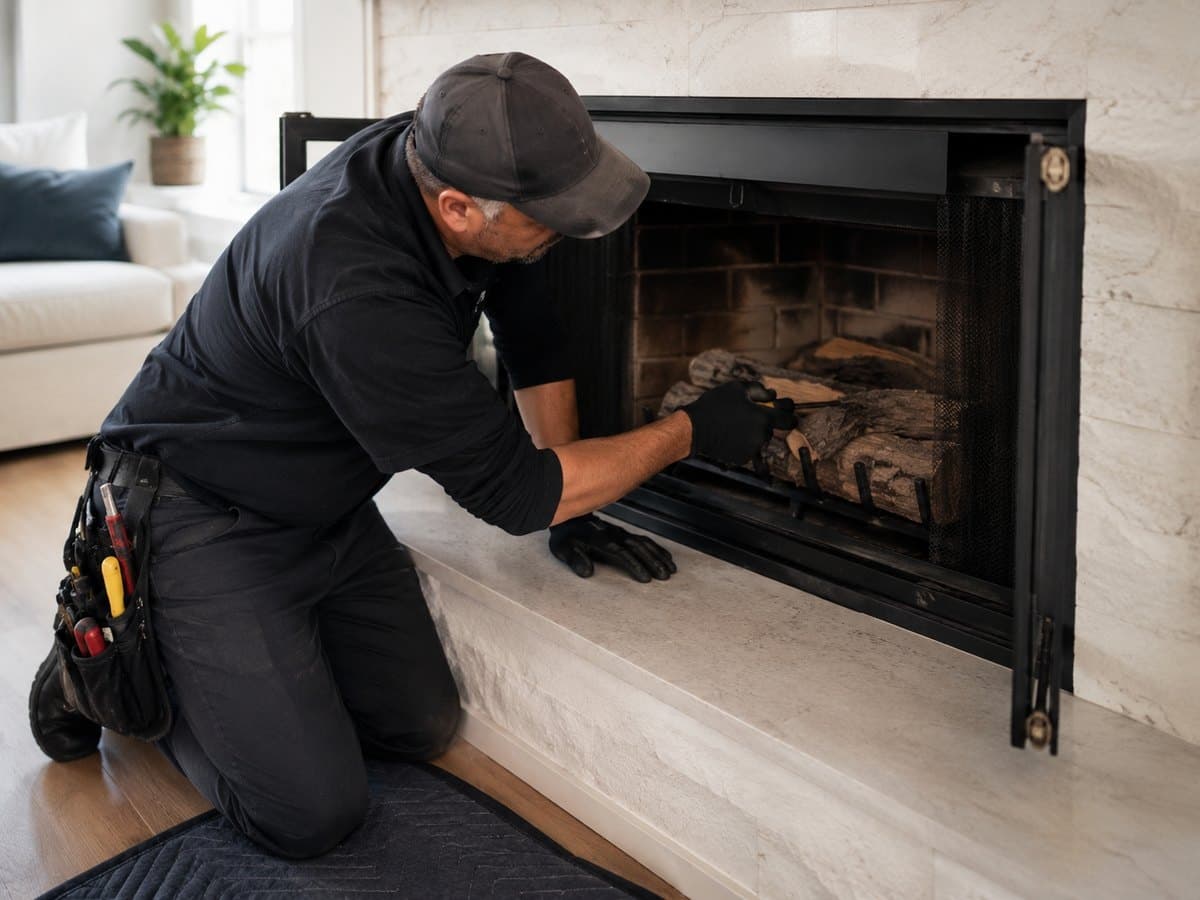
Glass doors on a wood fireplace do three jobs. They are a spark barrier when you aren’t sitting in front of the fire, a way to control how much room air the fire pulls in, and, for most of a Florida year, a front seal on a fireplace nobody is using. When the glass breaks, a hinge gives out or the frame stops closing, all three suffer.
Door work is part of our fireplace repair services. This page covers replacement glass, repairs to doors you already have, and using them safely. Adding doors to a fireplace that has none, or replacing the whole set, is covered on fireplace door installation.
Gas fireplace glass is a different part
The sealed glass front on a direct-vent gas fireplace is a component of a gas appliance: it is part of the unit’s combustion seal and is replaced with the manufacturer’s assembly. That work is not our service and should be done by a qualified gas fireplace technician. If your gas unit has other symptoms, our pages on a gas fireplace that won’t light and a gas smell near the fireplace explain the safety steps.
Tempered vs ceramic glass
Replacement glass has to be the type the door was designed for. Ordinary window glass is never an option, and even the two heat-rated types aren’t interchangeable.
| Feature | Tempered glass | Ceramic glass |
|---|---|---|
| What it is | Heat-strengthened glass | A transparent glass-ceramic made for very high heat |
| Heat tolerance | Good for many fireplace door designs, but far lower than ceramic | Handles much higher temperatures and sudden temperature changes |
| When it breaks | Shatters into many small, blunt pieces all at once | Cracks or breaks into larger shards |
| Look | Clear, sometimes lightly tinted | Often a faint amber or gray tint |
| Typical use | Many standard doors on masonry and prefab fireplaces | Doors meant to stay closed near a hot fire, and wood stoves |
| Relative cost | Lower | Higher |
What it is
- Tempered glass
- Heat-strengthened glass
- Ceramic glass
- A transparent glass-ceramic made for very high heat
Heat tolerance
- Tempered glass
- Good for many fireplace door designs, but far lower than ceramic
- Ceramic glass
- Handles much higher temperatures and sudden temperature changes
When it breaks
- Tempered glass
- Shatters into many small, blunt pieces all at once
- Ceramic glass
- Cracks or breaks into larger shards
Look
- Tempered glass
- Clear, sometimes lightly tinted
- Ceramic glass
- Often a faint amber or gray tint
Typical use
- Tempered glass
- Many standard doors on masonry and prefab fireplaces
- Ceramic glass
- Doors meant to stay closed near a hot fire, and wood stoves
Relative cost
- Tempered glass
- Lower
- Ceramic glass
- Higher
The door maker specifies which type goes in each frame, and that depends on how close the glass sits to the fire and whether the door is meant to be closed while burning. Upgrading a tempered door to ceramic glass is sometimes possible, but only if the frame and clips are suited to it. When the original type isn’t known, the manufacturer’s label or manual for the door is the first place to look.
Broken fireplace glass: what to do first
Stop using the fireplace
Don’t light a fire behind a cracked or missing pane, even with the mesh screen closed. A cracked pane can let go completely when it heats up.
Let everything cool
Glass and frames stay hot long after the flames are out. Wait until the metal is cool to the touch.
Clear the pieces carefully
Wear gloves and eye protection, pick up large pieces by hand and vacuum the small ones. Tempered glass can scatter across the hearth and into the ash.
Leave the frame alone
Don’t tape over a crack or bend clips to hold a loose pane. Note the door brand if there is a label, and measure the opening if a whole new door may be needed.
Glass usually breaks from impact (a log or poker), from fire built too close to the door, or from a frame that is bent or clamped too tightly, so the glass has no room to expand. When a frame is the cause, new glass alone will break again, which is why the frame, clips and gasket are checked along with the pane.
Doors that won’t close and worn gaskets
Common door faults
01Doors won’t close fully
- What you may notice
- One panel hits the other, a gap at the top or bottom, or doors spring back open.
- How it’s confirmed
- Checking whether the frame is square to the opening, the mounting is loose, or a bi-fold track or pivot clip is bent or missing.
02Worn or missing door gaskets
- What you may notice
- Daylight or drafts around closed doors, frayed rope, smoke marks outside the frame.
- How it’s confirmed
- Looking at the gasket channel and comparing the gasket with the door maker’s specified size and type.
03Loose or rattling glass
- What you may notice
- Glass that moves in the frame, missing clips or screws.
- How it’s confirmed
- Checking the glass clips and channel, and replacing clips or glazing gasket as the design calls for.
04Stiff or broken hinges and handles
- What you may notice
- Doors that drag, drop, or have a handle that spins or has come off.
- How it’s confirmed
- Identifying the door series to find matching hardware, or deciding whether the frame is worth keeping.
05Warped frame
- What you may notice
- A frame that no longer sits flat on the fireplace face, often with discolored metal.
- How it’s confirmed
- Looking for signs of overheating, which is also a warning about how the fireplace has been used.
Door gaskets are a small part with a real job: on a masonry fireplace they seal the frame against the face, and on some door designs they cushion the glass. On a factory-built fireplace, though, adding gaskets is not a free choice: the Florida Building Code, Residential (R1004.5) does not allow a gasketed door on a factory-built fireplace unless the system has been tested, listed and labeled for it under UL 127.
Glass and door parts for prefab fireplaces
Factory-built fireplaces are tested with specific accessories, and doors are among them. The rating plate on many units says which door kits are approved, and manuals are blunt about it: the Majestic BE36/BE42 manual, for example, warns to install only doors approved by the manufacturer (owner’s manual, PDF). An aftermarket door that fits the opening can still block cooling-air louvers or change how hot the unit runs.
- Start with the model number from the rating plate; the approved door kit is matched to it.
- If the approved door is discontinued, the manufacturer or a successor may list a replacement kit for the same model.
- If no approved door exists and the unit has other worn parts, it may be time to look at a new listed prefab fireplace that comes with doors designed for it.
Repair the doors or replace the set?
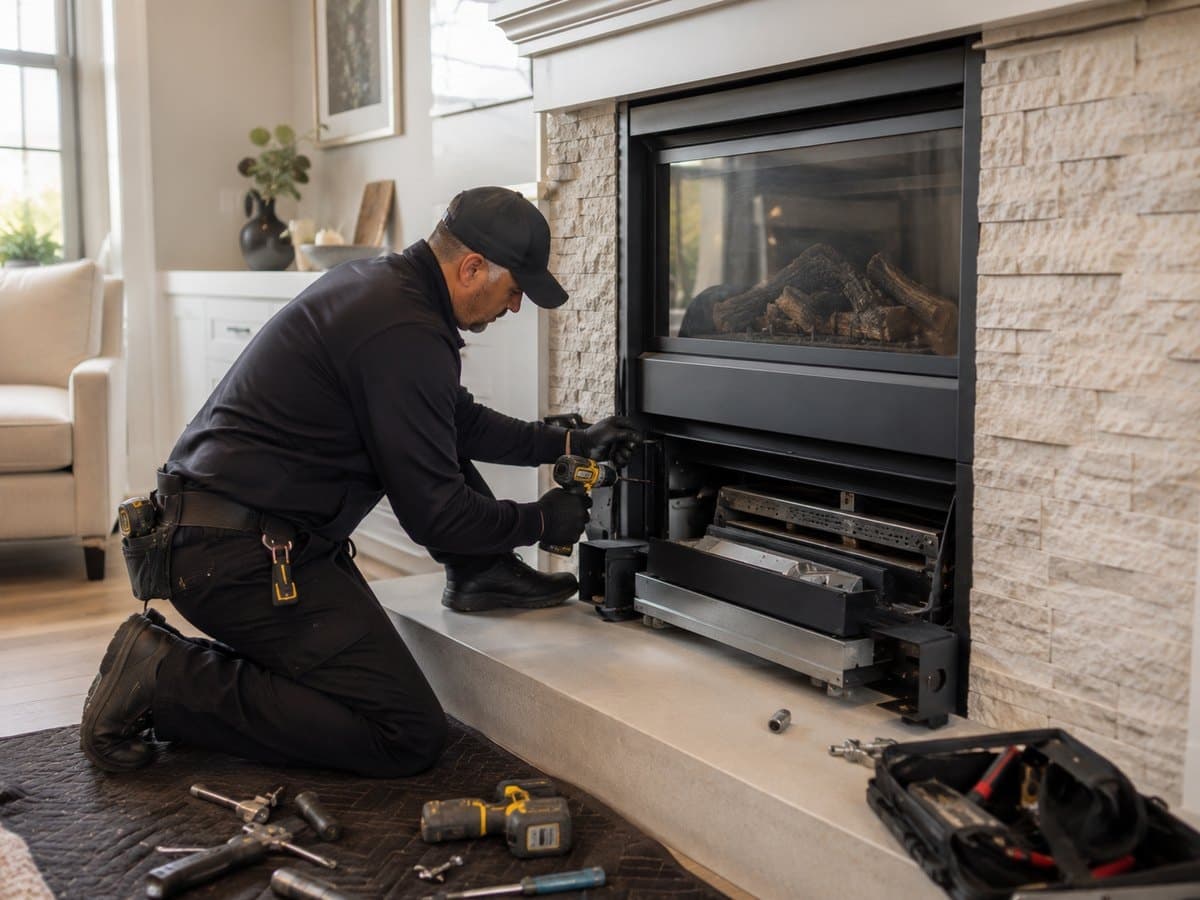
Glass, gaskets, hinges, latches and the air-control slide can all be replaced on a sound frame. When the frame itself is bent, the finish is flaking from heat, or the set never fit the opening, new doors make more sense than rebuilding the old ones. Measuring, mounting options and approved prefab doors are on installing new fireplace doors.
Using fireplace doors safely
Open or closed while burning is not a matter of taste. Follow the instructions for your door and your fireplace, because they differ between products. Some manufacturers are explicit: the Majestic manual cited above says a fireplace with doors should be run only with the doors fully open or fully closed, because doors left partly open can draw gas and flame out of the opening.
- With doors open, close the mesh screen to catch sparks.
- Open the damper fully before lighting; doors don’t replace a working damper.
- Treat the glass as hot. For gas fireplaces, the CPSC warns that glass fronts can reach 500°F or more and burn in seconds (CPSC), and doors on a wood fire get hot too; keep children back with a gate or barrier.
- Clean soot from cool glass with a non-abrasive glass cleaner. Abrasive pads scratch it.
- Don’t slam doors or close them against a log that is touching the glass.
Doors, AC loss and humid odors
Here, the doors spend far more time closed on a cold fireplace than open on a fire. In that role they are the room-side half of a two-part seal. The damper closes the flue; the doors close the opening. If the damper leaks, air-conditioned air leaves up the chimney and humid, sometimes musty air comes back down, and closed doors with sound gaskets cut much of that exchange at the room. If the damper itself is rusted or won’t seat, damper repair fixes the other half. If a smell is the main complaint, the guide to a chimney that smells in humid weather covers the sources doors can’t fix.
What affects the cost of fireplace door work
- Glass only, hardware only, or a complete door set
- Tempered or ceramic glass, and the pane size
- Standard size versus a custom masonry opening
- Whether an approved door is still made for your prefab model
- Frame finish and style
- Damage to the fireplace face that affects how the frame seals
Gaskets, clips and the parts around the glass
Replacing glass without dealing with what holds it is how a new panel cracks within a season. The glass rarely fails on its own.
Gasket rope hardens and compresses with heat cycling until it stops cushioning the panel, which lets the glass take stress directly from the frame. Retaining clips loosen or get overtightened. A frame that has gone out of square puts a point load on one corner, which is where cracks almost always start. All three get checked and corrected as part of the replacement rather than left for next time.
Where the doors themselves are the problem rather than the glass — a broken handle, a set that will not close, a missing mesh screen — that is covered on fireplace doors, screens and safety barriers.
References (3)
Facts and figures on this page come from these references.