Rotten-egg smell or CO alarm: leave first
If you smell gas, get everyone out without touching switches, the remote or the fireplace controls, and call the gas utility or 911 from outside. If a carbon monoxide alarm sounds or anyone has headaches, dizziness or nausea, get into fresh air and call 911. Nothing on this page applies until that is resolved.
Gas fireplace troubleshooting by symptom
| What you notice | Where the problem usually is | Safe check | Read more |
|---|---|---|---|
| Nothing happens, or it clicks without lighting | Gas supply, batteries, pilot or igniter | New batteries in the remote and receiver; confirm other gas appliances work | When it won’t light |
| Pilot lights, then goes out | Thermocouple or thermopile, dirty pilot, draft | One relight following the label; stop if it won’t hold | Pilot that keeps going out |
| Burner shuts off after a few minutes or cycles on and off | Thermostat mode, weak thermopile, or a safety switch | Put the remote in manual mode; never bypass a switch | Shutting off by itself |
| Remote or wall switch does nothing, or it won’t turn off | Receiver batteries, receiver switch, pairing or wiring | Receiver switch to REMOTE; re-pair per the manual | Remote and wall-switch problems |
| Small, weak or uneven flames | Flame setting, gas pressure, or clogged burner ports | Check the HI/LO knob and the propane gauge | A low or weak flame |
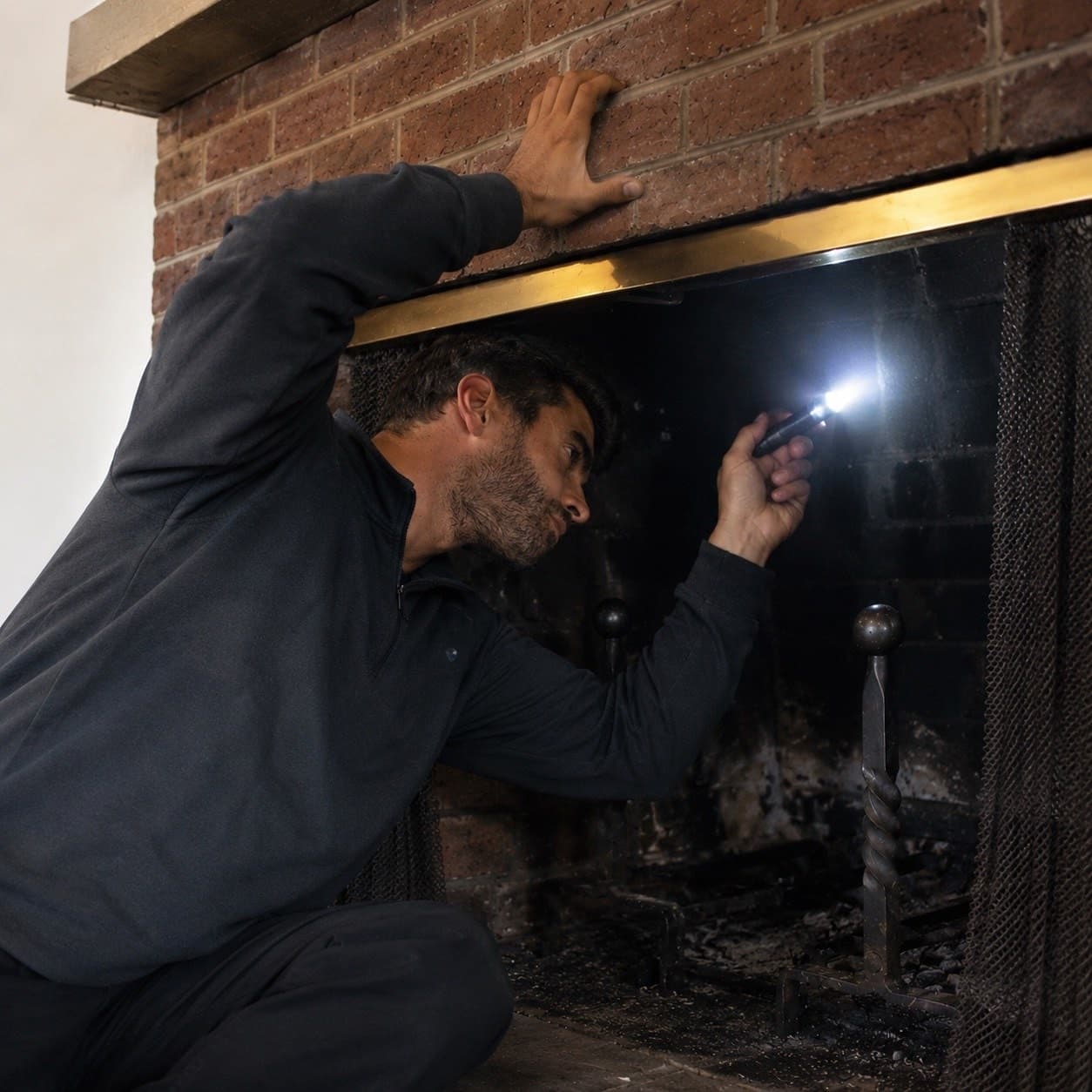
| Black soot on the glass or logs; dark, lazy flames | Logs out of position, blocked air shutter, venting | Turn it off and test the CO alarm | Why it soots or burns yellow |
| White haze on the inside of the glass | Normal combustion deposits | Clean when cold with a fireplace-glass cleaner, if the manual allows removal | Cloudy glass |
| Bang at ignition, roaring, rattling or hissing | Delayed ignition, pressure, blower or a possible leak | A bang or a hiss with a smell: turn off, or leave and call | Which noises are normal |
| Rotten-egg, burning or chemical smell | Possible leak, burn-off or wiring | Rotten egg: leave and call from outside | Which smells are dangerous |
Turn it off, or book a visit?
| Urgency | Signs | What to do |
|---|---|---|
| Leave and call from outside | Rotten-egg smell; hissing with the unit off; CO alarm; symptoms of CO exposure | Get everyone out and call the gas utility or 911. |
| Turn it off until serviced | Soot anywhere; a bang at ignition; cracked or loose glass; a safety switch shutting it off repeatedly; flames rolling out; a vent-free unit shutting off | Leave the unit off and test the CO alarm. Don’t relight to see if it happens again. |
| Book an appointment | Won’t start after the off-season with no smell; remote problems that fresh batteries don’t fix; a low flame; white haze; a noisy blower | Use it only if it lights and burns normally. |
What homeowners can and can’t do
| Feature | Homeowner checks | Technician work |
|---|---|---|
| Controls | Batteries, receiver switch position, pairing, remote modes | Receivers, modules, wall-switch wiring |
| Lighting | One relight following the label on the unit | Pilot assemblies, igniters, thermocouples and thermopiles |
| Flame | The HI/LO flame setting | Burner, orifice, air shutter, pressure |
| Glass | Cleaning when cold, only if the manual allows removal | Gaskets, cracked glass, frames |
| Gas | Checking the propane gauge; leaving if you smell gas | Valves, connectors and anything that carries gas |
Controls
- Homeowner checks
- Batteries, receiver switch position, pairing, remote modes
- Technician work
- Receivers, modules, wall-switch wiring
Lighting
- Homeowner checks
- One relight following the label on the unit
- Technician work
- Pilot assemblies, igniters, thermocouples and thermopiles
Flame
- Homeowner checks
- The HI/LO flame setting
- Technician work
- Burner, orifice, air shutter, pressure
Glass
- Homeowner checks
- Cleaning when cold, only if the manual allows removal
- Technician work
- Gaskets, cracked glass, frames
Gas
- Homeowner checks
- Checking the propane gauge; leaving if you smell gas
- Technician work
- Valves, connectors and anything that carries gas
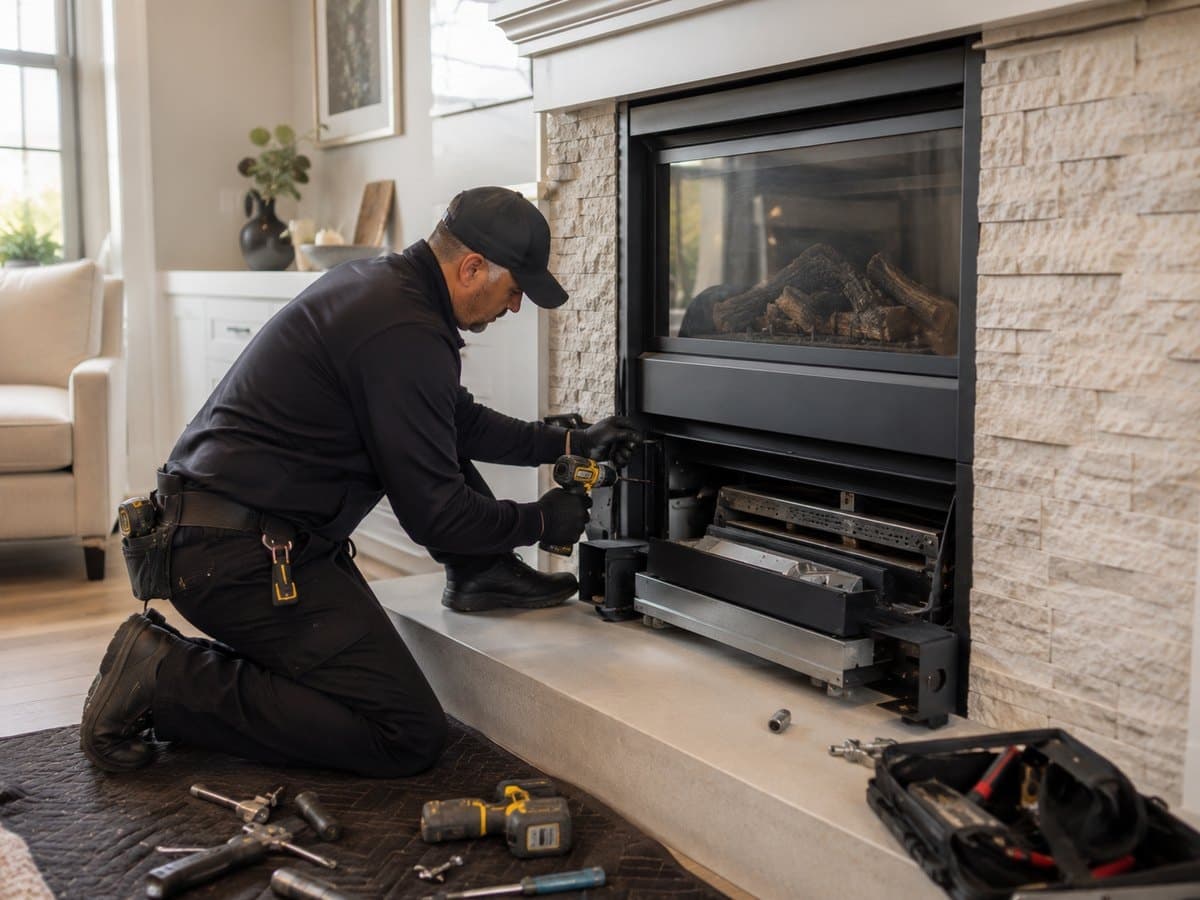
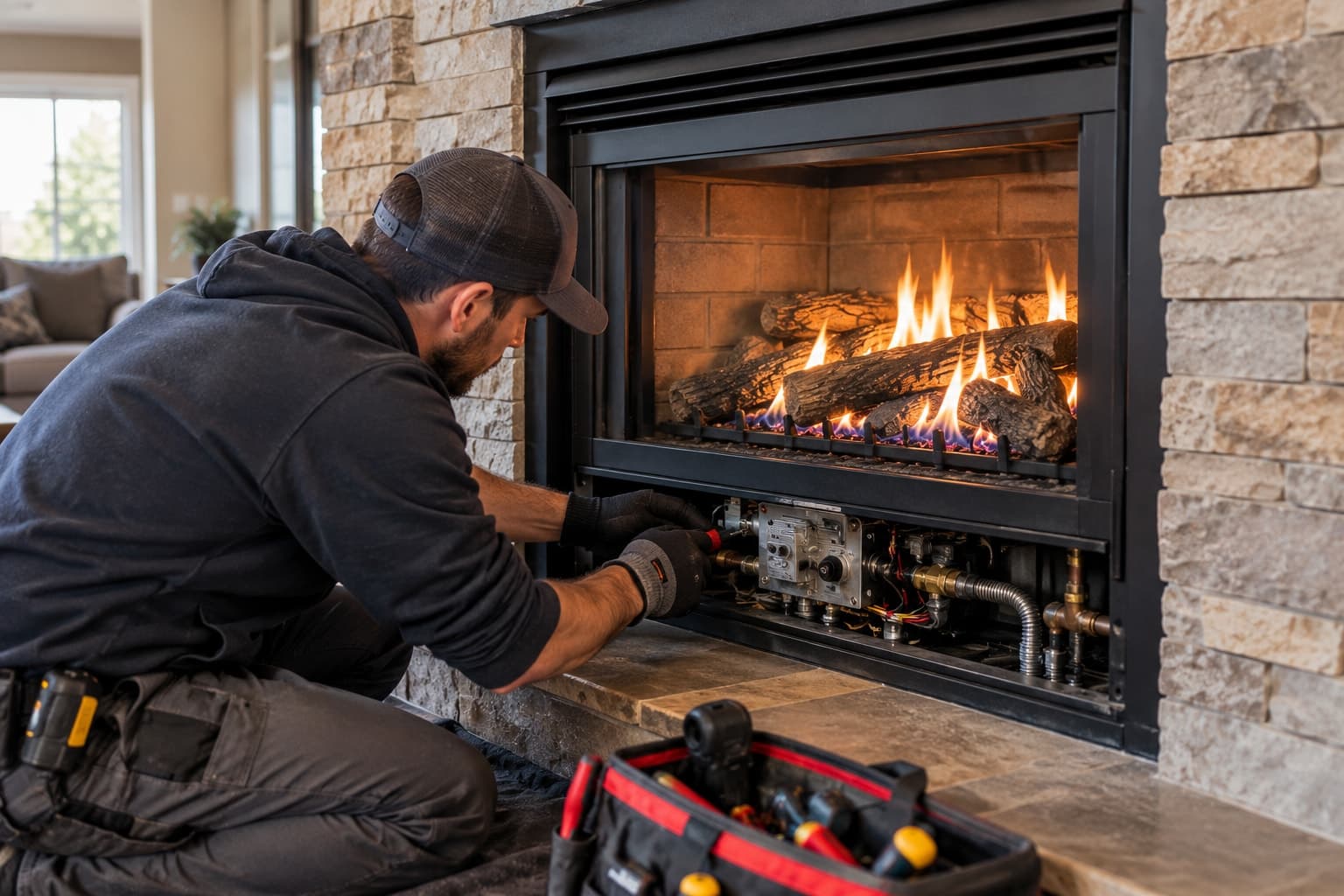
The appliance itself, including valves, pilots and burners, is serviced under gas fireplace repair and routine gas fireplace service. Gas-line work to the fireplace is quoted separately from appliance service, and we carry it out too. The vent or chimney the fireplace exhausts through still needs to be clear and intact, which is part of a chimney inspection.
The Central Florida off-season
In the Orlando area a gas fireplace may sit unused from March to December. Over those months batteries drain, spiders nest in pilot tubes and air shutters, and dust settles on burners, which is why so many problems show up on the first cool evening. A service visit in the fall, before you need the fireplace, catches most of them. If you turn the pilot off for summer, relight it following the label or have it relit during the service.
Whatever kind of gas fireplace you have, working carbon monoxide alarms are the backstop: the CPSC recommends them on every level of the home and outside sleeping areas. Wood-burning, factory-built and electric fireplaces are covered on the fireplace problems guide.
From symptom to repair
Each guide above covers the cause and the safe checks. Repairs to the pilot, igniter, flame sensor, valve and burner are gas fireplace repair; the yearly cleaning and safety check is gas fireplace service; and the vent is part of a chimney and vent inspection. There are no city-by-city gas fireplace pages; these services cover the whole service area. How the pilot, valve and burner work together explains the chain the symptoms follow.
References (3)
Facts and figures on this page come from these references.