On this page
- Why a clogged dryer vent matters
- Signs your dryer vent needs cleaning
- Which dryer vent service fits the problem?
- Airflow: what we measure and why
- What a dryer vent cleaning visit involves
- The exterior termination and its damper
- Long duct runs, elbows and the 35-foot rule
- Disconnected vents and foil or vinyl transition ducts
- Florida humidity and the hot, muggy laundry room
- Vacation rentals, condos and townhomes
- How often should a dryer vent be cleaned?
- Gas dryers and carbon monoxide
- What affects the cost of a dryer vent cleaning
- Booking, timing and urgency
A clothes dryer is only as good as the duct it breathes through. Every load pushes hot, wet air and fine lint down that duct, and the lint screen catches most of the lint but not all of it. Over months, the rest settles along the walls, collects at elbows and gathers behind the flap of the outside cap. Airflow drops, drying times climb, and the dryer runs hotter than it was designed to.
Dryer vent cleaning is not the same as emptying the lint screen, and it is not air duct cleaning for your AC. It is a mechanical cleaning of the one duct that carries dryer exhaust out of the house, plus a check of the parts that most often cause trouble: the flexible hose behind the dryer, the joints you can reach, and the termination on the wall or roof.
This page explains the service in depth for all of Greater Orlando. Each city in the service area also has its own local page, such as local dryer vent cleaning in the City of Orlando, with the housing and vent layouts found there.
Why a clogged dryer vent matters
The fire data is the reason this service exists. The U.S. Fire Administration estimated about 2,900 clothes dryer fires in residential buildings each year (2008–2010 NFIRS data), with failure to clean the leading factor contributing to ignition at 34 percent. Dust, fiber and lint was the most common item first ignited.
The NFPA’s Home Dryer Fires report uses a wider scope and a later period: an estimated average of 13,820 home structure fires a year involving dryers in 2014–2018, with failure to clean behind 32 percent of them. The two numbers differ because the studies count differently; neither is a Florida figure. What both agree on is that lint left in the system is the single biggest controllable factor.
The everyday cost is less dramatic but more common: a restricted vent means longer cycles, more wear on the heating element and thermostats, damp towels, and a hot, sticky laundry room.
Signs your dryer vent needs cleaning
- Towels or jeans need a second cycle, or come out damp at the seams
- The top or sides of the dryer feel much hotter than usual
- Clothes come out unusually hot to the touch
- The laundry room gets hot and muggy while the dryer runs
- The outside flap barely moves, or doesn’t open at all, with the dryer running
- Lint around the outside cap, behind the dryer, or on the roof near the cap
- A “check vent” or airflow warning on the dryer’s display
- A burning or scorched smell during a cycle (stop the dryer and get it checked)
If you are not sure whether the problem is the vent or the dryer itself, our guide to why a dryer takes too long to dry walks through the safe checks you can do first, and a dryer that overheats or shuts off mid-cycle covers the hotter end of the same problem.
Which dryer vent service fits the problem?
Cleaning is the routine service most vents need. Some problems call for something more specific, and it helps to know which before booking:
| What you’re dealing with | Service |
|---|---|
| Routine upkeep, slow drying, lint behind the dryer, a vent not cleaned in a year or more | Dryer vent cleaning (this page) |
| Lint escaping into the laundry room or attic, or a duct packed solid after years without cleaning | Heavy lint removal |
| Almost no air at the outside vent, a nest, or a flap that won’t open | Clearing a blocked vent |
| The vent exits through the roof | Cleaning a roof-terminated dryer vent |
| A home purchase, repeat problems, or you want to know whether the vent is to code | Inspection and airflow testing |
| Crushed, disconnected, leaking or foil ducts | Duct repair and replacement |
| A stuck, broken or screened outside cover | Replacing the vent hood |
| A run that is too long or has too many elbows | Rerouting to a shorter path |
| Vacation rentals and rental homes | Cleaning scheduled around guest stays |
Airflow: what we measure and why
Lint buildup is easy to argue about and hard to see inside a wall, so we measure. With the dryer running on a no-heat or air-fluff setting, we read the exhaust velocity at the termination with an anemometer (a small airflow meter). We do it before any cleaning and again at the end, at the same point and with the same dryer setting, so the two readings can be compared honestly.
There is no single “good” number for every home, because the reading depends on the dryer model, the duct length and how many elbows the run has. What matters is the change and the pattern. A strong improvement after cleaning confirms lint was the restriction. A reading that stays weak after the duct is clear points to something else: a crushed section, a disconnected joint, a sticking damper, or a run that is simply too long for the dryer. When a home needs a fuller answer (a purchase, a new dryer, a recurring clog), a stand-alone dryer vent inspection with airflow testing checks the whole run against the code.
What a dryer vent cleaning visit involves
Look at the whole run first
We find where the vent ends (sidewall, soffit area, roof), note the path and the number of turns, and check that the termination actually belongs to the dryer and not a bath fan.
Baseline airflow reading
With the dryer on a no-heat setting, we record airflow at the termination so you have a before number.
Pull the dryer and inspect the transition
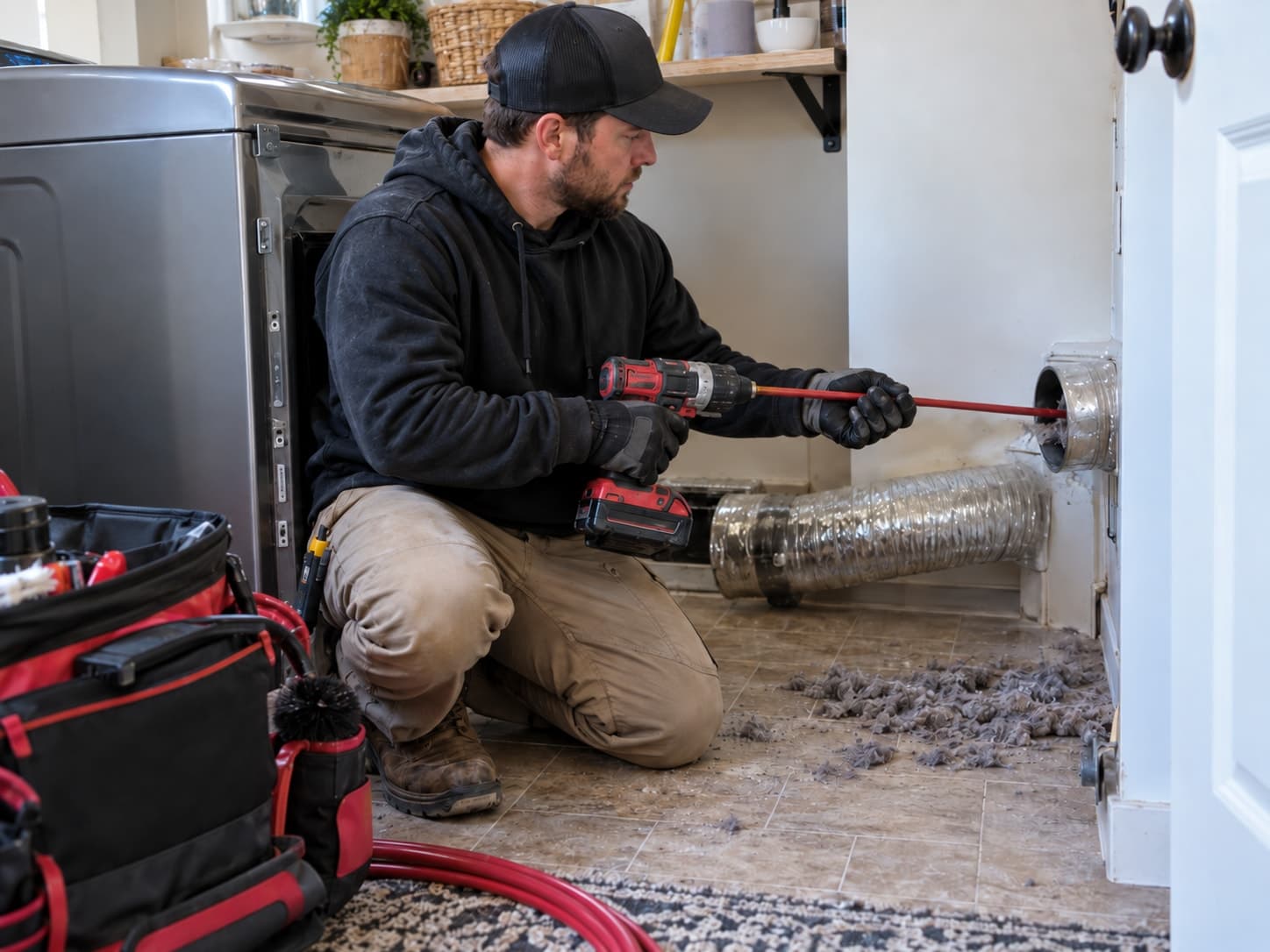
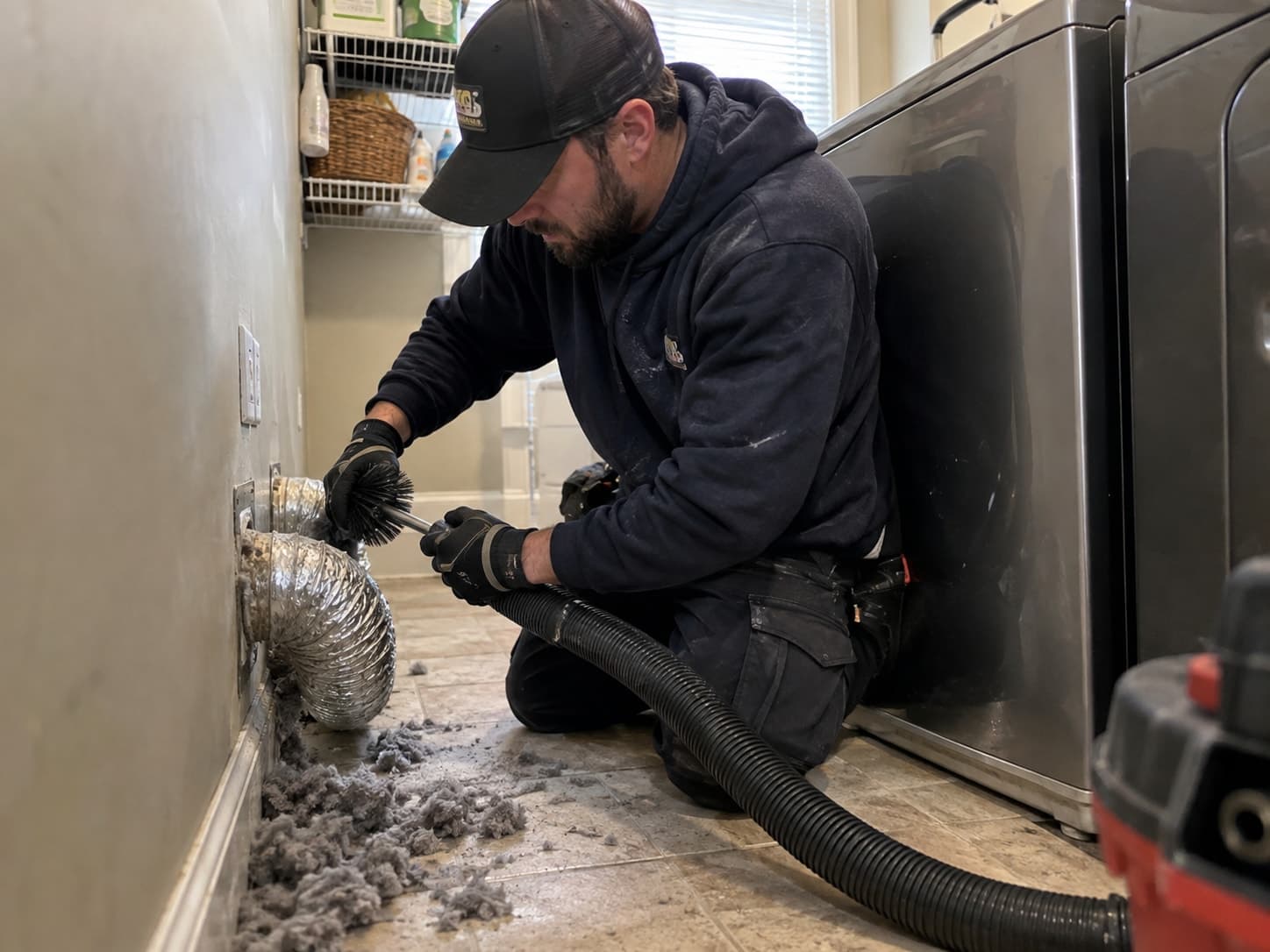
We slide the dryer out carefully, protect the floor, and look at the connector hose: material, length, kinks and crush points. Lint inside the dryer’s exhaust outlet is vacuumed out.
Brush and vacuum the full duct
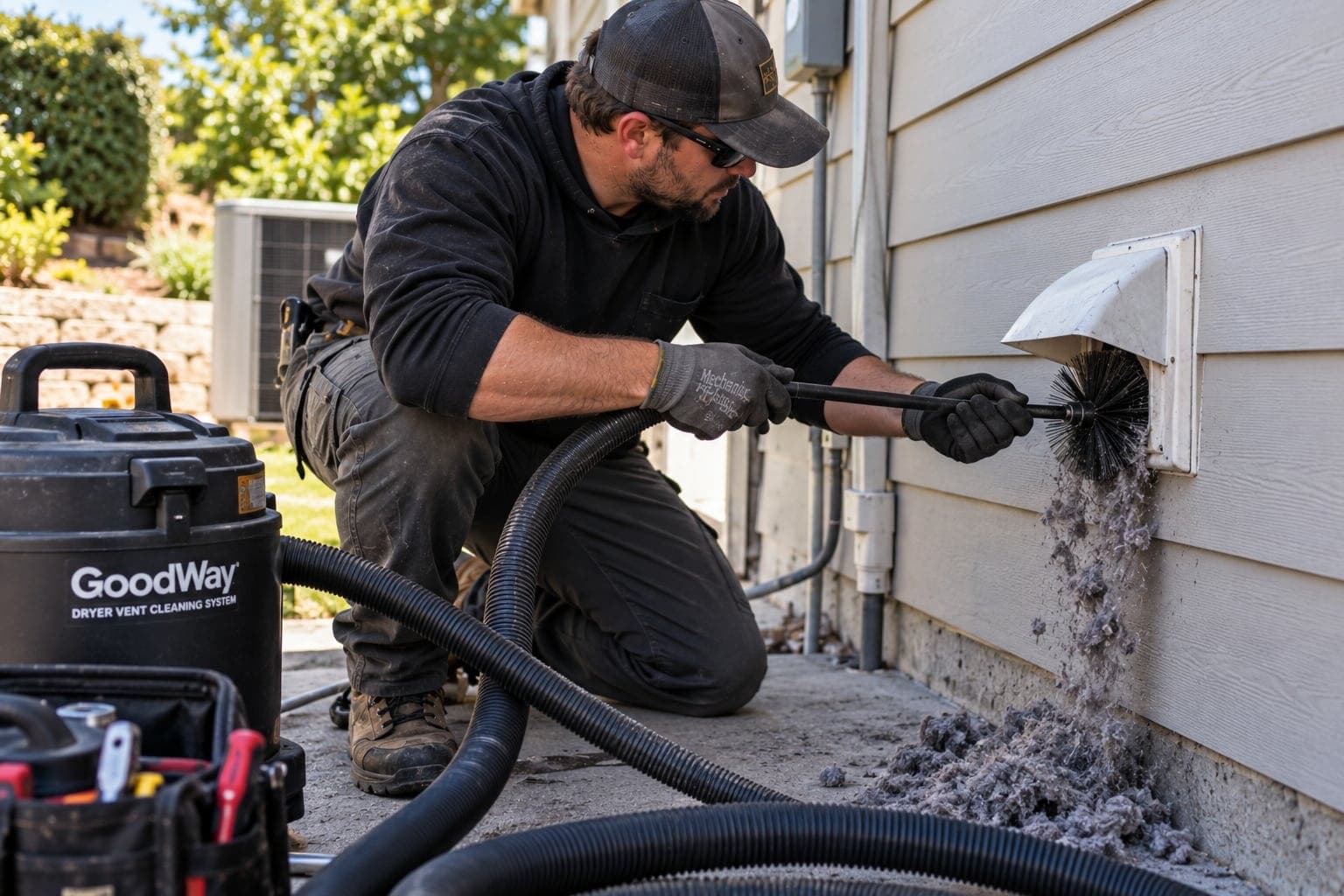
A rotary brush on flexible rods is run through the duct while a vacuum draws the loosened lint out. On long runs we work from both ends where that is safe and possible, so debris isn’t just pushed into the next elbow.
Clean and check the termination
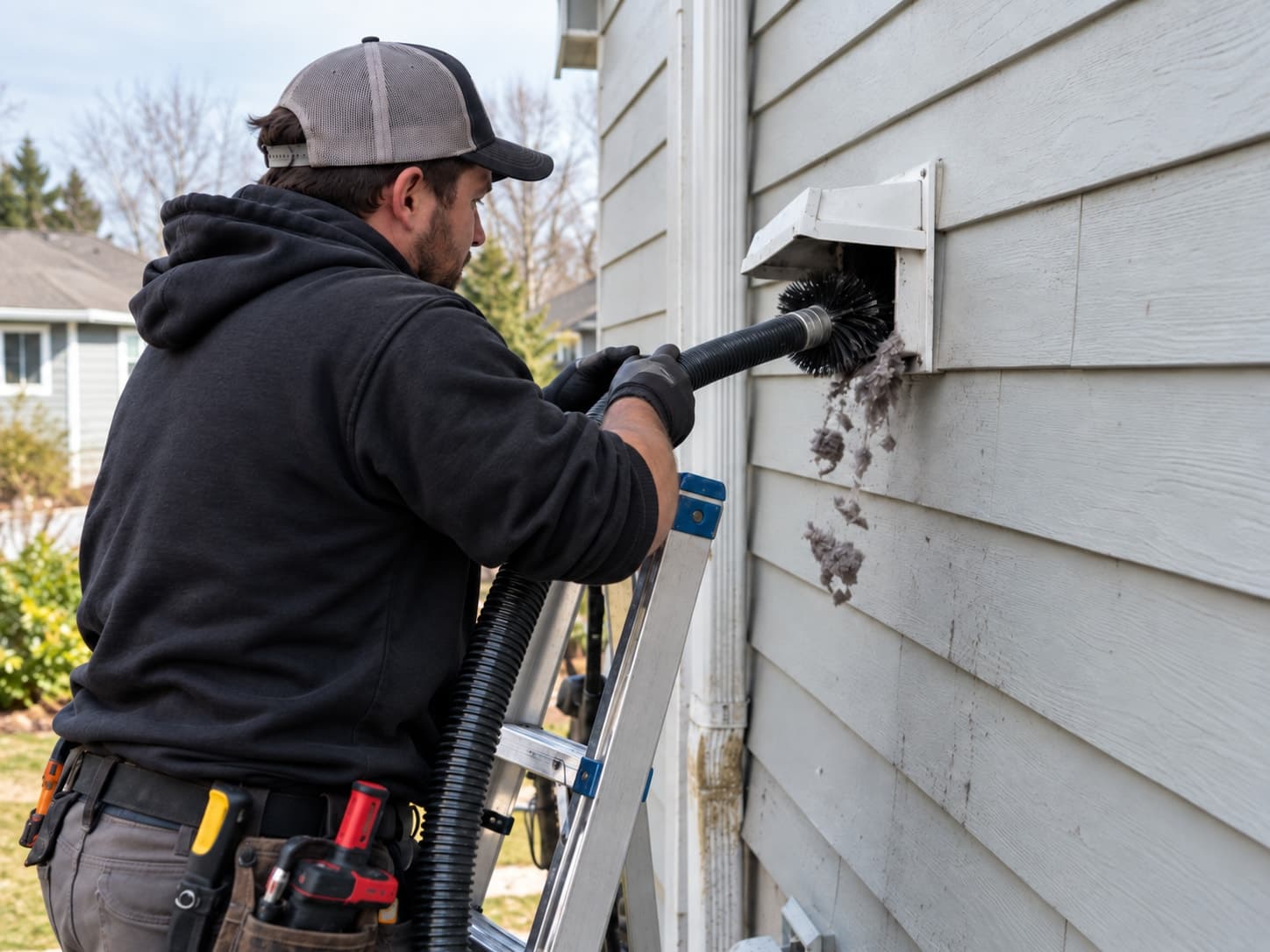
Lint packed behind the flap or inside a roof cap is removed, and we confirm the backdraft damper opens freely with airflow and closes when the dryer stops. Screens or bird guards that trap lint are flagged.
Reconnect, re-test and report
We reconnect the dryer, run it, take the after reading and check for leaks at the connection. You get the before-and-after numbers, and anything that needs repair is explained before any repair is scheduled.
What cleaning cannot fix
Brushing removes lint. It cannot straighten a crushed duct inside a wall, reconnect a joint that has fallen apart in the attic, or shorten a run that was too long from the start. When the after reading tells us that, we explain the duct repair or rerouting options instead of cleaning the same problem again next year.
The exterior termination and its damper
The cap where the duct leaves the house is where a lot of restrictions start. The Florida Building Code, Residential, requires dryer exhaust to terminate outside the building with a backdraft damper, and it specifically prohibits screens at the termination (FBC-R 2023, section M1502.3). A screen catches lint on every load; within weeks it can be blanketed.
Common termination faults include louvered caps with one or more slats stuck shut, flaps painted closed, caps crushed by a lawn mower or hidden behind shrubs, and aftermarket “pest guards” with mesh that act like a second lint screen. Birds and other small animals do nest in dryer vents, which the USFA report lists as a cause of blocked exhaust, and the code-compliant answer is a well-sealing damper cap, not a screen. Worn or wrong caps are replaced as part of dryer vent cover replacement.
Roof terminations
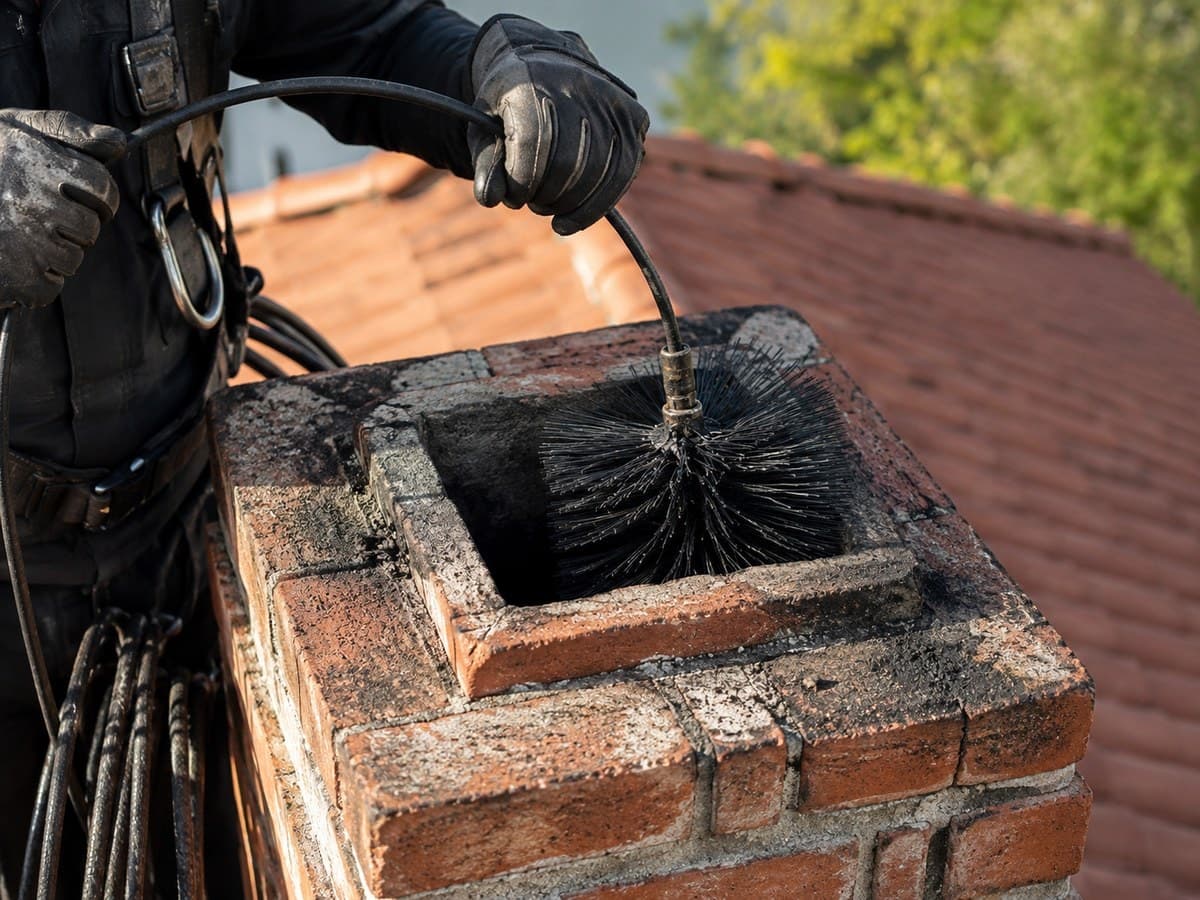
Many two-story homes and homes with a laundry room in the middle of the floor plan vent through the roof instead of a sidewall. Roof vents clog more often at the top, where lint slows down and collects under the cap, and cleaning them means working safely on tile or shingle. That work has its own page on roof-mounted dryer vents.
Long duct runs, elbows and the 35-foot rule
Florida’s residential code caps a dryer duct at 35 feet, reduced for every elbow, unless the dryer maker’s instructions allow more (FBC-R M1502.4). Long, bent runs matter for cleaning because more lint settles on the way out; the USFA also notes that moisture condensing in long or bent vents attracts lint. Homes with long runs usually need cleaning more often. The Florida dryer vent code guide works through the length math, and runs that are simply too long are a job for rerouting.
Disconnected vents and foil or vinyl transition ducts
Two installation problems turn up again and again. The first is a duct that has separated somewhere you can’t see: in the attic, inside a wall chase, or at the ceiling where a roof vent begins. The dryer then blows hot, wet, lint-laden air into the building instead of outside. Warning signs include lint in the attic insulation, a musty laundry room, or airflow at the outside cap that is weak even though the duct you can reach is clean. How to tell if a dryer vent is disconnected or crushed goes through them.
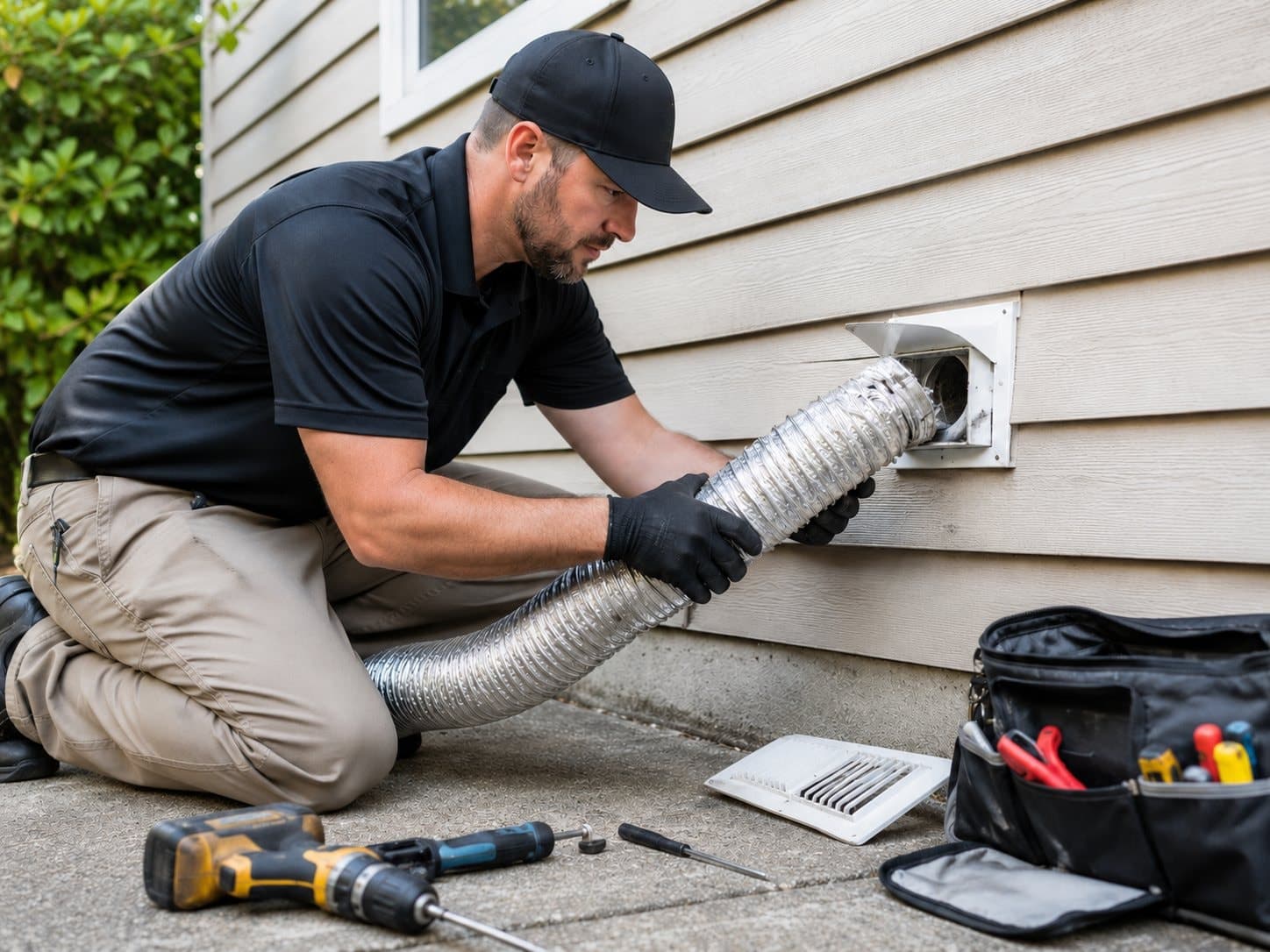
The second is the connector behind the dryer. The code allows a flexible transition duct only if it is listed and labeled to UL 2158A, no longer than 8 feet, and not concealed inside walls or ceilings. White vinyl hose and thin, unlisted foil accordion hose don’t meet that, and the USFA advises replacing coiled-wire foil or plastic venting with rigid, non-ribbed metal duct. Accordion hose also crushes easily when the dryer is pushed back, which can cut airflow sharply. We point out any of these during the cleaning; replacing them with the right connector is usually a small repair.
Florida humidity and the hot, muggy laundry room
Orlando’s average relative humidity is about 74 percent, ranging from roughly 89 percent in the early morning to about 55 percent in the early afternoon (CurrentResults, NCEI 1961–1990 normals). A dryer has to move all of the water from a load out of the house, and it may be working with moist air to begin with.
We don’t know of any study showing that Florida humidity by itself causes lint to clog vents faster, so we won’t claim it does. What we can say is that a laundry room that feels hot and humid while the dryer runs is often a sign that exhaust isn’t leaving the house the way it should, whether from a restricted duct, a leaky connection or a disconnected run. If the room is noticeably worse than it used to be, the vent is worth checking.
Vacation rentals, condos and townhomes
A dryer in a busy short-term rental can run far more loads than the same dryer in a household, so cleaning should follow occupancy rather than the calendar; scheduling around guest stays is covered under dryer vent cleaning for rentals and property managers. In condos and townhomes the termination is often maintained by the association, so it helps to know who is responsible for it before the visit.
How often should a dryer vent be cleaned?
Once a year is a sensible starting point for a household with a reasonably short run; roof terminations, long runs, heavy use and rentals need it sooner. The before-and-after airflow readings from the first visit are the best guide for your home. The full answer, with a schedule by household type, is in how often dryer vents should be cleaned.
Gas dryers and carbon monoxide
A gas dryer burns fuel to make heat, so its exhaust carries combustion products along with lint and moisture. That can include carbon monoxide. A blocked, crushed or disconnected vent can send that exhaust into the house instead of outdoors, which makes a clear, sealed, well-connected vent more important with gas than with electric. Keep working CO alarms in the home, especially near sleeping areas.
If you smell gas
Don’t operate switches or the dryer. Leave the home and call the gas utility or 911 from outside. We clean and inspect the exhaust side of gas dryers; we don’t disconnect, repair or reconnect gas piping or appliance gas connections; gas-line work is a separate job from appliance service, and we carry that out too.
What affects the cost of a dryer vent cleaning
We don’t publish flat prices, because the work varies a lot between homes. The main factors are where the vent ends (a first-floor sidewall is simpler than a two-story roof), the length and number of turns, how easy the dryer is to reach and move, how packed the duct is, and whether the cap or transition hose needs replacing on the same visit. You get the scope before work starts.
Booking, timing and urgency
Dryer vent cleaning is normally a planned job, and there is one version of it that is not.
Clothes taking longer than they used to is a booking. A burning smell during a cycle, a dryer cutting out on its thermal switch, or a cabinet too hot to touch means stopping and treating it as urgent — our page on urgent call-outs covers that, and calls are answered 24 hours Sunday through Friday.
Where the duct keeps clogging within months of being cleaned, more frequent cleaning is not the answer. That points at a run that is too long or has too many bends, covered on lint removal on long runs and dryer vent rerouting. Estimates are free, and same-day slots exist where the schedule allows.
References (4)
Facts and figures on this page come from these references.
- 1U.S. Fire Administration, Clothes Dryer Fires in Residential Buildings (2008–2010), Topical Fire Report v13i7
- 2NFPA Research, Home Dryer Fires (Ahrens, June 2020; 2014–2018 data)
- 3Florida Building Code, Residential 2023, Chapter 15 Exhaust Systems (M1502 Clothes Dryer Exhaust), via UpCodes
- 4Current Results, Orlando weather averages (NCEI normals; humidity 1961–1990)