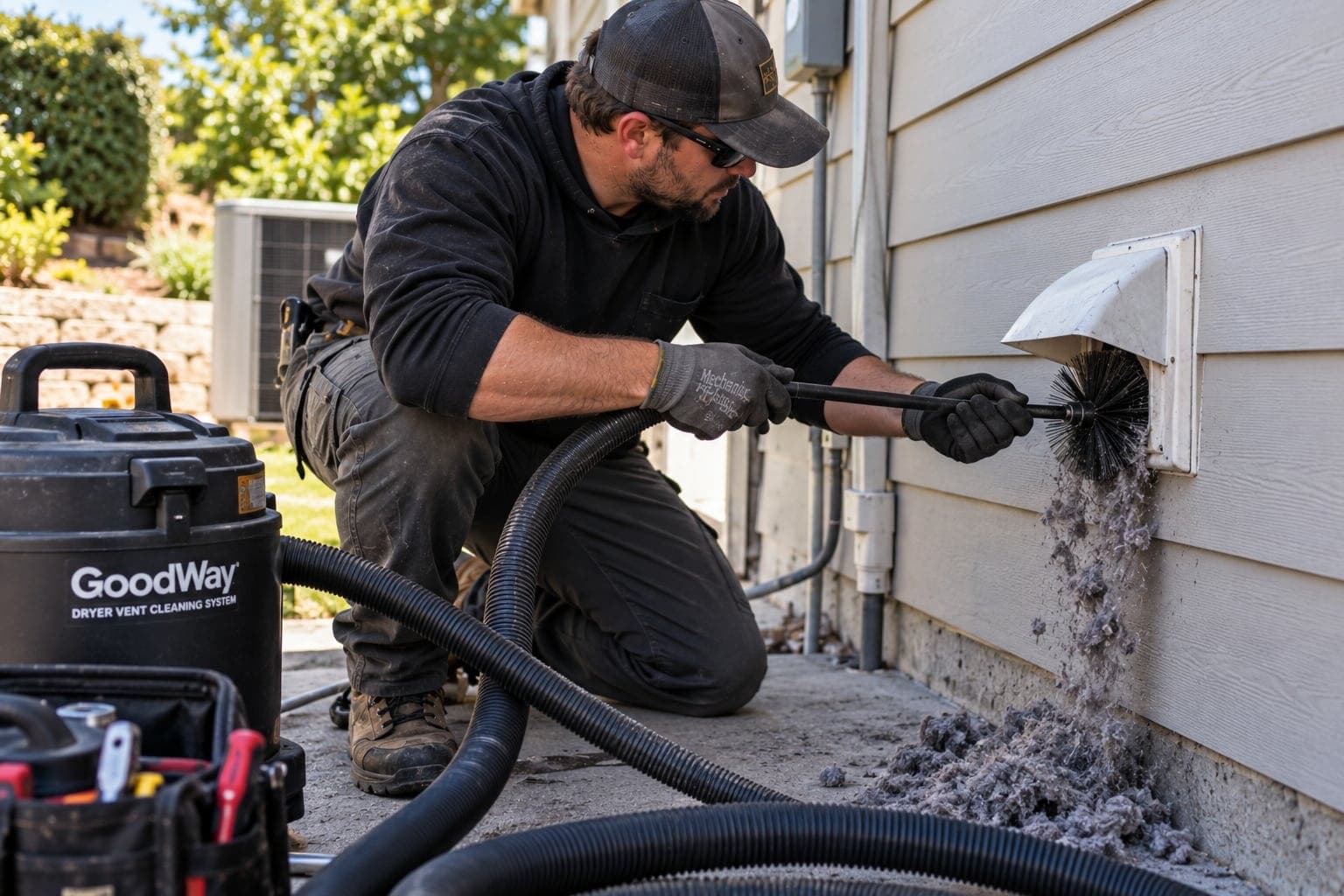
Lake Mary’s median home was built in 1997, 43.0% of homes date from 2000 or later and only 12.6% predate 1980. Most dryer vents are original to homes 20 to 30 years old. That’s the backdrop for most dryer vent calls here.
What a restricted dryer vent looks like
| What you notice | What it usually means |
|---|---|
| Loads need two cycles | Lint is restricting airflow somewhere in the duct (clothes that stay damp after a full cycle) |
| Dryer or laundry room runs hot | Heat and moisture can’t leave fast enough (a dryer that shuts off mid-cycle) |
| Weak air at the outside exit | A packed elbow, a stuck flap or a crushed section (what low airflow points to) |
| Lint around the hood or roof cap | Lint is packing at the termination and escaping around it |
| Burning or scorched smell | Stop the dryer; lint near a heat source is the concern (a hot or burning odor during drying) |
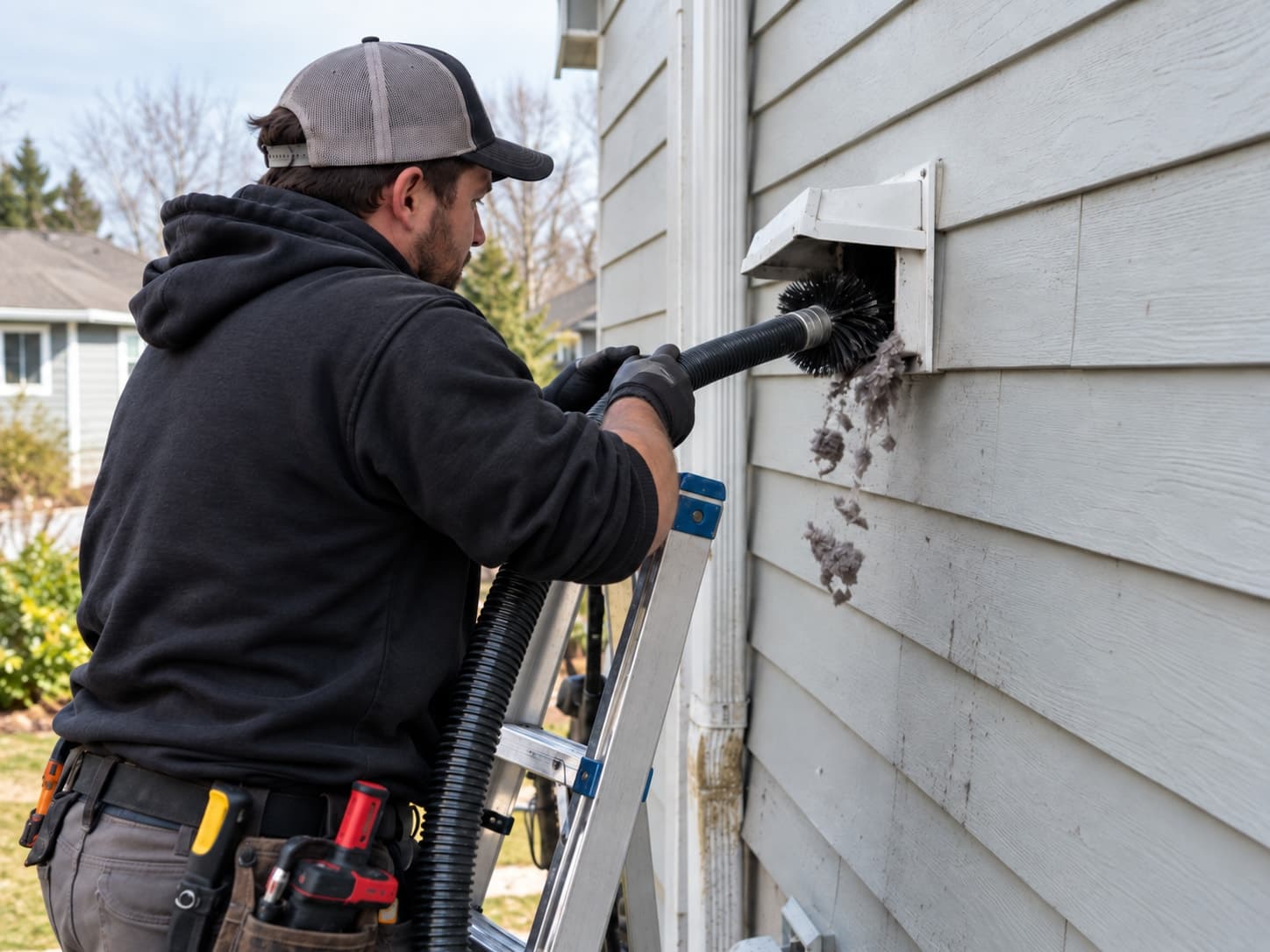
Lint is highly flammable, and a clogged duct makes the dryer run hotter. That’s why slow drying is worth acting on, not just living with.
What we see in Lake Mary
In communities such as Timacuan and Woodbridge Lakes, homes with an upstairs or interior laundry often vent through the attic to a roof cap. At twenty-plus years, the original roof cap has usually seen a reroof, and caps swapped by roofers are not always the right type for dryer exhaust.
Where this page applies
Heathrow is an unincorporated area next to the city, not part of Lake Mary.
What dryer vent cleaning covers
- Airflow reading at the outside exit before anything is touched
- The transition duct behind the dryer: checked for kinks, crushing and the right material
- The full duct run through the wall, floor or attic, brushed and vacuumed end to end
- Elbows and joints, where lint piles up first
- The termination: hood or roof cap cleared, the backdraft damper checked to open and close
- The lint-trap housing and the dryer’s exhaust outlet
- A second airflow reading to confirm the difference
The termination: hood, flap and damper
- Wall hoods: flaps that stick, louvers that no longer open, hoods painted shut or hidden behind shrubs
- Roof caps: lint packed under the cap, seized dampers, the wrong cap after a reroof (lint packed under a roof cap)
- Screens and pest guards: not allowed at a dryer exit in Florida, because they trap lint
- Nests: a sealing damper, not mesh, keeps birds out
The exit is cleared as part of every cleaning. A roof-mounted vent is planned around roof access; details are on clearing a dryer cap on the roof. A failed hood or cap is replaced through swapping a failed exterior hood, and which vent hoods work and which don’t explains the options.
When the airflow doesn’t come back
- Good recovery after cleaning: lint was the restriction; nothing more is needed
- Weak reading, duct clear: a crushed section or loose joint (a duct that has come apart), handled by repairing a crushed or loose duct
- Lint in the attic or laundry room: heavy lint removal
- Almost no air at all, or a nest: blocked-vent clearing
- Refills within months: often a run that’s too long (why some vents refill quickly); an inspection with airflow testing measures it against the code, and rerouting to a shorter path shortens it
Keeping the vent clear between cleanings
- Empty the lint screen before every load
- Leave room behind the dryer so the connector isn’t crushed
- Check that the outside flap opens when the dryer runs
- Book a cleaning when drying times start to creep up, or about once a year
Rental homes and condos follow the same logic, with laundry volume set by tenants or guests. Landlords and managers can schedule several homes through vent care for landlords and property managers. Intervals by household type are in a realistic cleaning schedule.
Dryer vent service around Lake Mary
- Anywhere in Lake Mary, including Timacuan: mention where the vent exits and the dryer type
- Nearby: Sanford dryer duct cleaning, lint and airflow work in Longwood and vent cleaning for Winter Springs homes
- Everything else for the house: other work on Lake Mary homes
Background reading: dryer vent cleaning, step by step and vent or appliance: how to tell.
References (3)
Where the Lake Mary numbers and code references come from.