Smoke or flames: get out and call 911
If you see smoke or flames, or smell something burning strongly, don’t open the dryer door. Get everyone out and call 911 from outside. If it is safe to do so on the way out, turning off power at the breaker can help, but don’t delay leaving.
What overheating looks like
| What you notice | What it usually means |
|---|---|
| The top or sides of the dryer are too hot to keep your hand on | Heat isn’t leaving through the vent |
| Clothes come out very hot but still damp | Airflow is too low to carry moisture away |
| Dryer stops partway through, then works again after cooling | High-limit or thermal cutoff tripping |
| Dryer runs but no longer heats at all | Thermal fuse blown, often after repeated overheating |
| Laundry room gets hot and humid | Exhaust leaking or airflow blocked |
| A hot or burning smell | Lint near the heat source; see a burning smell |
Possible causes, most likely first
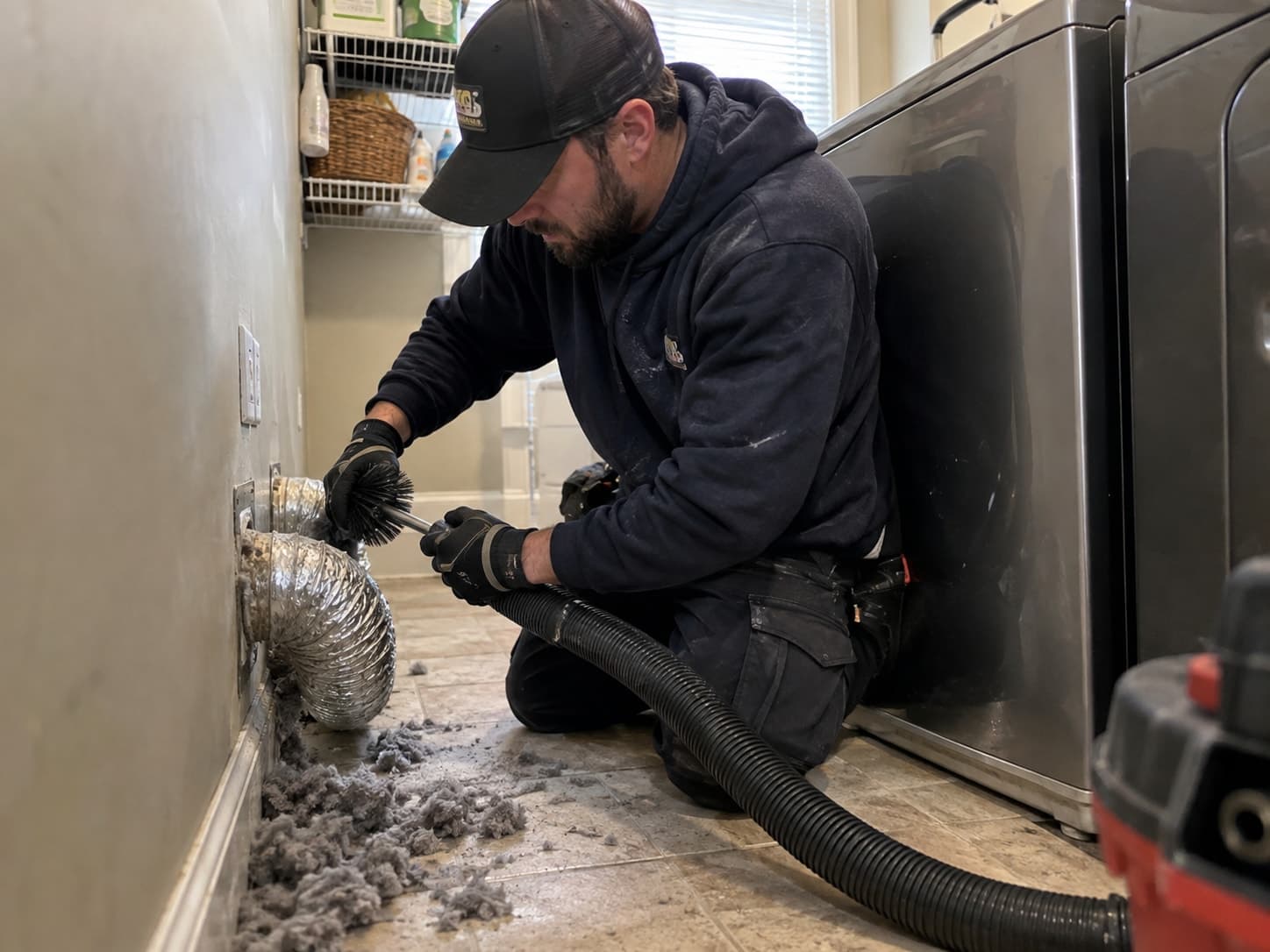
01Clogged vent run
- What you may notice
- Drying takes longer and longer; weak air at the outside vent.
- How it’s confirmed
- Measuring airflow at the termination and cleaning the full duct run.
02Crushed or kinked transition hose
- What you may notice
- Problem started after the dryer was moved or pushed back.
- How it’s confirmed
- Pulling the dryer out and checking the hose between the dryer and the wall. See a disconnected or crushed vent.
03Stuck exterior flap or clogged cover
- What you may notice
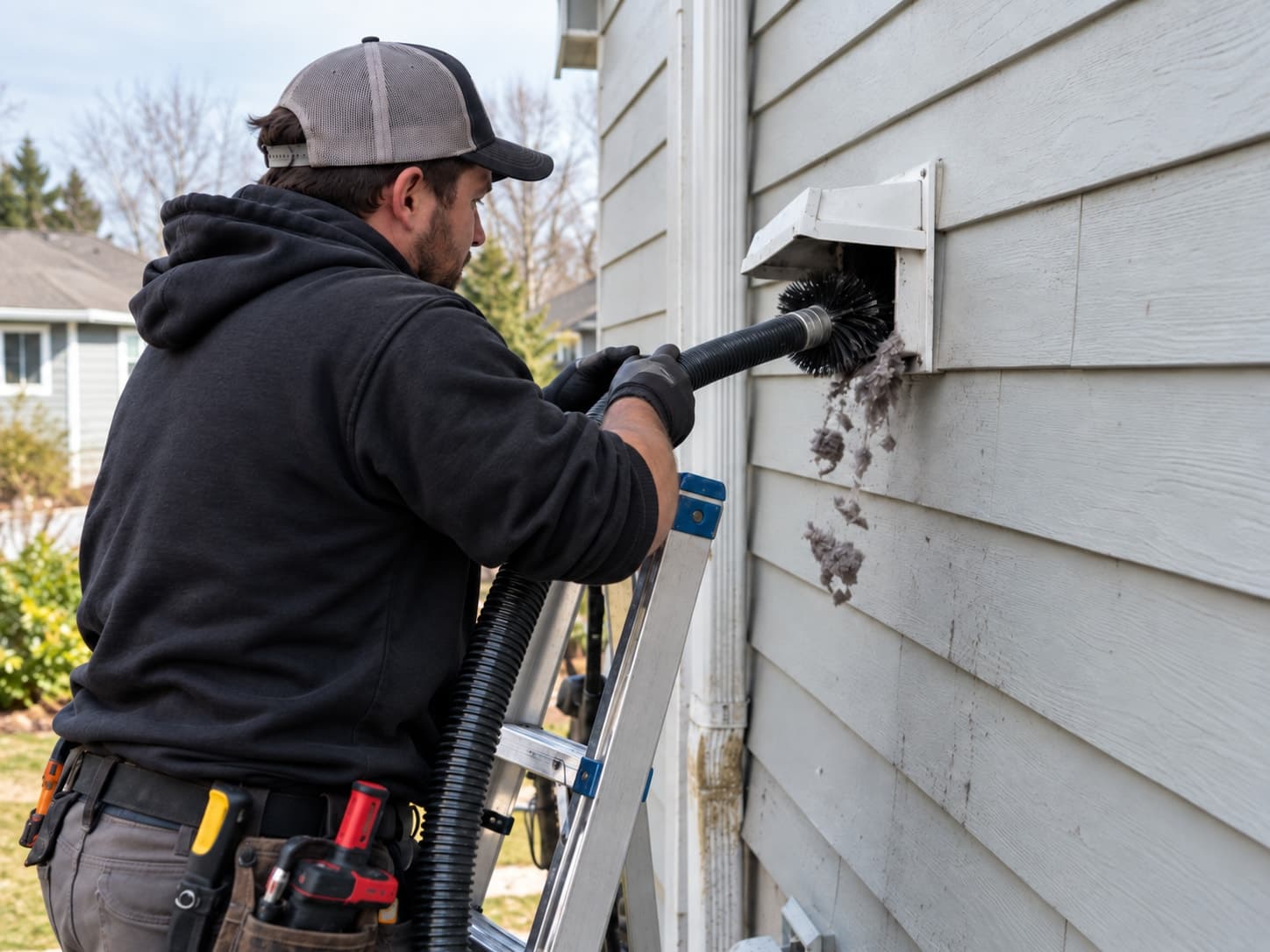
- Lint packed around the outside vent; flap that doesn’t open when the dryer runs.
- How it’s confirmed
- Checking the termination with the dryer running. See a flap that won’t open.
04Blockage deep in the run or at the roof
- What you may notice
- A long run, a roof termination, a bird nest, or a booster fan that has quit.
- How it’s confirmed
- Locating the blockage with airflow readings and clearing it. See a clogged roof dryer vent.
05Dryer fault
- What you may notice
- Airflow at the vent is strong but the dryer still overheats; cutoffs tripping with a clear vent.
- How it’s confirmed
- Once the vent is confirmed clear, the dryer itself (thermostats, element, internal lint buildup) goes to an appliance technician. See is it the dryer or the vent?
Why it matters
Lint is highly flammable, and overheating is how it ignites. NFPA research on home dryer fires found that failure to clean was the leading factor contributing to them (NFPA). Safety cutoffs are a last line of defense, not a way to keep running a dryer that can’t breathe. A dryer that trips repeatedly is also wearing out its heating parts.
Safe checks you can do
- Clean the lint screen before every load, and wash it with soapy water if dryer sheets have left a film on it.
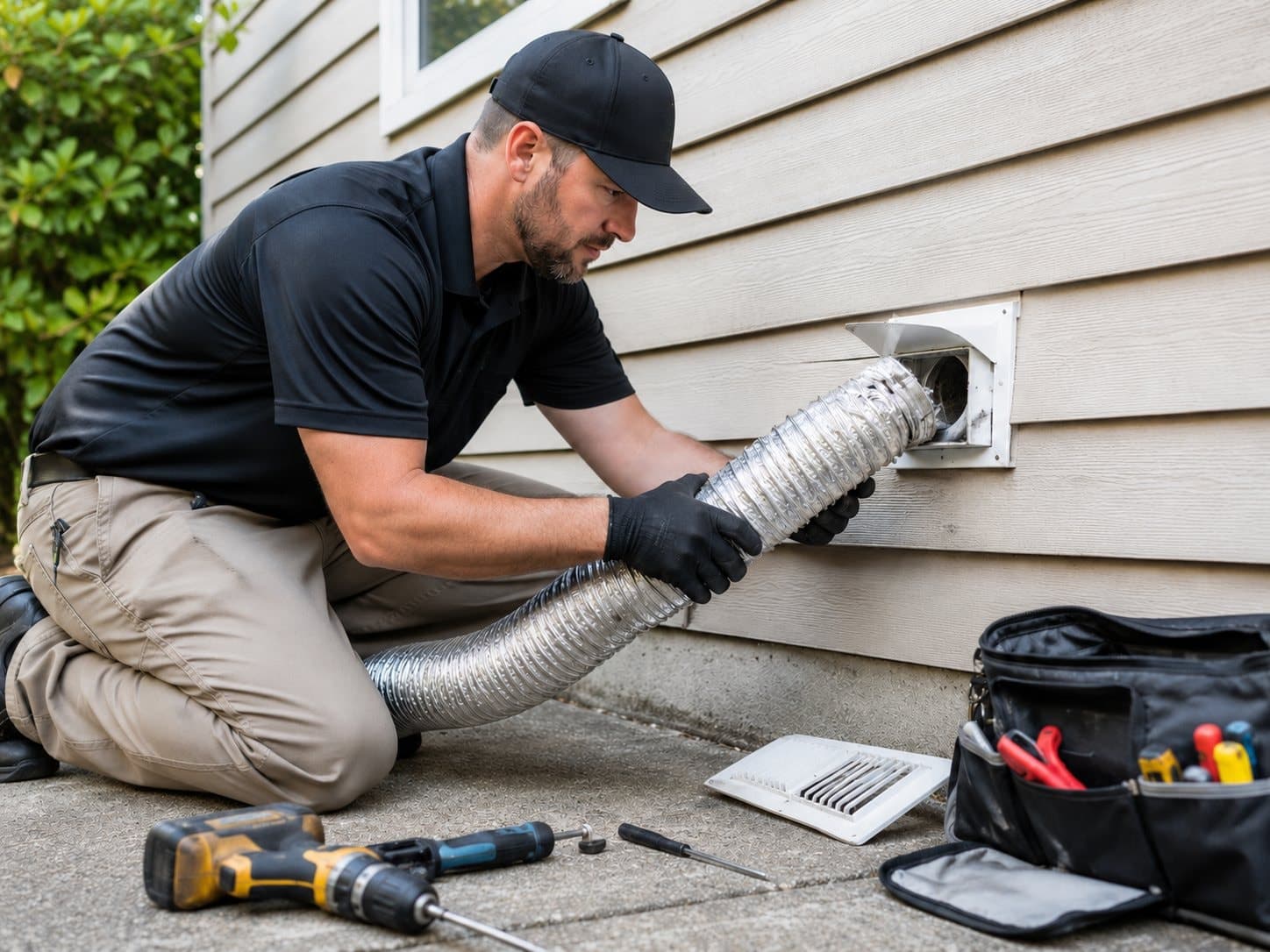
- Pull the dryer out and check the transition hose for kinks, crushing or disconnection. Unplug an electric dryer first.
- With the dryer running on heat, go outside and feel the airflow at the vent. It should be strong and warm, and the flap should open fully.
- Clear visible lint from the exterior cover; don’t push a tool deep into the duct.
- Run a small load and note whether it still shuts off.
Don’t reset or bypass the cutoffs
Replacing a blown thermal fuse without fixing the airflow problem just resets the clock. Never bypass a thermal fuse or high-limit thermostat. If the dryer has cut out more than once, leave it off until the vent has been checked.
Red flags: stop using the dryer
- A burning smell, scorched clothes or visible smoke.
- The dryer is too hot to touch, even with a small load.
- Repeated shutoffs or a blown thermal fuse.
- No airflow at all at the exterior vent: see no airflow from the dryer vent.
- Gas dryers: any gas smell. Leave and call from outside.
What a professional check involves
Measure airflow
Airflow is checked at the exterior vent before anything is cleaned, as a baseline.
Inspect the path
Transition hose, wall connection, duct run and termination are checked for crushing, disconnections and blockages.
Clean and repair
The full run is cleaned and damaged sections or the termination are repaired or replaced.
Confirm
Airflow is measured again. If the vent is clear and the dryer still overheats, the dryer needs an appliance technician.
Which service stops the overheating
| Cause | Where it’s fixed |
|---|---|
| Lint restricting the vent | dryer vent cleaning |
| Near-total blockage or a nest at the exit | dryer vent blockage removal |
| Crushed or disconnected duct | duct repair |
| Vent clear but still overheating | an inspection with airflow testing, then an appliance technician |
A thermal fuse that keeps blowing is a symptom, not the fix. Why a clogged vent is a fire risk explains the link. Local: vent cleaning for Kissimmee homes or dryer vents in Clermont.
References (2)
Facts and figures on this page come from these references.