Is your dryer vented through the roof?
If the laundry room is on the second floor or in the middle of the house, and you can’t find a flap on an outside wall that blows air when the dryer runs, the vent probably goes up through the attic. From the yard, a roof dryer vent looks like a small, low cap, sometimes easy to confuse with a bath fan or plumbing vent. Lint on the shingles right around one cap is the giveaway. See how to find the right vent for more clues.
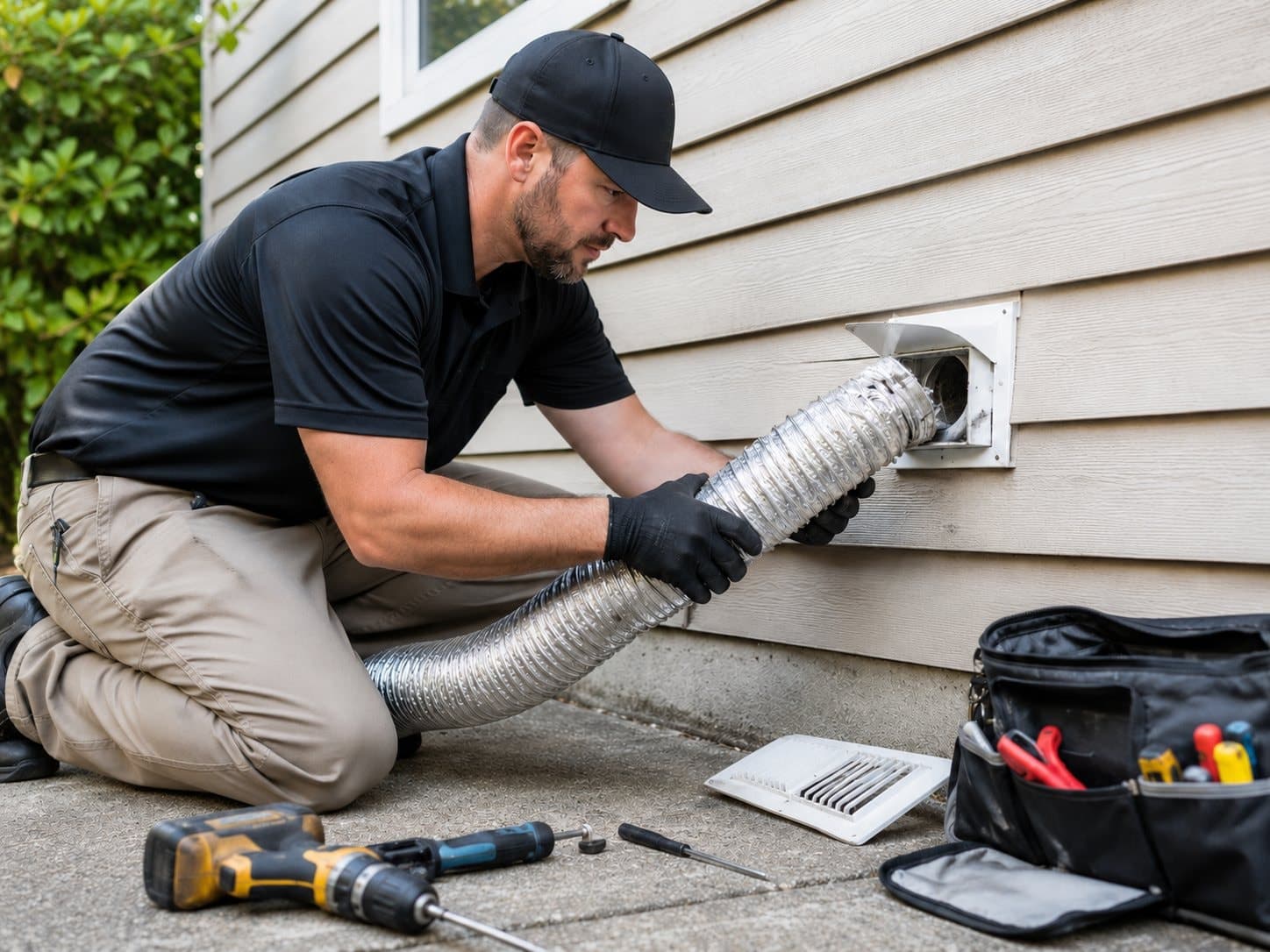
Dryer vent system, from dryer to termination
- 1Lint screen. Catches most lint inside the dryer. What gets past it collects in the duct.
- 2Transition duct. Short connector from the dryer to the wall. Easily crushed behind the machine.
- 3Duct run. Smooth 4-inch metal duct through walls, floors or the attic.
- 4Elbows. Every bend adds resistance and counts against the allowed duct length.
- 5Roof cap. Roof termination, common on two-story homes. Hard to see and to clean.
- 6Wall hood. Side-wall termination. Must open freely and has no screen.
- 7Backdraft damper. Flap that opens under airflow and closes to keep out air, rain and pests.
Why roof vents clog faster
01Lint falling back
- What you may notice
- Lint collects at the lowest elbow in the attic or behind the dryer.
- How it’s confirmed
- Checking the vertical run and the elbows at its base, where lint settles when the dryer stops.
02The wrong roof cap
- What you may notice
- A cap with louvers, a screen or a small opening; lint packed under it.
- How it’s confirmed
- Checking whether the cap is a dryer-specific design with a damper and no screen.
03Long run with many elbows
- What you may notice
- Slow drying even soon after a cleaning, or a booster fan that alarms.
- How it’s confirmed
- Measuring the run and counting fittings against the limits in the code and the dryer manual. See a vent that keeps clogging.
04Condensation in the attic
- What you may notice
- Water dripping from the duct, wet lint, stains on the ceiling below.
- How it’s confirmed
- Checking duct insulation and slope in the attic. See water in the dryer vent.
05Disconnected duct in the attic
- What you may notice
- Lint on the attic insulation, a humid attic, little air at the roof.
- How it’s confirmed
- Walking the run in the attic. See a disconnected dryer vent.
06Nests at the cap
- What you may notice
- Chirping, twigs on the roof around the cap, no airflow.
- How it’s confirmed
- Clearing the cap and duct and fitting a damper-style cap.
Signs you can check from the ground
- Time a normal load. A load that used to take 45 minutes and now takes 90 points to airflow.
- Use binoculars to look at the roof around the cap for lint on the shingles or a cap that looks packed.
- Feel the top of the dryer during a heated cycle. Too hot to keep a hand on means restricted airflow.
- Check the laundry room and the ceiling below the attic run for humidity, lint or water stains.
- If you can safely look into the attic, check the duct for sags, disconnected joints and lint on the insulation. Don’t step between joists.
- Clean the lint screen before every load; a clogged screen mimics a clogged vent.
Stay off the roof, and skip the leaf blower
Roof caps are often on steep pitches, and tile roofs crack underfoot. Blowing the vent out from the dryer end with a leaf blower can push lint into the attic if a joint is loose. Roof vents are cleaned from both ends with the cap removed.
Red flags
- A burning smell or a dryer that shuts itself off: see a dryer that’s overheating.
- Water dripping from the ceiling below the vent run.
- Lint piled on attic insulation.
- Loads taking two or more cycles: see a dryer taking too long.
What roof dryer vent cleaning involves
Measure airflow
Airflow is measured at the roof or at the dryer connection before cleaning.
Open both ends
The dryer end is disconnected and the roof cap is opened or removed so lint is pushed out, not into the attic.
Clean and check the run
The full run is cleaned with rotary brushes and checked for sags, disconnections and damage.
Fix the cap
A louvered or screened cap is replaced with a dryer-specific roof cap with a damper. See roof dryer vent cleaning.
Clearing a roof vent
| What’s found | Where it’s fixed |
|---|---|
| Lint packed under the roof cap | roof dryer vent cleaning |
| Wrong cap (screened or not made for dryers) | a proper dryer cap |
| Run too long to stay clear | moving the vent to a wall |
| Water in the duct under the cap | an inspection of the cap and the roof jack |
Please don’t climb onto the roof to check it. Local: vent cleaning for Minneola homes or dryer duct cleaning in Groveland. Roof exits usually need cleaning sooner than wall vents; see how often a roof-terminated vent needs cleaning.
References (1)
Facts and figures on this page come from these references.