The short answer
Plan on cleaning the dryer vent at least once a year. The NFPA’s clothes dryer safety tip sheet puts it plainly: once a year, or more often if clothes are taking longer than normal to dry, clean the lint out of the vent pipe or have a lint removal service do it (NFPA dryer safety tips). The U.S. Fire Administration says the dryer’s interior and venting system should be cleaned periodically by qualified service personnel, especially when drying times stretch out (USFA topical report).
Treat once a year as the floor, not the target. A single person with a short vent through the laundry room wall may be fine on that schedule. A family of five with a dryer that vents up through a two-story roof probably is not. Neither agency publishes a shorter fixed interval, so the rest of this guide is about judging where your house sits.
The daily part is separate
Cleaning the vent does not replace cleaning the lint screen. Both the NFPA and the USFA say to clean the lint filter before or after every load and never to run the dryer without it. The screen catches most lint, but not all of it, and what gets past it is what builds up in the duct.
What changes the interval
Lint builds up in proportion to how many loads go through the dryer, and it settles faster where the air slows down or turns. These are the factors that matter most:
| Factor | Why it matters | Effect on the interval |
|---|---|---|
| Number of loads per week | More loads means more lint passing the screen | Heavy daily use points to a shorter interval |
| Duct length | Air slows over a long run and lint drops out along the way | Long runs need attention sooner |
| Number of elbows | Each turn is a place where lint collects and airflow drops | Several turns point to a shorter interval |
| Roof termination | Exhaust has to climb, and lint tends to gather under the roof cap | Check more often; see roof vent cleaning |
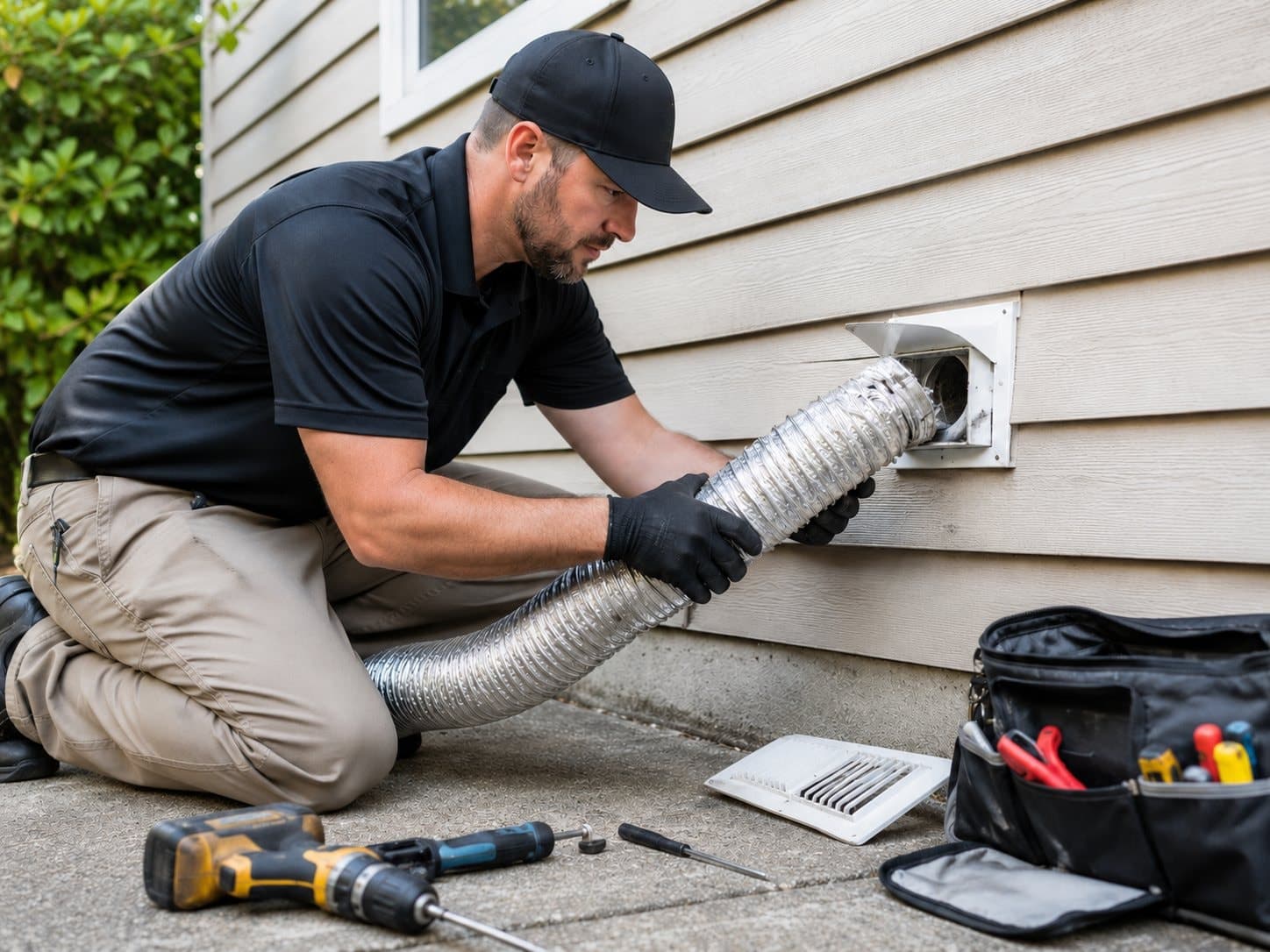
| Transition hose type | Ribbed foil or vinyl hose traps lint in its folds and crushes easily | Replace it rather than clean it more often |
| Towels, bedding and pet hair | Heavy linting fabrics and shedding pets add to the load | Shorter interval |
| Condensation in the duct | Moisture on duct walls makes lint stick (USFA) | Long, cool or sagging runs need checking sooner |
| Gas dryer | Lint builds the same way, but a blocked vent also affects combustion exhaust | Same interval, less tolerance for a restricted vent |
The USFA report notes that when a vent is too long or has many bends, moisture in the exhaust can condense on the vent surfaces and attract lint. You will also read that Central Florida’s humidity makes vents clog faster. That may be true for some homes, but we have not found a study that shows it, so treat it as a possibility rather than a rule. Duct length, turns and the number of loads are the factors you can actually measure.
A starting schedule by household type
Use this as a starting point, then adjust after the first cleaning. How much lint comes out, and how much airflow improves, tells you whether the interval was too long.
| Home and use | Starting interval | What to watch between cleanings |
|---|---|---|
| One or two people, short sidewall vent | Once a year | The outside flap opening fully with the dryer running |
| Family household, several loads a week | Once a year, with a check of the outside hood at the six-month mark | Drying times and a hot laundry room |
| Large household or daily loads | Consider cleaning more often than yearly, based on what the first cleaning finds | Drying times creeping up; lint at the hood |
| Vent runs to the roof, or a long run with several elbows | At least yearly; check sooner if drying times change | Lint on the roof near the cap, a flap that barely moves |
| Long-term rental | At least yearly, and at each tenant turnover | Tenant reports of slow drying or a vent warning |
| Short-term or vacation rental | Set by the number of loads, not the calendar | Turnover crews checking the hood and the lint screen |
| Condo or townhome with a shared exterior or roof termination | At least yearly for your unit’s duct | Who maintains the termination (often the association) |
Rental properties are where a fixed calendar works worst. A vacation home can run several loads of sheets and towels after every stay, and tenants rarely notice a slow dryer until it becomes a complaint. Our dryer vent cleaning for rental properties page covers how owners and managers can tie cleaning to occupancy.
Signs you need it sooner
If any of these show up before the vent is due, don’t wait for the calendar:
Clean or check the vent now if you notice
- Towels or jeans need a second cycle, or come out damp at the thick seams
- The outside of the dryer, or the clothes, feel hotter than they used to
- The outside flap barely lifts, or you feel little air at the hood
- Lint collecting around the outside hood, behind the dryer, or on the roof near the cap
- A “check vent” or airflow warning on the dryer’s display
- The laundry room gets noticeably hot and muggy during a cycle
- A musty smell in the laundry room or lint in the attic insulation
- Any scorched or burning smell (stop using the dryer until it’s checked)
Slow drying has more than one cause, and not all of them are in the vent. If you are not sure whether to call a vent company or an appliance technician, our guide on telling a vent problem from a dryer problem walks through safe checks, and the slow-drying symptom page covers the most common causes. A vent that fills up again within months is its own problem, covered under a dryer vent that keeps clogging.
A burning smell is not a scheduling question
Turn the dryer off and don’t use it again until the vent and the dryer have been checked. See what to do about a burning smell from the dryer. If there is smoke or flame, get out and call 911.
Setting the right interval for your home
How to settle on a schedule
Start with a full cleaning and a baseline
Have the whole run cleaned, from the dryer outlet to the outside termination, with airflow checked before and after. Ask what was found: how much lint, where it had collected, and whether any section was crushed or disconnected.
Note the date and how the dryer behaves
Write down the date and how long a typical load of towels takes afterwards. That gives you something to compare against later.
Check the outside hood every few months
With the dryer on a no-heat setting, confirm the flap opens and air flows strongly. If the vent is on the roof, look from the ground only.
Adjust at the next cleaning
If the duct was heavily packed after twelve months, shorten the interval. If very little came out and airflow was strong, a yearly schedule is probably right.
If each cleaning finds the same packed elbow or a weak reading even after the duct is clear, more frequent cleaning isn’t the answer. The run itself may be too long, crushed or poorly sloped. A dryer vent inspection looks at the whole system, and repairing or replacing the duct fixes the cause instead of cleaning around it.
What a cleaning should cover
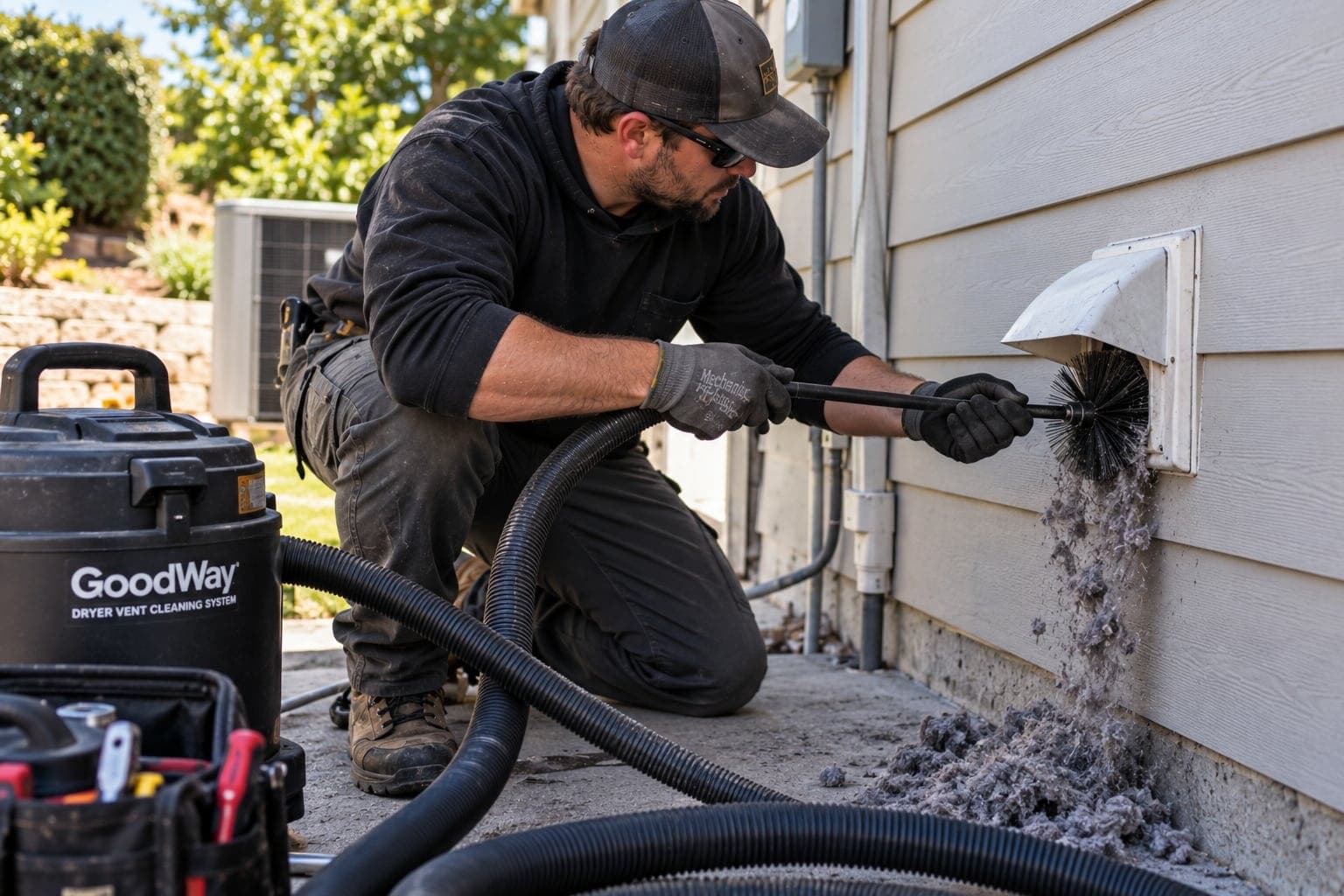
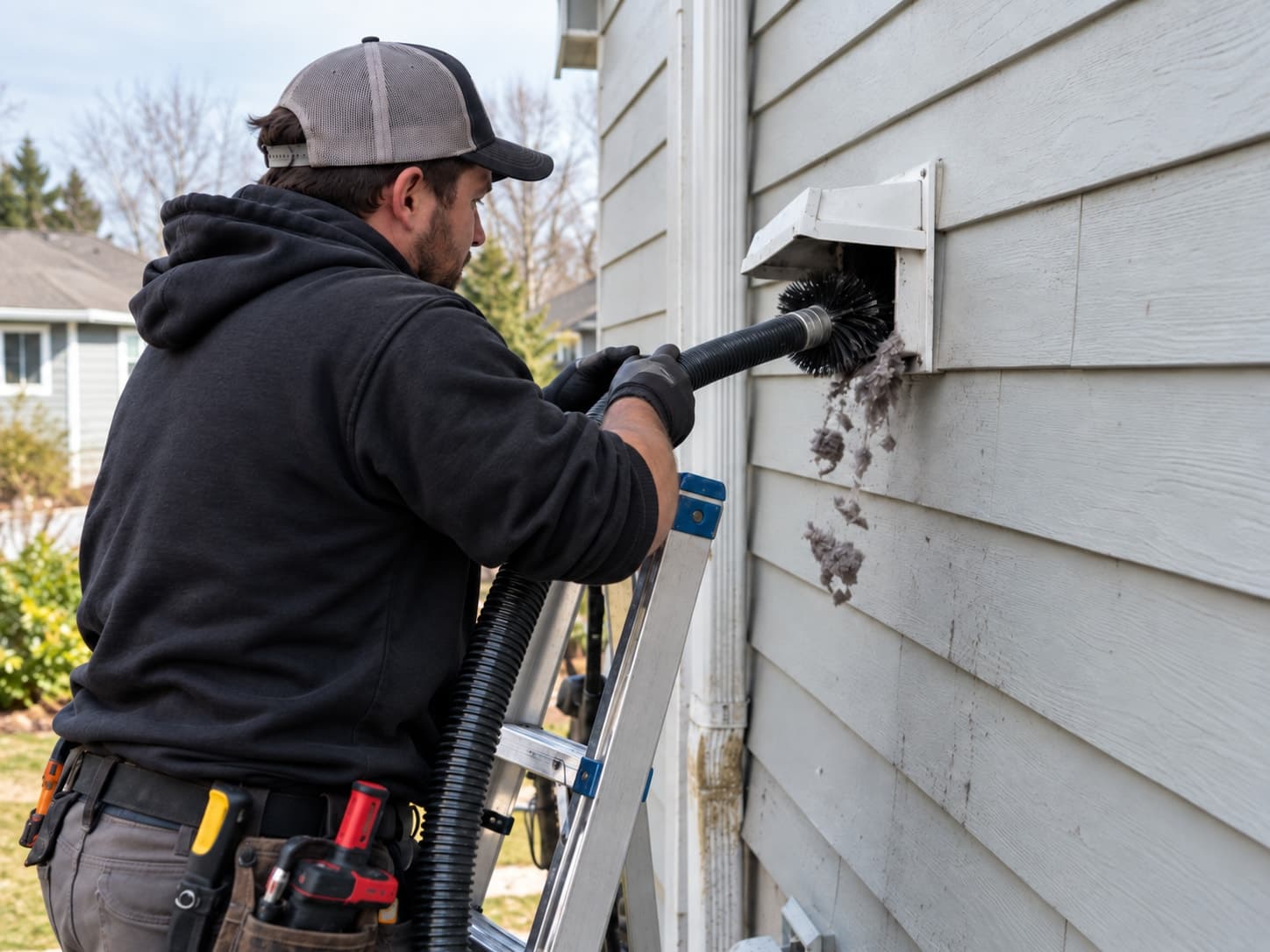
A cleaning that only reaches the first few feet behind the dryer won’t reset the clock. A complete dryer vent cleaning covers the transition hose, the full length of the duct, every elbow and the termination and its damper, and ends with the dryer reconnected and tested.
If a warning sign is already showing, the symptom pages go further: a dryer vent that keeps clogging and a dryer that’s overheating. The DIY vs professional guide covers who should do the cleaning. For local scheduling, see dryer vent cleaning in Orlando or dryer vent cleaning for Oviedo homes.
References (3)
Facts and figures on this page come from these references.