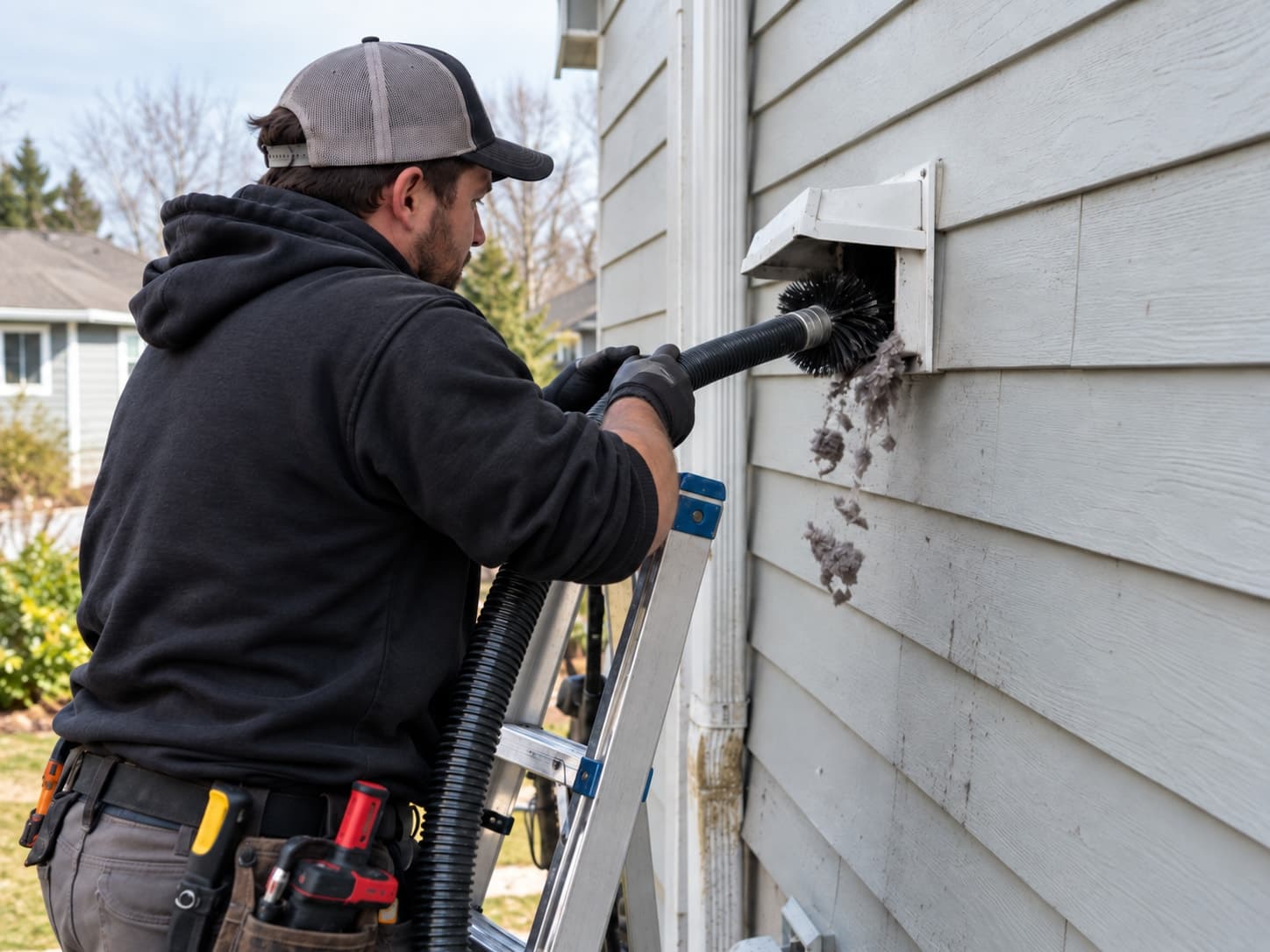
The quick rule
Heat but no airflow points to the vent. Airflow but no heat points to the dryer. A dryer needs both: it heats the air, tumbles the load, and pushes the warm, wet air outside. When the air can’t leave, the drum gets hot and the clothes stay damp. When the heat isn’t being made, air moves normally but the load never warms up. Mechanical symptoms such as a drum that won’t turn, loud grinding or an error code usually belong to the appliance.
Two tests not to do
Don’t run a gas dryer with its exhaust disconnected. Its exhaust carries combustion products, including carbon monoxide, into the room. Don’t run an electric dryer disconnected either: it blows hot, lint-laden air into the house. And don’t pull, twist or disassemble a gas dryer’s connection; that belongs to a qualified appliance technician, and gas-line work is quoted as a separate job. If you smell gas, leave the home and call the gas utility or 911 from outside.
Step-by-step: narrowing it down safely
Work through these in order
Clean the lint screen and test it with water
Pull the screen, remove the lint, then run water over it. If water pools instead of passing through, a film from dryer sheets or softener has sealed it. Wash it with warm, soapy water and a soft brush, and let it dry fully. Also look into the screen slot with a flashlight for lint caught below it.
Check for heat
Start a normal heat cycle with a small load. After a few minutes, is the air inside the drum warm? If there is no heat at all, or only barely warm air, the fault is most likely inside the dryer (or its power or gas supply). Skip to the appliance section below.
Check airflow at the outside hood
Switch to a no-heat or air-fluff setting and go to the outside termination. The flap should open clearly and you should feel a strong, steady stream of air. A flap that barely lifts, or little air at all, points to a restriction or a disconnection between the dryer and the outside. For a roof vent, look from the ground only.
Inspect the connector behind the dryer
Without disconnecting anything, shine a light behind the dryer. Is the connector crushed flat against the wall, kinked, or pulled off the dryer outlet? Is it white vinyl or thin foil? A crushed hose can cut airflow sharply.
Compare a small load with a full load
If half a load dries in one normal cycle but a full load doesn’t, overloading is part of the problem. If both are slow and the dryer is hot, the vent is the stronger suspect.
Decide who to call
Hot dryer, weak airflow outside, lint at the hood or behind the dryer: vent service. No heat with strong airflow, noises, a drum that won’t turn, or an error code your manual lists as a component fault: appliance repair. Unsure, or signs of both: start with the vent, because a restricted vent can also cause heating faults.
Symptoms that usually mean the dryer itself
Appliance symptoms (call an appliance repair technician)
01No heat at all
- What you may notice
- The drum turns and air moves at the outside hood, but the load stays cool.
- How it’s confirmed
- An appliance technician tests the heating element or gas burner and igniter, the thermal fuse, thermostats and the power or gas supply. If a thermal fuse has blown, have the vent checked too, since overheating from a restricted vent is a common reason fuses blow.
02Drum doesn’t turn
- What you may notice
- The motor hums or runs but the drum stays still, or nothing happens at all.
- How it’s confirmed
- Usually a broken drive belt, a failed motor, a door switch or a control fault. This is appliance repair; the vent isn’t involved.
03Loud thumping, squealing or grinding
- What you may notice
- New noises from inside the cabinet during a cycle.
- How it’s confirmed
- Commonly worn drum rollers, an idler pulley or the drum bearing. A technician opens the cabinet to confirm. (A rattle or flapping sound from the outside hood is the vent, not the dryer.)
04Error codes
- What you may notice
- A code on the display, or the dryer won’t start.
- How it’s confirmed
- Look the code up in your owner’s manual. Some codes refer to airflow or a vent restriction; many refer to sensors, heaters, motors or controls, which are appliance faults.
05Clothes wet and cool at the end, but airflow strong
- What you may notice
- The cycle ends early and the load is damp, even though the vent blows hard outside.
- How it’s confirmed
- Often a moisture sensor coated with residue, or a control or heating fault. An appliance technician confirms.
Symptoms that usually mean the vent
Vent symptoms (call a dryer vent service)
01Hot dryer, damp clothes
- What you may notice
- The cabinet and the clothes feel hotter than usual, but loads need two cycles.
- How it’s confirmed
- Airflow is measured at the termination, the duct is cleaned end to end, and airflow is measured again.
02Weak or no air at the outside hood
- What you may notice
- The flap barely moves, or you can’t feel air even though the dryer is running.
- How it’s confirmed
- The run is traced for a blockage, a crushed section or a separated joint, and the termination is opened.
03“Check vent” or airflow warning
- What you may notice
- The dryer’s vent indicator comes on, especially if it keeps coming back after the lint screen is cleaned.
- How it’s confirmed
- The whole vent system is checked: transition hose, duct, elbows and termination.
04Lint where it shouldn’t be
- What you may notice
- Lint behind the dryer, around the outside hood, on the roof near the cap, or in the attic insulation.
- How it’s confirmed
- A leaking or disconnected joint, or a packed termination, is located and repaired.
05Hot, muggy laundry room or musty smell
- What you may notice
- The room gets much warmer and damper than it used to during a cycle.
- How it’s confirmed
- Connections are checked for leaks, and concealed sections for separation, since exhaust may be escaping indoors.
06Water at the dryer connection or in the duct
- What you may notice
- Drips behind the dryer, rust streaks on the duct, or damp lint paste.
- How it’s confirmed
- The duct is checked for sags, condensation points and a leaking cap or roof jack.
Dryer vent system, from dryer to termination
- 1Lint screen. Catches most lint inside the dryer. What gets past it collects in the duct.
- 2Transition duct. Short connector from the dryer to the wall. Easily crushed behind the machine.
- 3Duct run. Smooth 4-inch metal duct through walls, floors or the attic.
- 4Elbows. Every bend adds resistance and counts against the allowed duct length.
- 5Roof cap. Roof termination, common on two-story homes. Hard to see and to clean.
- 6Wall hood. Side-wall termination. Must open freely and has no screen.
- 7Backdraft damper. Flap that opens under airflow and closes to keep out air, rain and pests.
When it’s both
The two problems often feed each other. A restricted vent makes the dryer run hotter and longer, which wears the heating parts, and many dryers have a thermal fuse or high-limit thermostat that cuts the heat when things get too hot. The result looks like an appliance failure: no heat. An appliance technician replaces the fuse, the dryer works for a while, and then the fuse blows again because the vent was never cleared.
So if the dryer has a blown thermal fuse, or has had repeated heating repairs, have the vent checked as well. A dryer vent inspection with an airflow reading tells you whether the duct was part of the cause. The reverse also happens: a clean vent with strong airflow and a dryer that still won’t heat means the appliance technician is the right call.
Stop and get it checked
A scorched or burning smell, a cabinet too hot to keep your hand on, smoke, or a dryer that shuts itself off mid-cycle are reasons to stop using it until both the dryer and the vent have been looked at. Our page on a dryer that smells like burning explains what to do.
What to tell whoever you call
- Gas or electric, and roughly how old the dryer is
- Whether the drum gets hot, and how the outside flap behaves with the dryer running
- Where the vent ends (side wall, roof, soffit area) and roughly how far the laundry room is from an outside wall
- Any error codes, and when the problem started (suddenly, or gradually over months)
- Whether the dryer was recently moved, replaced or pushed back against the wall
That information helps a vent technician or an appliance technician decide quickly whether the problem is theirs. If it does turn out to be lint in the duct, a full-length vent cleaning with airflow checked afterwards confirms the fix, and our guide to the fire risk of a clogged vent explains why it shouldn’t wait. For a gradual slowdown with a hot dryer, our slow-drying troubleshooting page goes deeper into the causes.
For the vent side, how often dryer vents should be cleaned and dryer vent duct types cover the usual culprits. Two symptom pages go deeper on the most common complaints: a dryer taking two cycles and a dryer that shuts off hot. Local pages such as dryer vent cleaning in St. Cloud cover scheduling.
References (3)
Facts and figures on this page come from these references.