Short answer
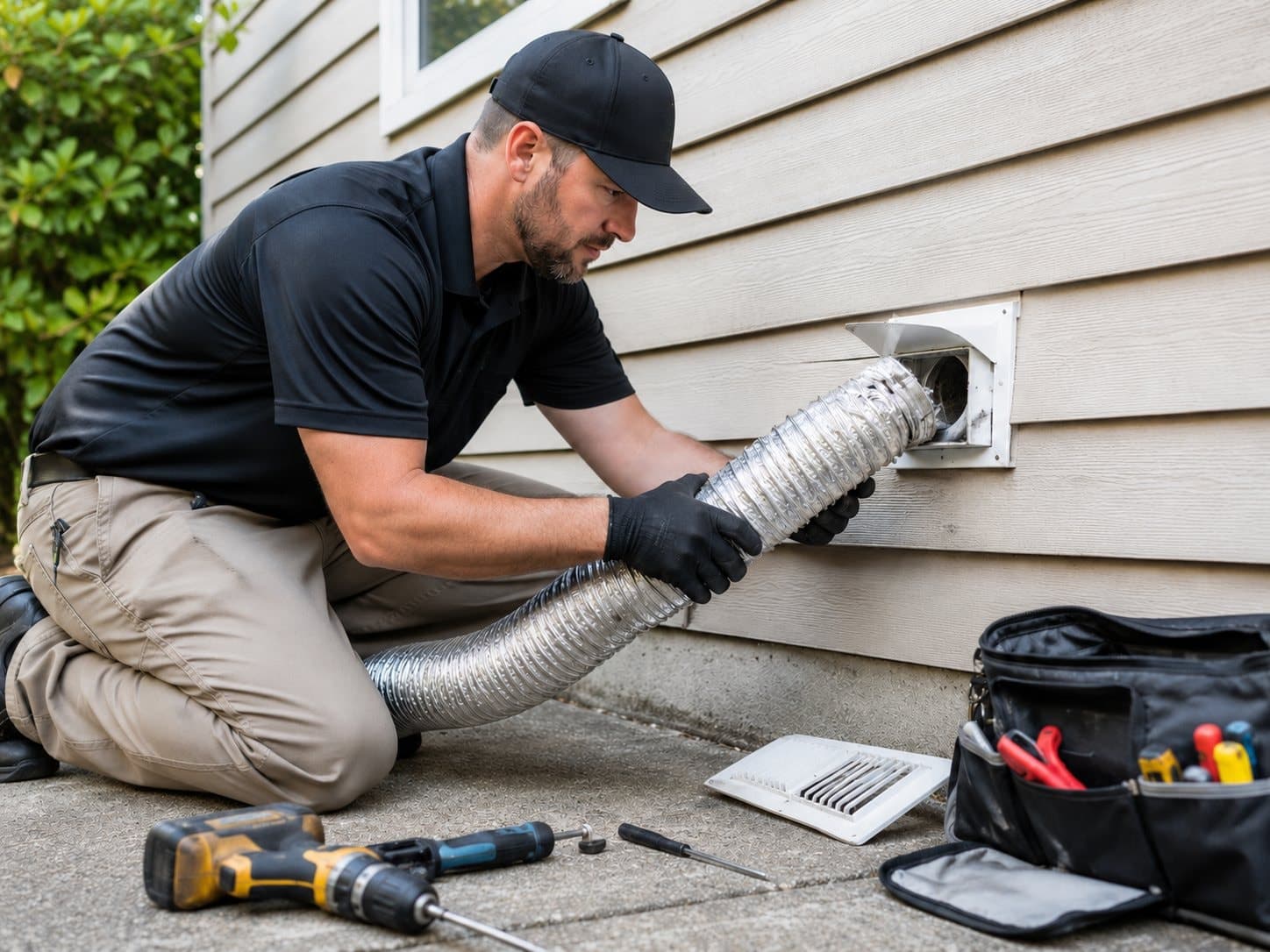
Inside walls, floors and attics, use rigid smooth-wall metal duct. Behind the dryer, use a short, listed transition connector such as semi-rigid metal or a slim periscope, kept visible and uncrushed. White vinyl or plastic hose doesn’t belong anywhere, and foil accordion hose is discouraged even where it is listed.
Two different parts of the vent
Dryer vent system, from dryer to termination
- 1Lint screen. Catches most lint inside the dryer. What gets past it collects in the duct.
- 2Transition duct. Short connector from the dryer to the wall. Easily crushed behind the machine.
- 3Duct run. Smooth 4-inch metal duct through walls, floors or the attic.
- 4Elbows. Every bend adds resistance and counts against the allowed duct length.
- 5Roof cap. Roof termination, common on two-story homes. Hard to see and to clean.
- 6Wall hood. Side-wall termination. Must open freely and has no screen.
- 7Backdraft damper. Flap that opens under airflow and closes to keep out air, rain and pests.
The transition duct is the short, flexible connector between the dryer and the wall or floor. The exhaust duct is the fixed run to the outside. Florida’s residential code requires the exhaust duct to be smooth-walled metal and limits transition ducts to listed products that stay short and in the open (UpCodes, FBC-R Chapter 15). The Florida dryer vent code guide has the section-by-section rules.
Materials compared
| Type | Where it belongs | Airflow and lint | Watch out for |
|---|---|---|---|
| Rigid smooth-wall metal | The concealed exhaust run through walls, floors and attics | Best airflow; least lint catch | Joints sealed with foil tape, not screws that poke into the duct |
| Semi-rigid aluminum | Transition behind the dryer, if listed for it | Good; holds its shape | Must stay visible and within the length limit |
| Foil accordion hose | Transition only, if listed; many manufacturers discourage it | Ridges trap lint; crushes easily | Sagging, tearing and kinks |
| White vinyl or plastic hose | Nowhere | Traps lint; can melt | Remove and replace |
| Periscope / slim connector | Tight spaces directly behind the dryer | Good when correctly sized | Must fit the dryer outlet and wall collar alignment |
The U.S. Fire Administration’s dryer safety guidance advises rigid or flexible metal venting and warns against plastic or foil accordion-style ducts (USFA).
Joints, elbows and length
- Male ends point in the direction of airflow so lint doesn’t catch on the joint edges.
- Joints are sealed with foil tape; screws or rivets that protrude into the duct catch lint.
- Every elbow counts against the maximum length; long-radius elbows restrict less.
- Horizontal runs are supported so they don’t sag and collect condensation; see water in the dryer vent.
- Long runs may need rerouting or a listed booster fan; see when a booster fan is allowed. The run ends at a dryer-rated hood; see dryer vent cover types.
Tight laundry closets
Many Central Florida condos and townhomes have laundry closets where the dryer sits inches from the wall. That is where hoses get crushed, and vacation rentals in those buildings run dryers hardest. A slim periscope connector, a recessed dryer vent box in the wall, or shifting the wall connection can give the dryer room to exhaust without a folded hose. See a crushed or disconnected vent for the symptoms.
Signs you have the wrong duct
- White plastic or thin foil hose behind the dryer.
- A hose squashed flat or kinked when the dryer is pushed back.
- Flexible hose running through walls, ceilings or the attic.
- Drying that got slower after the dryer was replaced or moved.
Replacing connectors and duct sections is part of dryer vent repair; shortening or re-routing a long run is dryer vent rerouting.
Code details for each part are in the Florida dryer vent code guide, and dryer vent fire risk explains why plastic and foil hoses matter. If the dryer slowed after being pushed back, no airflow from the dryer vent covers the checks. For duct fixes in condos and townhomes, see dryer vent cleaning in Altamonte Springs.
References (2)
Facts and figures on this page come from these references.