Short answer
The best outside dryer vent cover is one made for dryer exhaust: a single lightweight flap or a pest-resistant damper, no screen, an opening at least as large as the duct, and a material that stands up to sun. Multi-louver hoods tend to stick with lint, and screened or caged covers aren’t allowed for dryers.
What the code requires of any cover
Florida’s residential code requires dryer exhaust to end outside with a backdraft damper, prohibits screens at the termination, and doesn’t allow the termination to reduce the duct’s size (UpCodes, FBC-R Chapter 15). Those three rules eliminate a lot of what is sold in hardware aisles. The full rules are in the Florida dryer vent code guide.
Dryer vent system, from dryer to termination
- 1Lint screen. Catches most lint inside the dryer. What gets past it collects in the duct.
- 2Transition duct. Short connector from the dryer to the wall. Easily crushed behind the machine.
- 3Duct run. Smooth 4-inch metal duct through walls, floors or the attic.
- 4Elbows. Every bend adds resistance and counts against the allowed duct length.
- 5Roof cap. Roof termination, common on two-story homes. Hard to see and to clean.
- 6Wall hood. Side-wall termination. Must open freely and has no screen.
- 7Backdraft damper. Flap that opens under airflow and closes to keep out air, rain and pests.
Wall cover types compared
| Type | How it works | Airflow and lint | Pests and weather |
|---|---|---|---|
| Multi-louver hood | Several thin slats that lift in the airflow | Slats stick together with lint; restrictive | Slats warp and stay open; weak against pests |
| Single-flap (gravity) hood | One lightweight flap that swings open | Opens easily; less lint catch | Closes well if the flap is sound |
| Pest-resistant damper hood | Spring or magnetic damper behind a guard without mesh | Designed for dryer airflow | Good pest resistance without a screen |
| Screened or caged hood | Mesh over the opening | Traps lint quickly | Not allowed for dryers |
| Low-profile / flush cover | Shallow design close to the wall | Varies; check it’s rated for dryer exhaust | Useful where hoods get hit or blocked |
Roof caps
A roof-vented dryer needs a cap made for dryer exhaust: a damper, no screen and an opening at least as large as the duct. Generic roof vents intended for bath fans or attic ventilation often have louvers or screens that pack with lint. Roof caps are a leading reason roof dryer vents clog, and they are replaced during roof dryer vent cleaning when needed.
Materials
| Feature | Plastic | Metal |
|---|---|---|
| Cost | Lower | Higher |
| Florida sun | UV can make it brittle and warp flaps | Holds shape; paintable |
| Damage | Cracks from lawn equipment and impacts | Dents but rarely breaks |
| Best use | Sheltered, easy-to-reach locations | Exposed walls, roofs and high locations |
Cost
- Plastic
- Lower
- Metal
- Higher
Florida sun
- Plastic
- UV can make it brittle and warp flaps
- Metal
- Holds shape; paintable
Damage
- Plastic
- Cracks from lawn equipment and impacts
- Metal
- Dents but rarely breaks
Best use
- Plastic
- Sheltered, easy-to-reach locations
- Metal
- Exposed walls, roofs and high locations
Placement matters too
- Leave clear space in front of the hood; shrubs, mulch and stored items block the flap.
- Keep sprinklers from spraying into the hood.
- Keep it away from windows, doors and AC condensers so humid exhaust doesn’t come back in.
- Make sure it’s reachable for cleaning, or accept that cleaning will need a ladder or roof access. Managers of several homes can track this per property; see dryer vent care for vacation rentals.
Signs the cover is the problem
- The flap doesn’t open with the dryer running, or hangs open when it’s off; see a stuck dryer vent flap.
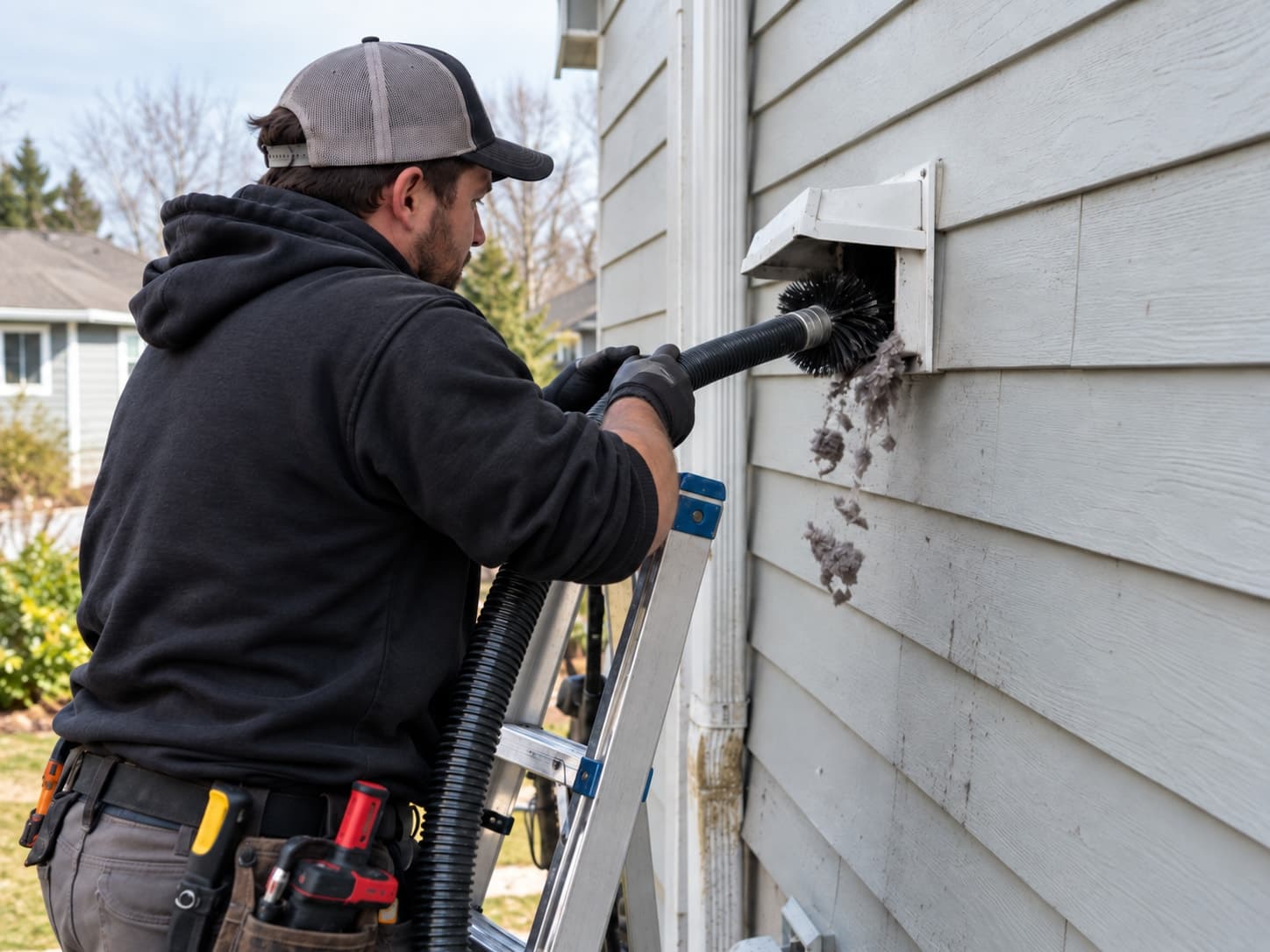
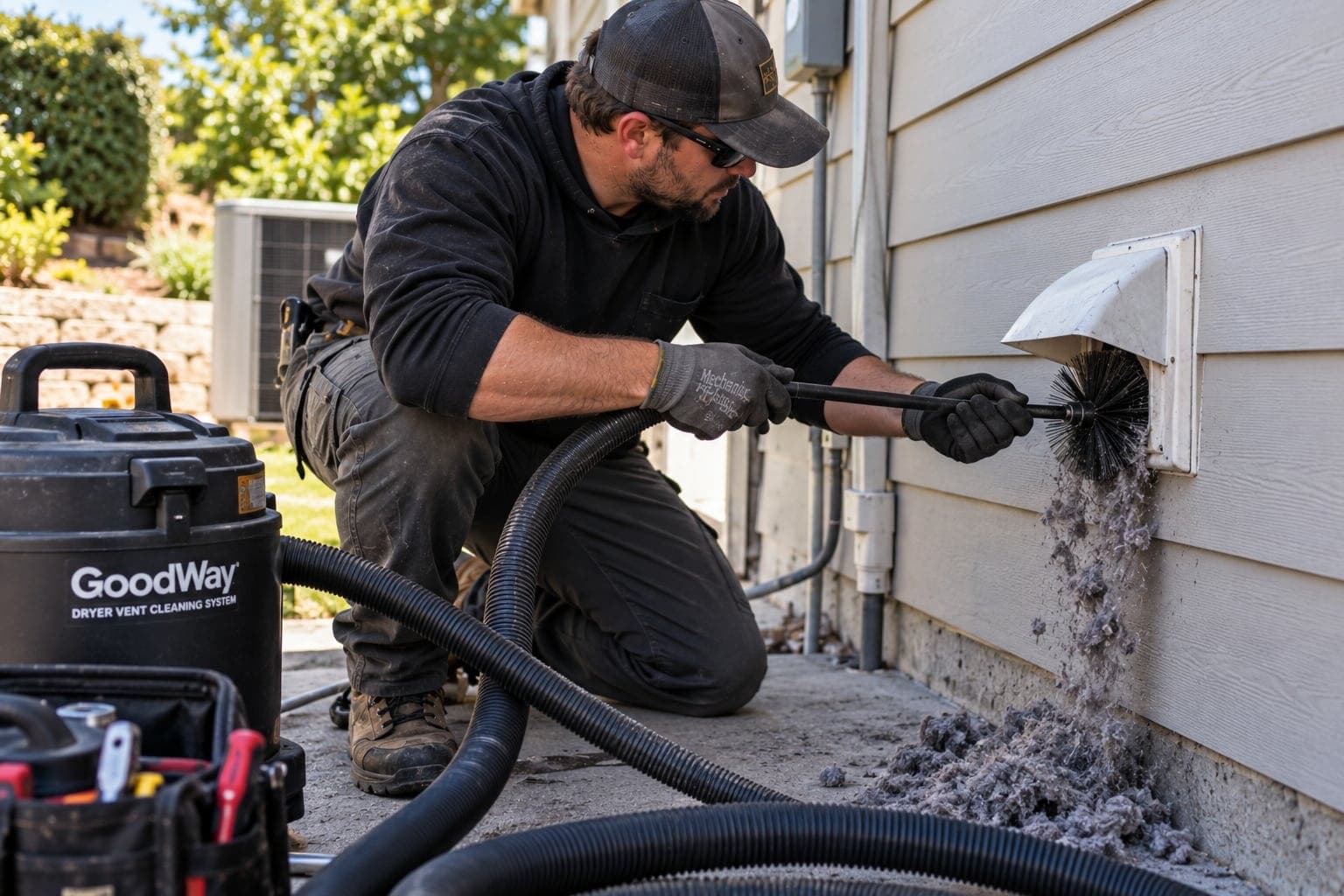
- Lint collecting on the louvers or on the wall below.
- Birds, lizards or insects inside the hood.
- Cracked or faded plastic.
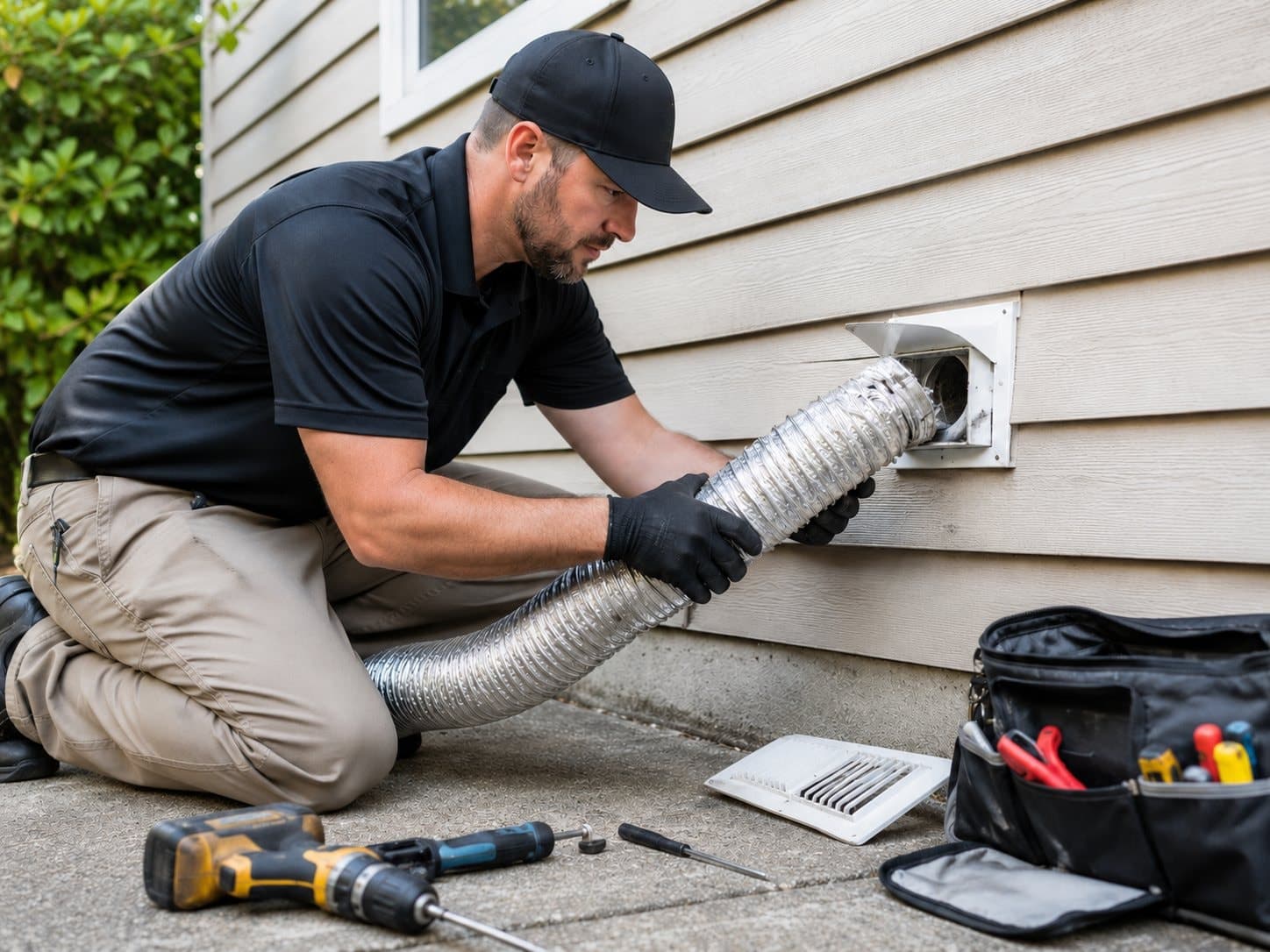
Replacement hoods and roof caps are part of dryer vent cover replacement, usually done with a cleaning of the run behind them.
Covers are the last few inches of a longer system; dryer vent duct types covers the rest, and how often dryer vents should be cleaned covers upkeep. Birds and lint at the hood often go together; see a dryer vent that keeps clogging. For hood replacements with a cleaning, local pages such as dryer vent cleaning in Winter Springs describe scheduling.
References (1)
Facts and figures on this page come from these references.