Stuck shut or stuck open
| Feature | Flap won’t open | Flap won’t close |
|---|---|---|
| What you notice | Weak or no air outside; slow drying | Flap hangs open; lint or debris inside the hood |
| Common causes | Lint packed behind it, paint or caulk, broken hinge, clogged louvers | Broken or missing flap, sun-warped plastic, lint propping it |
| Main risk | Heat and lint building up in the duct and dryer | Pests, rain and humid air entering the duct |
What you notice
- Flap won’t open
- Weak or no air outside; slow drying
- Flap won’t close
- Flap hangs open; lint or debris inside the hood
Common causes
- Flap won’t open
- Lint packed behind it, paint or caulk, broken hinge, clogged louvers
- Flap won’t close
- Broken or missing flap, sun-warped plastic, lint propping it
Main risk
- Flap won’t open
- Heat and lint building up in the duct and dryer
- Flap won’t close
- Pests, rain and humid air entering the duct
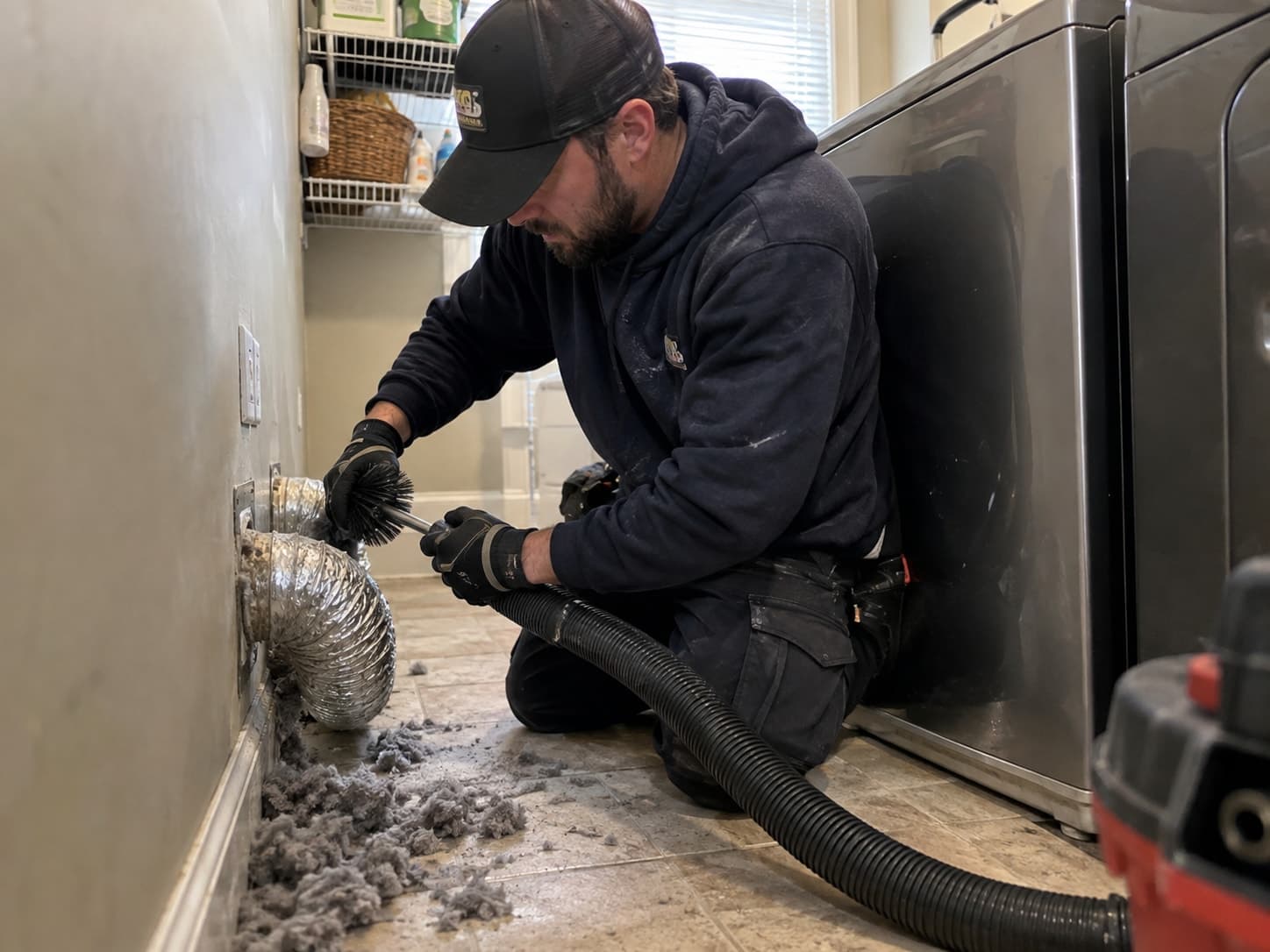
Possible causes
01Lint buildup at the termination
- What you may notice
- Lint visible around the edges, fuzz on the wall below, a flap that barely lifts.
- How it’s confirmed
- Clearing the termination and checking how much lint is in the last few feet of duct; heavy lint here usually means the whole run needs cleaning.
02Louvered or small-opening cover
- What you may notice
- Several thin louvers that stick together with lint.
- How it’s confirmed
- Replacing with a dryer-specific cover with a single damper and a larger opening.
03Paint, caulk or siding work
- What you may notice
- Problem started after the house was painted or re-sided.
- How it’s confirmed
- Freeing or replacing the flap and resealing only around the hood, not the moving parts.
04Sun-damaged or broken plastic
- What you may notice
- Brittle, cracked or faded hood; missing flap; flap that won’t hang straight.
- How it’s confirmed
- Replacing with a UV-resistant or metal cover sized for the duct.
05A screen or guard over the opening
- What you may notice
- Mesh, grille or rodent guard packed with lint.
- How it’s confirmed
- Removing it. The residential code says dryer exhaust terminations must not have screens.
06Nests or pests
- What you may notice
- Twigs or grass in the hood, chirping, insects around the vent.
- How it’s confirmed
- Clearing the nest and duct, then fitting a cover with a working damper. See a vent that keeps clogging.
Florida factors
Central Florida’s sun makes plastic vent hoods brittle faster, and wind-driven summer rain can blow into a flap that doesn’t close, soaking lint in the duct; see water in the dryer vent. Lizards, frogs, wasps and birds all take advantage of an open flap. Many homes also have the vent at ground level behind landscaping, where mulch, plants and irrigation block the flap. The Florida dryer vent code guide covers termination rules.
Safe checks you can do
- With the dryer running on heat, go outside and watch the flap. It should open fully and you should feel a strong, warm flow.
- Turn the dryer off and check that the flap closes on its own.
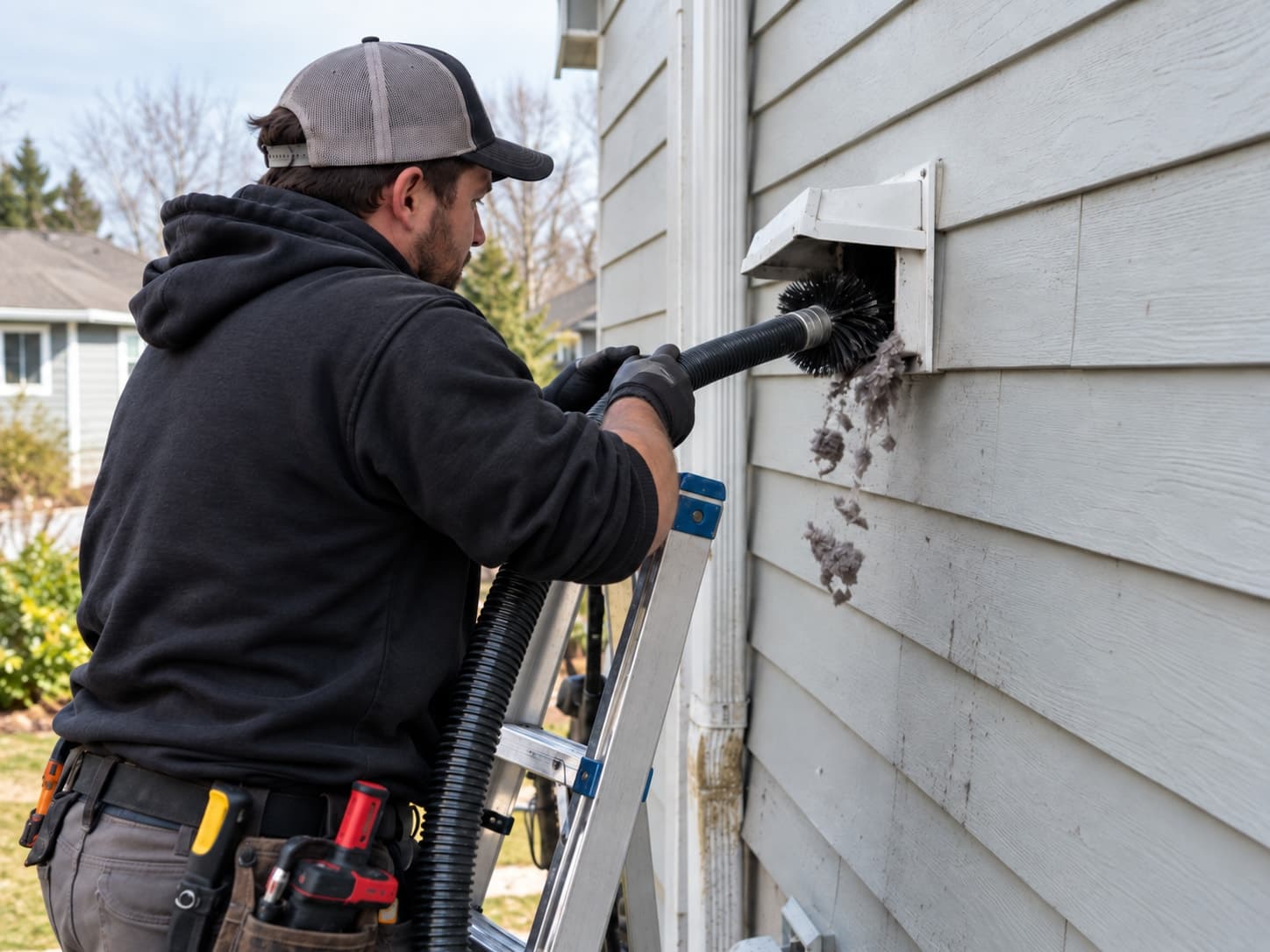
- Pull out lint you can reach by hand from the hood opening.
- Trim plants and move mulch or stored items so the flap has at least a foot of clear space.
- Look for a screen or mesh guard and note it for replacement.
- Don’t wedge the flap open or remove it to improve airflow; that invites pests and rain.
Red flags
- The flap stays shut while the dryer runs and the dryer is very hot: see a dryer that’s overheating.
- A burning smell at the dryer or the outside vent.
- Animals or nesting inside the duct.
- No air at all at the outside vent even with a clean flap: the blockage or disconnection is elsewhere.
What a cover replacement involves
Confirm the right vent
The dryer termination is confirmed with the dryer running; bath and kitchen fan hoods look similar.
Clean the end of the run
The hood and last section of duct are cleared, and the rest of the run is checked.
Fit a dryer-rated cover
A cover with a single damper, no screen, sized for the duct, and suited to the wall or siding.
Seal and test
The hood is sealed to the wall (not the moving parts) and airflow is checked.
Clear it or replace the hood
| Condition | Where it’s fixed |
|---|---|
| Lint holding the flap open or shut | dryer vent cleaning including the hood |
| Cracked, warped, painted-shut or screened hood | dryer vent cover replacement |
| Lint packed deep behind the hood | heavy lint removal |
Screens and pest guards trap lint, which is why the Florida code doesn’t allow them at a dryer exit; the different types of vent cover compares the options. Local: lint and airflow work in Altamonte Springs.
References (1)
Facts and figures on this page come from these references.