Read the pattern first
| When it smokes | Most likely cause | First thing to try |
|---|---|---|
| Only for the first few minutes | Cold flue, or cold air sinking down the flue | Warm the flue before lighting (see below) |
| When the kitchen hood, bath fans or dryer run | Negative house pressure | Turn fans off; crack a window near the fireplace |
| Every fire, from the start, getting worse | Blockage: nest, debris, heavy creosote, closed damper | Stop using it; have the flue checked |
| Mostly at the top of the opening, even with a good fire | Opening too large for the flue, or a smoke chamber problem | Try a smaller, hotter fire at the back of the firebox |
| Only on windy days, or wind from one direction | Downdraft from roof lines, trees or a taller building nearby | Note wind direction; check the cap |
| Smoldering, hissing fires with lots of smoke | Wet or unseasoned wood | Switch to dry, split hardwood |
| After the fire dies down, overnight | Cooling flue and house pressure pulling air in | Close glass doors once the fire is out |
Possible causes, most likely first
What weakens a fireplace’s draft
01Damper closed or only partly open
- What you may notice
- Smoke immediately, every time. The handle feels stiff, or doesn’t move as far as it used to.
- How it’s confirmed
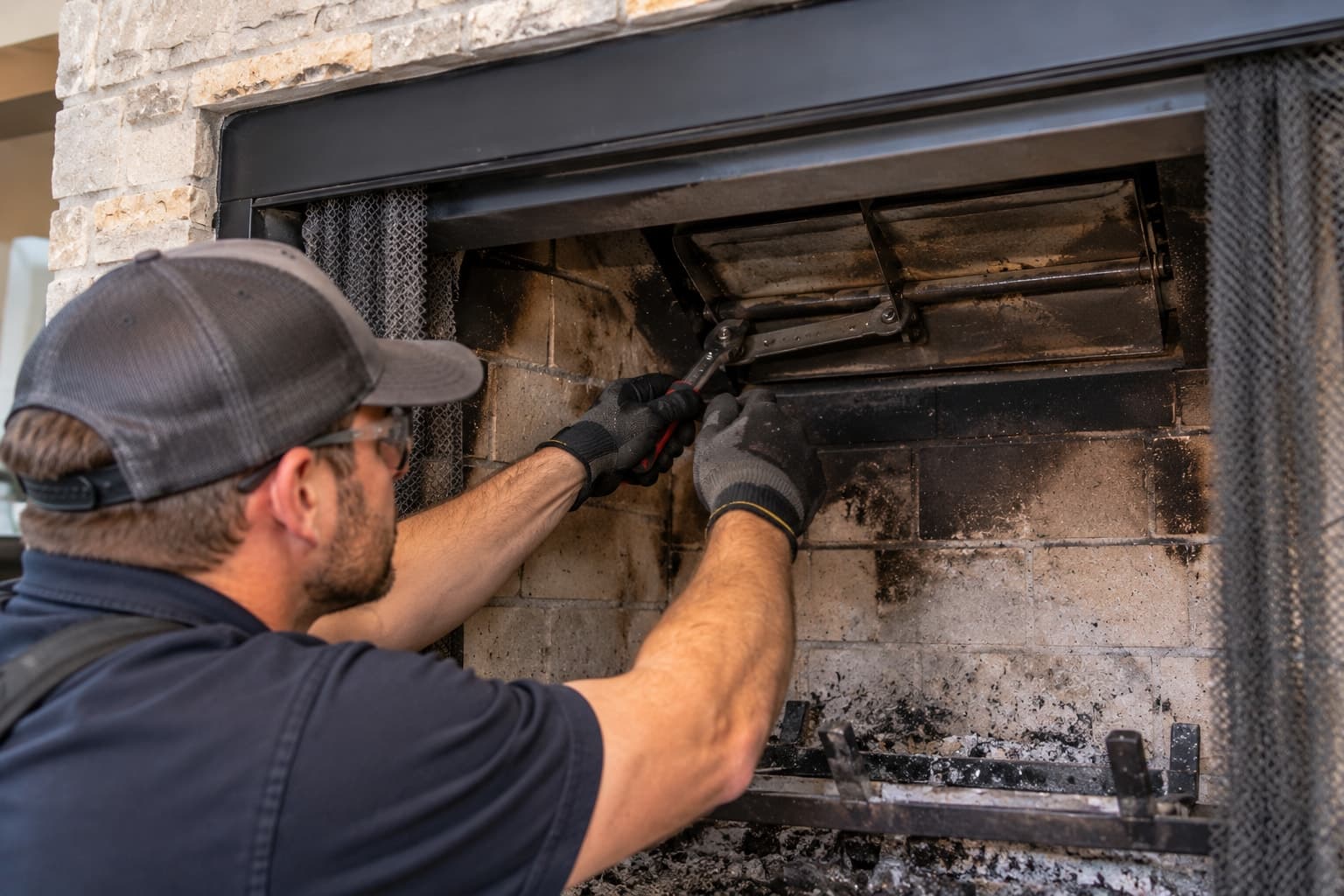
- Opening the damper fully and looking up with a light; checking the blade, pivots and frame for rust or warping.
02Nest, debris or a fallen cap
- What you may notice
- A fireplace that used to work now smokes badly. Twigs, leaves or droppings in the firebox; bird or animal activity earlier in the year.
- How it’s confirmed
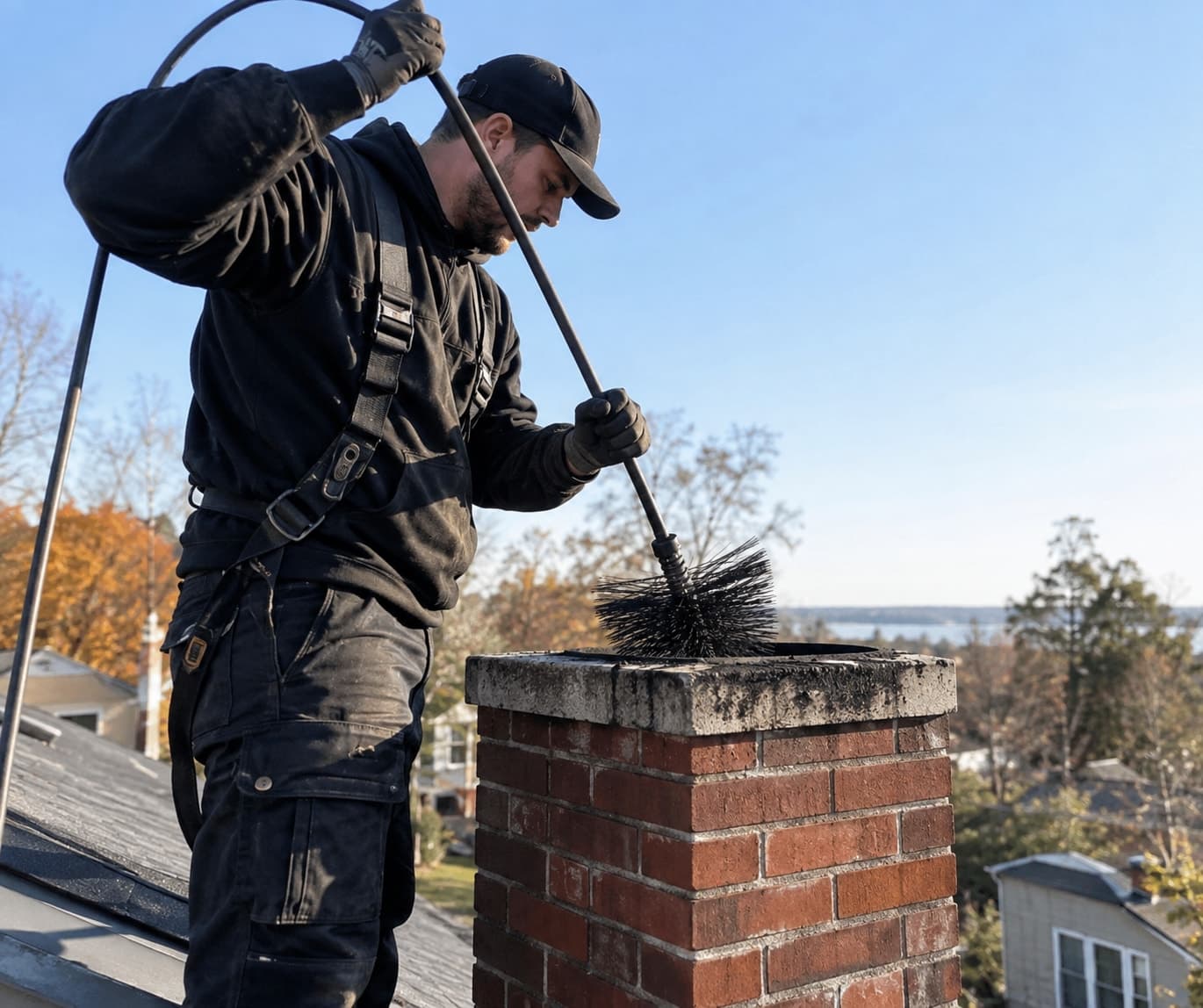
- Light check of the smoke shelf and flue, then removal from the top or bottom.
03Negative house pressure
- What you may notice
- Smoke or cold air falls down the chimney when exhaust fans, a range hood or the dryer runs. Worse in newer or recently sealed homes.
- How it’s confirmed
- Watching air movement at the opening with fans off and on, and with a window cracked.
04Heavy creosote
- What you may notice
- Thick black or shiny deposits past the damper, a strong tar smell, fires that struggle to draw.
- How it’s confirmed
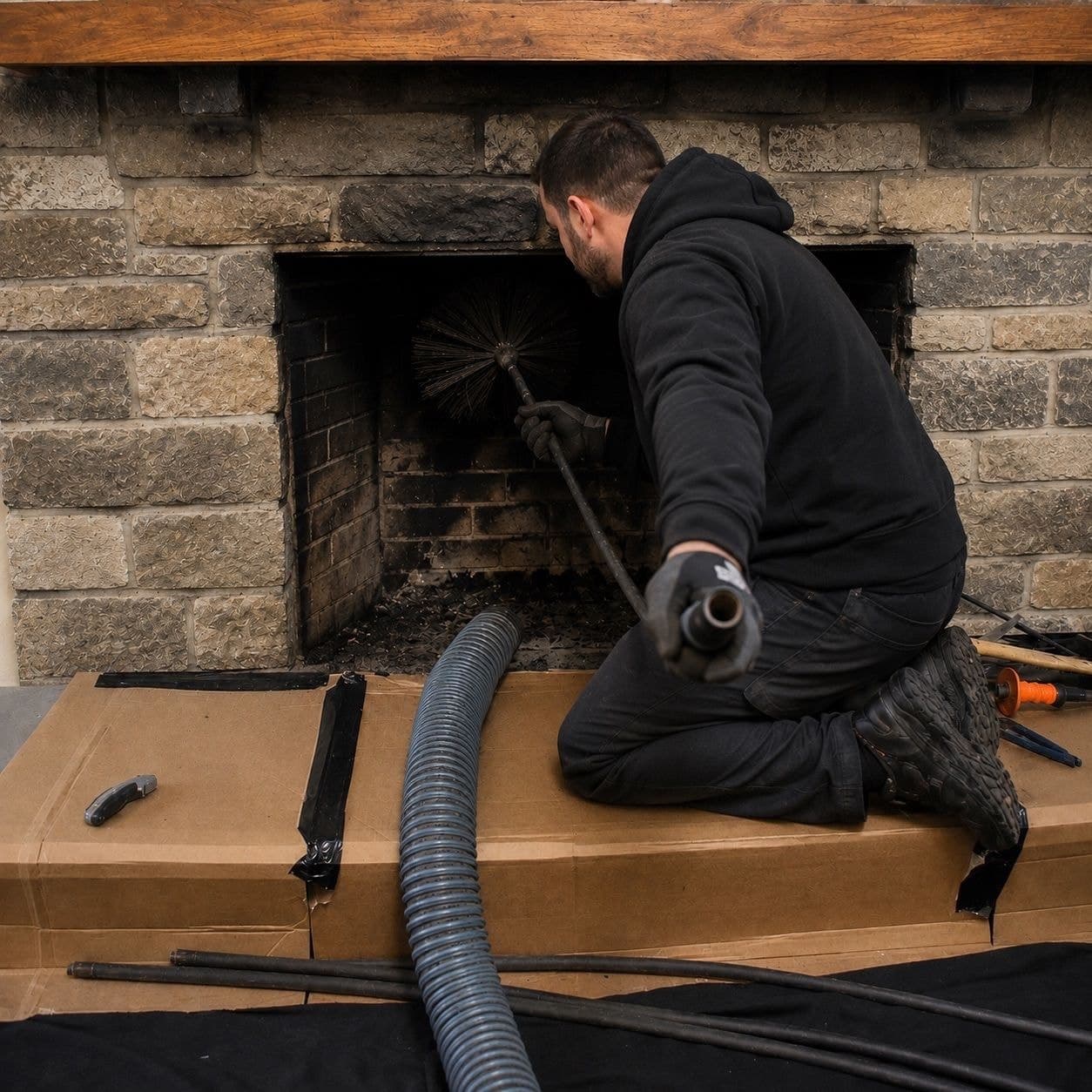
- Inspection of the flue and smoke chamber; deposits are removed by sweeping, and glazed creosote may need special treatment.
05Smoke chamber in poor condition
- What you may notice
- Smoke rolls out of the top of the opening on a masonry fireplace; rough, stepped or cracked masonry visible just above the damper.
- How it’s confirmed
- Looking at the smoke chamber walls above the damper for gaps, steps and missing mortar.
06Opening too big for the flue
- What you may notice
- A large or wide fireplace that has always smoked a little, especially with big fires.
- How it’s confirmed
- Measuring the fireplace opening and the flue and comparing the ratio.
07Chimney too short, or obstructions nearby
- What you may notice
- Smoke or downdrafts on windy days; a chimney lower than a nearby roof ridge, a second story or tall trees.
- How it’s confirmed
- Measuring the chimney’s height above the roof and against anything within 10 feet.
Cold flue and cold air
A chimney that hasn’t been used for days is full of air at outdoor temperature, and in an air-conditioned Florida house that air is often heavier than the air in the room. Light a fire under it and the smoke hits a cold plug that won’t move. Before lighting, hold a rolled, lit sheet of newspaper up near the open damper for a minute. When you feel the air start moving upward, light the fire.
Negative pressure in a tight house
A fireplace needs a steady supply of air to replace what goes up the flue. In a well-sealed house, a range hood, bath fans, a clothes dryer or leaky return ducts on the AC can pull more air out than comes in, and the easiest place for the house to get it back is down the chimney. The smoke comes with it. Turning off exhaust fans and opening a window a couple of inches near the fireplace while you burn is the quick test and often the fix. The same air movement explains why a fireplace smells on humid days when it isn’t in use.
Flue size and chimney height
Two design rules matter here. For masonry fireplaces, the Florida Building Code ties flue size to the fireplace opening: a round flue needs at least 1/12 of the opening area, a square or near-square one 1/10, and a long rectangular flue 1/8 (FBC Residential R1003.15). An opening that is too big for its flue will smoke no matter how clean it is. The code also sets chimney height: at least 3 feet above where it passes through the roof and at least 2 feet higher than any part of the building within 10 feet (R1003.9, UpCodes, FBC Residential 2023). Factory-built chimneys follow their own listing and installation manual for termination height. A chimney that falls short, or is overshadowed by a later addition or grown trees, can suffer downdrafts.
Masonry chimney and fireplace, cutaway
- 1Chimney cap. Metal lid with mesh sides over the flue opening. Keeps rain, debris and animals out.
- 2Crown. The concrete or mortar top of the masonry, sloped to shed water away from the flue.
- 3Flue liner. Clay tile or metal lining that carries smoke up and protects the masonry from heat.
- 4Flashing. Metal that seals the joint between the chimney and the roof.
- 5Brick & mortar. The chimney structure. Mortar joints and brick faces absorb water when they wear.
- 6Smoke chamber. The sloped transition that funnels smoke from the firebox into the flue.
- 7Damper. Metal plate at the throat (or a sealing lid on top) that closes the flue when not in use.
- 8Firebox. Where the fire burns. Firebrick laid in heat-resistant mortar.
- 9Hearth. Non-combustible floor extension in front of the fireplace opening.
Wood and fire-building
Wet or green wood spends its energy boiling off water, which makes a cool, smoky fire and weak draft. Bundled firewood isn’t always dry, and wood left uncovered in humid weather picks moisture back up. Buy it well ahead of time, split it, keep it off the ground under cover, and build smaller fires toward the back of the firebox.
Safe checks you can do
Try these before the next fire
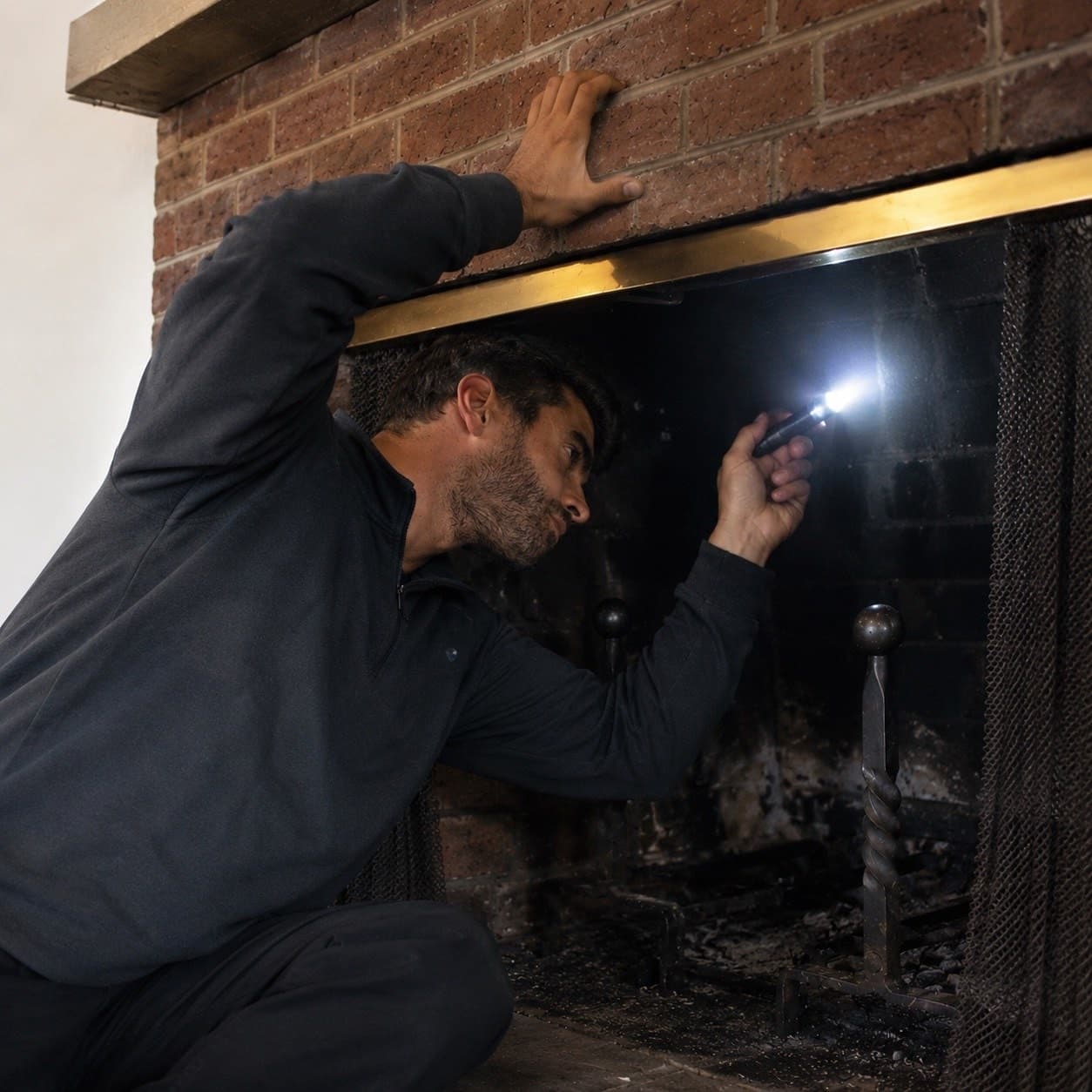
- Open the damper and shine a flashlight up: can you see daylight or the cap above a straight flue? Is anything hanging down?
- Check that the damper handle is fully in the open position and the blade actually moved.
- Turn off every exhaust fan and the dryer, and crack a window near the fireplace.
- Warm the flue with a rolled newspaper before lighting.
- Burn a small fire of dry, split hardwood set toward the back wall.
- From the ground, compare the chimney top with nearby roof ridges and trees.
- Test your smoke and CO alarms. CPSC recommends testing them monthly and replacing batteries yearly (CPSC).
Fixes that help, and what each one is for
| Feature | Smoke guard | Glass doors |
|---|---|---|
| What it is | A metal strip across the top of the opening that lowers it | A framed glass front across the opening |
| Helps with | An opening that is too tall for the flue | Room air being pulled down or out; spillage after the fire dies down |
| Doesn’t fix | Blockages, a stuck damper, house pressure | A blocked or undersized flue while the doors are open |
| Good to know | Often tested with a temporary strip first to find the right height | Must be rated for the fireplace; follow the maker’s guidance on burning with doors open or closed |
What it is
- Smoke guard
- A metal strip across the top of the opening that lowers it
- Glass doors
- A framed glass front across the opening
Helps with
- Smoke guard
- An opening that is too tall for the flue
- Glass doors
- Room air being pulled down or out; spillage after the fire dies down
Doesn’t fix
- Smoke guard
- Blockages, a stuck damper, house pressure
- Glass doors
- A blocked or undersized flue while the doors are open
Good to know
- Smoke guard
- Often tested with a temporary strip first to find the right height
- Glass doors
- Must be rated for the fireplace; follow the maker’s guidance on burning with doors open or closed
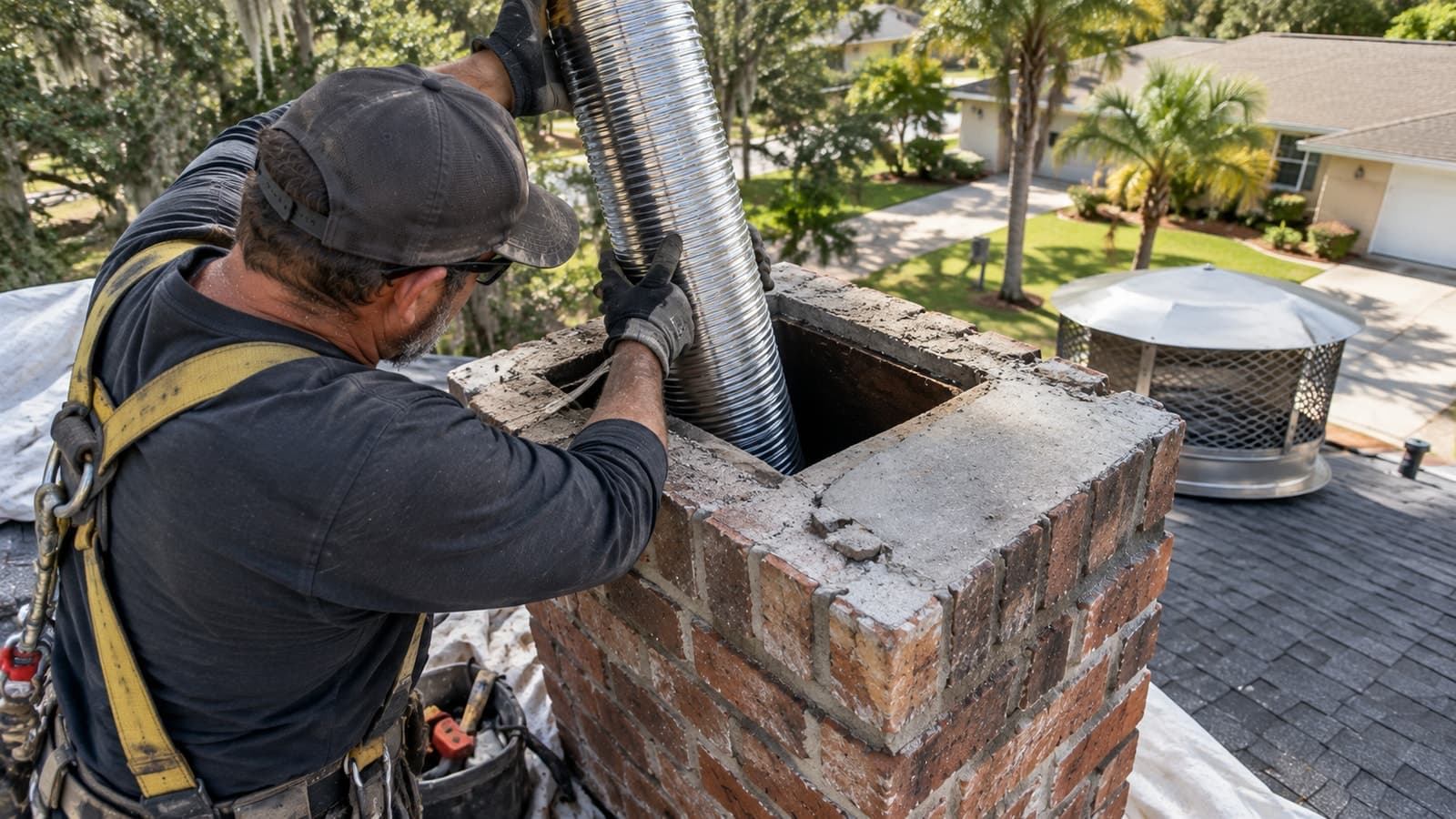
Other fixes follow the cause: sweeping or blockage removal, repairing or replacing the damper, parging a rough smoke chamber, a cap that resists wind-driven downdrafts, or, for a chimney that is too short, an extension. Glass doors are covered on our fireplace glass doors page.
Red flags
- A CO alarm sounding, or headaches, dizziness or nausea while the fire burns: get everyone outside and call 911.
- Smoke coming out anywhere other than the opening, such as around the mantel, through the wall or in another room.
- Smoke on the first fire after birds or animals were in the chimney; see birds in the chimney.
- Loud roaring, popping or dense smoke from the chimney top: signs of a possible chimney fire. Get out and call 911.
- Black smoke stains on the face of the fireplace or the mantel from past fires.
What professional diagnosis involves
Go over the pattern
When it smokes, which fans were on, the wind that day and what you burn. That narrows the list quickly.
Inspect the draft path
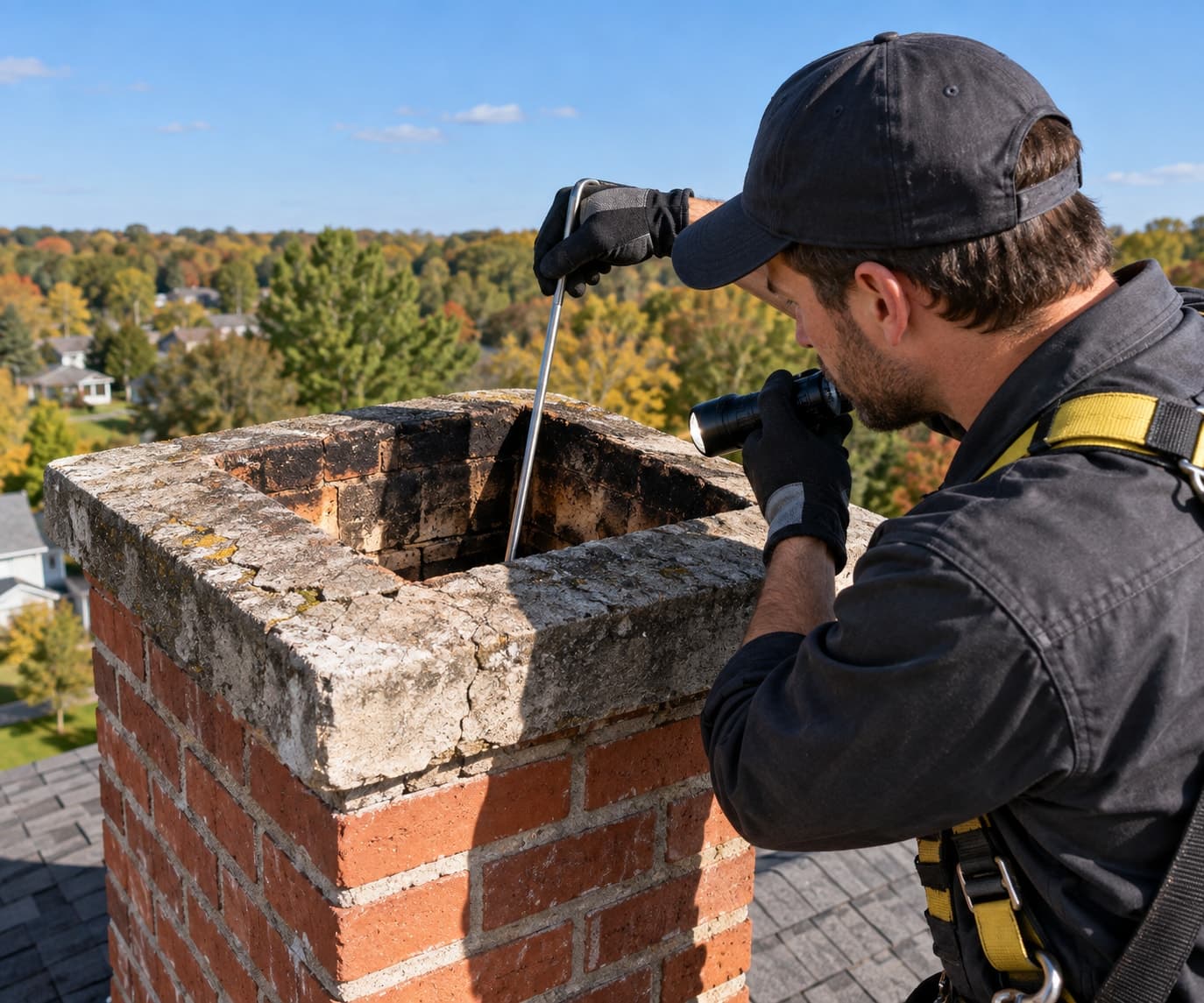
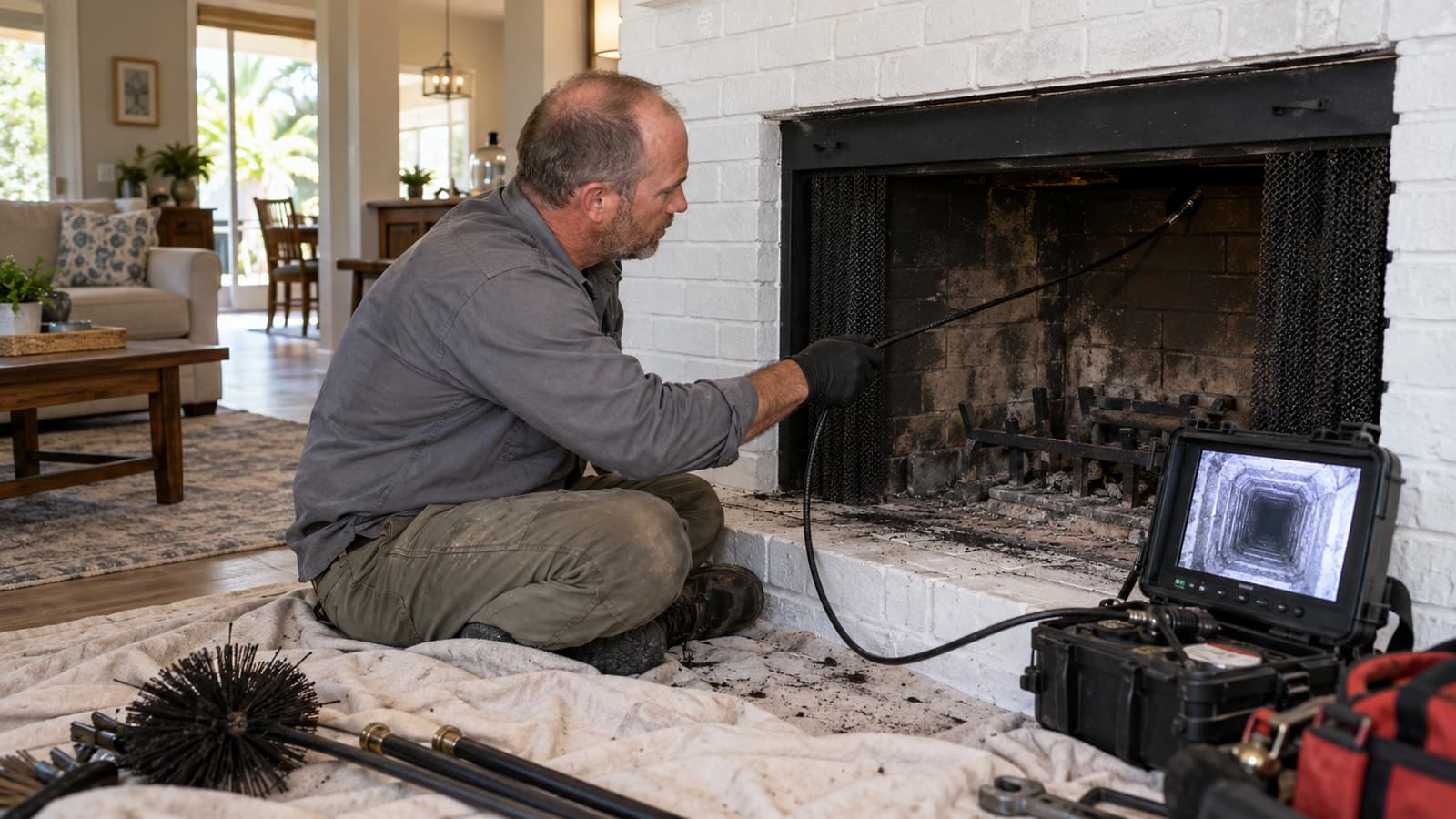
Damper, smoke chamber and flue are checked with a light for blockages, creosote, damaged liners and rough masonry.
Measure
Fireplace opening against flue size, and chimney height against the roof and anything nearby.
Test the house
Air movement at the opening is checked with exhaust fans on and off to see whether house pressure is a factor.
Recommend the fix
Cleaning, blockage removal, damper or smoke chamber repair, a smoke guard, doors or a taller chimney, depending on what the checks show. A chimney and fireplace inspection covers all of this in one visit.
Which fix for which smoke problem
| Confirmed cause | Where it’s fixed |
|---|---|
| Blocked or dirty flue | a chimney sweep or blockage removal |
| Damper stuck partly closed | damper repair |
| Rough, stepped smoke chamber | smoke chamber repair |
| Opening too big for the flue, or firebox damage | fireplace repair |
| Cause not obvious | a chimney and fireplace inspection first |
Smoke that only appears when exhaust fans or the AC run is an air-pressure problem, covered in air coming out of the fireplace. What a smoke chamber does explains the most overlooked cause. Local: fireplace repair in Winter Park or inspection visits in Kissimmee.
References (2)
Facts and figures on this page come from these references.