One city, two very different kinds of chimney
Census figures show why a single “Orlando chimney” answer doesn’t work. Citywide, the median home was built in 1992, about one in five homes predates 1970 and roughly four in ten were built in 2000 or later (Census ACS 2020–2024 via Census Reporter). Those averages hide two clusters: a pre-war and mid-century core around downtown, and large post-2000 districts on the east and southeast edges.
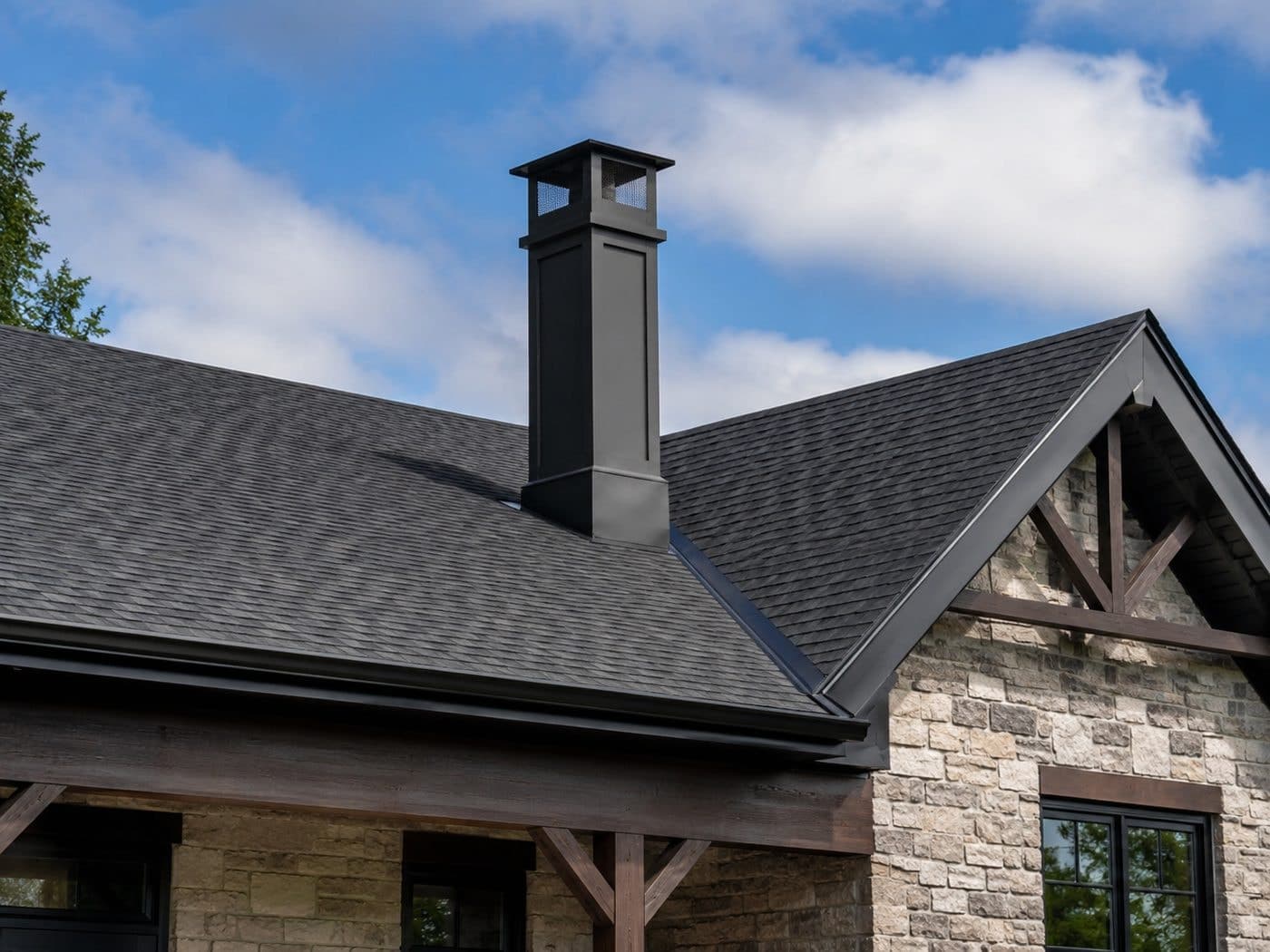
Housing age is the best clue we have to what sits on your roof. The older core is where solid brick chimneys with clay tile liners and mortar crowns are most likely. Newer neighborhoods more often have a factory-built fireplace: a metal firebox and metal flue inside a framed chase that’s wrapped in siding or stucco and topped with a sheet-metal chase cover. That is an inference from build dates, not a count of fireplaces, so we confirm the type at the first visit.
Orlando neighborhoods and their chimneys
The table below uses Census ZIP Code Tabulation Areas (ZCTAs), the closest geography with reliable housing-age estimates. A ZCTA follows postal delivery areas, not neighborhood lines, so each row approximates the named neighborhoods and also takes in the streets around them. Some of the best-known names on Orlando mailing addresses are also outside city limits: Dr. Phillips and Bay Hill are separate unincorporated census-designated places in Orange County, and Avalon Park is an unincorporated planned community east of the city.
| ZIP and neighborhoods | Jurisdiction of the named area | Median year built | Built before 1980 | Built 2000+ | Detached homes | Median home value |
|---|---|---|---|---|---|---|
| 32804 College Park | City of Orlando | 1964 | 67.3% | 22.8% | 62.1% | $561,000 |
| 32803 Audubon Park, Colonialtown | City of Orlando | 1965 | 64.4% | 22.5% | 54.9% | $455,600 |
| 32806 Delaney Park, Lake Copeland, SoDo | City of Orlando | 1967 | 72.8% | 11.3% | 67.2% | $441,300 |
| 32801 Downtown, Thornton Park, Lake Eola Heights | City of Orlando | 2003 | 28.0% | 58.1% | 12.0% | $428,000 |
| 32814 Baldwin Park | City of Orlando | 2007 | 5.8% | 86.8% | 23.3% | $754,300 |
| 32827 Lake Nona | City of Orlando | 2012 | 8.2% | 89.4% | 60.0% | $662,200 |
| 32832 Lake Nona (southeast) | City of Orlando | 2013 | 1.4% | 93.6% | 56.5% | $497,200 |
| 32835 MetroWest | City of Orlando | 1994 | 11.2% | 32.8% | 44.2% | $349,100 |
| 32828 Avalon Park | Unincorporated Orange County | 2002 | 3.1% | 61.8% | 61.4% | $432,100 |
| 32836 Dr. Phillips, Bay Hill | Unincorporated Orange County (CDPs) | 2001 | 5.2% | 51.9% | 57.3% | $677,800 |
What each housing era means for the chimney, fireplace and dryer vent
| Era | Where it dominates | Likely fireplace and chimney | Check first | Dryer vent pattern |
|---|---|---|---|---|
| 1920s–1940s | 32804, parts of 32803 and 32806; the historic districts | Site-built masonry: brick chimney with clay tile liner, or in the oldest houses possibly no liner | Liner joints, crown, top-course mortar, flashing after reroofs | Laundry often added later in a garage, porch or addition; check the duct material and route |
| 1950s–1970s | 32803 and 32806 (median build years 1965–1967) | Mostly brick on single-story ranch houses; some early factory-built units | Flashing on low-slope roofs, damper, flue tiles | Short wall vents, often with an old foil or vinyl hose behind the dryer |
| 1980s–1990s | 32835 MetroWest; older parts of 32836 | Factory-built fireplaces in framed chases become common; masonry in custom homes | Chase cover rust, storm collar, chase siding | Condo and apartment runs through walls and ceilings |
| 2000 and later | 32814, 32827, 32832, 32828, 32801, much of 32836 | Factory-built wood or gas units in framed chases; many homes have none | Chase cover slope and seams, termination cap | Upstairs or interior laundry, long runs, some ending on the roof |
Two rows need a caveat. ZIP 32801 mixes downtown towers with older bungalows around Lake Eola Heights and Thornton Park, and only 12% of its homes are detached, so the 2003 median says little about the houses that actually have chimneys. ZIP 32836, covering Dr. Phillips and Bay Hill, has a 2001 median and only 5.2% of homes from before 1980, so chimneys on pre-1980 houses are uncommon there. A ZIP row describes the odds on a street, never the house itself.
The historic core: brick, mortar and older roof lines
The City of Orlando has six local historic districts: Downtown, Lake Cherokee, Lake Copeland, Lake Eola Heights, Lake Lawsona and Colonialtown South (City of Orlando). Around them are neighborhoods that aren’t districts but share the same era of construction.
College Park (32804)
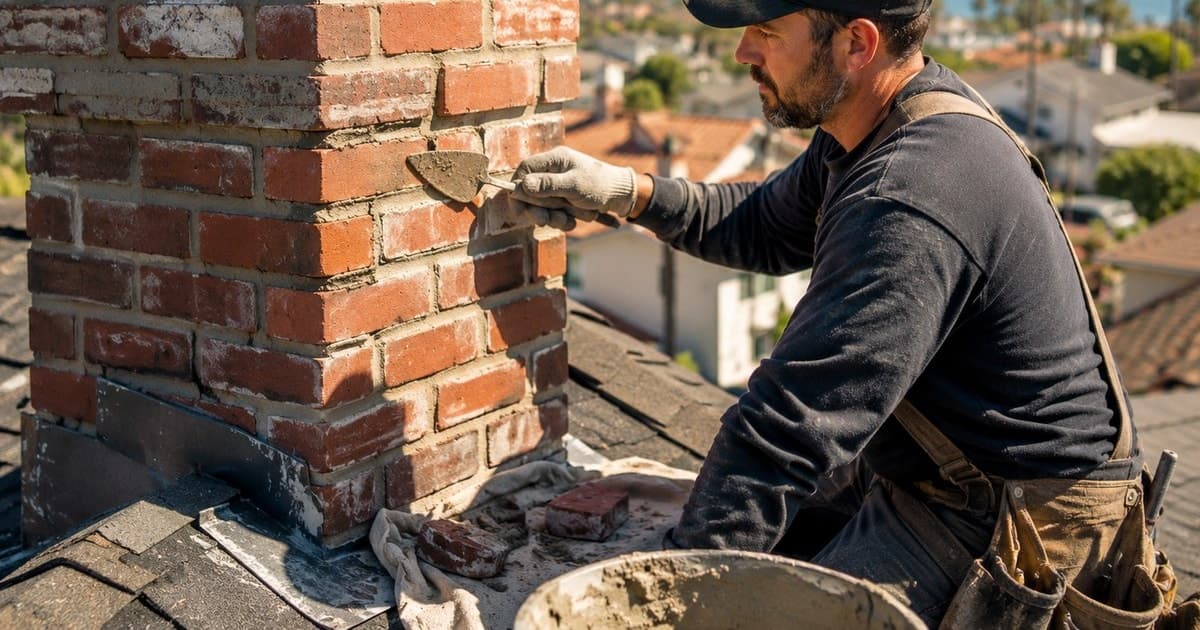
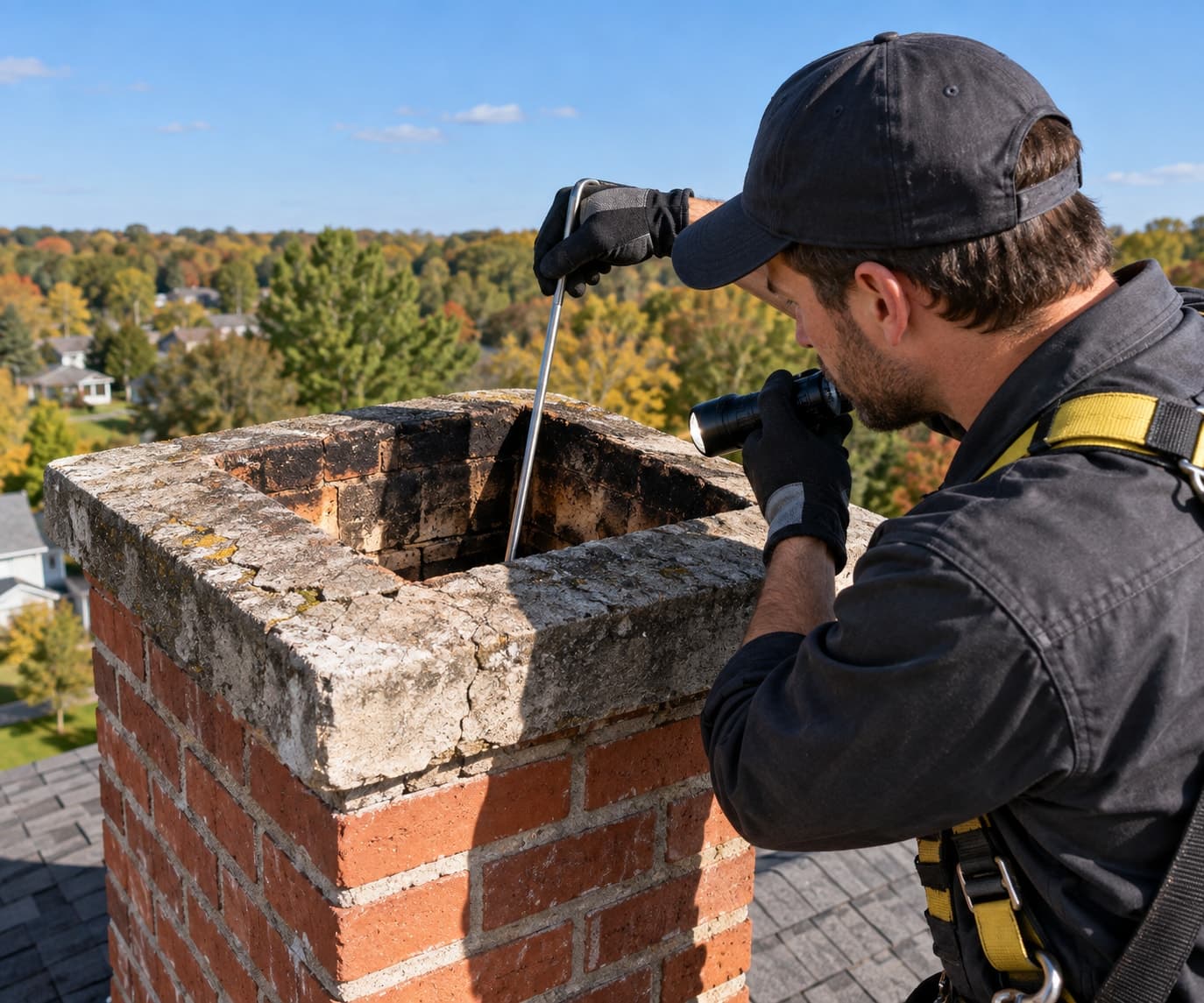
College Park grew mostly in the 1920s–1940s, with Craftsman and Mediterranean Revival bungalows (Orange County Regional History Center). Its ZIP has a median build year of 1964 and 57.7% of homes from before 1970. On chimneys of that age we look first at the crown, the mortar joints in the top courses, and the flashing where brick meets a roof that has probably been replaced several times. A cracked crown or a flashing detail that didn’t survive the last reroof lets rain straight into the brick.
Lake Eola Heights and Thornton Park
Lake Eola Heights is one of the city’s designated historic districts, with roughly 570 buildings. Thornton Park sits beside it, and its ZIP (32801) is mostly downtown condos: only about 12% of homes there are single-family detached, and the median build year is 2003. So the chimneys on the older houses are a small, distinct group. A chimney on a house of that age may have sat unused for years, and it’s worth a full look at the flue before anyone lights a fire in it again.
Delaney Park and Lake Copeland (32806)
ZIP 32806 has the oldest profile of the Orlando ZIPs we track: 72.8% of homes predate 1980 and only 11.3% were built after 2000. Lake Copeland is a local historic district. Here the usual findings are clay flue tiles with cracked or missing joints, dampers rusted open or shut, and chimneys that have been painted or stuccoed over, which can trap moisture in the brick.
Audubon Park (32803)
Audubon Park is mostly mid-century; its ZIP’s median home was built in 1965. Ranch houses from that period often have a single brick chimney on an exterior wall with a low-slope roof around it. Low slopes shed water slowly, so the flashing and the cricket (if there is one) matter more than on a steep roof.
Historic district? Check with the City before exterior changes
In Orlando’s historic districts, exterior modifications need a Certificate of Appropriateness (City of Orlando). Whether a particular chimney job counts, such as rebuilding a crown, adding a cap or changing the brick or stucco finish, is a question for the City’s Historic Preservation staff. Ask them before exterior work is scheduled; interior sweeping and inspection don’t change the outside of the house.
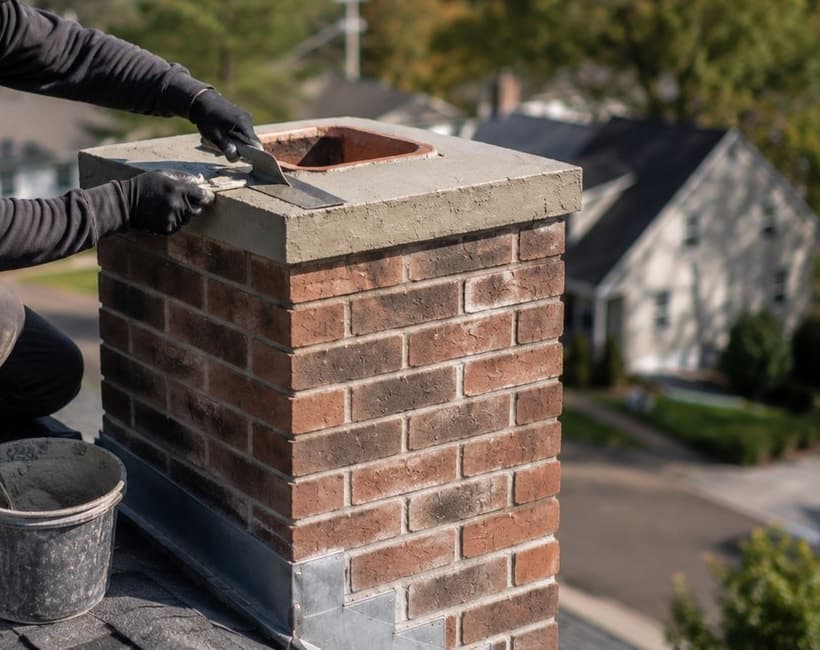
Newer neighborhoods: chases, chase covers and long dryer runs
Baldwin Park (32814)
Baldwin Park was built on the former Naval Training Center site, and its ZIP shows 86.8% of homes from 2000 on, with a median home value of $754,300. Fewer than a quarter of homes are detached, so many residents live in townhomes and condos where the dryer vent may run through an interior wall or up to the roof. In the houses that have fireplaces, gas units and framed chases are more likely than masonry.
Lake Nona (32827 and 32832)
Lake Nona is almost entirely new: 89.4% and 93.6% of homes in its two ZIPs were built since 2000. Even a young chase cover can rust or hold water if it was made flat without a slope or cross-break. For two-story homes, the laundry is often upstairs or in the interior, which means longer dryer ducts, sometimes ending on the roof. The Florida residential code caps a dryer exhaust duct at 35 feet of developed length, reduced for every fitting, and requires a backdraft damper with no screen at the outlet (FBC-Residential M1502). Lake Nona is part of the City of Orlando but has its own community page with more detail.
Avalon Park (32828, unincorporated Orange County)
Avalon Park’s ZIP has a median build year of 2002. Homes from the 1990s–2000s there are reaching the age when original sheet-metal chase covers and storm collars start to show rust streaks down the siding, a sign that water is sitting on top of the chase.
MetroWest (32835)
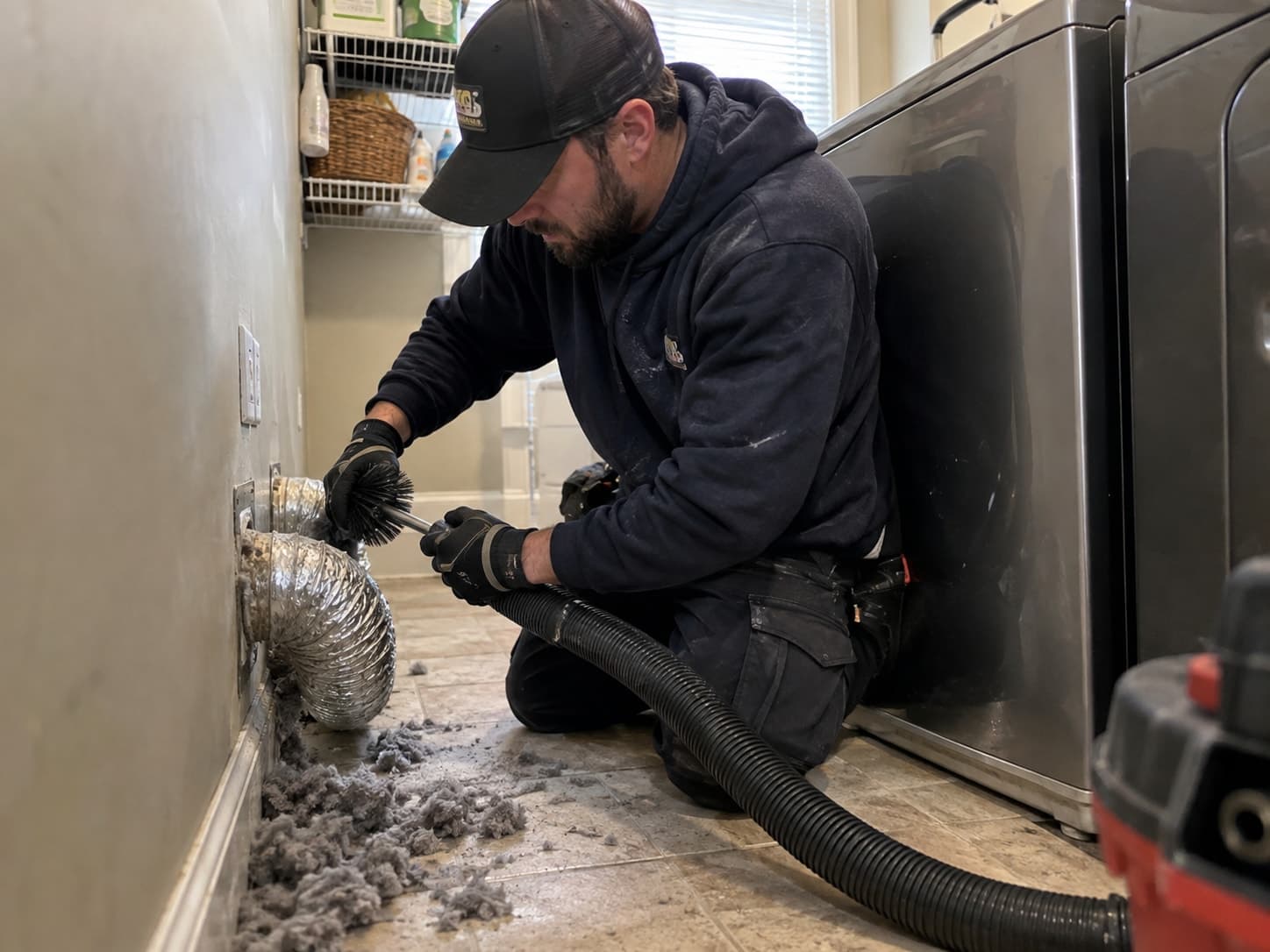
MetroWest is a 1990s area with many condos and apartments (44% detached). For owners and associations there, the service need is usually dryer vents more than fireplaces: long shared-wall runs, crushed transition hoses behind stacked units and lint-clogged wall caps.
What Orlando’s weather does to a chimney
Water intrusion is one of the most important chimney problems for Central Florida homes, whatever the neighborhood. According to NWS Melbourne, Orlando’s rainy season has a median start of May 27, and the heaviest rain falls June through September in afternoon sea-breeze storms (NWS Melbourne). Big storms add a different kind of test: during Hurricane Ian, Orlando International Airport logged 12.49 inches of rain in 24 hours and 22.42 inches over the event (Spectrum News 13), and Hurricane Milton brought an 86 mph gust at Orlando (ClickOrlando).
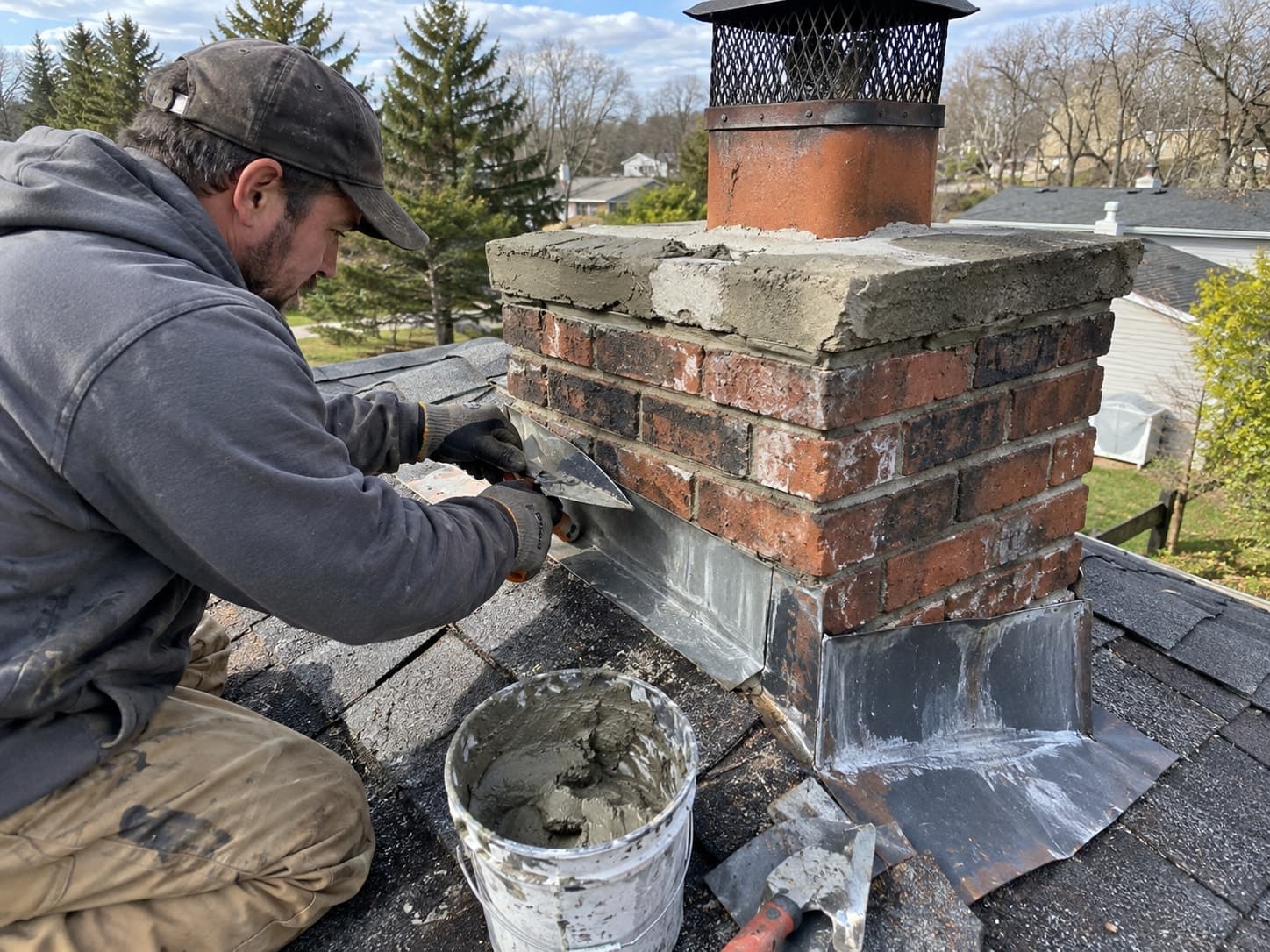
A brick chimney and a framed chase fail differently under that load. Brick absorbs water through a cracked crown and releases it into the attic or around the firebox. A chase usually fails at the top, where a rusted or flat cover sends water down the metal flue or into the framing. After a named storm, a post-storm chimney inspection checks both the outside and the flue for damage you can’t see from the yard.
Where to start, by neighborhood
Each of the core services has its own City of Orlando page with the process and what a visit involves. This list matches them to the situations above.
- Historic core with a brick chimney: start with an Orlando chimney inspection that includes the flue, then plan crown, mortar or liner repairs if the inspection finds problems.
- Water stains near any fireplace, in any neighborhood: leak tracing across the city finds the entry point before anything is sealed.
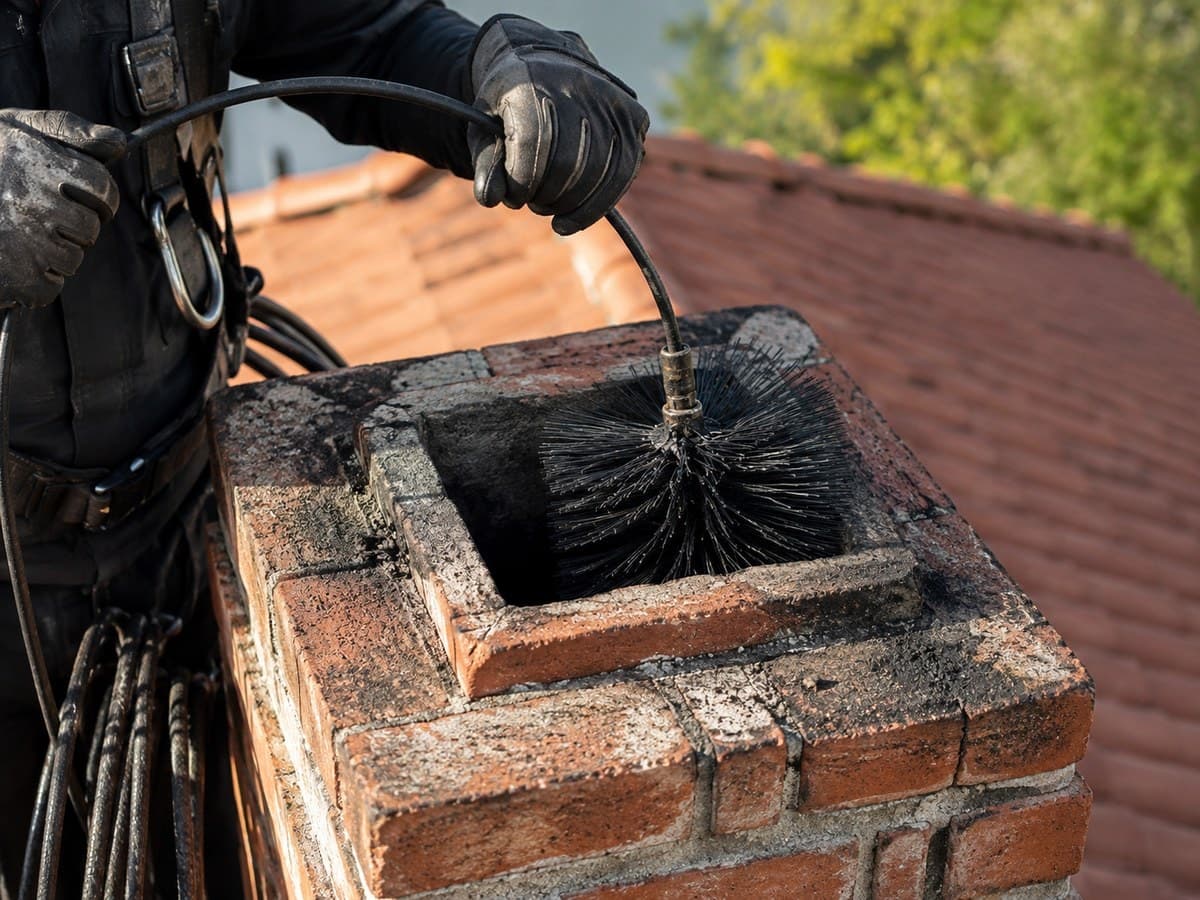
- A fireplace used a few times a winter: chimney sweeping in Orlando before the cool months, or a fuller chimney cleaning when nests, odors or heavy deposits are involved.
- A firebox, damper or door that has given up: fireplace repair for Orlando homes, masonry or factory-built.
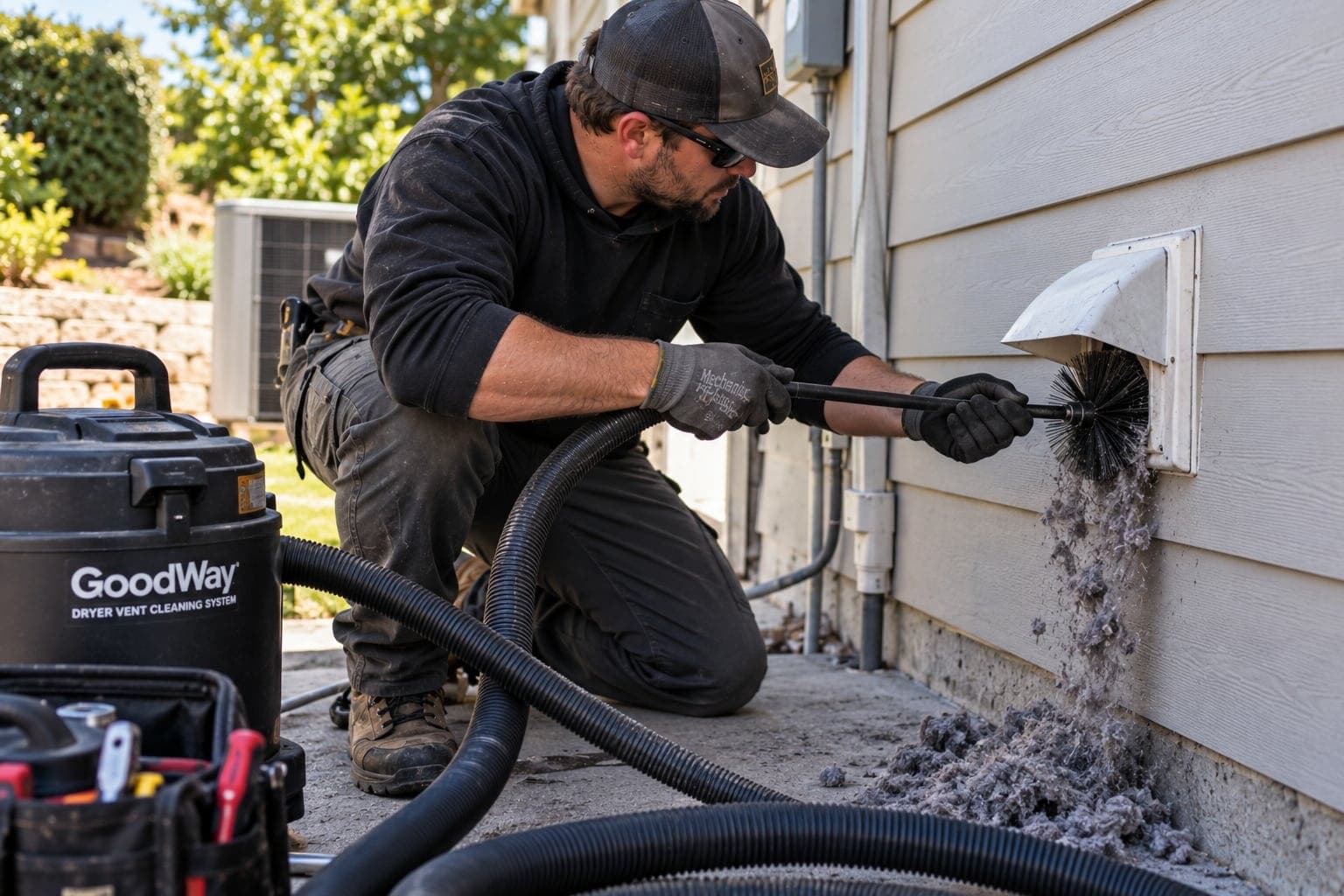
- Single-story homes and condos with slow drying: dryer vent cleaning in the city, including the outside hood.
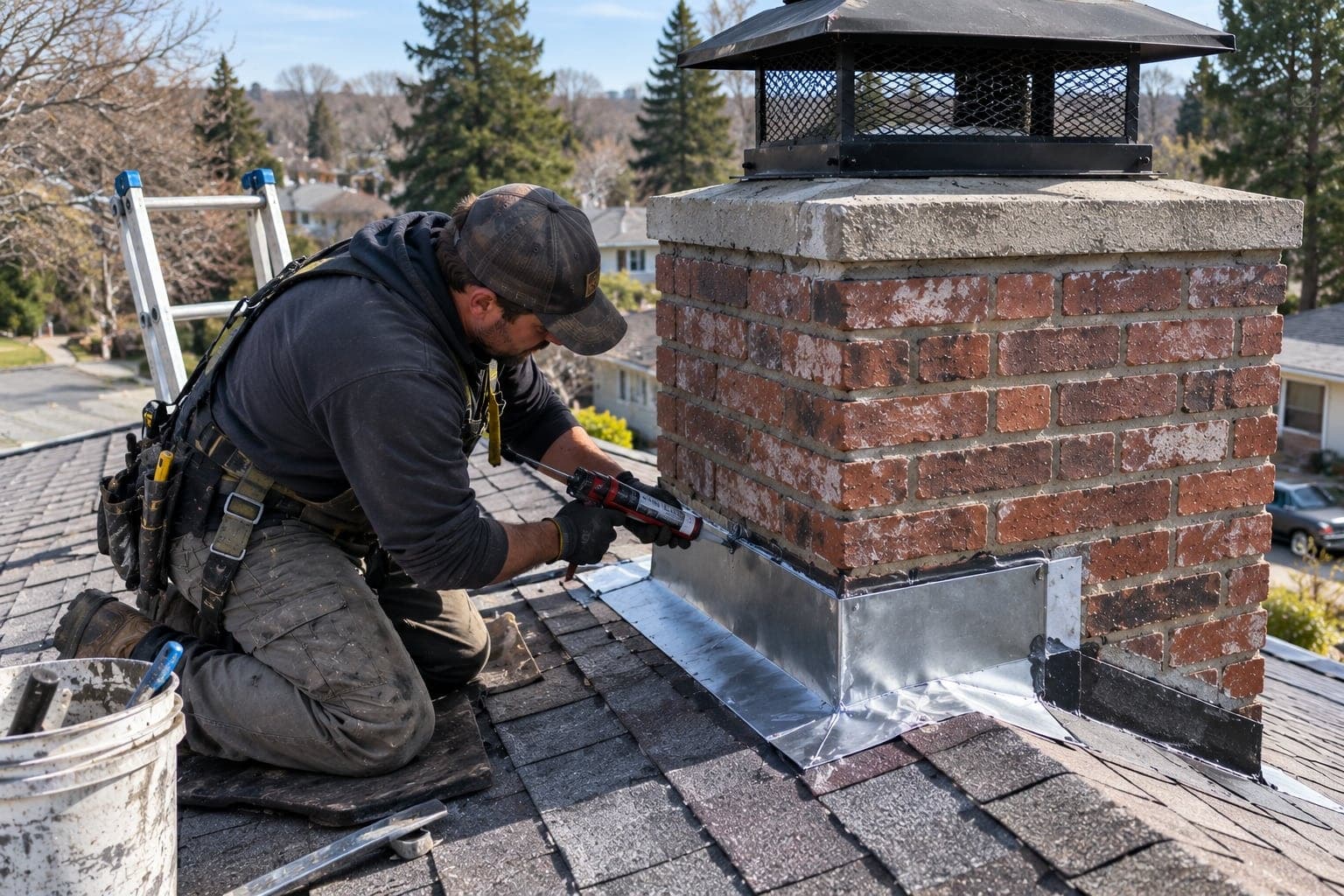
- Rust streaks on siding below a chase: usually a chase cover replacement job.
- Two-story home with a roof-terminated dryer vent: roof dryer vent cleaning clears the full run, not just the lint trap end.
- Buying an older home near Lake Eola or Lake Copeland: a real-estate chimney inspection covers the flue interior that a general home inspection doesn’t have to.
References (21)
Facts and figures on this page come from these references.
- 1Census Reporter: Orlando city, ACS 2020–2024
- 2Census Reporter: ZIP 32804, ACS 2020–2024
- 3Census Reporter: ZIP 32803, ACS 2020–2024
- 4Census Reporter: ZIP 32806, ACS 2020–2024
- 5Census Reporter: ZIP 32801, ACS 2020–2024
- 6Census Reporter: ZIP 32814, ACS 2020–2024
- 7Census Reporter: ZIP 32827, ACS 2020–2024
- 8Census Reporter: ZIP 32832, ACS 2020–2024
- 9Census Reporter: ZIP 32828, ACS 2020–2024
- 10Census Reporter: ZIP 32835, ACS 2020–2024
- 11Census Reporter: ZIP 32836, ACS 2020–2024
- 12Wikipedia: Dr. Phillips, Florida (CDP)
- 13Wikipedia: Bay Hill, Florida (CDP)
- 14Wikipedia: Avalon Park, Florida
- 15City of Orlando: SODO District Main Street
- 16City of Orlando: Historic Preservation Districts
- 17Orange County Regional History Center: A College Park Century
- 18NWS Melbourne: Florida Rain Machine
- 19Spectrum News 13: Ian, a historic storm for Central Florida
- 20ClickOrlando: Strongest winds from Hurricane Milton
- 21Florida Building Code, Residential 2023, Chapter 15 (M1502)