On this page
What this page is and is not
We service, repair and inspect the makes listed here. We are not an authorized dealer for any of them, we are not factory trained or factory certified by any manufacturer, and we do not administer manufacturer warranties. If a unit is still under warranty, going through the dealer who sold it is usually the better route and we will say so.
Find the rating plate first
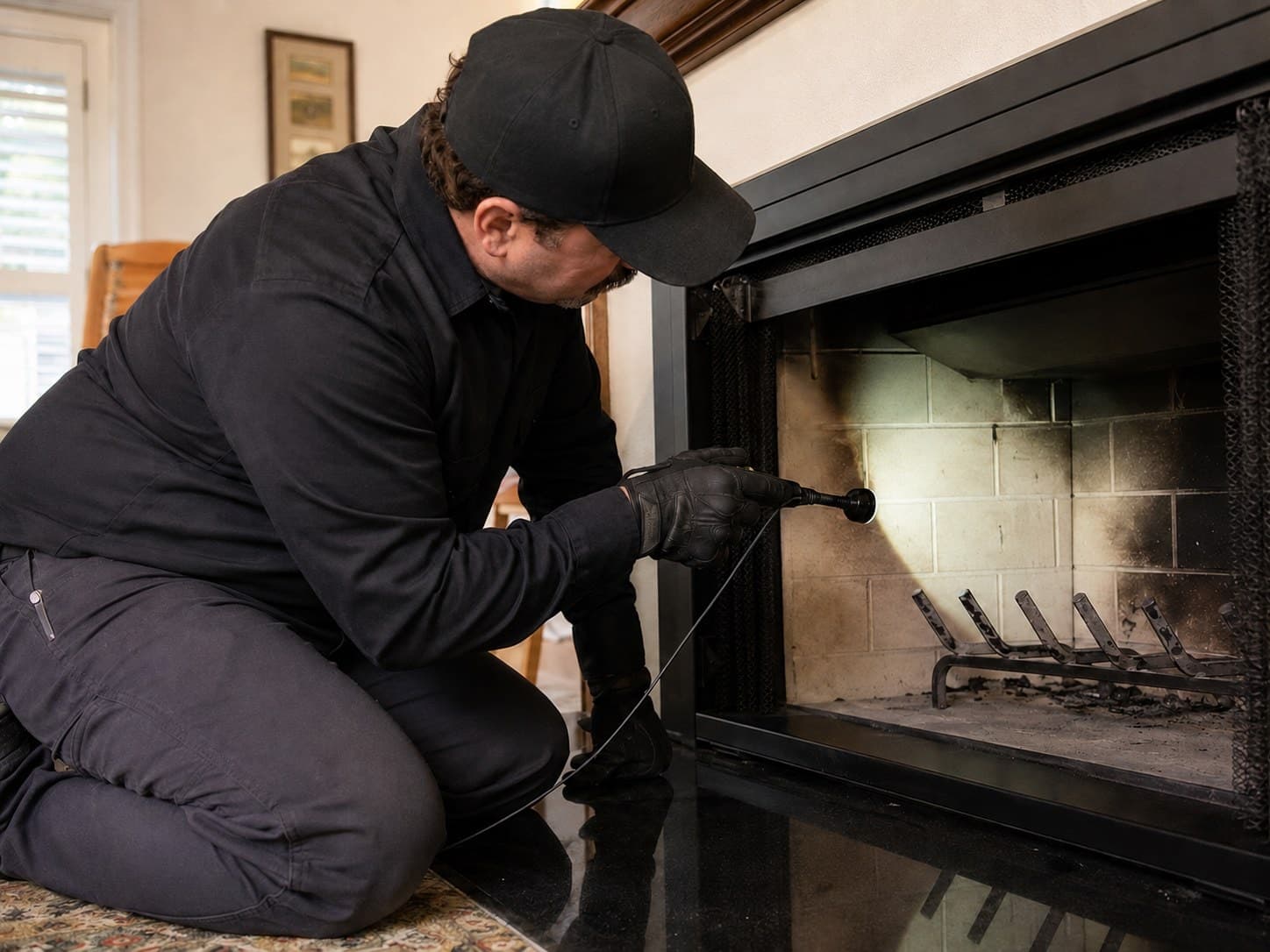
Every factory-built fireplace carries a metal or foil rating plate with the manufacturer, the model number and the listing. It tells you what the unit is, what fuel it was built for and which appliances it is approved to take. Without it, everything else is guesswork.
Where the plate usually hides
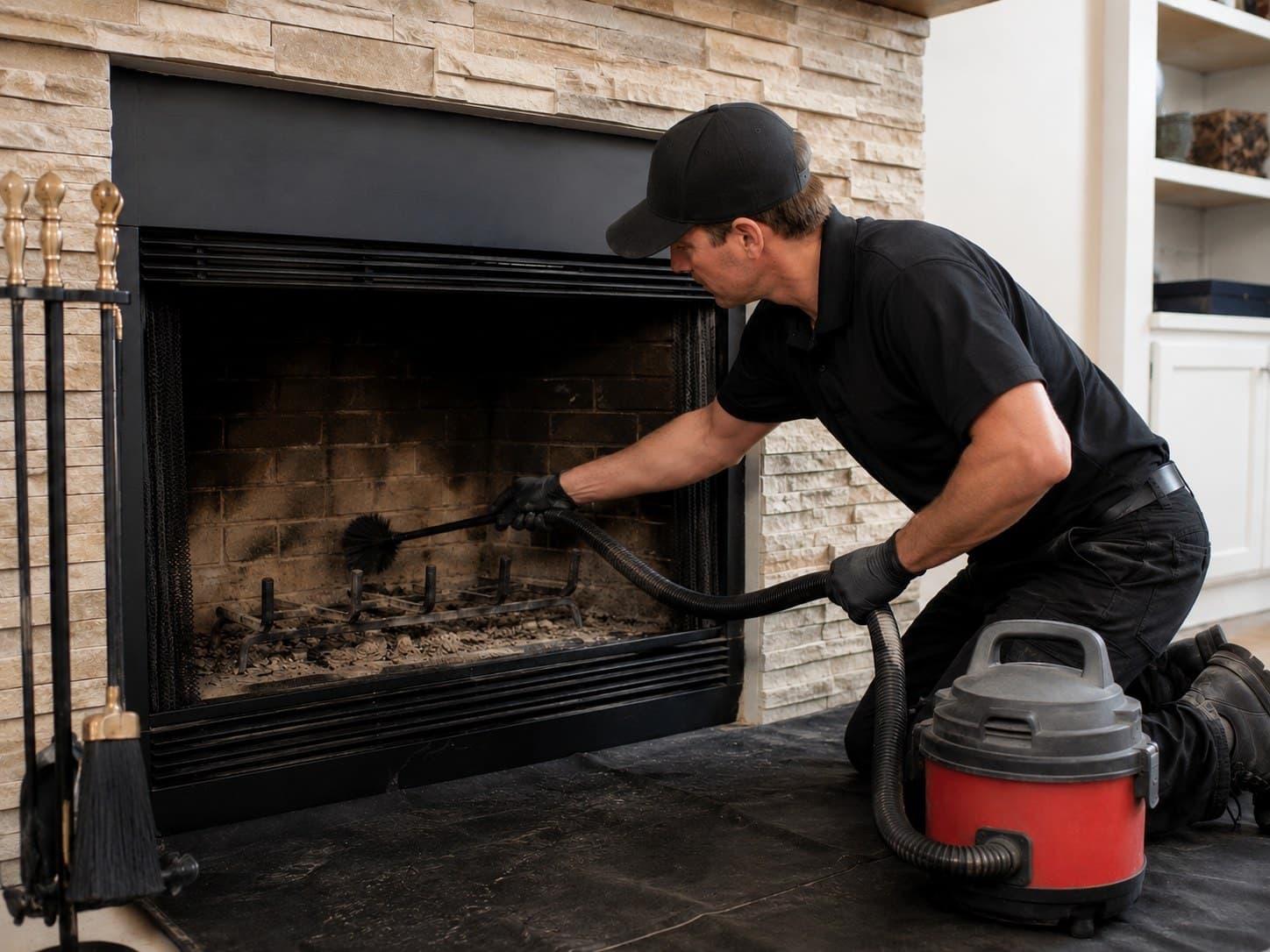
- Inside the firebox on a side wall, near the top, often behind soot
- Behind the lower louvre or grille panel, which usually lifts or unclips
- On the inside face of the frame, visible once glass doors are opened
- Inside the control cavity on a gas unit, beside the valve
- On the outer casing above the opening, visible from inside the chase on some installations
Take a photo of it with your phone before you call. A model number turns a vague conversation into a specific one, and it decides whether a part exists at all.
If you cannot find it, that is a normal outcome — plates get painted over, soot-covered or removed. Identification then comes from the firebox construction, the panel pattern, the damper design and the flue type, which is part of a chimney and fireplace inspection.
Masonry or factory-built?
Before brands matter at all, this is the distinction that determines everything else. A true masonry fireplace has no manufacturer.
| Feature | Masonry fireplace | Factory-built (prefab) |
|---|---|---|
| Firebox | Laid firebrick with mortar joints | Steel shell lined with refractory panels |
| Chimney | Solid brick or block with a clay or metal liner | Round metal pipe inside a framed chase |
| Outside appearance | Brick or stone all the way up | Siding or stucco over a boxed frame, often with a metal shroud |
| Rating plate | None — it was built on site | Yes, and it governs what may be fitted |
| Brand | Not applicable | Heatilator, Majestic, Superior, Marco and others |
| Repair approach | Rebuild and repoint with matching materials | Replace listed components with the right parts, or replace the unit |
Firebox
- Masonry fireplace
- Laid firebrick with mortar joints
- Factory-built (prefab)
- Steel shell lined with refractory panels
Chimney
- Masonry fireplace
- Solid brick or block with a clay or metal liner
- Factory-built (prefab)
- Round metal pipe inside a framed chase
Outside appearance
- Masonry fireplace
- Brick or stone all the way up
- Factory-built (prefab)
- Siding or stucco over a boxed frame, often with a metal shroud
Rating plate
- Masonry fireplace
- None — it was built on site
- Factory-built (prefab)
- Yes, and it governs what may be fitted
Brand
- Masonry fireplace
- Not applicable
- Factory-built (prefab)
- Heatilator, Majestic, Superior, Marco and others
Repair approach
- Masonry fireplace
- Rebuild and repoint with matching materials
- Factory-built (prefab)
- Replace listed components with the right parts, or replace the unit
Our guide to masonry versus factory-built fireplaces goes through the differences in more detail if you are still not sure which you have.
Common in Central Florida homes
Orlando's housing stock has a distinct fireplace profile. Tract building through the 1970s, 80s and 90s put factory-built units into a very large number of homes across Orange, Seminole and Osceola counties, and those are the units that now need attention.
| Make | Typically found in | What they usually need |
|---|---|---|
| Heatilator | Wood-burning prefabs from the 1980s onward; later gas models | Refractory panel cracking, damaged screens and doors, worn gaskets. Parts are widely available for recent models. |
| Majestic | Wood and gas prefabs across several decades | Panel and firebox wear; on gas models, valve and ignition faults. |
| Superior / Lennox Hearth | Very common in 1980s–90s tract housing | Panels and door hardware. Some older lines are discontinued, so availability depends on the model. |
| Marco | 1970s–80s homes, now at end of life | Parts are no longer manufactured. Usually a replacement decision rather than a repair. |
| Preway | Same era as Marco | Company long gone. Parts obsolete. |
| Martin Industries | 1970s–90s prefabs | Manufacturer defunct. Panel and door parts are not available new. |
| FMI / Temco | Florida tract housing | Panel and refractory wear; availability varies by model. |
| Heat & Glo | Newer builds and remodels, mostly gas | Ignition modules, remote receivers, blowers, glass gaskets. |
| Napoleon | Gas and wood units in newer homes | Ignition and valve components; glass and gasket service. |
| Regency | Inserts and freestanding units | Blower assemblies, gaskets, glass; insert liner checks. |
| Monessen / Empire | Gas log sets and vent-free appliances | Burner and pilot assemblies, orifices, thermopiles. |
| Dimplex | Electric fireplaces and inserts | Flame-effect motors, LED modules, heater elements, remotes. |
Others turn up less often and are serviced on the same basis: Astria, Kingsman, Valor, Mendota, Ortal, Town & Country, Travis Industries and Fireplace Xtrordinair on the gas and wood side; Vermont Castings, Jøtul, Quadra-Fire, Osburn, Pacific Energy, Drolet, Morso and Hearthstone on the stove side, where Florida demand is modest but the units that exist still need servicing.
When a legacy unit is beyond parts
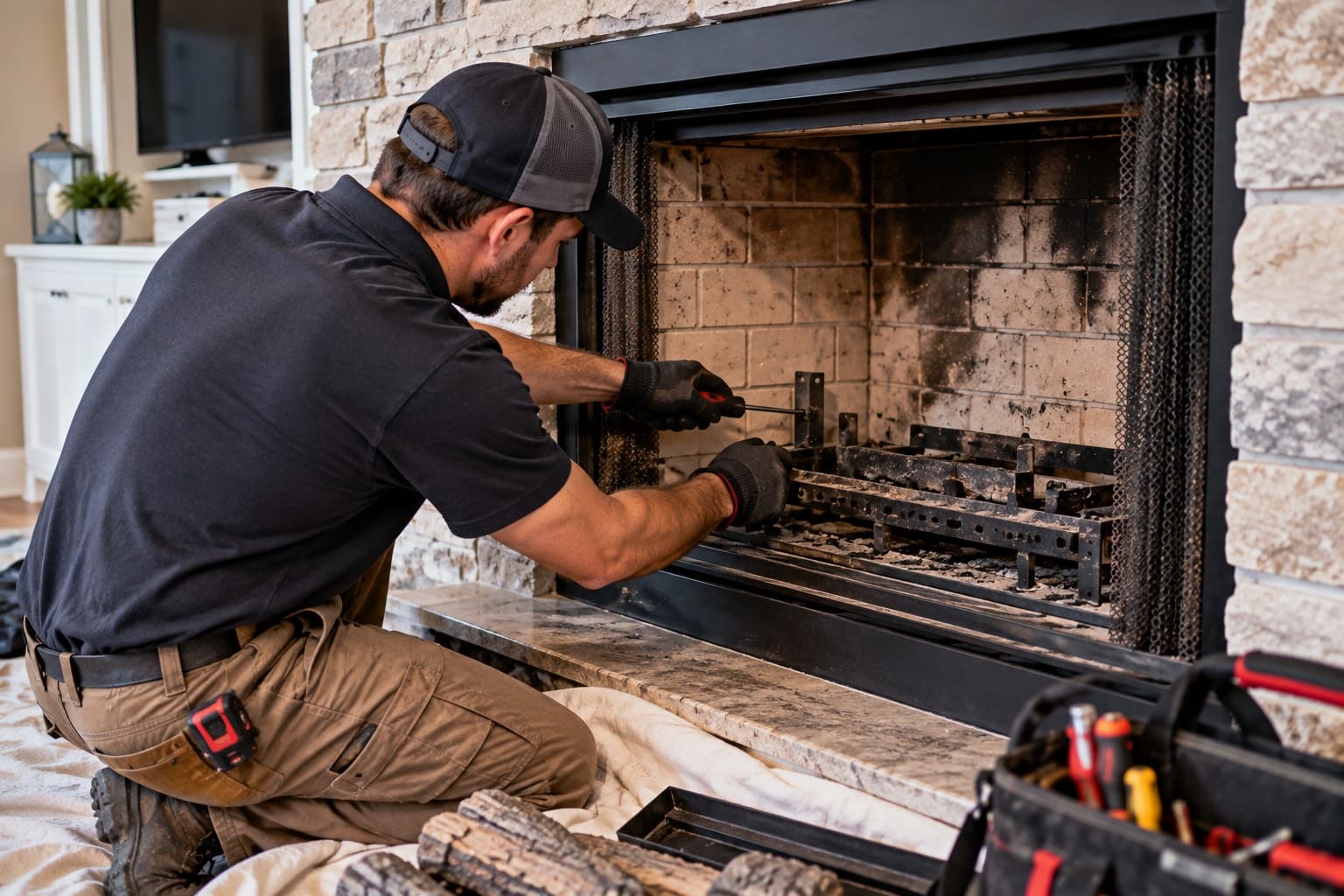
This is the conversation that comes up most often with Marco, Preway and Martin units, and with some older Superior models. The fireplace is not broken in a dramatic way — the panels have cracked, the screen is gone, the doors no longer seal — but the parts to put it right have not been made for decades.
Substituting parts from another manufacturer is not a way round it. A factory-built fireplace is listed and tested as a complete assembly, and fitting a panel or a door from a different unit voids the listing that the clearances depend on. That is not a paperwork technicality: those clearances are what keeps the framing around the firebox from getting too hot.
Deciding between repair and replacement
01Panels cracked but the shell is sound
- What you may notice
- Cracks in the refractory wider than a coin edge, or pieces missing.
- How it’s confirmed
- If panels are still made for the model, replacing them is straightforward. If not, the unit is at a decision point.
02Rusted firebox or chase
- What you may notice
- Rust flakes in the firebox, staining down the siding, or soft metal at the base.
- How it’s confirmed
- Rust means water has been getting in for a while. The leak is traced as well, or a new unit goes the same way.
03Obsolete make with multiple faults
- What you may notice
- A Marco, Preway or Martin unit needing panels, doors and a screen at once.
- How it’s confirmed
- Replacement is usually the honest answer. A new listed unit in the existing opening is covered on the replacement page.
04Gas unit with a discontinued valve or module
- What you may notice
- An ignition or valve fault on an appliance more than about fifteen years old.
- How it’s confirmed
- Some components are still available, some are not, and generic substitutes are not appropriate on gas controls. The model number settles it.
05The unit works but you want a different one
- What you may notice
- Nothing is wrong; you want gas instead of wood, or a modern linear look.
- How it’s confirmed
- That is a conversion rather than a repair, and the routes differ a great deal in cost.
What brand-specific service actually means
In practice, knowing the make changes four things about a visit.
- Which parts fit. Refractory panels, doors, screens, gaskets, glass and gas controls are model-specific. The right part is ordered against the model number, not matched by eye.
- What the listing allows. The rating plate says which appliances the firebox may take. That decides whether a gas log set or an insert can legally and safely go in.
- Which faults to look for. Every design has its weak points, and knowing the make means checking those first rather than working through everything.
- Whether parts still exist. The difference between a repair and a replacement decision, and it is better established at the start than after a week of chasing suppliers.
What it does not mean is a different standard of work depending on the badge. A Heatilator and a Majestic of the same era get the same inspection and the same care.
Stoves and inserts
Wood stoves are uncommon in Central Florida but not absent, mostly in older rural properties around Lake County and in homes where a previous owner fitted one. Vermont Castings, Jøtul, Quadra-Fire and Osburn are the names that turn up.
Servicing is the same regardless of badge: connector pipe and flue swept, baffle checked, door gasket and glass assessed, air controls tested. That is covered under wood stove cleaning and service. Pellet appliances are a different mechanical system and are not part of our current scope.
Bring the model number
What makes the first call useful
- A photo of the rating plate, or the make and model typed out
- A photo of the fireplace from a few feet back, showing the surround
- A photo of the firebox interior with the doors or screen open
- Whether the chimney outside is brick and stone, or siding and stucco over a frame
- Fuel: wood, natural gas, propane or electric
- What is actually wrong, in your own words
Brand service is available across Orlando, Winter Park, Altamonte Springs, Kissimmee, Oviedo, Clermont and the rest of the communities we serve. Estimates are free, and if your unit turns out to be one where parts no longer exist you will be told that before anything is ordered rather than after.