On this page
A fireplace collects mess from both directions. Ash and half-burned wood build up on the floor of the firebox, soot coats the walls and the back of the damper, and smoke that escapes the opening stains the brick or stone above it. Glass doors turn gray. A fireplace cleaning deals with all of that, so the fireplace looks and works the way it should.
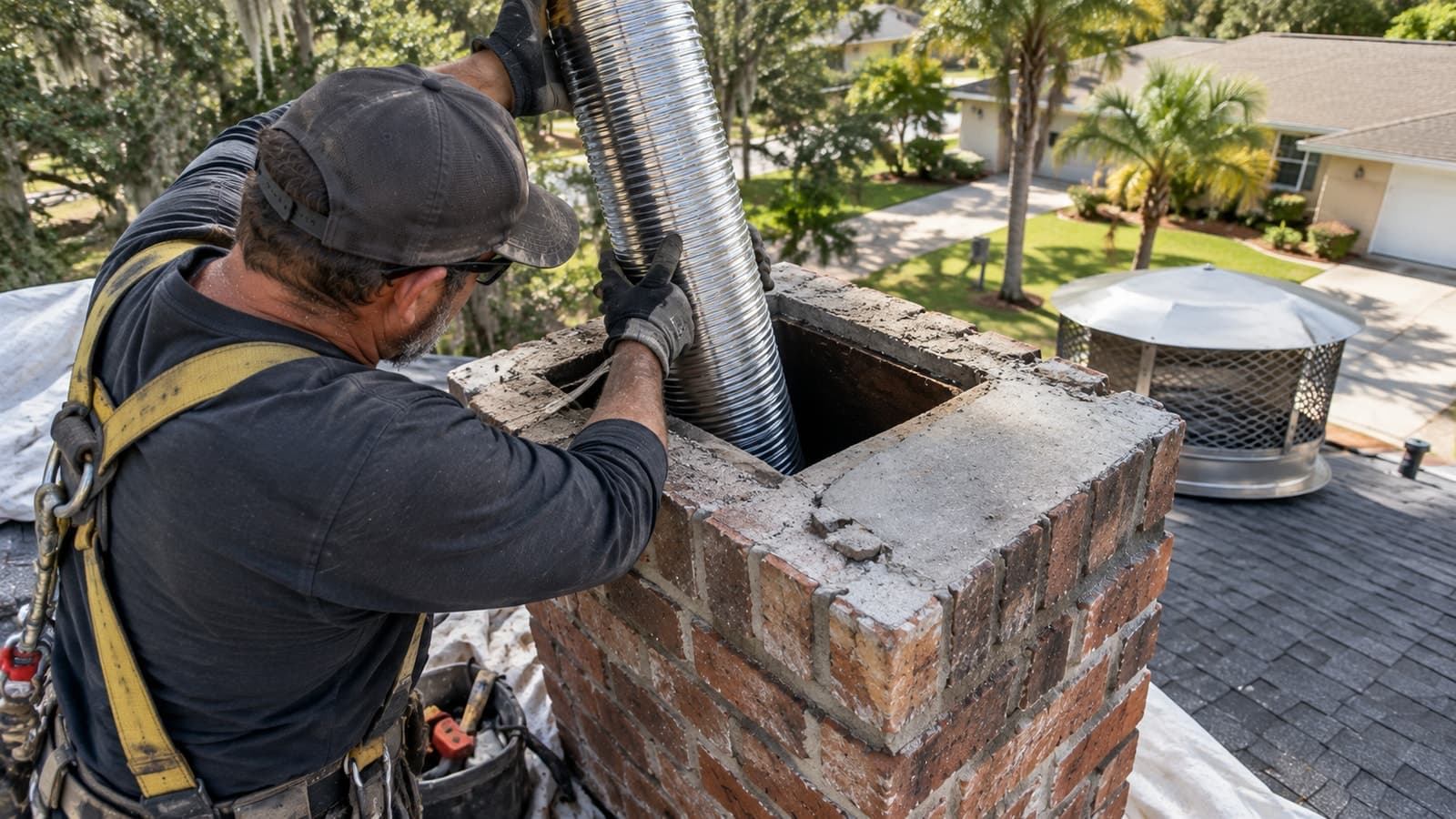
The flue above the damper is a separate job. If the fireplace is gas, cleaning the burner, logs and glass is part of gas fireplace service.
Fireplace cleaning, chimney sweep or insert cleaning?
| Job | Covers | Book it when |
|---|---|---|
| Fireplace cleaning (this page) | Firebox, grate and ash, smoke shelf and damper, glass doors, soot on the facing | The room side is sooty or stained, or the flue was recently swept |
| Routine chimney sweep | The flue plus a basic firebox clean-out | The yearly check shows buildup in the flue |
| Deep flue cleaning | Heavy soot through the flue and smoke chamber | The chimney hasn’t been cleaned in years or smells strongly |
| Insert cleaning | An insert’s firebox, baffle and liner | You have a wood insert in the fireplace opening |
What a fireplace cleaning includes
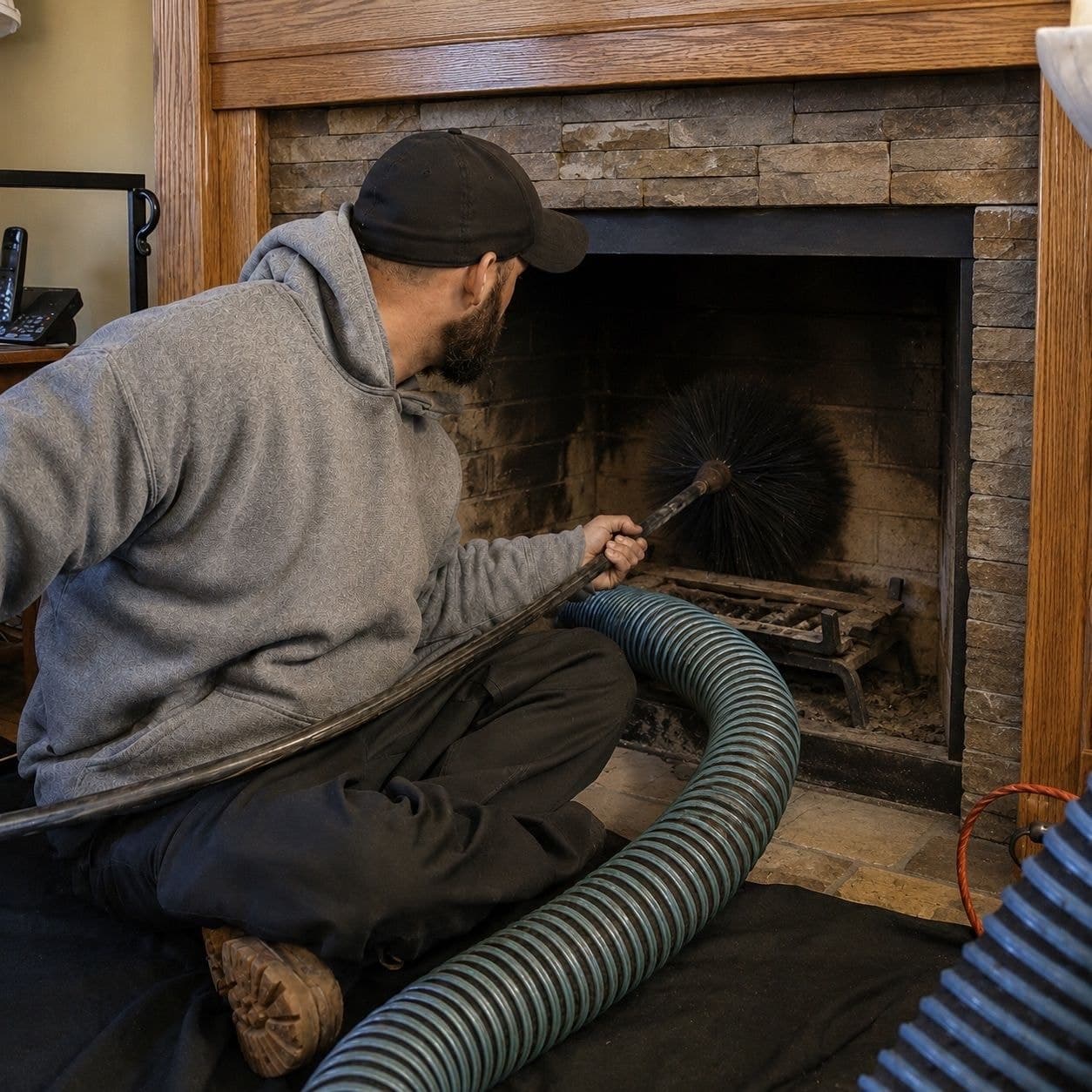
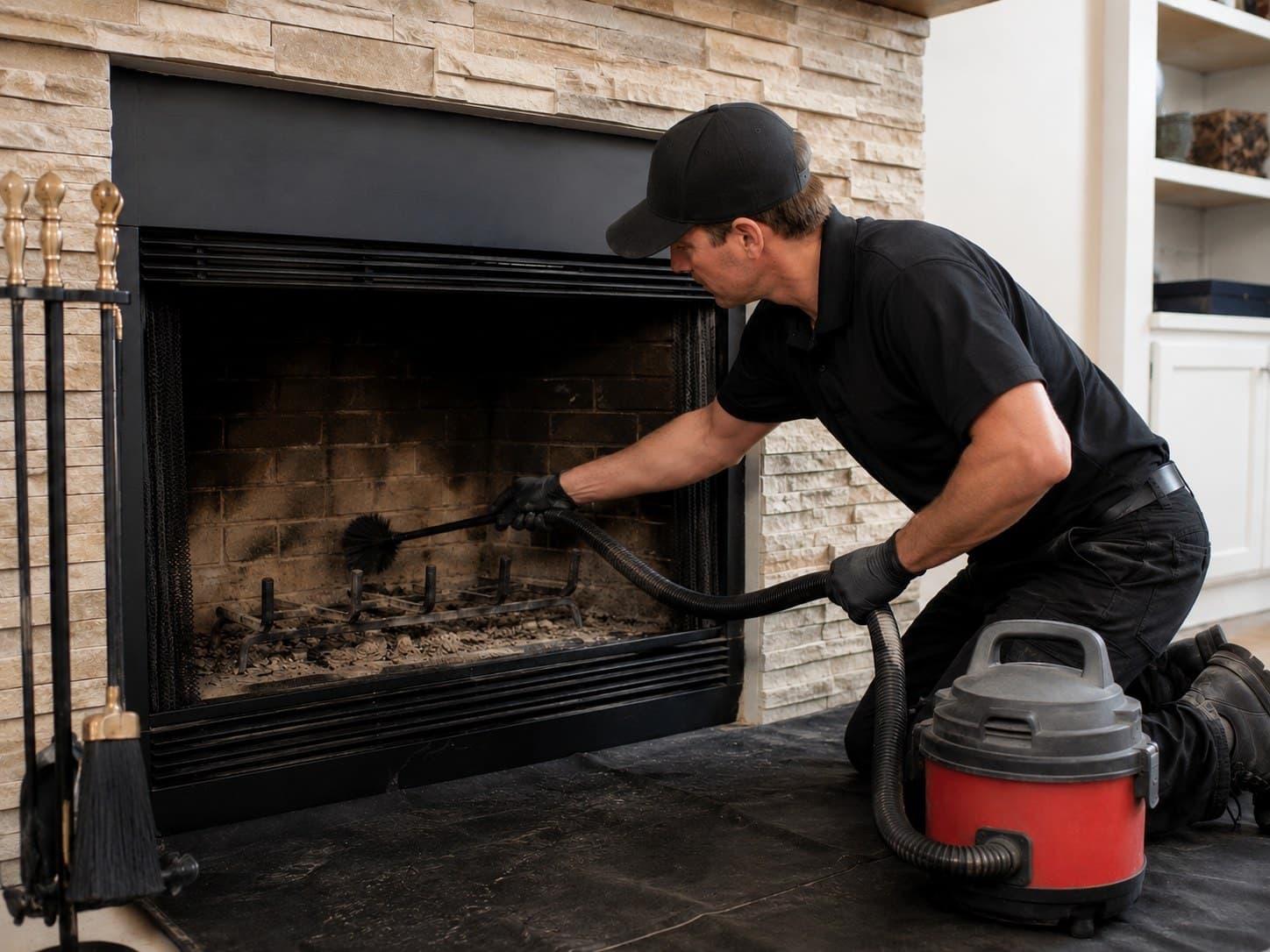
- Ash and debris removed from the firebox floor, grate and ash dump
- Firebox walls brushed and vacuumed, whether brick, refractory panels or a metal liner
- Smoke shelf and damper area cleared of soot, debris and anything that fell from above
- Damper cleaned so it opens, closes and seals properly
- Glass doors and screen cleaned with products safe for tempered or ceramic glass
- Soot on the surround cleaned from brick, stone or tile where the material allows
Refractory panels in factory-built fireplaces are brittle and easily damaged, so they get a gentle brush and vacuum, not scraping. Cracks found while cleaning are noted, since a panel with wide cracks or missing pieces needs new panels matched to the model.
Soot stains on the facing
Black staining above the opening means smoke has been spilling into the room. We clean it, but a stain that comes back usually points to a draft problem: a damper not fully open, a blocked or dirty flue, an opening too big for the flue, or the house pulling air down the chimney. If that’s what we find, you’ll hear about it along with the options. Our guide to a fireplace smoking into the room walks through the causes.
| Material | Approach |
|---|---|
| Brick | Dry soot sponge first, then a mild masonry cleaner; no acid on older, softer brick |
| Natural stone | pH-neutral cleaners only; acids etch limestone and marble |
| Tile | Tile-safe cleaner and soft pads; grout lines cleaned gently |
| Painted surround | Dry soot sponge and very mild detergent; heavy staining may need repainting with heat-rated paint |
How the visit goes
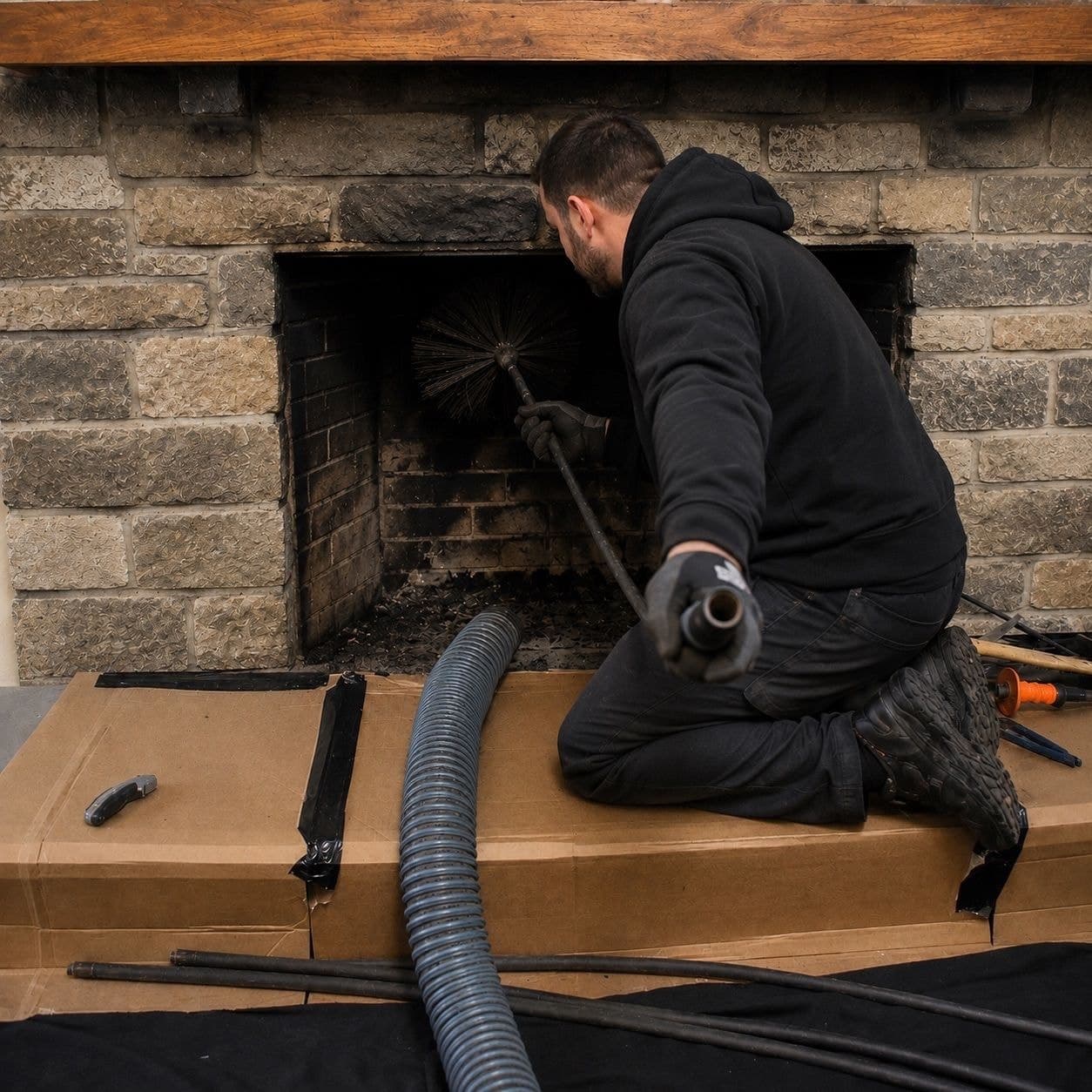
Protect the room
Drop cloths from the hearth outward and a sealed setup around the opening.
Remove ash and debris
Cool ash is vacuumed with equipment rated for fine ash, never a household vacuum.
Clean the firebox and damper
Walls, smoke shelf and damper are brushed and vacuumed.
Clean glass and facing
Doors, screen and surround are cleaned with methods suited to each material.
Note anything that needs repair
Cracked firebrick, damaged panels, a warped damper or loose door hardware go in your summary.
Ash can hold heat for days
Wait until ash is completely cold before removing it yourself, and store it in a metal container with a lid, outside and away from the house. Hot coals can survive in an ash bed longer than most people expect.
The ash dump and ashpit
Older masonry fireplaces around Orlando often have a small cast-iron door in the firebox floor. Ash was swept through it into a chamber below, and emptied from a cleanout door in the garage, the crawl space or an exterior wall. Plenty of homeowners have never opened either one.
An ashpit nobody has emptied for decades causes real problems. Packed ash holds moisture against the masonry, which in a humid climate is how you get persistent damp and smell at the base of the chimney. The dump door itself rusts open or seizes shut, and a door that will not close is an air leak straight into the firebox.
Part of a cleaning where an ash dump exists
- The dump door opened, checked for warping and cleaned so it seats again
- The ashpit emptied through the cleanout where one is accessible
- The cleanout door checked for a seal, since a missing one lets damp air into the chimney base
- Any standing water in the pit noted, because that points at a leak higher up
- Ash disposed of rather than left on site
Ash stays hot far longer than you expect
Embers can stay live in ash for days, which is why ash should go into a metal container with a lid and be kept off a wooden deck or garage floor. That applies whether you are clearing the firebox or the ashpit.
Grates, andirons and the hardware in the firebox
The metal sitting in the firebox is worth looking at while it is empty, because it is easiest to assess when everything else has been cleared out.
- The grate. Bars burn through and sag from the middle over time. A collapsed grate drops the fire onto the firebox floor, which concentrates heat exactly where you do not want it.
- Andirons. Largely decorative in a modern fireplace, but they still hold logs off the floor and they are worth checking for cracks.
- The fireback. A cast plate at the rear of the firebox, if fitted. It protects the back wall and reflects heat forward.
- Mesh curtain screens. Frequently torn or missing entirely on a fireplace that has not been used in years.
- The damper handle and blade. Cleaned so it actually seats, because a damper that does not close lets humid air into the house all summer.
Where a grate or screen needs replacing, that is straightforward. Doors, screens and safety barriers are covered on the fireplace doors and screens page.
Gas fireboxes are cleaned differently
A gas firebox has no ash and no creosote, so “cleaning” means something else entirely: glass, media, burner and the surfaces around them. Brushing it like a wood firebox would damage it.
The white or grey film that builds on the inside of the glass is a normal by-product of combustion and needs the right cleaner rather than an abrasive one, which will scratch the surface permanently. Repositioning the logs or media afterwards matters as much as the cleaning, because a log left out of the maker's layout is what starts sooting. All of that belongs with the annual gas fireplace service rather than with a firebox clean.
Fireplace cleaning is available across Orlando, Winter Park, Kissimmee, Oviedo, Clermont and the rest of the Central Florida service area, with same-day slots where the schedule allows and free estimates on anything the clean turns up.
References (1)
Facts and figures on this page come from these references.