Built fast between 1970 and 2000
Altamonte Springs incorporated in 1920 (Wikipedia), but very little of its housing is that old. Census estimates for 2020–2024 show just 8.8% of homes predating 1970, then a jump: 38.9% predate 1980, which means roughly three in ten homes were built in the 1970s alone. Only 15.9% date from 2000 or later, and the median home was built in 1983. The city had 46,116 residents and a median home value of $293,000 (Census ACS via Census Reporter).
| Measure | Share of homes |
|---|---|
| Built before 1970 | 8.8% |
| Built 1970–1979 | about 30% |
| Built 1980–1999 | about 45% |
| Built 2000 or later | 15.9% |
| Single-family detached | 24.4% |
Two practical consequences follow. First, with only about a quarter of homes detached, a large share of residents live in condos, apartments and townhomes, where the dryer duct is usually the only exhaust system they own. Second, the fireplaces that do exist are mostly from the 1970s to the 1990s, which is the period when factory-built fireplaces in framed chases became common in Central Florida homes alongside site-built brick. That’s an inference from build dates, not a survey.
Dryer ducts in attached and stacked homes
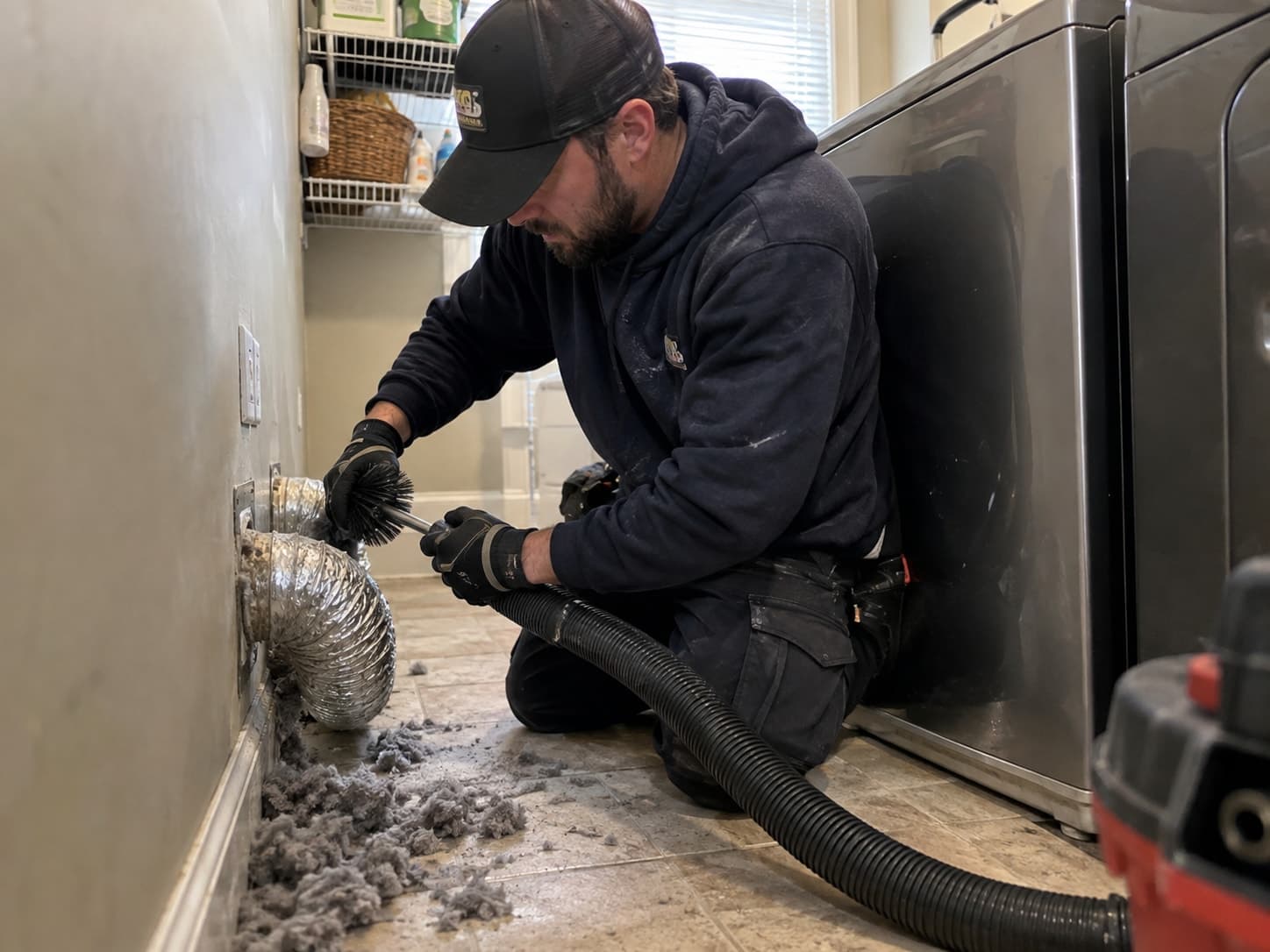
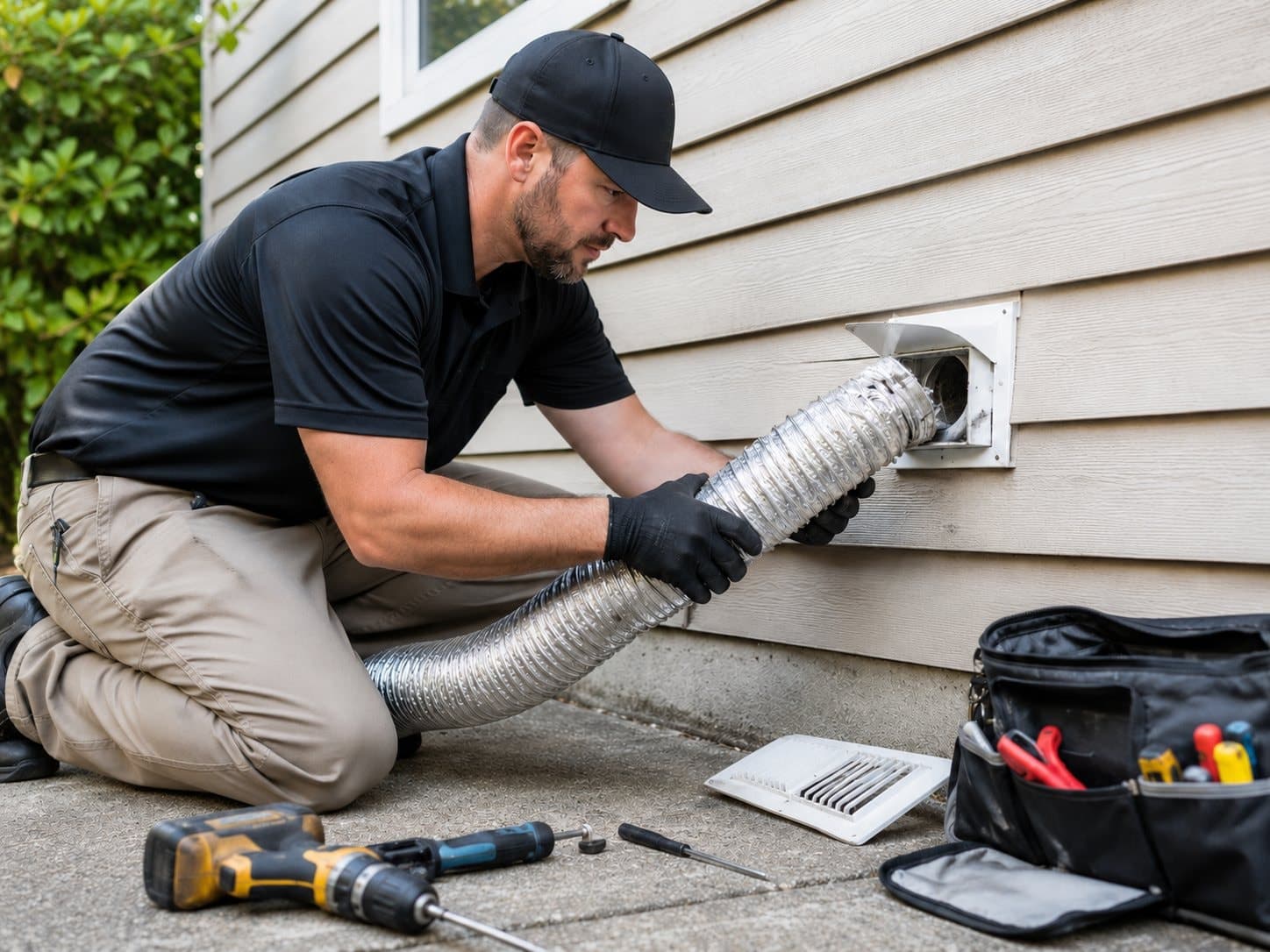
In a detached house, the dryer often sits on an exterior wall or in the garage with a short duct to the outside. In a condo or townhome, the laundry closet may be in the middle of the unit, so the duct turns and runs through walls or ceilings before it reaches a hood. Florida’s residential code caps the developed length at 35 feet, reduced for each fitting, requires a smooth metal duct and a backdraft damper, and bans screens at the outlet (FBC-Residential M1502).
Where lint and airflow problems start in attached units
01Transition hose behind the dryer
- What you may notice
- The dryer sits tight against the wall; a foil or vinyl hose is flattened or kinked.
- How it’s confirmed
- Pull the dryer out and check the hose material, length and whether it is crushed or split.
02Concealed duct run
- What you may notice
- Drying takes two cycles even with a clean lint screen; the closet gets hot.
- How it’s confirmed
- Airflow is measured at the outlet, then the run is cleaned from both ends where access allows.
03Outside hood
- What you may notice
- The flap stays shut or is packed with lint; a screen or bird guard has been added.
- How it’s confirmed
- We check that the damper opens freely under dryer airflow and that nothing restricts the outlet.
Renters and condo owners
In apartments, the landlord or management usually controls the duct. In condos, the association may own the part inside the walls while the owner is responsible for the hose. It’s worth finding out before booking work. Our guide to dryer fire risk explains why a clogged duct matters.
Fireplaces from the 1970s to the 1990s
A factory-built fireplace is a tested, listed system: the firebox, refractory panels, metal flue, damper and cap are designed to work together, and parts must be ones the manufacturer lists for that model. A unit installed in the 1970s or 1980s may be decades past its original parts, and some older models are no longer supported. Our guide to how long a prefab fireplace lasts covers what wears out and when replacement becomes the practical answer.
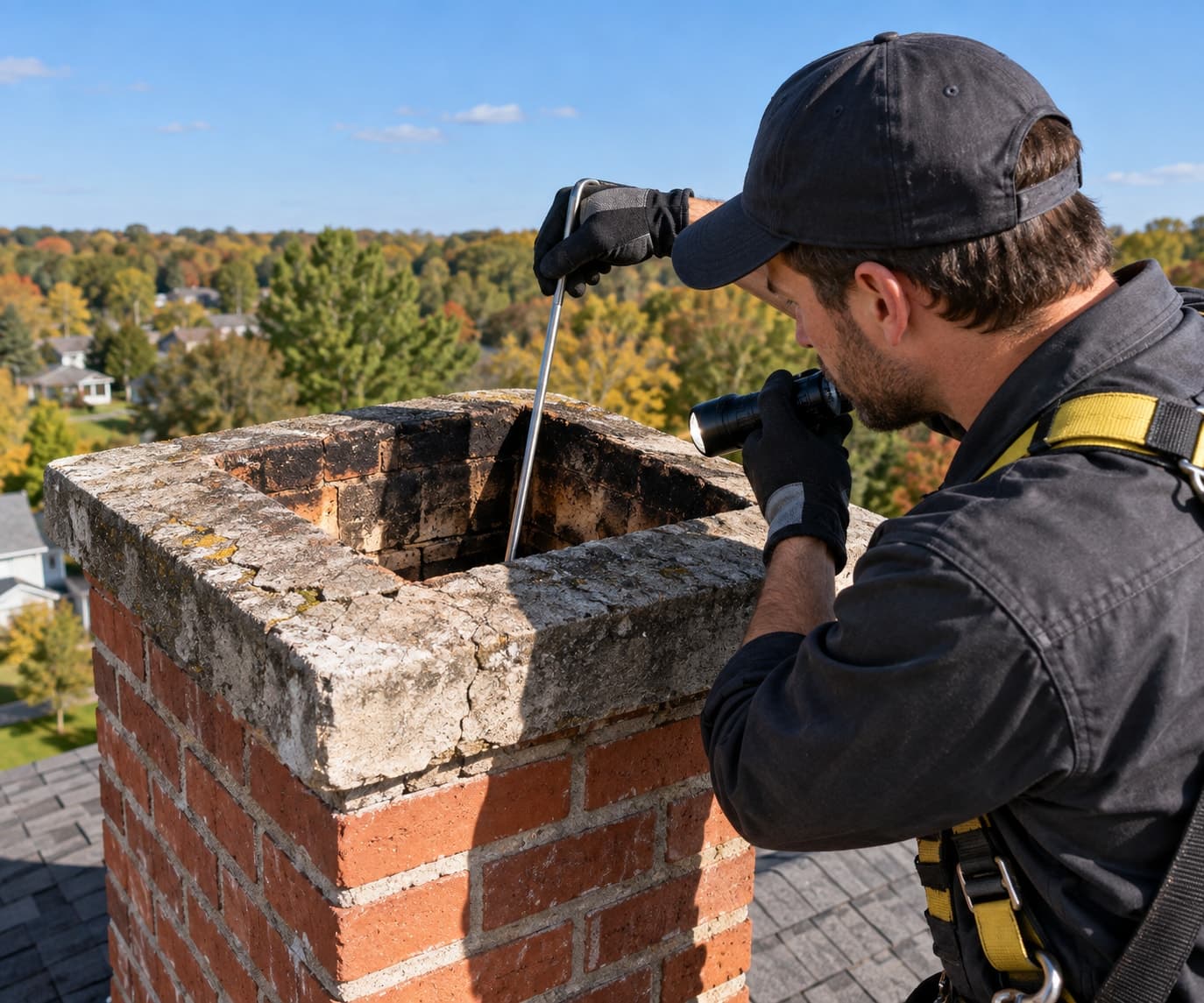
What an inspection of an older factory-built fireplace looks at
- The rating plate, to identify the manufacturer and model
- Refractory panels for cracks, gaps and missing pieces
- The metal firebox for rust-through or warping
- The damper and its linkage
- Metal flue sections and joints, as far as they can be seen
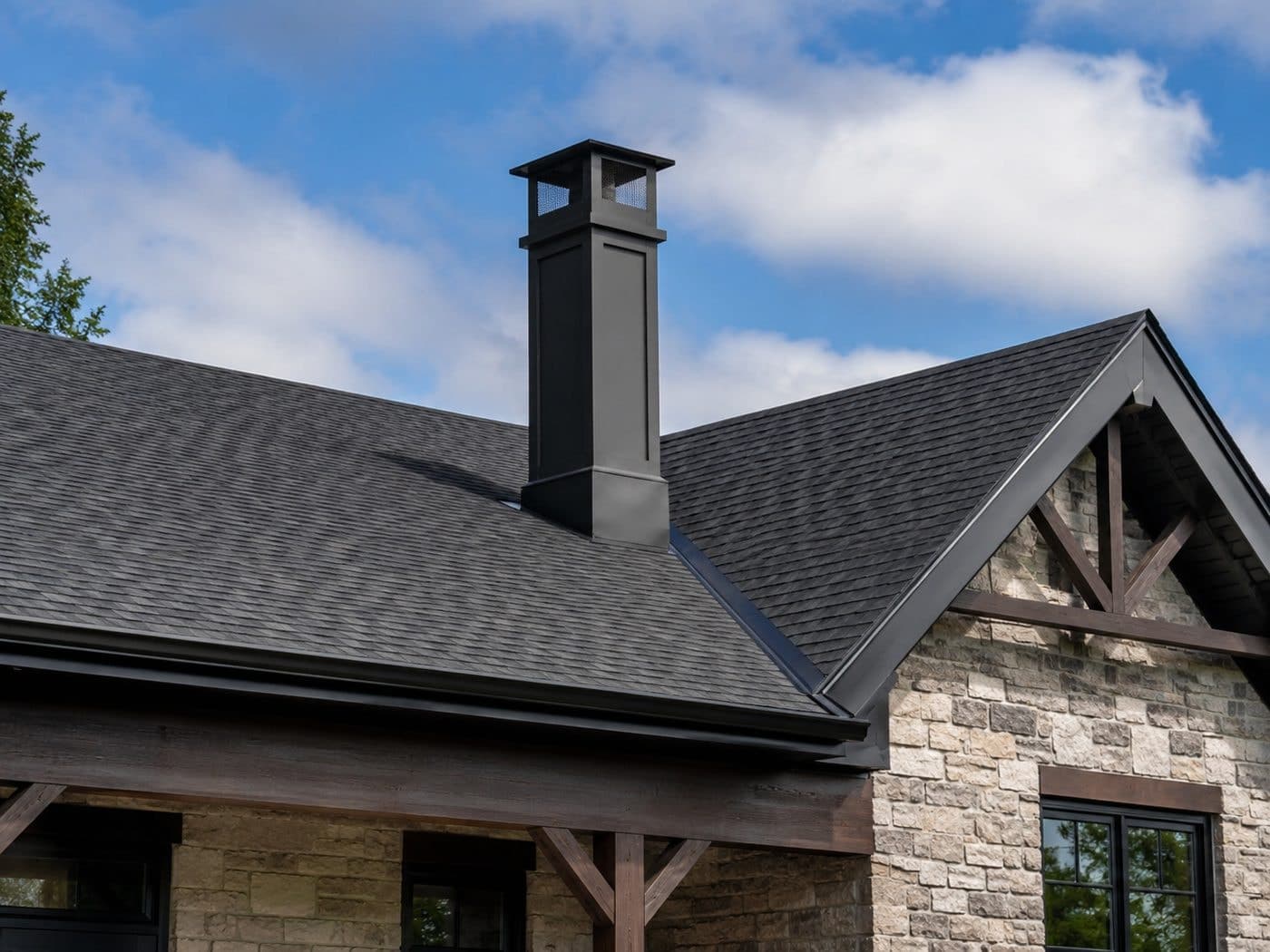
- Chase cover, storm collar and cap at the roof
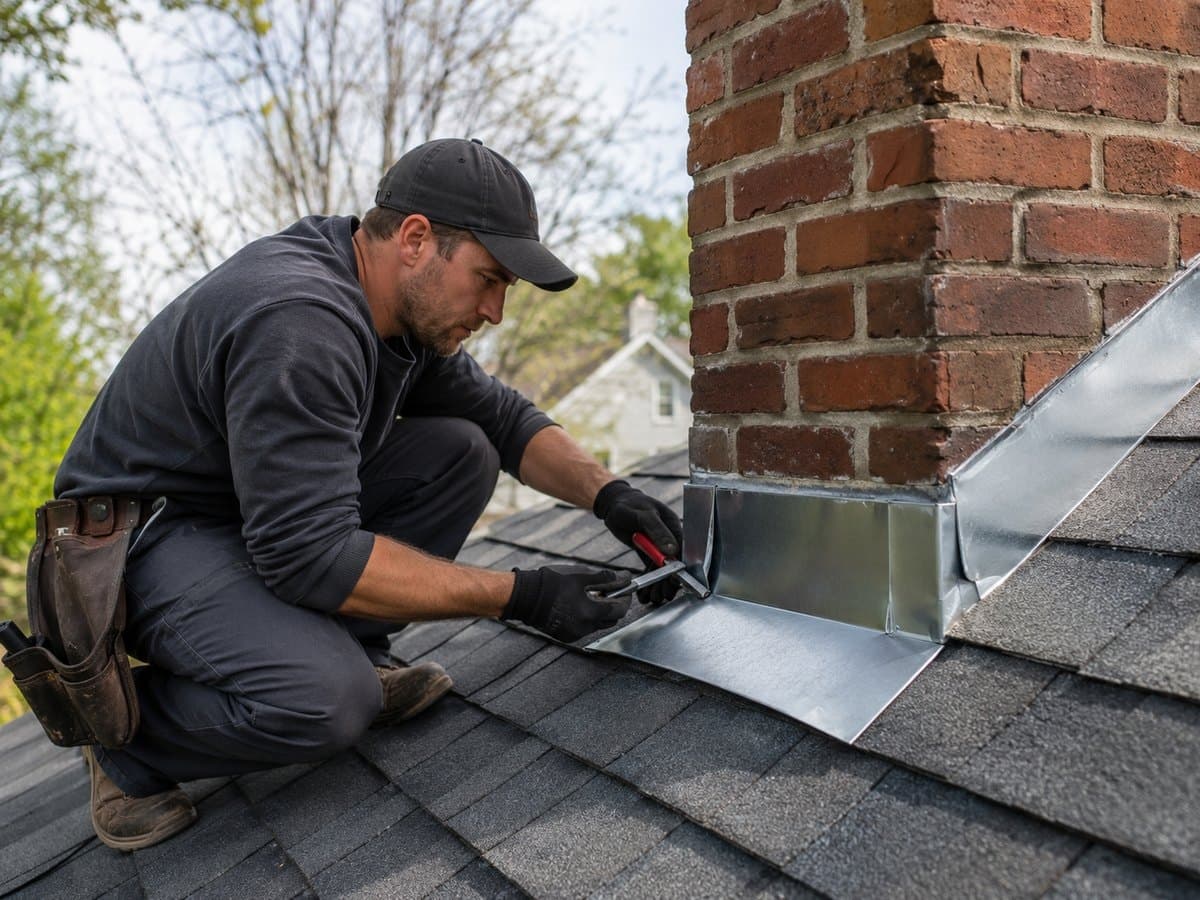
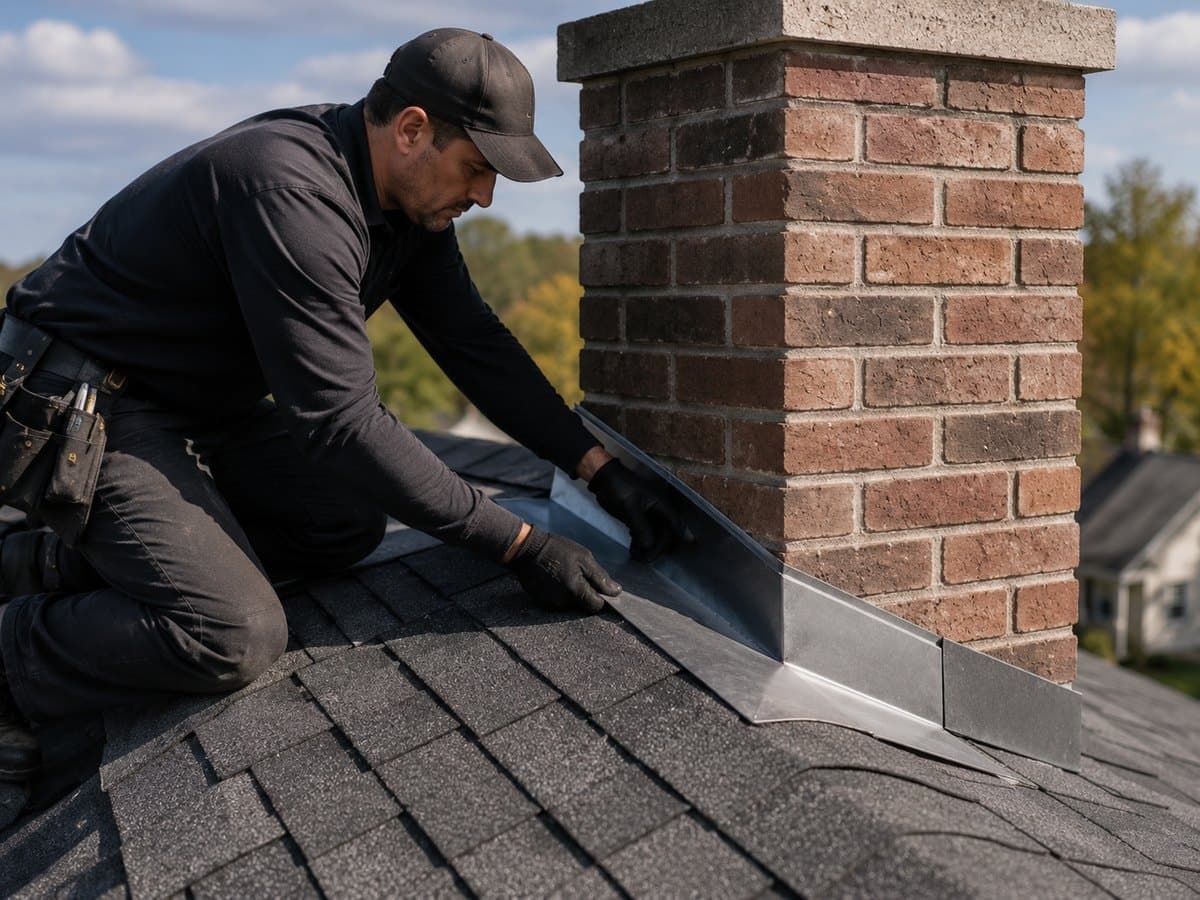
If the inspection finds a rusted top or water running down the flue, a new, sloped chase cover is often the fix. Damage to the flue, collar or chase framing falls under repair of factory-built chimneys and chases.
Chimney and fireplace services across the city
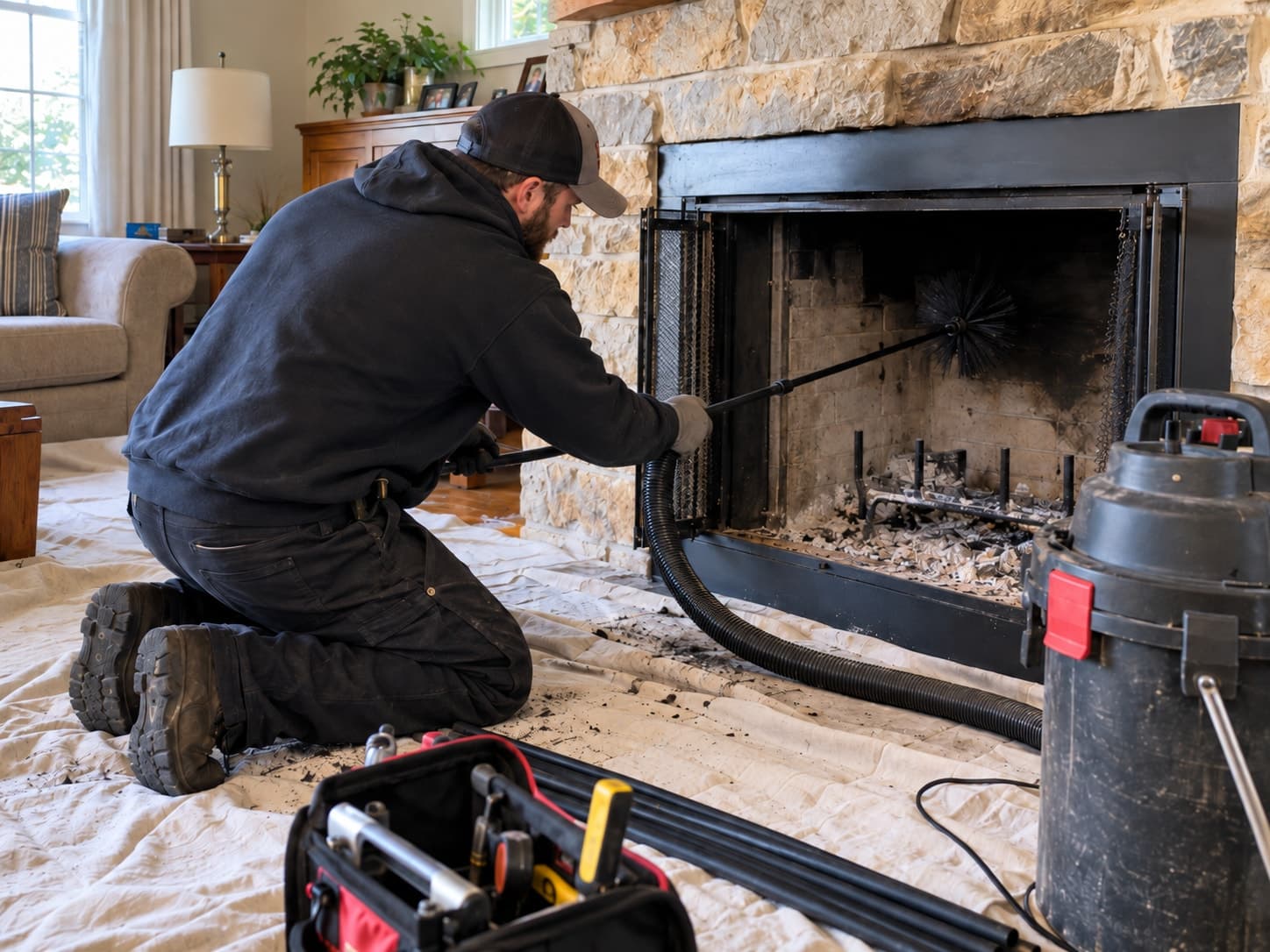
The detached neighborhoods, such as Spring Oaks and Country Creek, are where most Altamonte Springs fireplaces are, but the service area takes in the whole city, including Cranes Roost Village and the city’s many condo and townhome buildings. Each core service has its own local page: a chimney inspection in Altamonte Springs for a fireplace that has sat idle or a home you’ve just bought, sweeping and a fuller chimney cleaning for wood-burning units, repairs to the chimney itself, leak tracing after heavy rain, and fireplace repair for 1970s–90s units, from cracked panels to dampers that no longer close.
After storms along the Little Wekiva
Hurricane Ian in 2022 brought historic flooding along the Little Wekiva River near Altamonte Springs (Spectrum News 13). Residents of the Spring Oaks neighborhood have seen river flooding after hurricanes including Ian and Milton, and the City has discussed a $3 million erosion-control project on the river between SR 436 and Montgomery Road (ClickOrlando).
After a named storm or local flooding
Don’t relight gas equipment that was under water
Any gas fireplace, gas logs or gas dryer that floodwater reached should be checked by a gas professional before use.
Look at the roof penetrations
From the ground, check the chimney or chase for a missing cap, a lifted cover or bent flashing.
Check the dryer hood
Wind and debris can jam the damper or pack the hood with leaves and mud.
Book an inspection if anything looks off
A post-storm chimney inspection covers the exterior and the flue for damage you can’t see from the yard.
References (6)
Facts and figures on this page come from these references.
- 1Census Reporter: Altamonte Springs city, ACS 2020–2024
- 2Wikipedia: Altamonte Springs, Florida
- 3Spectrum News 13: Ian, a historic storm for Central Florida
- 4ClickOrlando: Altamonte Springs plan for the Little Wekiva River
- 5City of Altamonte Springs: Flood Information
- 6Florida Building Code, Residential 2023, Chapter 15 (M1502)