Altamonte Springs has a lot of multi-unit housing: only 24.4% of homes are single-family detached. The median home was built in 1983, with 38.9% predating 1980. That decides where the lint usually collects.
What a restricted dryer vent looks like
| What you notice | What it usually means |
|---|---|
| Loads need two cycles | Lint is restricting airflow somewhere in the duct (why loads take two cycles) |
| Dryer or laundry room runs hot | Heat and moisture can’t leave fast enough (a dryer that runs too hot) |
| Weak air at the outside exit | A packed elbow, a stuck flap or a crushed section (weak airflow at the outside vent) |
| Lint around the hood or roof cap | Lint is packing at the termination and escaping around it |
| Burning or scorched smell | Stop the dryer; lint near a heat source is the concern (a burning smell from the dryer) |
Lint is highly flammable, and a clogged duct makes the dryer run hotter. That’s why slow drying is worth acting on, not just living with.
Dryer vents in Altamonte Springs homes
In the condos and townhomes around Cranes Roost, laundry closets often sit in the middle of a unit, with the duct running through a ceiling to a roof or rear wall. In detached homes in areas such as Spring Oaks, the vent is more often a wall run from the garage. Stacked washer-dryer closets are common in the newer units and need the dryer pulled out carefully to reach the connection.
From the dryer to the outside
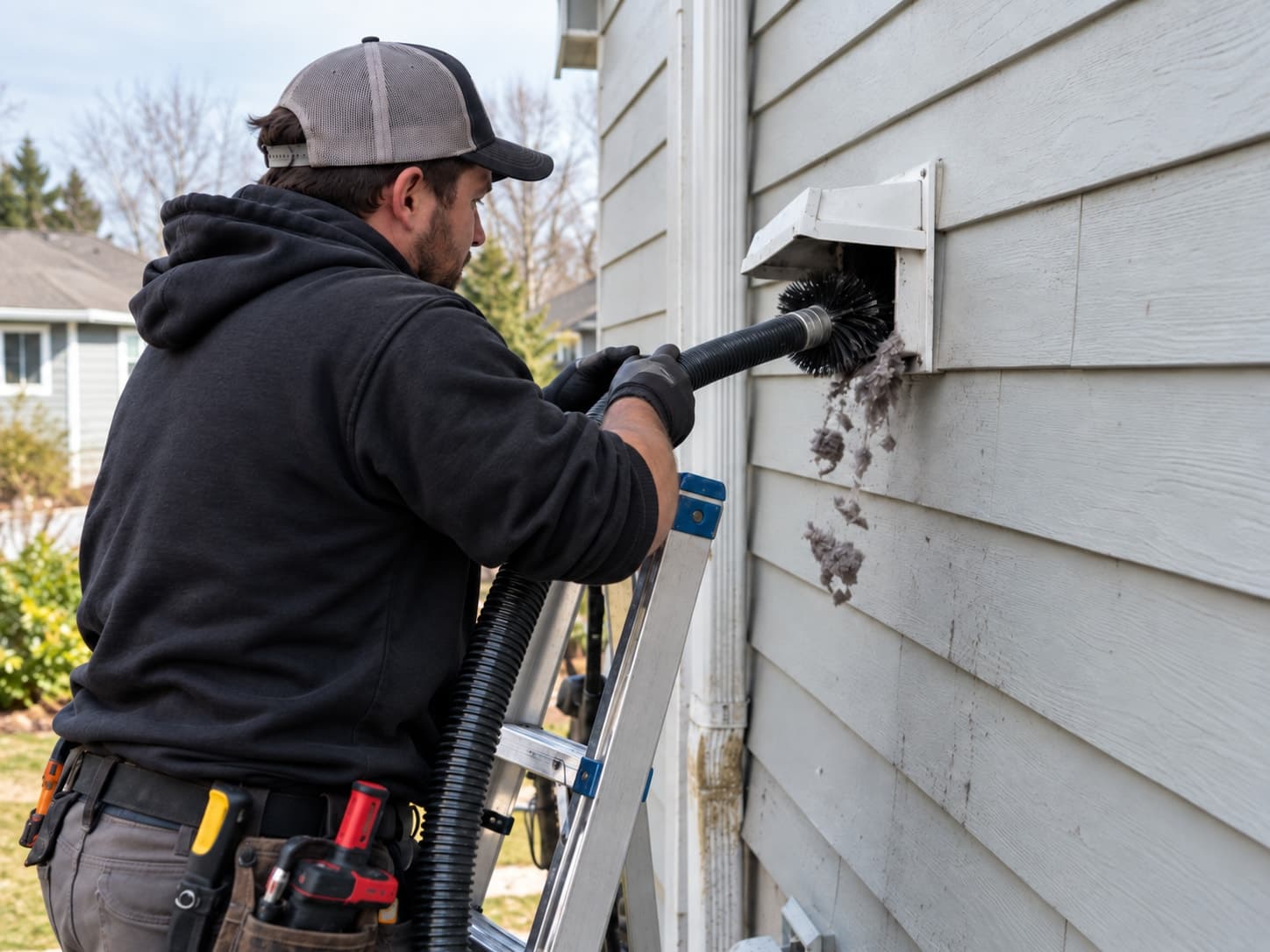
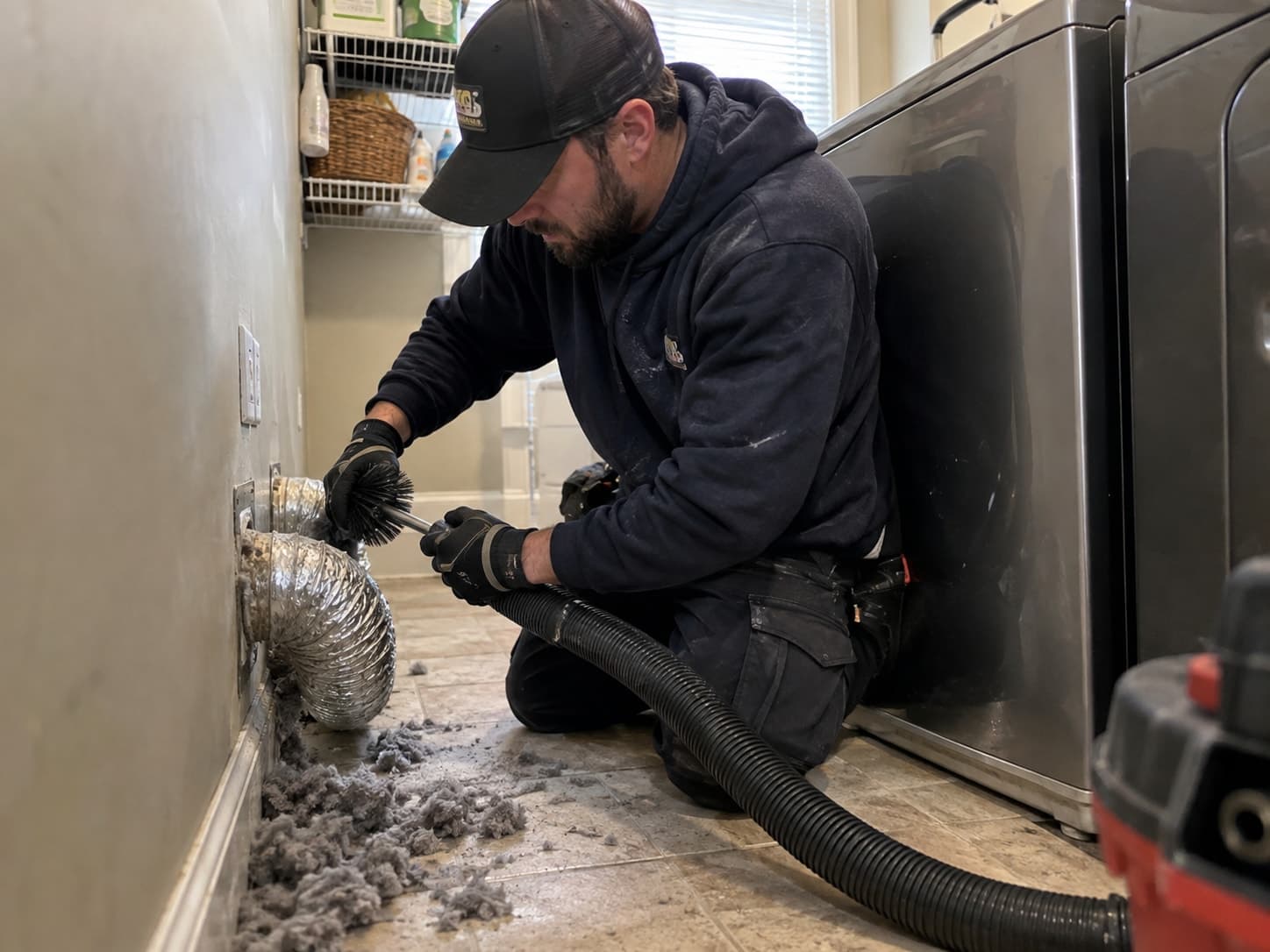
A dryer vent has three parts, and lint collects in all of them. Behind the dryer is the transition duct, the short connector that gets pushed against the wall and crushed. Inside the house is the duct run itself, through a wall, a floor or the attic, with elbows where the air slows and lint drops out. Outside is the termination, a wall hood or roof cap with a backdraft damper that should open with the airflow and close when the dryer stops.
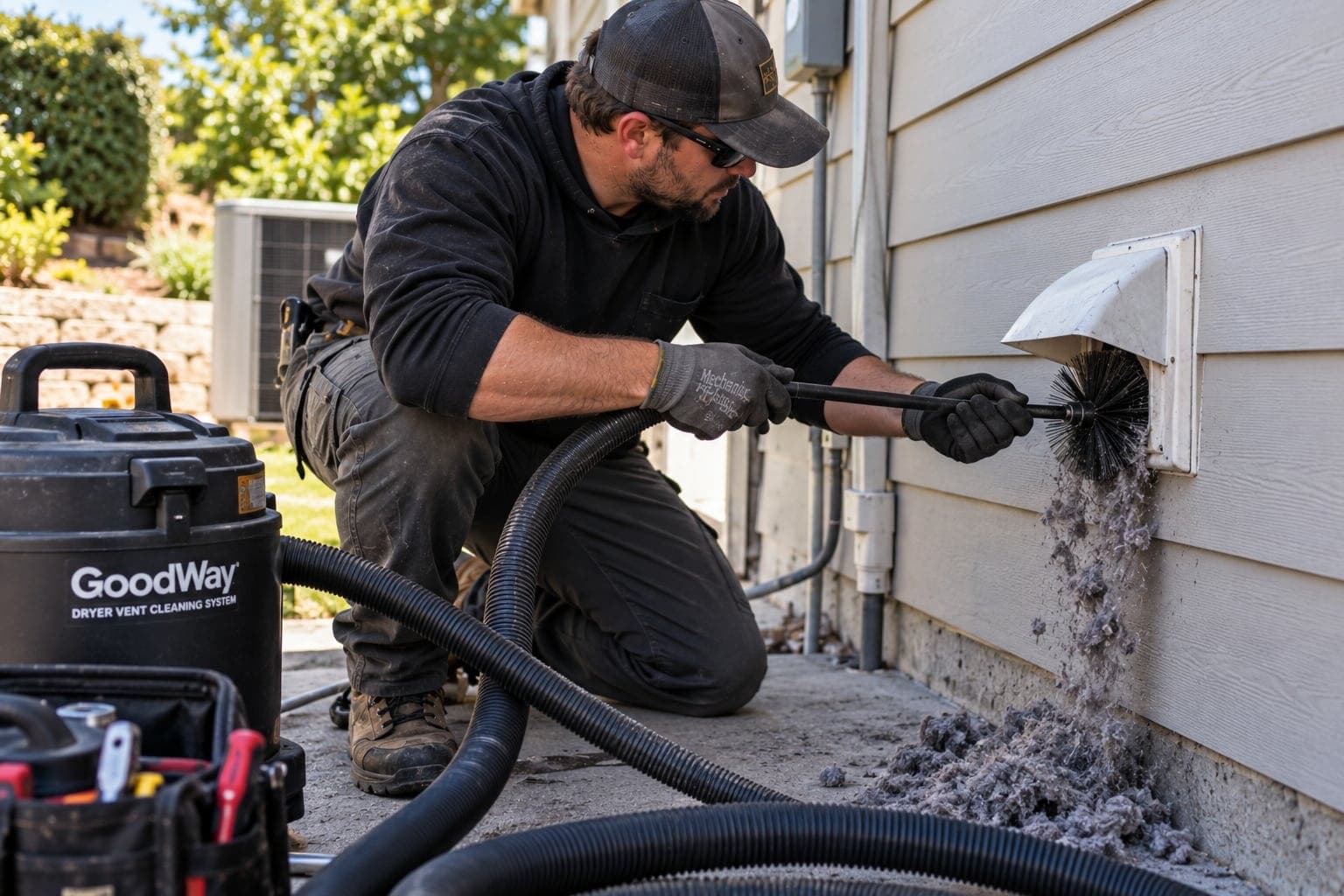
Cleaning covers all three, with airflow read before and after at the same point so the numbers can be compared honestly. Florida’s code also sets limits on the duct itself, summarized in dryer exhaust rules in Florida.
The termination: hood, flap and damper
- Wall hoods: flaps that stick, louvers that no longer open, hoods painted shut or hidden behind shrubs
- Roof caps: lint packed under the cap, seized dampers, the wrong cap after a reroof (a roof vent that’s clogged)
- Screens and pest guards: not allowed at a dryer exit in Florida, because they trap lint
- Nests: a sealing damper, not mesh, keeps birds out
The exit is cleared as part of every cleaning. A roof-mounted vent is planned around roof access; details are on cleaning a vent that exits through the roof. A failed hood or cap is replaced through a new vent cover with a working damper, and which vent hoods work and which don’t explains the options.
Cleaning vs. repair, blockage and inspection
| Feature | Dryer vent cleaning | Related services |
|---|---|---|
| Lint | Normal buildup along the duct and at the exit | Packed or escaped lint: removal of packed or escaped lint |
| Airflow | Restricted by lint | Stopped by a nest or plug: clearing a blocked or nested vent |
| The duct | Intact, just dirty | Crushed, loose or foil: reconnecting or replacing damaged duct |
| The route | Within the code’s length limit | Too long or too bent: moving the vent to a shorter route |
| The question | “Is it clean?” | “Is it right?”: a dryer vent inspection |
Lint
- Dryer vent cleaning
- Normal buildup along the duct and at the exit
- Related services
- Packed or escaped lint: removal of packed or escaped lint
Airflow
- Dryer vent cleaning
- Restricted by lint
- Related services
- Stopped by a nest or plug: clearing a blocked or nested vent
The duct
- Dryer vent cleaning
- Intact, just dirty
- Related services
- Crushed, loose or foil: reconnecting or replacing damaged duct
The route
- Dryer vent cleaning
- Within the code’s length limit
- Related services
- Too long or too bent: moving the vent to a shorter route
The question
- Dryer vent cleaning
- “Is it clean?”
- Related services
- “Is it right?”: a dryer vent inspection
How often Altamonte Springs dryer vents need cleaning
Once a year suits most households with a reasonably short run. Long runs, roof exits, big families, pets and rentals need it sooner, and the before-and-after readings from the first visit are the best guide for your house. The guide on cleaning intervals by household goes into detail, and doing it yourself versus hiring it out covers what you can do yourself.
With just 24.4% of Altamonte Springs homes single-family detached, many dryers are in condos, townhomes and apartments, where an association may maintain the outside end. Owners with several properties can use the rental property service.
Dryer vent service around Altamonte Springs
- Anywhere in Altamonte Springs, including Spring Oaks: mention where the vent exits and the dryer type
- Nearby: vent cleaning for Maitland homes, dryer vents in Longwood and Casselberry dryer duct cleaning
- Everything else for the house: chimney, fireplace and vent services in Altamonte Springs
More detail: how dryer vent cleaning works, plus which duct materials are allowed.
References (3)
Public data and code references cited for Altamonte Springs.