The short answer
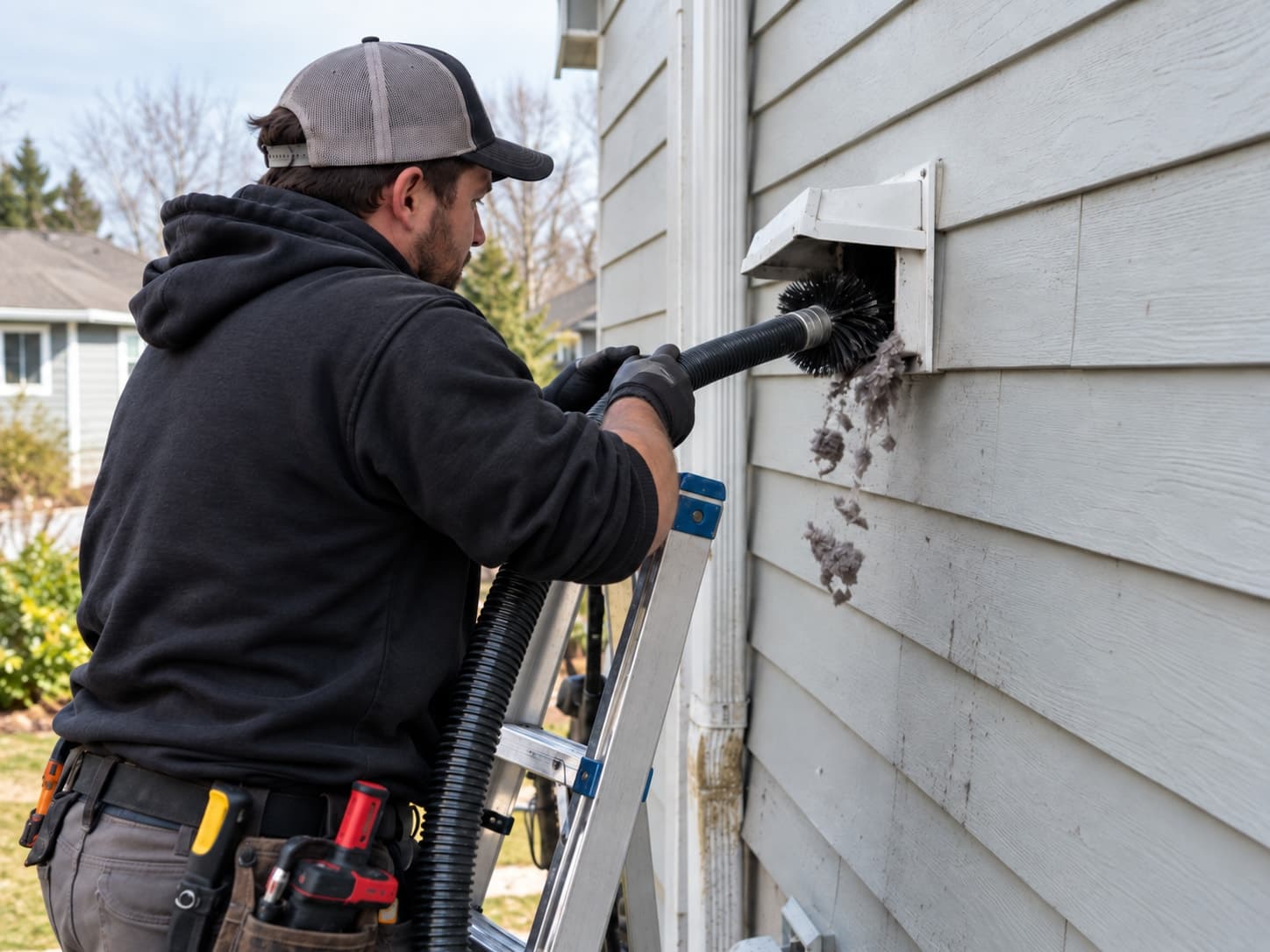
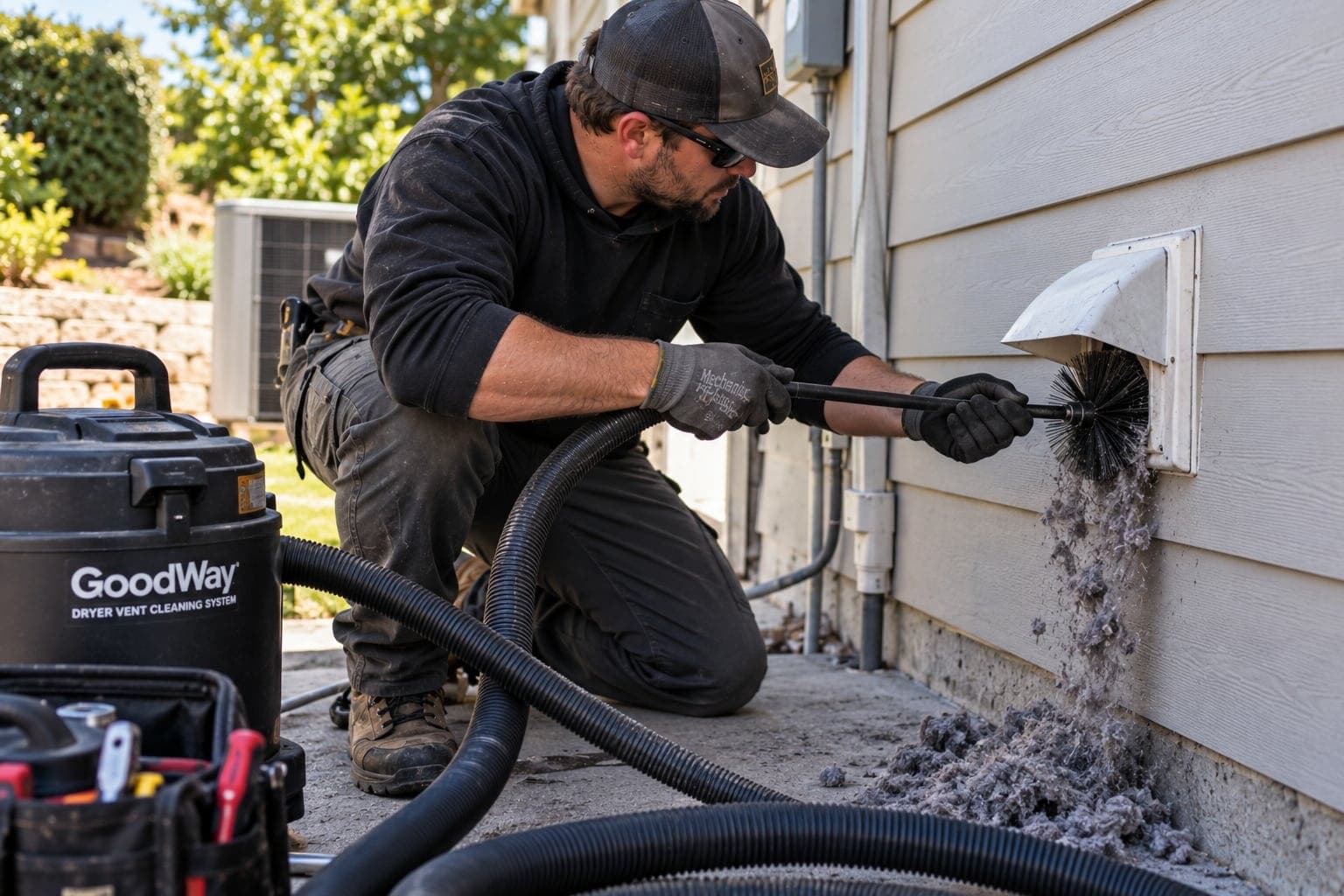
DIY is reasonable for a short, fairly straight vent through a ground-floor wall that you can reach from both ends. For long runs, several elbows, two-story homes, roof terminations, or a vent that keeps clogging, a professional cleaning is usually the better choice, mainly because those runs need the whole length cleared and the result checked, not just brushed from one end. The NFPA’s tip sheet says to clean lint out of the vent pipe yourself or have a lint removal service do it, (NFPA dryer safety tips), while the USFA recommends periodic servicing and cleaning by qualified service personnel (USFA topical report).
What every homeowner can do
Safe, useful DIY on any dryer
- Clean the lint screen every load, and wash it when water beads on it
- Vacuum the lint screen slot with a narrow crevice tool
- Vacuum lint from behind and under the dryer, with the power off
- Clear lint from the outside hood and flap that you can reach from the ground
- Check that the outside flap opens with the dryer running and closes when it stops
- Look for a crushed or kinked hose behind the dryer, and pull the dryer forward slightly if needed
The USFA reminds owners not to forget the back of the dryer, where lint builds up, and to check that the venting behind the dryer isn’t damaged, crushed or restricted (USFA clothes dryer fire safety flyer). None of that needs special tools. With a gas dryer, look but don’t move it far or disturb the gas connection. For how often the duct itself needs a full cleaning, see our dryer vent cleaning schedule guide.
What brush kits do well, and what they don’t
| Feature | DIY brush kit | Professional cleaning |
|---|---|---|
| Short, straight sidewall run | Usually works well, especially from both ends | Works well; may be more than the job needs |
| Long run with several elbows | Brush may not turn corners cleanly; lint gets pushed ahead into the next elbow | Longer rods and a vacuum drawing lint out as the brush works |
| Roof termination | Lint often gets packed into the roof cap; the roof end is out of reach | Cleaned from both ends, with the cap cleared and checked on the roof |
| Removing loosened lint | Depends on catching it at the far end or with a household vacuum | Vacuum collection while brushing |
| Confirming it worked | Judged by feel at the outside flap | Airflow can be measured before and after |
| Finding hidden faults | Unlikely to spot a separated joint in the attic | More likely to notice crushed or disconnected sections and a bad cap |
Short, straight sidewall run
- DIY brush kit
- Usually works well, especially from both ends
- Professional cleaning
- Works well; may be more than the job needs
Long run with several elbows
- DIY brush kit
- Brush may not turn corners cleanly; lint gets pushed ahead into the next elbow
- Professional cleaning
- Longer rods and a vacuum drawing lint out as the brush works
Roof termination
- DIY brush kit
- Lint often gets packed into the roof cap; the roof end is out of reach
- Professional cleaning
- Cleaned from both ends, with the cap cleared and checked on the roof
Removing loosened lint
- DIY brush kit
- Depends on catching it at the far end or with a household vacuum
- Professional cleaning
- Vacuum collection while brushing
Confirming it worked
- DIY brush kit
- Judged by feel at the outside flap
- Professional cleaning
- Airflow can be measured before and after
Finding hidden faults
- DIY brush kit
- Unlikely to spot a separated joint in the attic
- Professional cleaning
- More likely to notice crushed or disconnected sections and a bad cap
A kit is a set of flexible rods and a brush head, usually driven by a drill. It is a good tool used in the right place. The trouble comes when the run is longer than the rods, turns more times than the brush likes, or ends somewhere you can’t reach.
Where DIY cleaning goes wrong
- Stuck brush heads. A brush can jam in an elbow or a crushed section. Pulling hard can tear the duct or leave the head inside.
- Rods unscrewing inside the duct. Most kits have threaded rods that are meant to turn in one direction only. Running the drill in reverse can unscrew a section and leave it in the duct.
- Separated joints. Pushing and spinning rods through a concealed duct can pull apart a joint in the wall or attic, especially one that was only friction-fit. The dryer then exhausts into the house or attic, which the Florida residential code prohibits (M1501.1).
- Lint pushed, not removed. Brushing from the dryer end only tends to drive the lint toward the far end. On a sidewall vent, it comes out at the hood. On a roof vent, it often packs into the cap.
- Roof access. Clearing a roof cap means working on a pitched tile or shingle roof, often two stories up. That is a fall risk for anyone without the right equipment, and tile can crack underfoot.
- Leaf blowers. Blowing out a vent is a common shortcut. It can push lint into elbows or a stuck cap, and it can dislodge weak joints, while you can’t see what happened inside the wall.
If a brush gets stuck
Stop turning the drill and don’t force it. Try backing it out gently while turning in the normal (forward) direction. If it won’t come free, leave it where it is and don’t run the dryer. A stuck brush is a blockage, and the duct may need to be opened at an access point to recover it.
When a professional makes sense
Consider professional cleaning when
- The vent ends on the roof, or in a spot you can’t safely reach
- The run is long, has several elbows, or passes through the attic
- The laundry room is on a second floor or in the middle of the house
- The vent clogs again within months of being cleaned
- Airflow is still weak after you have cleaned what you can reach
- You suspect a disconnected or crushed section (lint in the attic, a musty laundry room)
- It’s a rental property, and you want a record of when it was done
Roof vents are the clearest case for hiring out. Our roof dryer vent cleaning page explains why lint collects under roof caps and how those runs are cleaned from both ends. For every other layout, the standard dryer vent cleaning service covers the full run. If the vent keeps filling up, the recurring clog symptom page lists the underlying causes, and a full vent inspection is the way to find them.
What any professional cleaning should include
Whoever you hire, a thorough cleaning has the same parts. Use this list to compare quotes and to judge the work afterwards:
A complete dryer vent cleaning
- Confirming where the vent ends, and that it belongs to the dryer and not a bath fan
- An airflow check at the termination before cleaning, on a no-heat setting
- The dryer moved carefully, and the transition hose and dryer outlet inspected and cleaned
- The full length of the duct brushed, with lint collected by vacuum rather than just pushed through
- The termination cleared, and the damper confirmed to open and close, with no screen
- The dryer reconnected without crushing the hose, then run and checked for leaks at the connection
- An airflow check after cleaning, at the same point and setting, to compare
- An explanation of anything that cleaning can’t fix, such as a crushed duct, a separated joint or a run that is too long
It is reasonable to ask for the before-and-after results and any findings in writing, and to see photos of damage before approving a repair. Be cautious with any offer that bundles a vent cleaning into a very low price and then adds charges on site, and with any recommendation to replace an entire system without a clear explanation of what is wrong with it.
Dryer vent cleaning vs air duct cleaning
These are two different services that are often advertised together. Air duct cleaning refers to the heating and cooling system: the supply and return ducts, registers and grilles, coils, drain pans, and the air handler (EPA). Dryer vent cleaning deals with one duct: the one that carries dryer exhaust from the back of the dryer to the outside.
| Item | Dryer vent | HVAC air ducts |
|---|---|---|
| What it carries | Hot, moist, lint-laden dryer exhaust to the outdoors | Conditioned air around the house |
| Main concern | Lint buildup, airflow, fire risk | Dust, debris, mold or pests in the system |
| How often | NFPA: at least once a year, more often if drying slows | EPA: not routinely, only as needed |
| Typical equipment | Rotary brush on rods, vacuum, airflow meter, roof access | Larger vacuum and agitation equipment for the whole duct system |
If a company offers both, ask whether the dryer vent is cleaned along its full length to the termination, and whether the termination and damper are checked. The dryer duct is small, runs to a different place, and can’t be cleaned from an AC register.
The vent type decides most of this, which dryer vent duct types and dryer vent cover types explain. If the dryer is already struggling, no airflow from the dryer vent covers what a kit can’t fix. For local professional cleaning, see dryer vent cleaning in Sanford or dryer vent cleaning around Clermont.
References (4)
Facts and figures on this page come from these references.