On this page
This page covers the scan itself: what the camera shows, when it earns its place and when it does not. For the inspection it usually forms part of, start at chimney and fireplace inspection.
Why a flashlight is not enough
A masonry flue is a tall, narrow, sooty box. From the firebox you can see up as far as the smoke chamber and no further. From the roof you can see down a few feet. Between those two points sits most of the chimney, including every liner joint.
That middle section is exactly where the faults that matter tend to be. A cracked flue tile, a joint where the mortar has washed out, a gap between sections of metal liner, a collapsed shoulder in the smoke chamber — none of it is visible from either end, and all of it changes what the chimney is safe to do.
Masonry chimney and fireplace, cutaway
- 1Chimney cap. Metal lid with mesh sides over the flue opening. Keeps rain, debris and animals out.
- 2Crown. The concrete or mortar top of the masonry, sloped to shed water away from the flue.
- 3Flue liner. Clay tile or metal lining that carries smoke up and protects the masonry from heat.
- 4Flashing. Metal that seals the joint between the chimney and the roof.
- 5Brick & mortar. The chimney structure. Mortar joints and brick faces absorb water when they wear.
- 6Smoke chamber. The sloped transition that funnels smoke from the firebox into the flue.
- 7Damper. Metal plate at the throat (or a sealing lid on top) that closes the flue when not in use.
- 8Firebox. Where the fire burns. Firebrick laid in heat-resistant mortar.
- 9Hearth. Non-combustible floor extension in front of the fireplace opening.
What the scan actually shows
Conditions a video scan confirms or rules out
- Cracked, spalled or missing flue tiles, and how far up they start
- Open mortar joints between tiles, where flue gases can reach the brickwork
- Gaps, separated sections or crushed areas in a metal liner
- Heat damage after a chimney fire, including tiles that have shifted
- Glazed creosote and how much of the flue length it covers
- A blockage, and whether it is a nest, fallen tile, debris or a collapsed section
- Water staining inside the flue, which points at a crown, cap or flashing fault
- An unlined flue, common in older masonry chimneys
- Whether an offset is too sharp for a liner to pass, before relining is quoted
It also settles the opposite question. Plenty of scans show a flue in sound condition, which is a useful answer when a home inspector has flagged the chimney and everyone is guessing at the cost of a repair that may not be needed.
When a camera scan is worth booking
Situations where the scan changes the outcome
01Buying or selling a house
- What you may notice
- A home inspector wrote 'chimney: further evaluation recommended', or the fireplace has no service history.
- How it’s confirmed
- The scan gives the buyer and seller the same evidence instead of two opinions. It is the usual reason a real-estate inspection goes beyond a visual check.
02After a storm or a chimney fire
- What you may notice
- A named storm has passed, lightning struck nearby, or there was a roaring sound in the flue during a fire.
- How it’s confirmed
- Heat and impact damage tends to be internal. A scan shows whether the liner is still intact, which is what an insurer and a structural decision both hinge on.
03Before relining or a major repair
- What you may notice
- A liner has been recommended and you want to know it is actually needed, and what size will pass.
- How it’s confirmed
- The scan confirms the damage, the flue's internal dimensions and whether any offsets will take a liner.
04Smoke coming into the room
- What you may notice
- The fireplace smokes even with the damper wide open and the room ventilated.
- How it’s confirmed
- A scan separates a blockage from a draft or sizing problem, so the right repair is quoted.
05A chimney that has sat unused
- What you may notice
- The house has been vacant, or the fireplace has not been lit in years and you want to use it.
- How it’s confirmed
- Nests, debris and water damage accumulate quietly. A scan shows the state of the flue before a first fire.
06Recurring water inside the firebox
- What you may notice
- Damp patches or staining in the firebox that a visual check has not explained.
- How it’s confirmed
- Staining inside the flue shows roughly where water is entering, which narrows the leak path before anyone goes on the roof.
When it is not worth it
A camera is a diagnostic tool, not a default. If the flue is heavily sooted, the picture is a black smudge until it has been swept — so a scan booked before a cleaning often has to be repeated. If the problem is already visible from the firebox, a scan confirms what you can see and adds nothing.
A routine chimney sweep on a chimney with no symptoms and a known history does not need one either. The honest order is: clean first, look second, scan when the question cannot be answered any other way.
Sweep first, scan after
Where both are needed on one visit, the cleaning comes first. A swept flue gives a picture you can actually read, and any damage the brushing reveals is on camera while the equipment is still on site.
How a scan fits the inspection levels
NFPA 211 describes three inspection levels. The camera is not a level of its own — it is one of the tools a Level 2 inspection uses when the flue's interior has to be evaluated.
| Level | Scope | Camera involved? |
|---|---|---|
| Level 1 | Readily accessible parts of the chimney and appliance, on a system with no changes and no known problems | No |
| Level 2 | Everything in Level 1 plus accessible parts of attics, crawl spaces and basements, and an evaluation of the flue's interior — required on a property transfer, after a change to the system, and after an operating malfunction or an external event such as a fire or a storm | Yes, this is where a video scan is normally used |
| Level 3 | Removal of parts of the building or chimney to reach a suspected serious hazard | Sometimes, to confirm what is found |
The difference between the first two levels is set out in more detail in our guide to Level 1 versus Level 2 chimney inspections. The short version: a Level 2 is the one triggered by a sale, a storm or something going wrong, and it is the one that looks inside the flue.
What happens during the visit
Protect the room
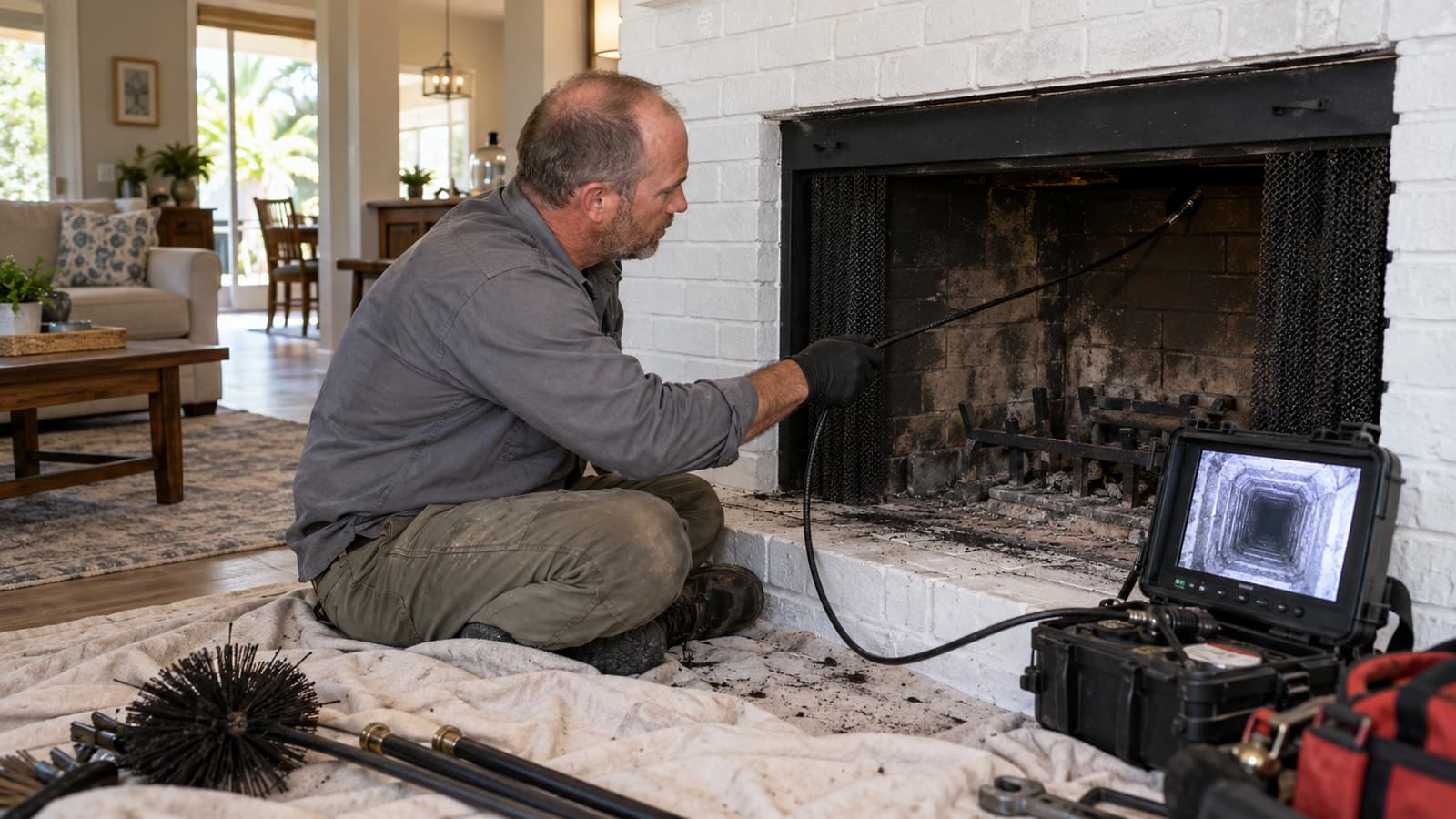
Drop cloths at the hearth, the opening sealed where the camera is going up from below, and a vacuum running so soot stays in the fireplace.
Look from both ends first
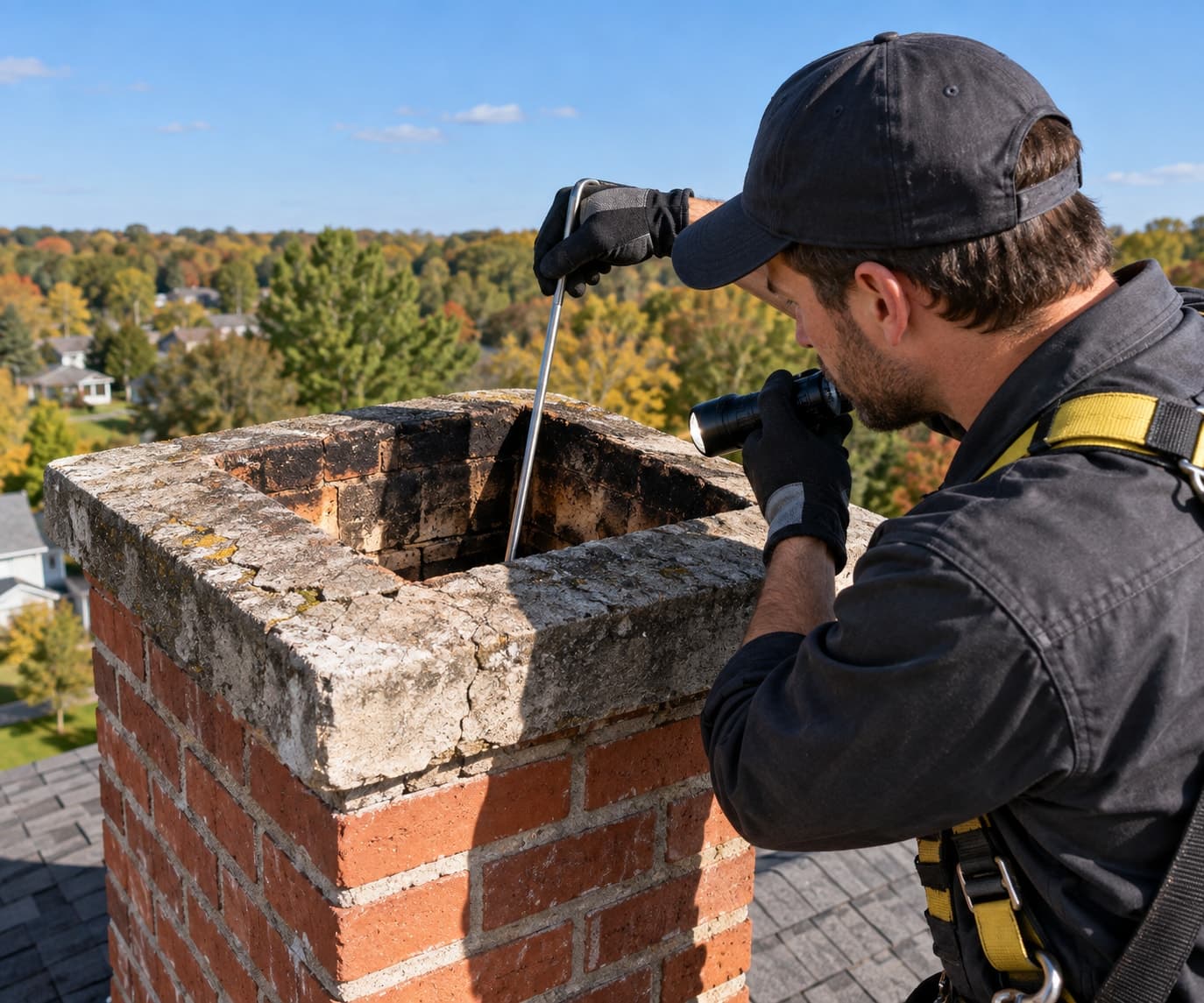
Firebox, damper, smoke chamber and, where the roof is safe to access, the cap, crown and the top of the flue. Half of what a scan might be asked to find is visible without it.
Clean where the view is blocked
A sooted flue is scanned after sweeping, not before. This is agreed with you rather than added to the job silently.
Run the camera
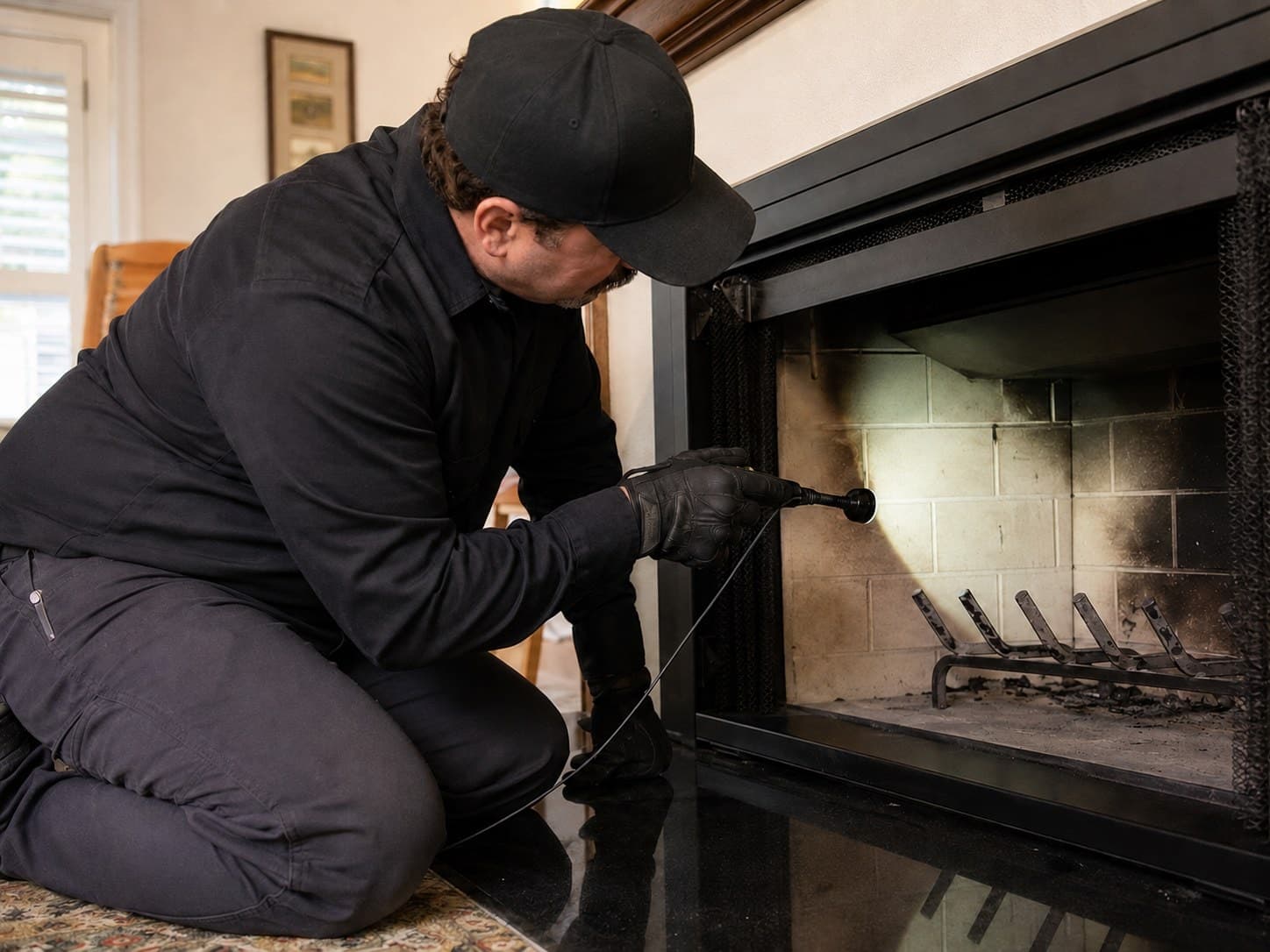
The head is lowered from the top on a reel or raised from the firebox on a rod, depending on access and what is being looked at. It travels the full flue length where the chimney allows.
Watch it with us
The screen is there while the camera is moving. You see the liner as it passes and anything of concern is stopped on and explained at the time.
Talk through what it means
A cracked tile at head height and a cracked tile forty feet up are different repairs. The findings are put in terms of what the chimney can safely do now and what the options are.
Factory-built chimneys
Many Orlando-area homes have a factory-built system: a metal firebox with refractory panels, a round metal pipe above it, and a framed chase finished in siding or stucco. These are scanned too, but what the camera is looking for is different — separated pipe sections, a crushed or dented section, corrosion at the joints, and gaps at the firestop.
Metal systems are also less forgiving of the wrong brush, so the cleaning that precedes a scan is matched to the pipe. Where the camera shows damaged sections, the options are covered under prefab chimney and chase repair and, where the firebox itself has failed, prefab fireplace replacement.
Dryer ducts and camera work
The same principle applies to a dryer duct hidden in a wall or ceiling: a push camera shows a crushed elbow, a disconnected joint inside the cavity or a duct that was never connected to the outside at all. That is covered on the dryer vent inspection page rather than here, because the equipment and the questions are different.
Booking a scan in Greater Orlando
Camera inspections are available across Orlando and the Central Florida service area. If you are working to a closing date, say so when you book — inspection slots tied to a contract get scheduled around the deadline rather than the queue. Estimates are free, and if the scan turns out not to be the right tool for your question you will be told that before it is booked.
References (2)
Facts and figures on this page come from these references.