Safety first after a storm
Stay away from the base of a chimney that is leaning, cracked through or missing bricks; it can fall. Keep off the roof. If a tree or limb is on the chimney or the roof, or there are downed power lines, call the utility or 911 and keep clear. If you smell gas, leave the home and call from outside.
Why storms hit chimneys hard
Central Florida has been through several significant storms in recent years. Hurricane Ian in 2022 brought extreme rainfall to parts of the Orlando area (NHC report), and Hurricane Milton in 2024 brought damaging winds across the region (NHC report). Wind lifts caps and chase covers, pushes rain sideways into joints that normally stay dry, and drops limbs on roofs. The most common storm damage is small parts at the top that let in water afterward.
Factory-built fireplace and chimney chase, cutaway
- 1Termination cap. The listed cap on top of the metal chimney pipe.
- 2Storm collar. Sealed band around the pipe that sheds water onto the chase cover.
- 3Chase cover. Sheet-metal top of the framed chase. Should slope, with a raised collar and drip edge.
- 4Chase. The wood-framed box, finished in siding or stucco, that encloses the chimney pipe.
- 5Chimney pipe. Listed metal flue sections made for this specific fireplace model.
- 6Fireplace unit. The factory-built metal firebox, tested and listed as one system with its chimney.
- 7Refractory panels. Molded liner panels lining the unit's firebox. Replaced only with listed parts.
What to look for
| Damage | What it can lead to | More detail |
|---|---|---|
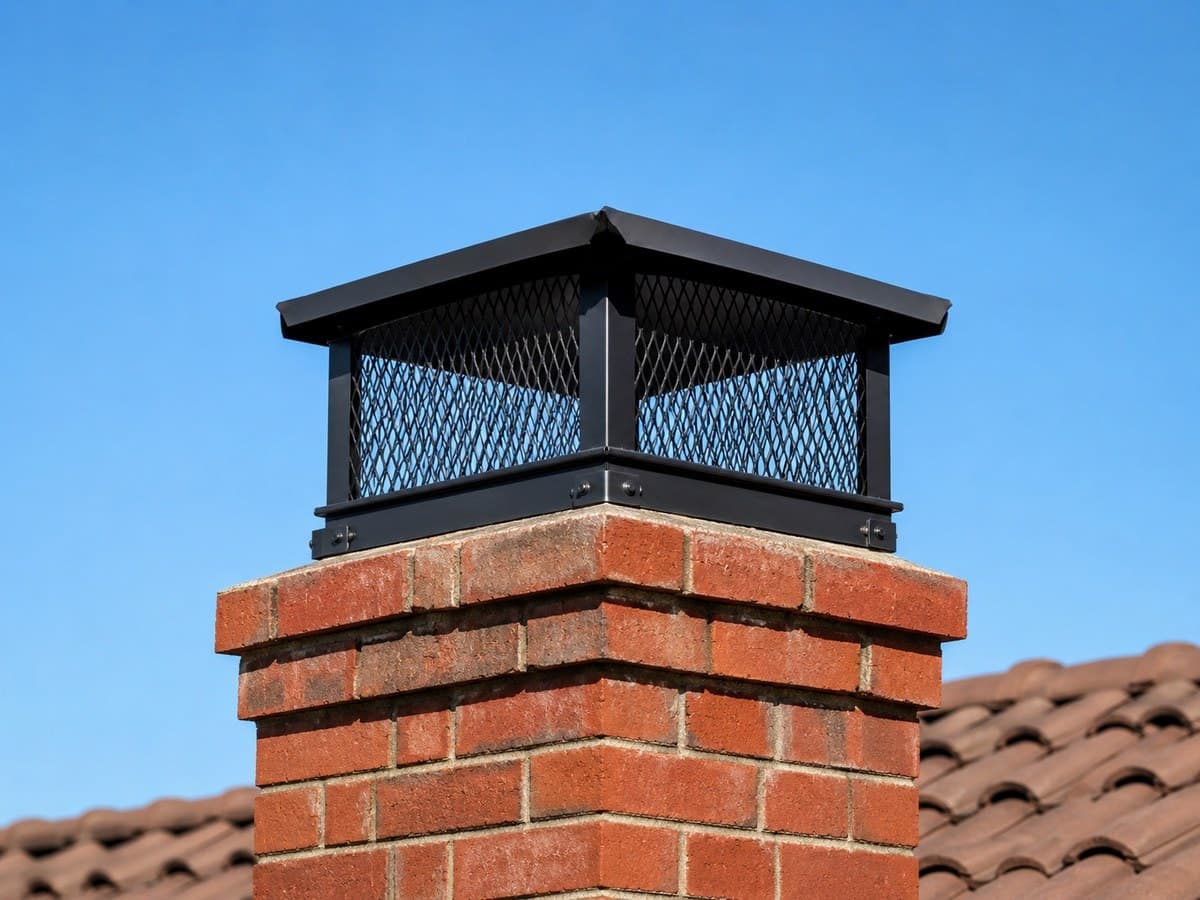
| Cap missing, tilted or dented | Rain straight down the flue; animals moving in | Missing or damaged cap |
| Chase cover lifted, bent or peeled back | Water inside the framed chase and on the fireplace | Rust and chase covers |
| Bricks or crown pieces on the roof or ground | Water into the masonry; more falling pieces | Cracked crown |
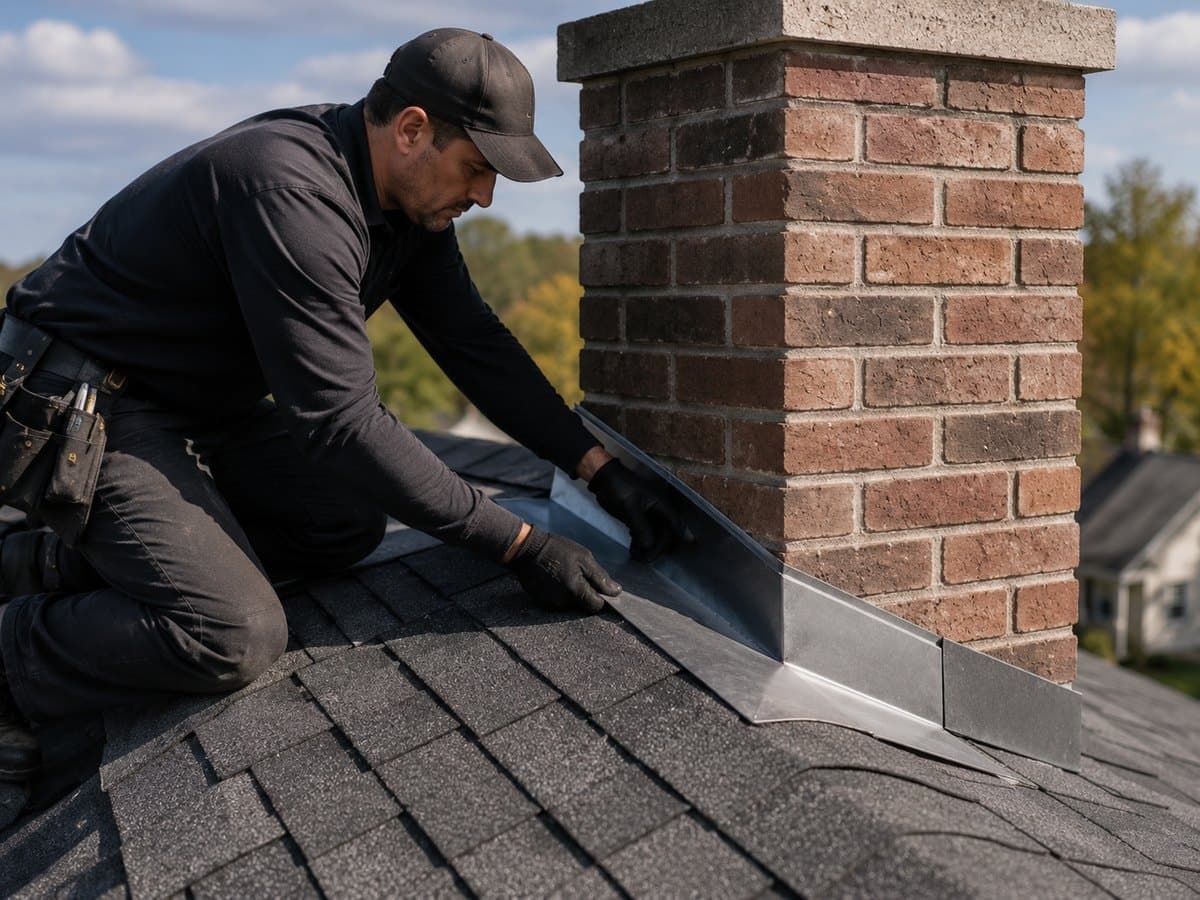
| Flashing pulled away or roof damage at the chimney | Leaks beside the chimney | Leaking flashing |
| Chimney or chase out of line, or a new gap at the wall | Structural movement | Leaning chimney |
| New water in the firebox or stains near the chimney | An opening somewhere at the top | Water through the chimney |
Steps to take, in order
Stay safe
Keep clear of the chimney base if anything looks loose, and don’t go on the roof.
Document
Photograph the chimney from every side you can see, anything on the ground, and any water inside, with the date. Keep damaged parts such as a cap.
Limit water damage
Close the damper and fireplace doors, put a tray in the firebox, and move valuables away from any wet wall.
Don’t use the fireplace
Leave it unused, including gas logs, until the flue and top have been checked.
Call your insurer and book an inspection
An inspection that records storm-related damage separately from wear helps the claim. Our hurricane season checklist covers what to prepare.
Safe checks from the ground
- Walk around the house and look at the chimney from each side with binoculars: cap, top, sides and roof line.
- Check the yard and gutters for metal pieces, brick, stucco or crown fragments.
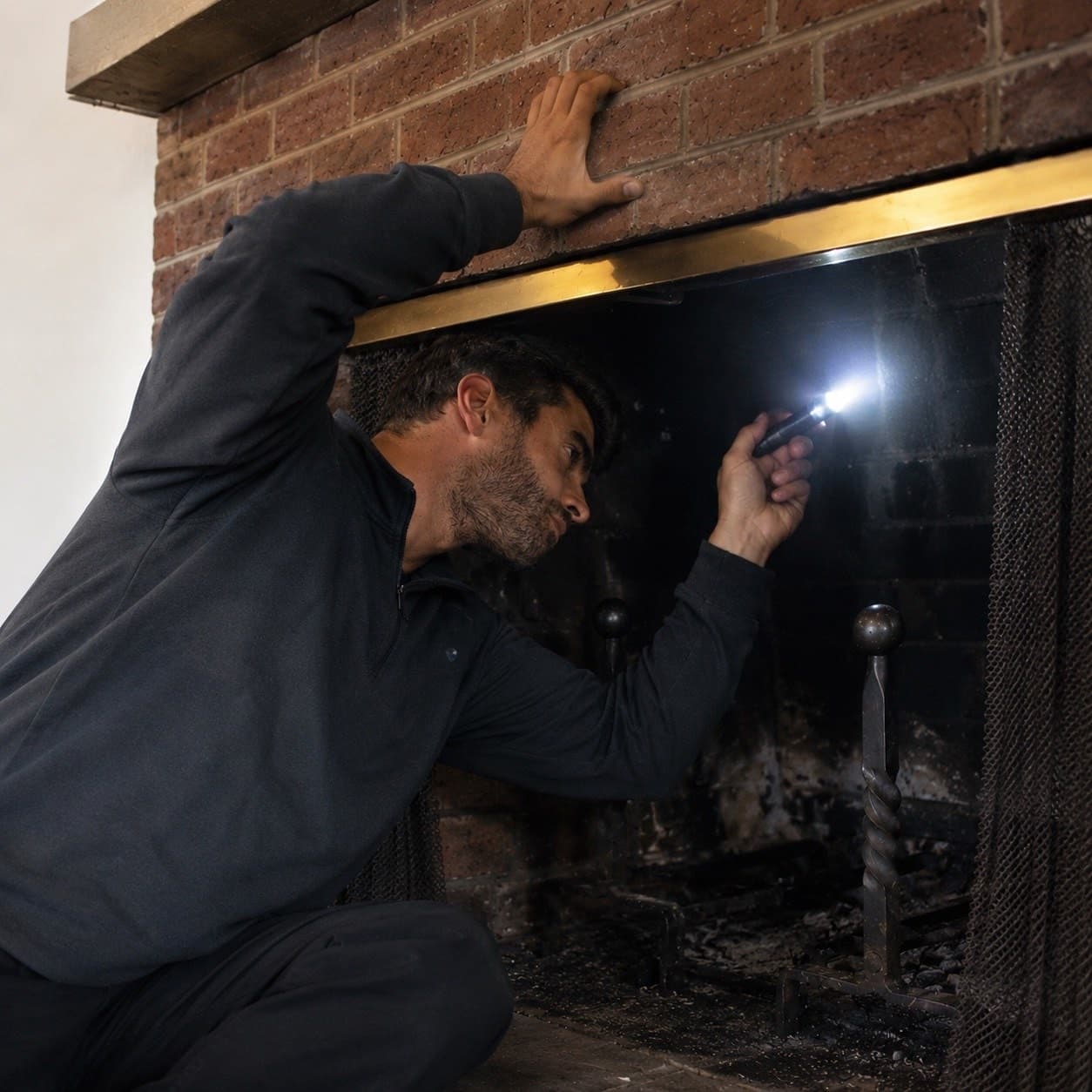
- Look up the flue from the firebox with a flashlight for debris, water or daylight where there shouldn’t be any.
- Check the attic around the chimney for wet insulation or dripping.
- Test smoke and CO alarms, especially if you ran a generator or have gas appliances.
Red flags
- A chimney or chase that has visibly moved, cracked through or separated from the house.
- A tree limb resting on the chimney or roof beside it.
- Water running into the house, not just a drip.
- A gas appliance that vents into the chimney where the cap or flue may be damaged. Leave it off.
What a storm-damage inspection involves
NFPA 211 calls for a more detailed Level 2 inspection after an event that may have damaged a chimney, including severe weather (Chimneys.com). In practice that means the top of the chimney is checked up close, the flue is examined for cracks or displaced tiles as far as it can be seen, and flashing, crown, cap and chase are recorded with notes on what looks storm-related. Our storm damage chimney inspection page describes the visit.
After the storm: which service
| Damage found | Where it’s fixed |
|---|---|
| Cap missing or bent | cap replacement |
| Chase cover lifted or torn | chase cover replacement |
| New leak after the storm | chimney leak repair |
| Bricks down, cracks or movement | structural chimney repair |
Insurers want the storm damage separated from older wear, which is what a storm damage chimney inspection does. Local: leak repair after storms in Kissimmee or St. Cloud chimney leak help.
References (3)
Facts and figures on this page come from these references.