What the crown does, and why it cracks
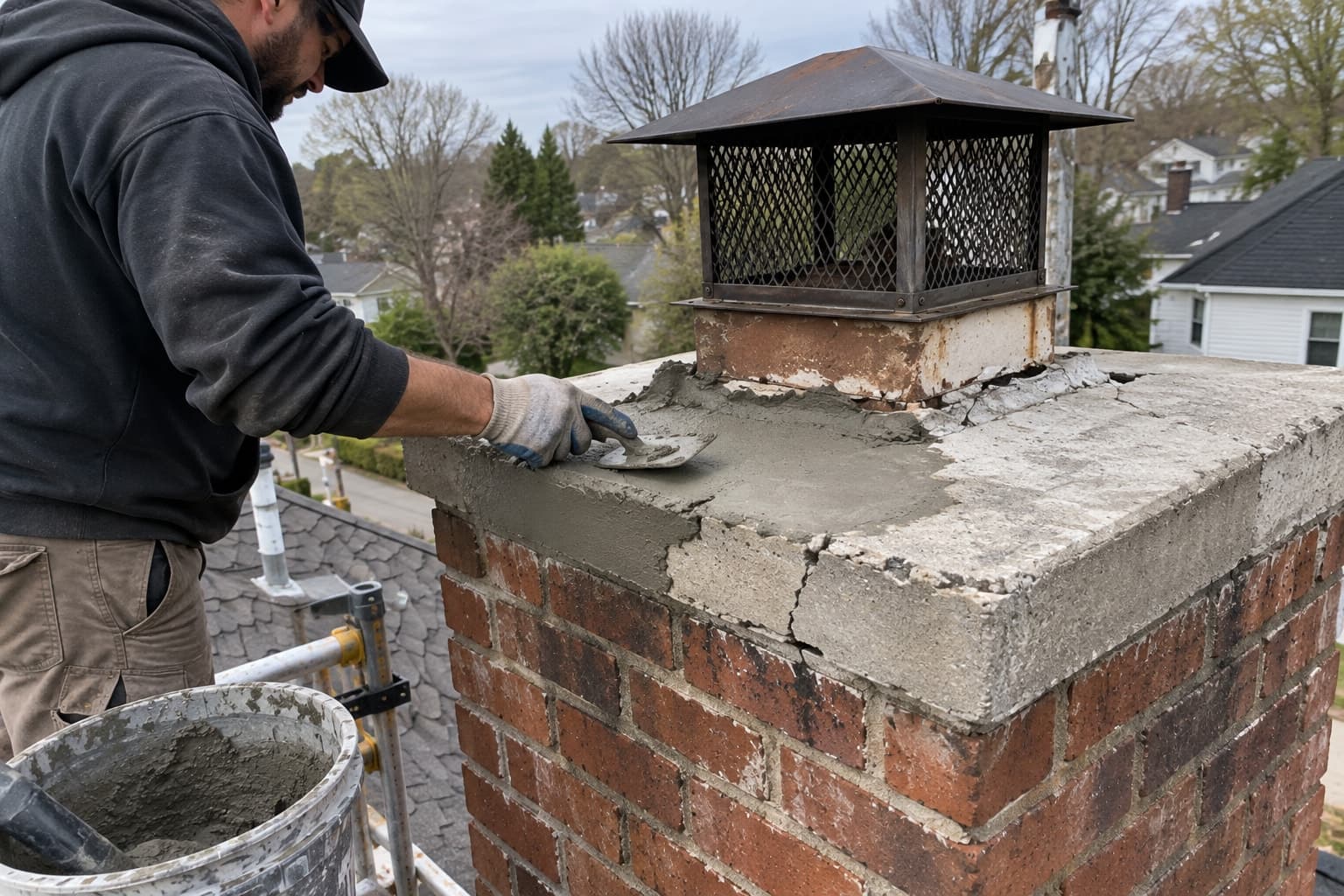
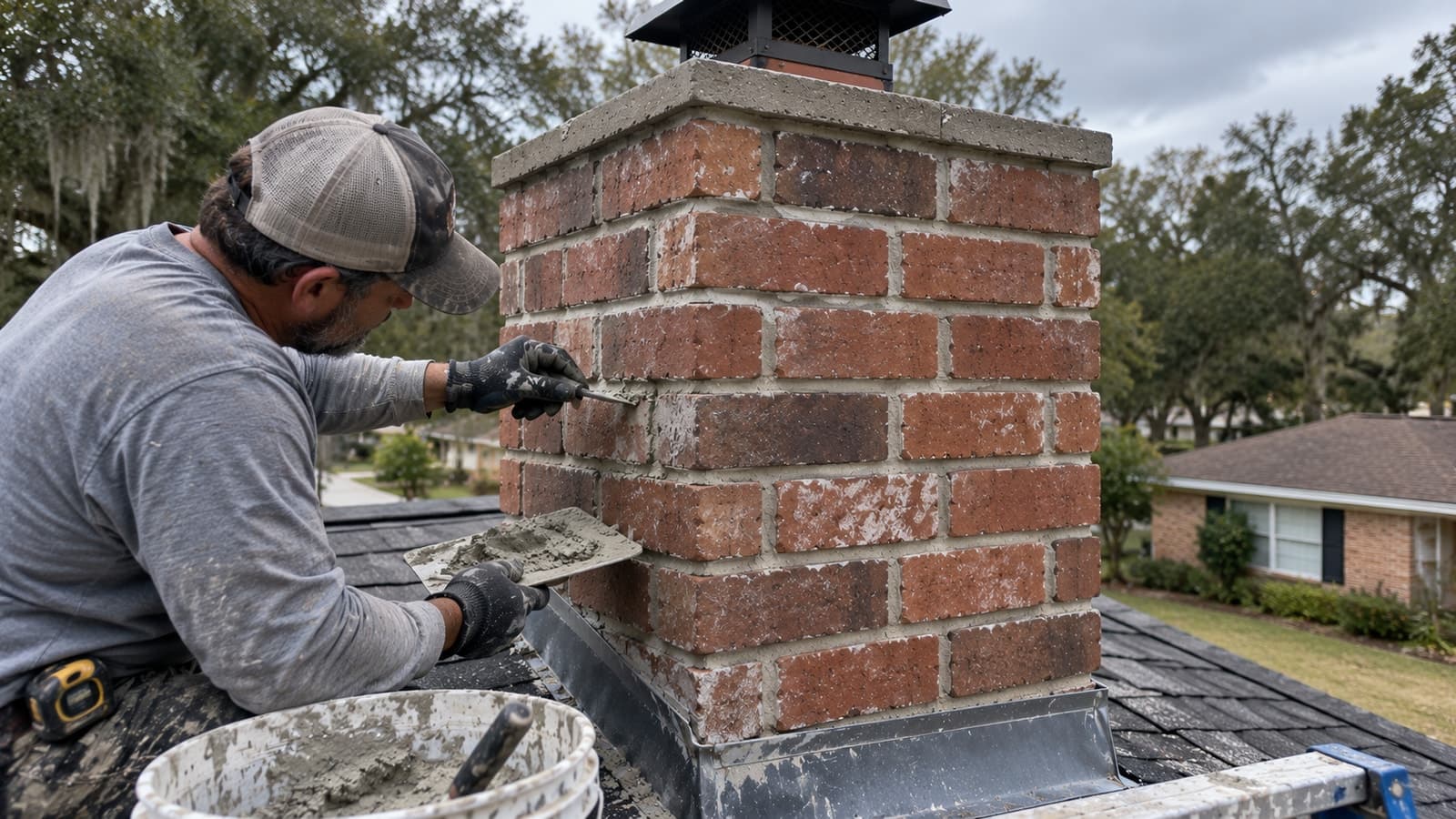
A brick chimney has two different things on top that people call a cap. The crown is the masonry slab that covers the top course of brick and seals around the flue liner. The chimney cap is the metal hood and screen that sits above the flue. The crown is meant to shed water outward, past the face of the brick, so that rain never soaks into the top of the chimney. For a quick visual of the parts, see parts of a chimney.
Masonry chimney and fireplace, cutaway
- 1Chimney cap. Metal lid with mesh sides over the flue opening. Keeps rain, debris and animals out.
- 2Crown. The concrete or mortar top of the masonry, sloped to shed water away from the flue.
- 3Flue liner. Clay tile or metal lining that carries smoke up and protects the masonry from heat.
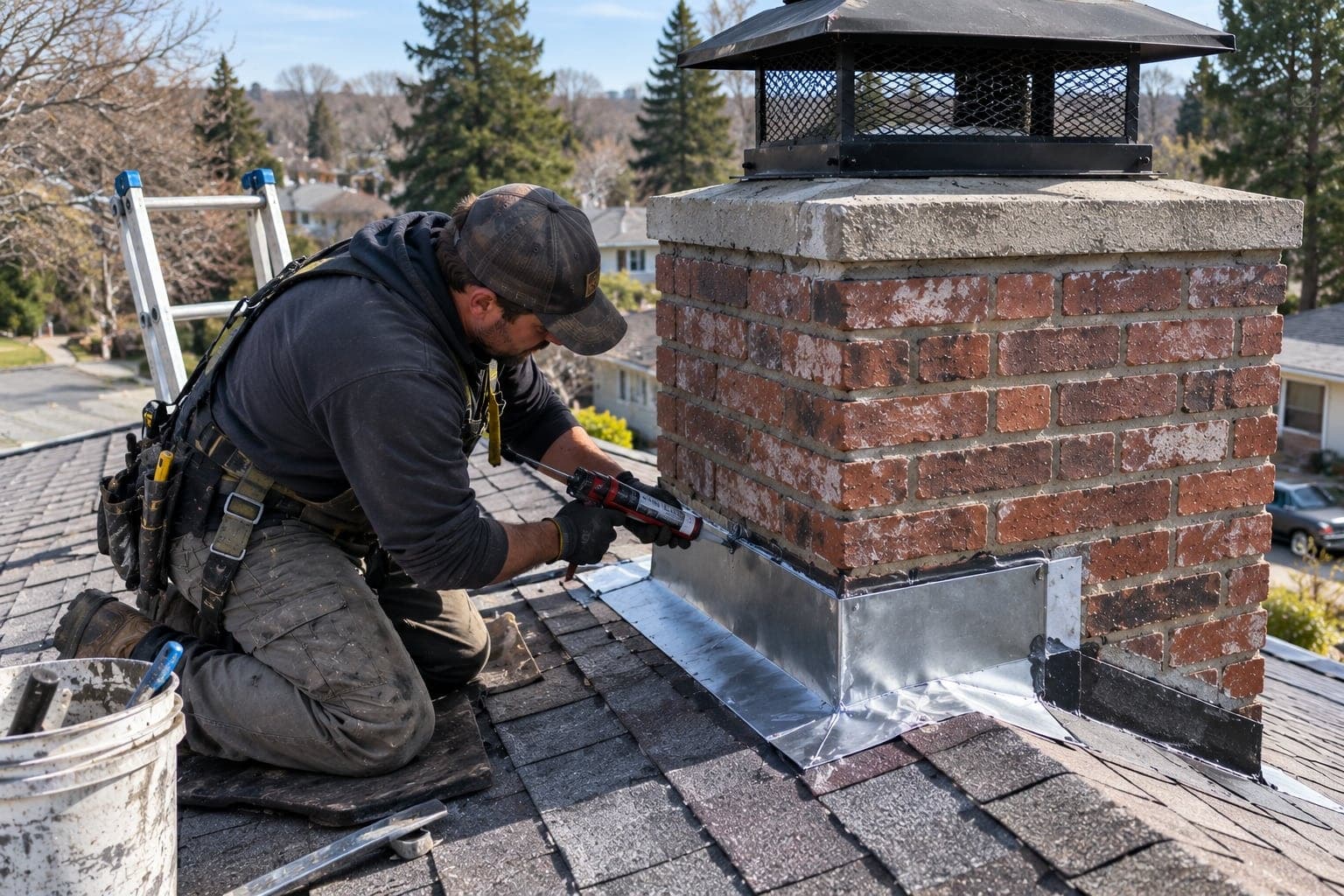
- 4Flashing. Metal that seals the joint between the chimney and the roof.
- 5Brick & mortar. The chimney structure. Mortar joints and brick faces absorb water when they wear.
- 6Smoke chamber. The sloped transition that funnels smoke from the firebox into the flue.
- 7Damper. Metal plate at the throat (or a sealing lid on top) that closes the flue when not in use.
- 8Firebox. Where the fire burns. Firebrick laid in heat-resistant mortar.
- 9Hearth. Non-combustible floor extension in front of the fireplace opening.
The residential chimney code in Florida calls for a masonry chimney top that is sloped to shed water, has a drip edge, and has a bond break around the flue liner so the two can move independently (Florida Building Code, Residential, Chapter 10). Many older crowns were finished by troweling leftover mortar over the top bricks: thin, nearly flat, with no overhang and bonded tight to the flue tile. Those crowns crack as the flue heats and cools, as the masonry expands and contracts in the sun, and simply because thin mortar is not a durable roof.
Reading the cracks
| What you see | What it usually means | Typical direction |
|---|---|---|
| Fine spiderweb crazing on the surface | Shrinkage or weathering of the top layer; water is not yet going through | Seal with a crown repair coating before it opens up |
| A crack running from the flue tile to the edge | The crown was bonded to the flue with no room to move | Seal if narrow; rebuild with a bond break if it keeps reopening |
| Water standing on the crown after rain | The crown is flat or dished and has no real slope | Rebuild with slope and a drip edge |
| Pieces missing, loose chunks, exposed brick | The crown has failed; water enters freely | Rebuild |
| Crown looks fine but bricks just below are loose | Water has been getting in for years, often through the crown joint | Crown plus masonry repair |
What a failing crown leads to
Damage that often traces back to the crown
01Water in the firebox or on the damper
- What you may notice
- Drips, a damp hearth or rust flakes after heavy rain, worse with wind from one direction.
- How it’s confirmed
- Water-testing the crown and cap separately from the flashing so the right component gets fixed.
02Loose or missing bricks at the top
- What you may notice
- Brick pieces on the roof, gaps in the top two or three courses.
- How it’s confirmed
- Checking whether the top courses are still bonded before a new crown is poured on them.
03White staining on the brick
- What you may notice
- Efflorescence starting just below the crown and fading lower down.
- How it’s confirmed
- Tracing the salt deposits to where water enters the masonry.
04Cracked flue tile
- What you may notice
- Pieces of clay tile on the smoke shelf or damper; the top tile loose in the crown.
- How it’s confirmed
- Inspection of the flue top once the crown and top tile are examined.
Safe checks from the ground
- Use binoculars from the yard to look at the top of the chimney after a rain: dark wet patches just below the crown suggest water is soaking in.
- Look for concrete or brick pieces on the roof, in the gutters or on the ground beside the chimney.
- Check whether the crown overhangs the brick. A crown that stops flush with the face sheds water down the brick instead of away from it.
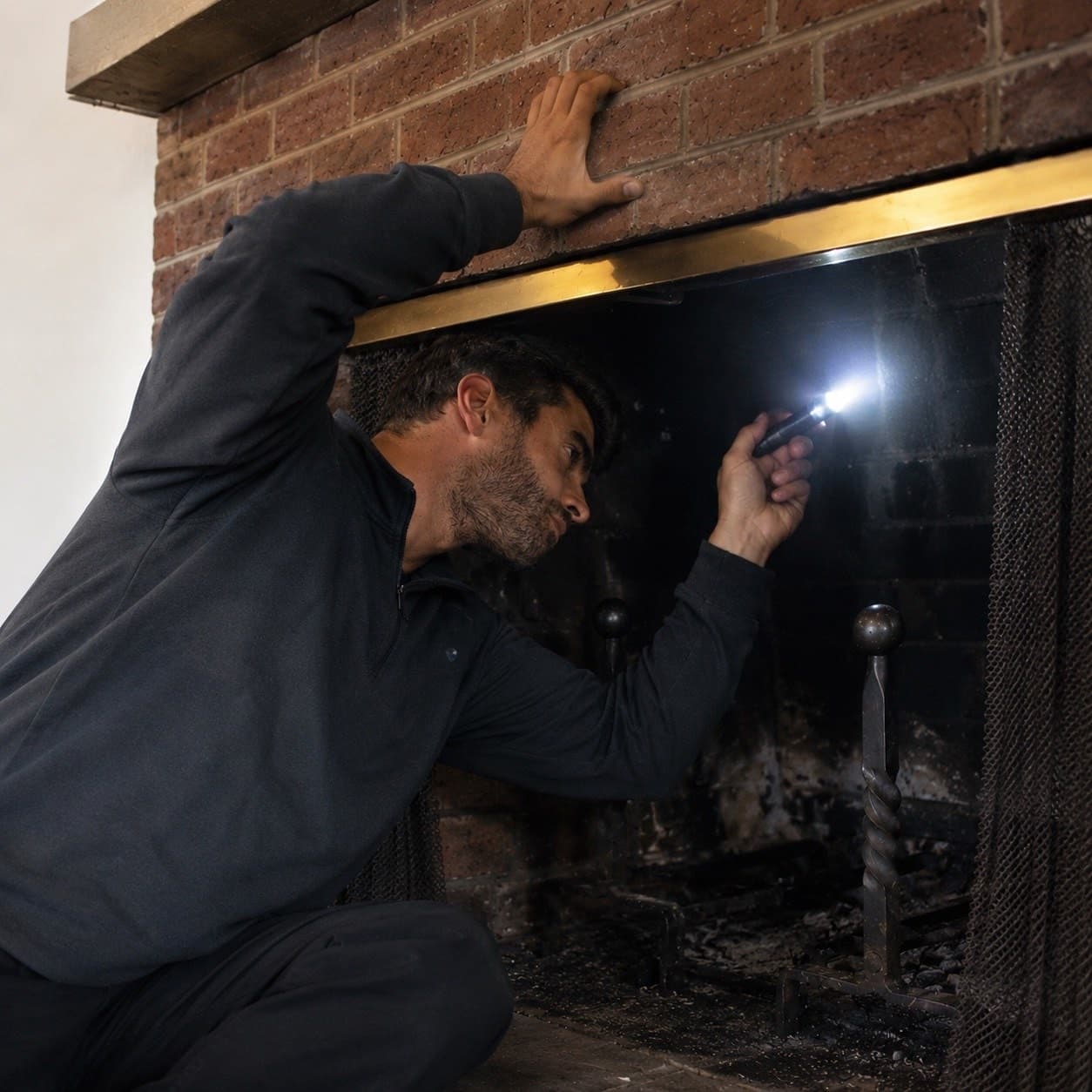
- With the fireplace cold, look up from the firebox with a flashlight for water lines, rust or tile fragments on the damper.
- Note whether water shows up inside only during long, wind-driven storms. That pattern fits the crown and cap more than the flashing.
Stay off the roof
Crown inspection means standing at the top of the chimney, often on a steep or tile roof. Tile and older shingles break underfoot, and a crumbling crown is not a handhold. Use binoculars or a phone camera zoom from the ground instead.
Sealing, repairing or rebuilding
| Feature | Repair or seal | Rebuild |
|---|---|---|
| Cracks | Hairline to narrow, few in number | Wide, many, or through the full depth |
| Slope | Already sheds water | Flat or holding water |
| Overhang | Has a drip edge | Flush with the brick, no drip edge |
| Soundness | Solid when tapped | Hollow, loose or missing pieces |
| Around the flue | Flexible seal can be added | Bonded to the tile and cracking repeatedly |
Cracks
- Repair or seal
- Hairline to narrow, few in number
- Rebuild
- Wide, many, or through the full depth
Slope
- Repair or seal
- Already sheds water
- Rebuild
- Flat or holding water
Overhang
- Repair or seal
- Has a drip edge
- Rebuild
- Flush with the brick, no drip edge
Soundness
- Repair or seal
- Solid when tapped
- Rebuild
- Hollow, loose or missing pieces
Around the flue
- Repair or seal
- Flexible seal can be added
- Rebuild
- Bonded to the tile and cracking repeatedly
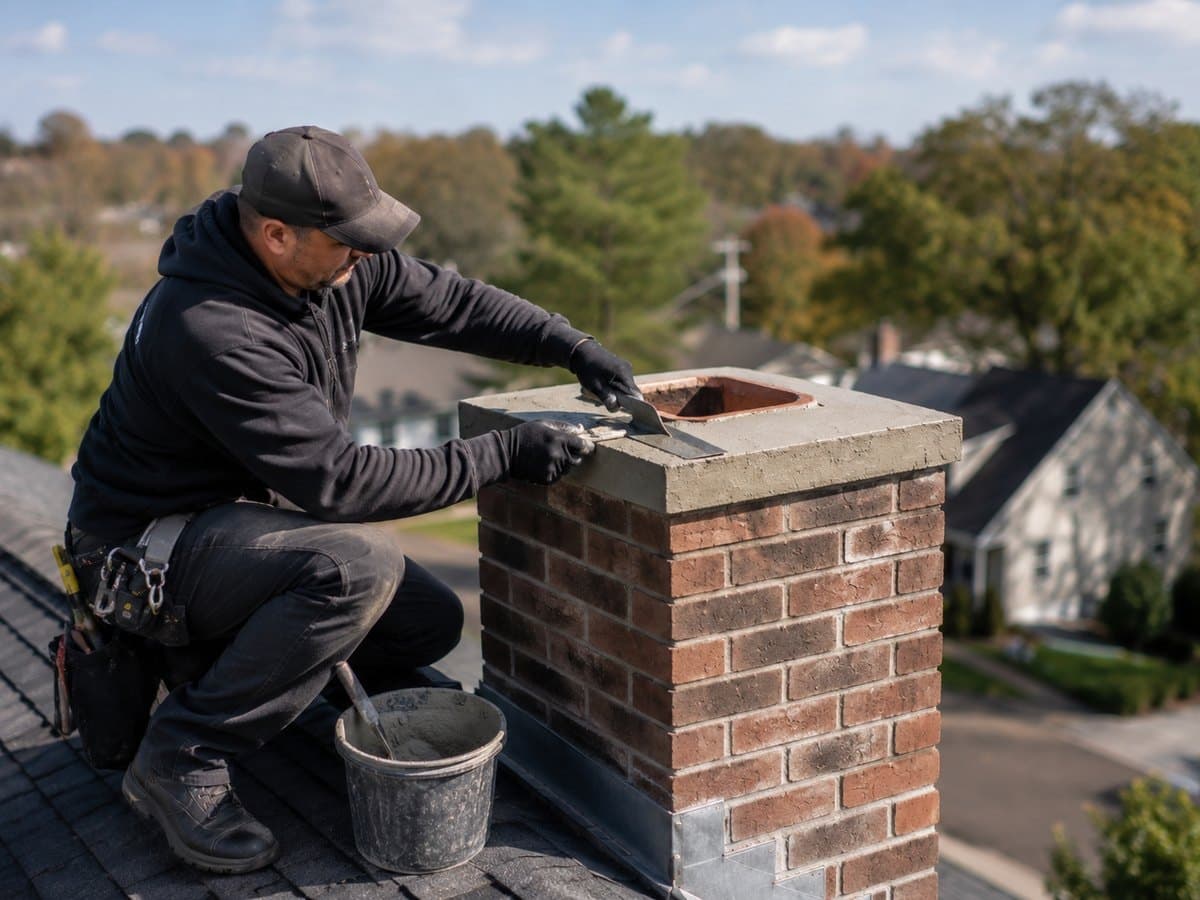
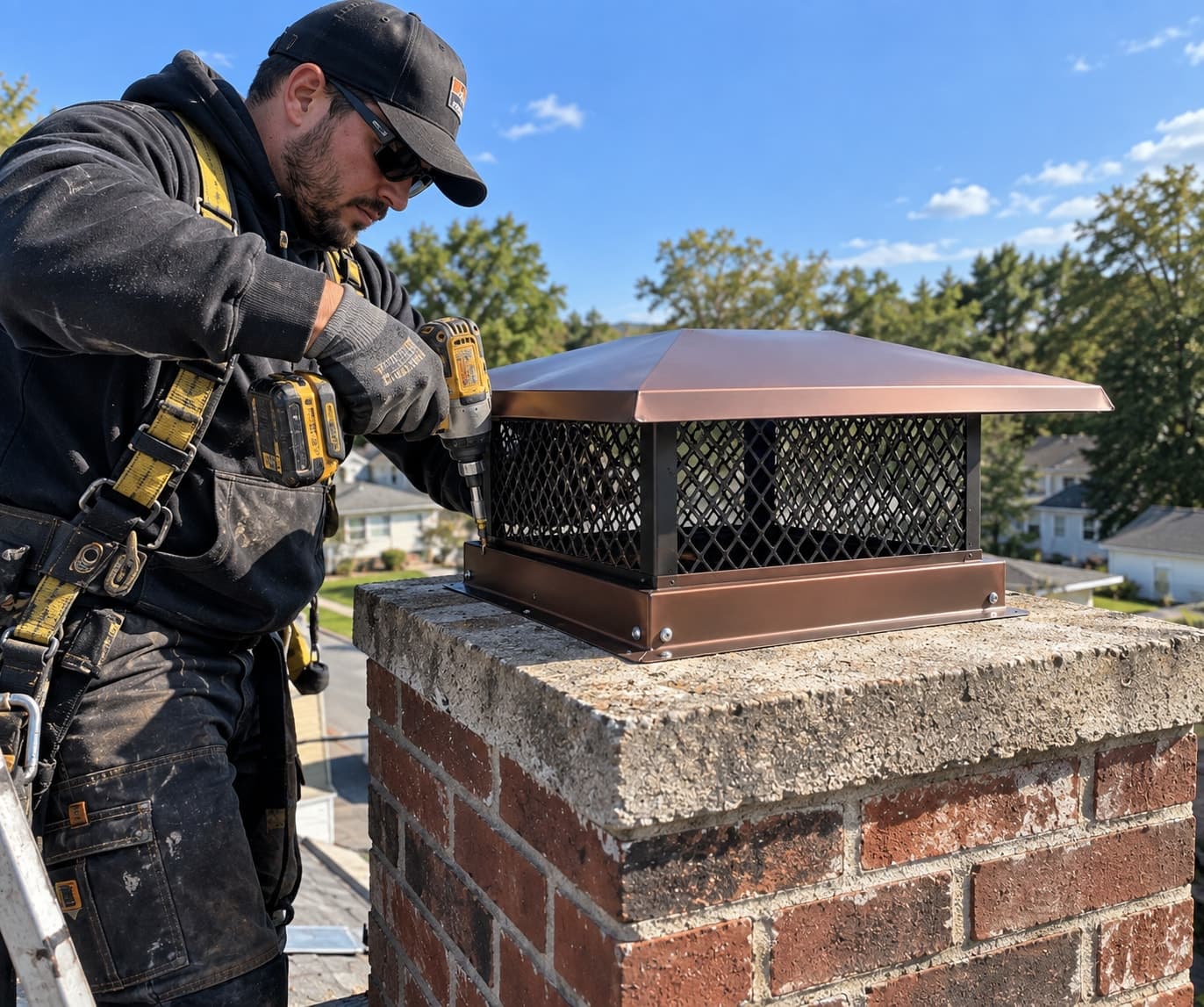
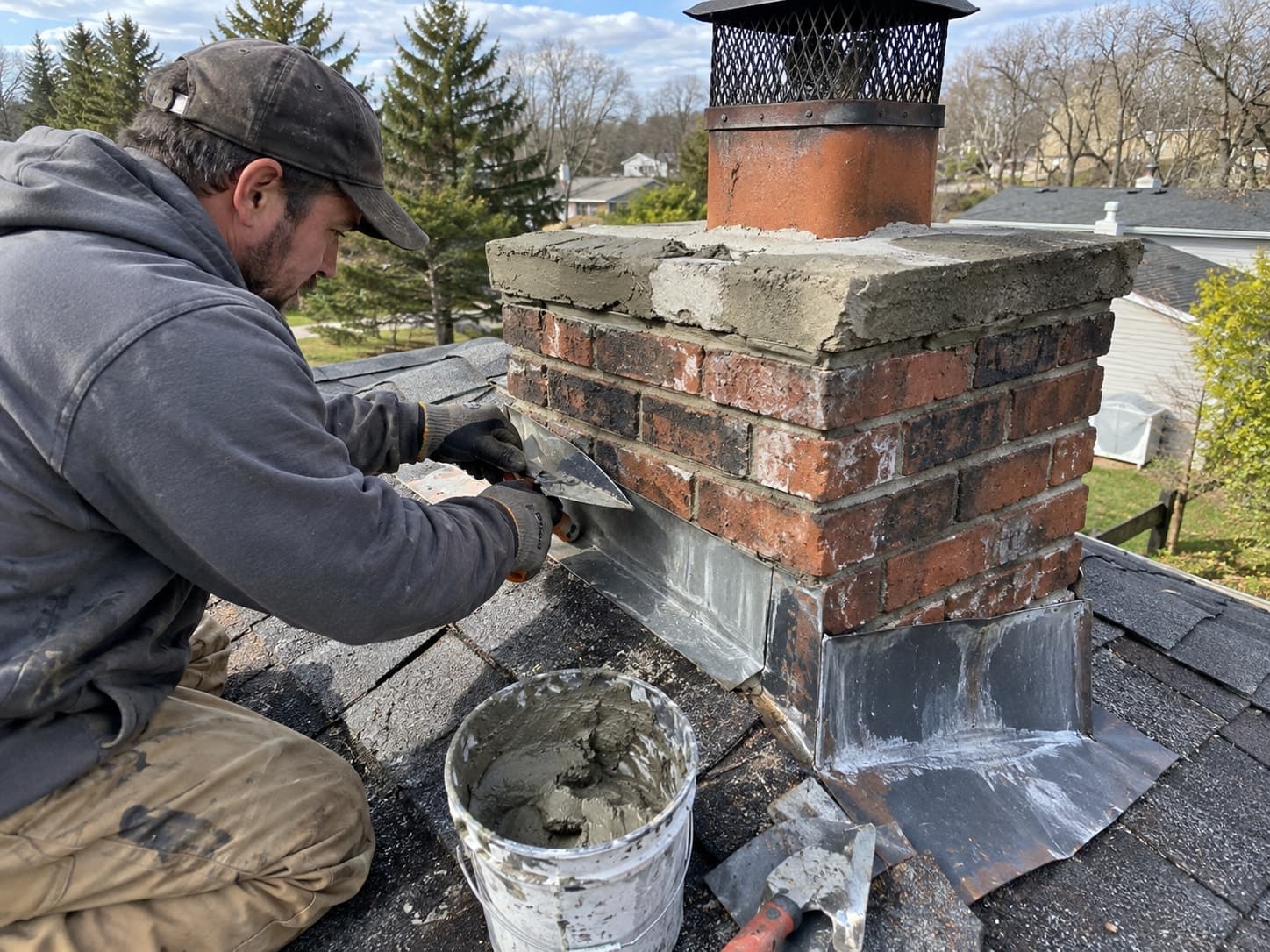
Patching a thin mortar crown with more mortar rarely lasts: the new layer is thinner still and cracks along the old lines. A rebuilt crown is formed with an overhang, sloped away from the flue, and separated from the flue tile with a flexible joint. A metal cap over the flue reduces the rain that lands on the crown in the first place, which is why the two are often done together. Our chimney crown repair page walks through both approaches.
Red flags
- Chunks of crown or brick falling from the chimney top.
- The flue tile loose or tilted in the crown.
- Water in the firebox after ordinary rain, not just hurricanes.
- Soft, wet or stained drywall near the chimney: see stains around the chimney.
- Mortar washing out of the top courses, covered in mortar falling out of a chimney.
What a professional crown assessment involves
Close look at the top
The crown is checked for cracks, slope, overhang, soundness and how it meets the flue tile.
The layers around it
The cap, the top brick courses and the flue tile are checked at the same visit, because crown work sits on all three.
Inside evidence
The damper, smoke shelf and firebox are checked for water, rust and tile fragments.
The right scope
A coating for sound crowns with surface cracks; a rebuild when the slab is thin, flat or broken.
Seal, repair or rebuild?
| Crown condition | Where it’s fixed |
|---|---|
| Hairline cracks in a sound crown | sealing with a crown coating as part of crown repair |
| Wide cracks, crumbling or a thin mortar wash | rebuilding the crown with an overhang and bond break (crown repair) |
| Water already inside the chimney | a leak diagnosis to find every entry point |
| Crown fine but the flue opening uncovered | a chimney cap |
The crown is one of the most common entry points for water, so the crack is only half the question. The chimney crown explained covers how a crown should be built. Nearby: crown and masonry repair in Winter Park or chimney leak help in Sanford.
References (1)
Facts and figures on this page come from these references.