In short
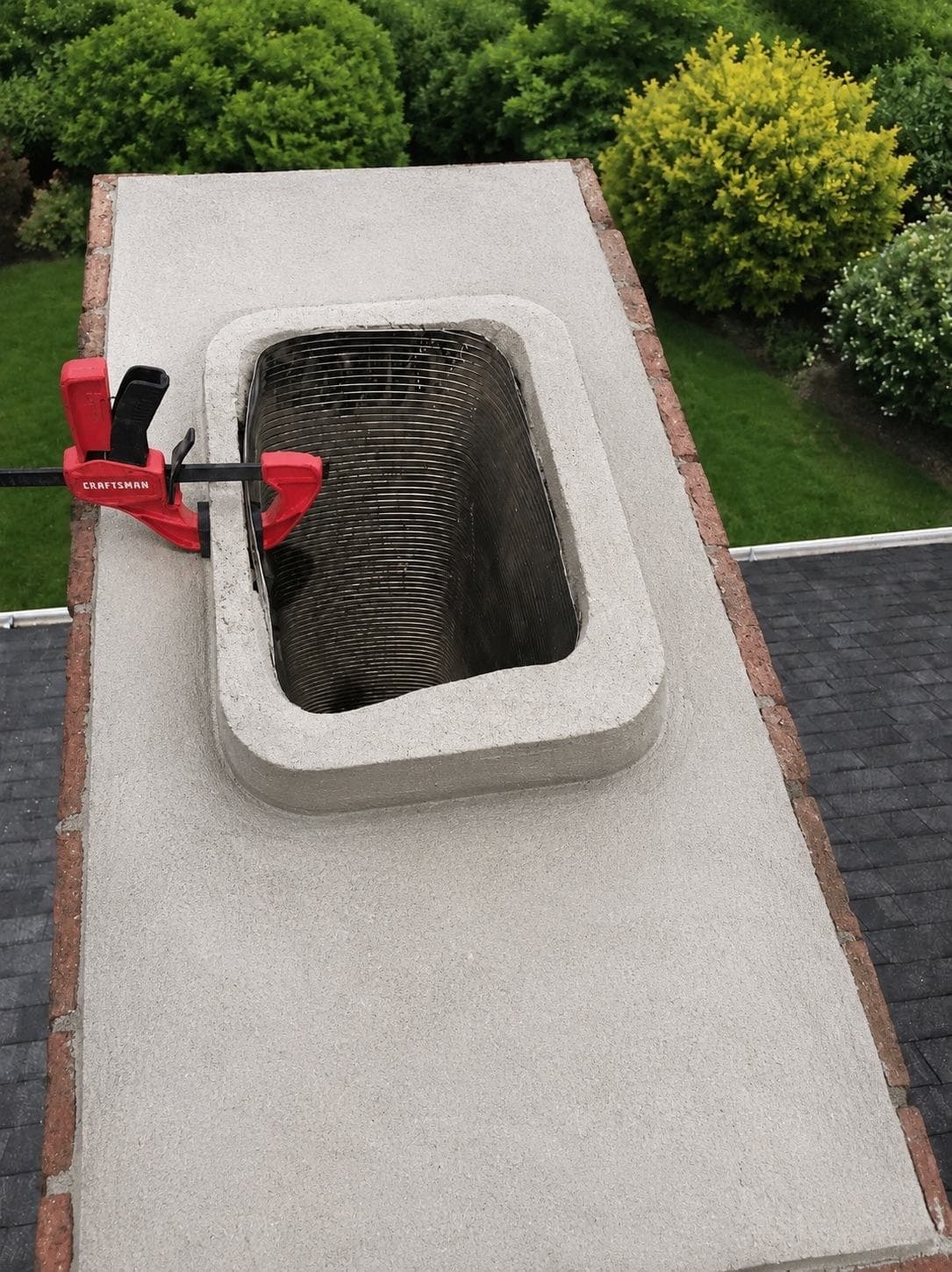
A chimney crown is the sloped concrete slab over the top course of brick on a masonry chimney. It sheds rain off the brick, seals around the flue liner and overhangs the faces so water drips clear. A cap is a separate metal hood over the flue; a factory-built chimney has a chase cover instead of a crown.
Crown, wash and cap: three different things
| Term | What it is | Job |
|---|---|---|
| Crown | A formed or precast slab of concrete over the top course of brick, with an overhang | Sheds water off the masonry and seals around the flue |
| Wash (mortar wash) | A thin layer of mortar troweled over the top bricks, usually without overhang | An older, weaker substitute for a crown |
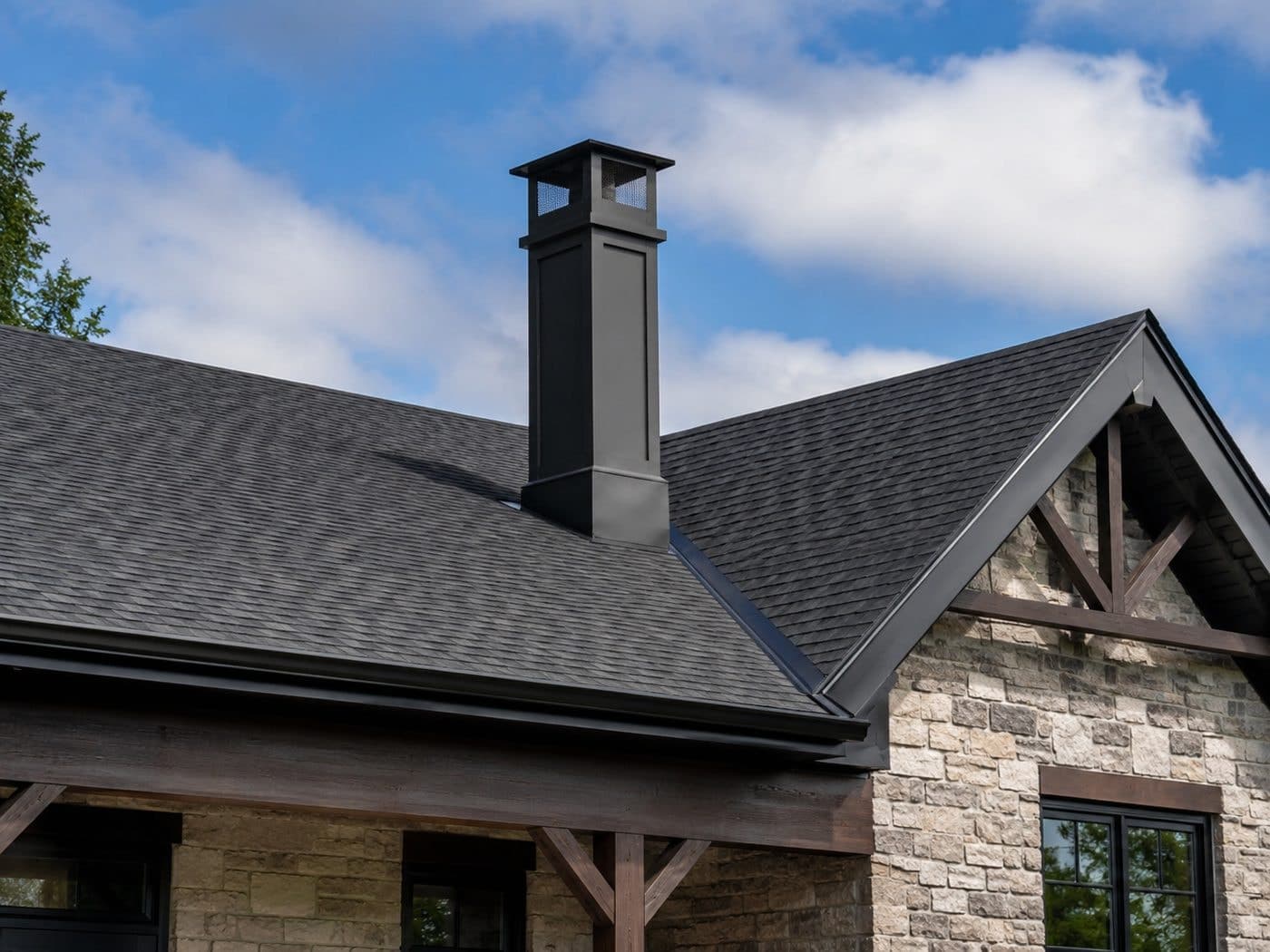
| Chimney cap | A metal hood and screen over the flue opening | Keeps rain, animals and sparks out of the flue |
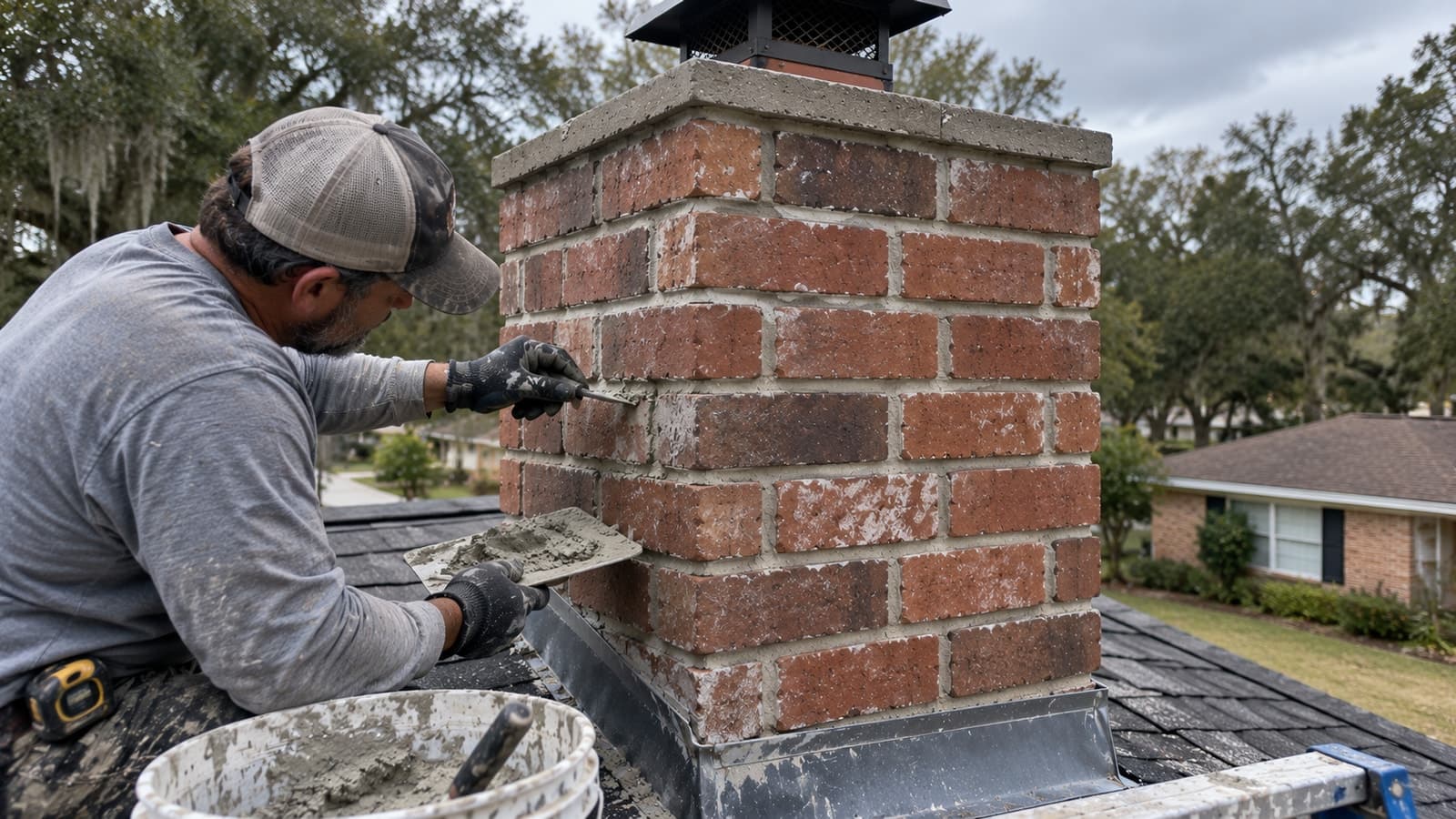
Many chimneys described as having a crown actually have a mortar wash. The difference matters: a wash is thin, nearly flat and flush with the brick face, so it cracks sooner and sends water down the brick instead of away from it.
Masonry chimney and fireplace, cutaway
- 1Chimney cap. Metal lid with mesh sides over the flue opening. Keeps rain, debris and animals out.
- 2Crown. The concrete or mortar top of the masonry, sloped to shed water away from the flue.
- 3Flue liner. Clay tile or metal lining that carries smoke up and protects the masonry from heat.
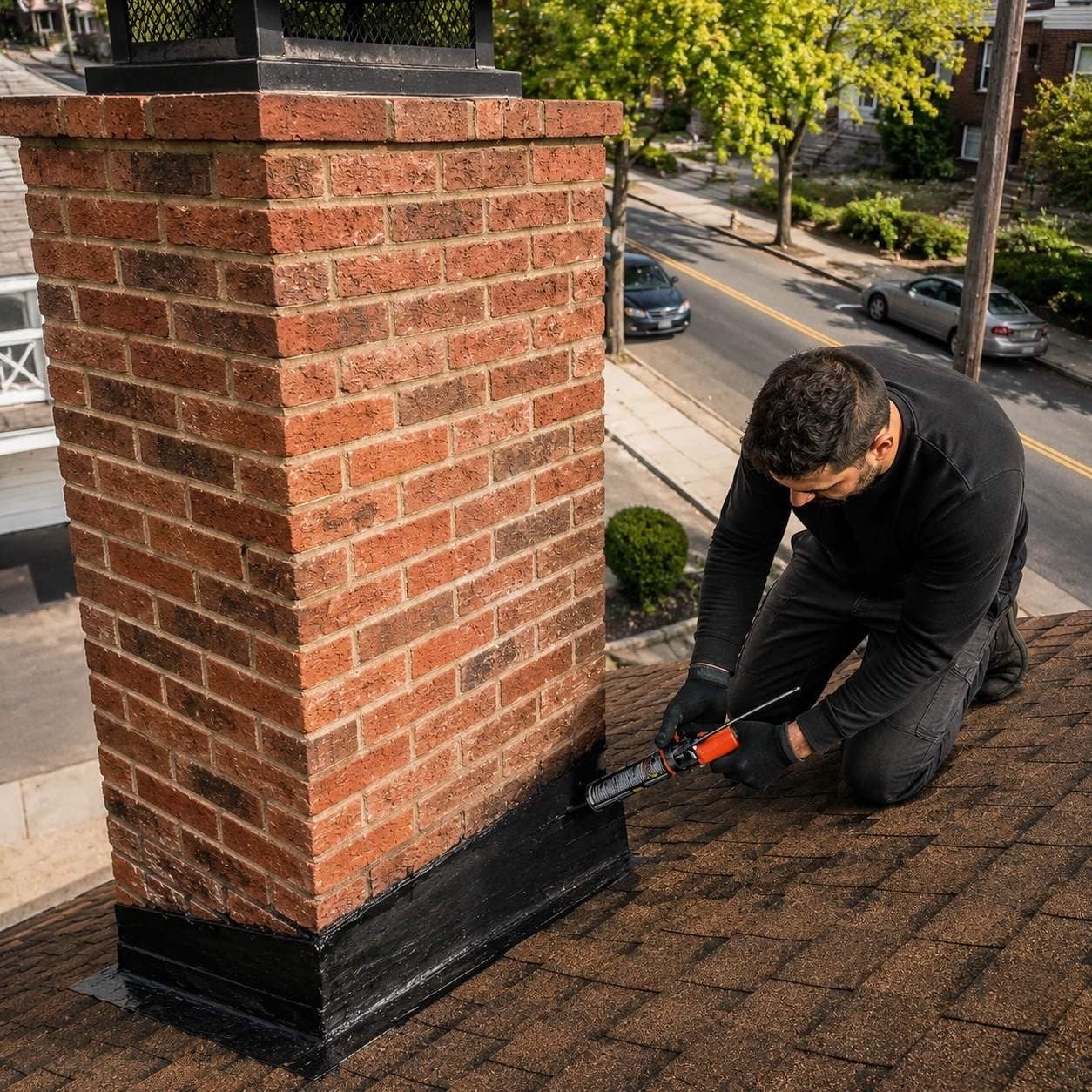
- 4Flashing. Metal that seals the joint between the chimney and the roof.
- 5Brick & mortar. The chimney structure. Mortar joints and brick faces absorb water when they wear.
- 6Smoke chamber. The sloped transition that funnels smoke from the firebox into the flue.
- 7Damper. Metal plate at the throat (or a sealing lid on top) that closes the flue when not in use.
- 8Firebox. Where the fire burns. Firebrick laid in heat-resistant mortar.
- 9Hearth. Non-combustible floor extension in front of the fireplace opening.
What a well-built crown looks like
- Made of concrete (or precast stone or concrete) thick enough to resist cracking, not a skim of mortar.
- Sloped away from the flue so water runs off rather than pooling.
- Overhangs the brick on every side, with a drip edge (a groove or kerf underneath) so water drops clear of the face.
- Separated from the flue liner by a bond break and a flexible sealant joint, so the liner can expand without cracking the crown.
- Free of steel reinforcing close to the surface, where rust would expand and crack the concrete.
The residential code in Florida calls for masonry chimney tops that are sloped to shed water, have a drip edge and have a bond break around the flue liner (Florida Building Code, Residential, Chapter 10).
Poured in place vs precast
| Feature | Poured in place | Precast |
|---|---|---|
| How it’s made | Formed and poured on top of the chimney | Cast on the ground or in a shop, then set on the chimney |
| Fit | Shaped to the exact chimney and flue layout | Needs accurate measurements; standard sizes may not fit |
| Curing | Cures on the roof; weather-sensitive | Cured before installation |
| Good for | Irregular chimneys and multiple flues | Standard single-flue chimneys |
How it’s made
- Poured in place
- Formed and poured on top of the chimney
- Precast
- Cast on the ground or in a shop, then set on the chimney
Fit
- Poured in place
- Shaped to the exact chimney and flue layout
- Precast
- Needs accurate measurements; standard sizes may not fit
Curing
- Poured in place
- Cures on the roof; weather-sensitive
- Precast
- Cured before installation
Good for
- Poured in place
- Irregular chimneys and multiple flues
- Precast
- Standard single-flue chimneys
Crown coatings: what they can and can’t do
Elastomeric crown coatings bridge hairline cracks and add a flexible waterproof layer to a crown that is otherwise sound. They are useful early. They do not add slope to a flat crown, create an overhang that isn’t there, or hold together a crown that has broken into pieces. For those, the crown is rebuilt. Waterproofing the brick below the crown is a separate step, covered in chimney waterproofing explained.
How long crowns last
A properly built concrete crown can last decades. A mortar wash often starts cracking within a few years. In Central Florida, heavy summer rain and strong sun do more of the work than freeze-thaw cycles, which are rare, so the main enemies are poor slope, a missing drip edge and a crown bonded tight to the flue. A cap reduces the rain that lands on the crown; see chimney caps.
When to have the crown looked at
- Water in the firebox or rust on the damper after ordinary rain.
- Pieces of concrete or mortar on the roof or in the gutters; if the brick below is loose too, see chimney repair vs rebuild.
- White staining that starts just below the top of the chimney.
- Any reroof, since the chimney top is easy to reach while roofers are there; the flashing guide covers the joint at the roof line.
If you’re already seeing cracks, the symptom guide on a cracked chimney crown helps judge urgency. Coatings and rebuilds are both part of chimney crown repair.
If the crown is already cracked, the cracked crown symptom page covers urgency, and water in the firebox after rain is usually traced through water coming through a chimney. For the difference between the crown and the metal tops of prefab chimneys, see chimney cap vs chase cover. Many historic brick chimneys have a thin mortar wash rather than a true crown; chimney repair in Winter Park is one area where that comes up.
References (1)
Facts and figures on this page come from these references.