The short answer
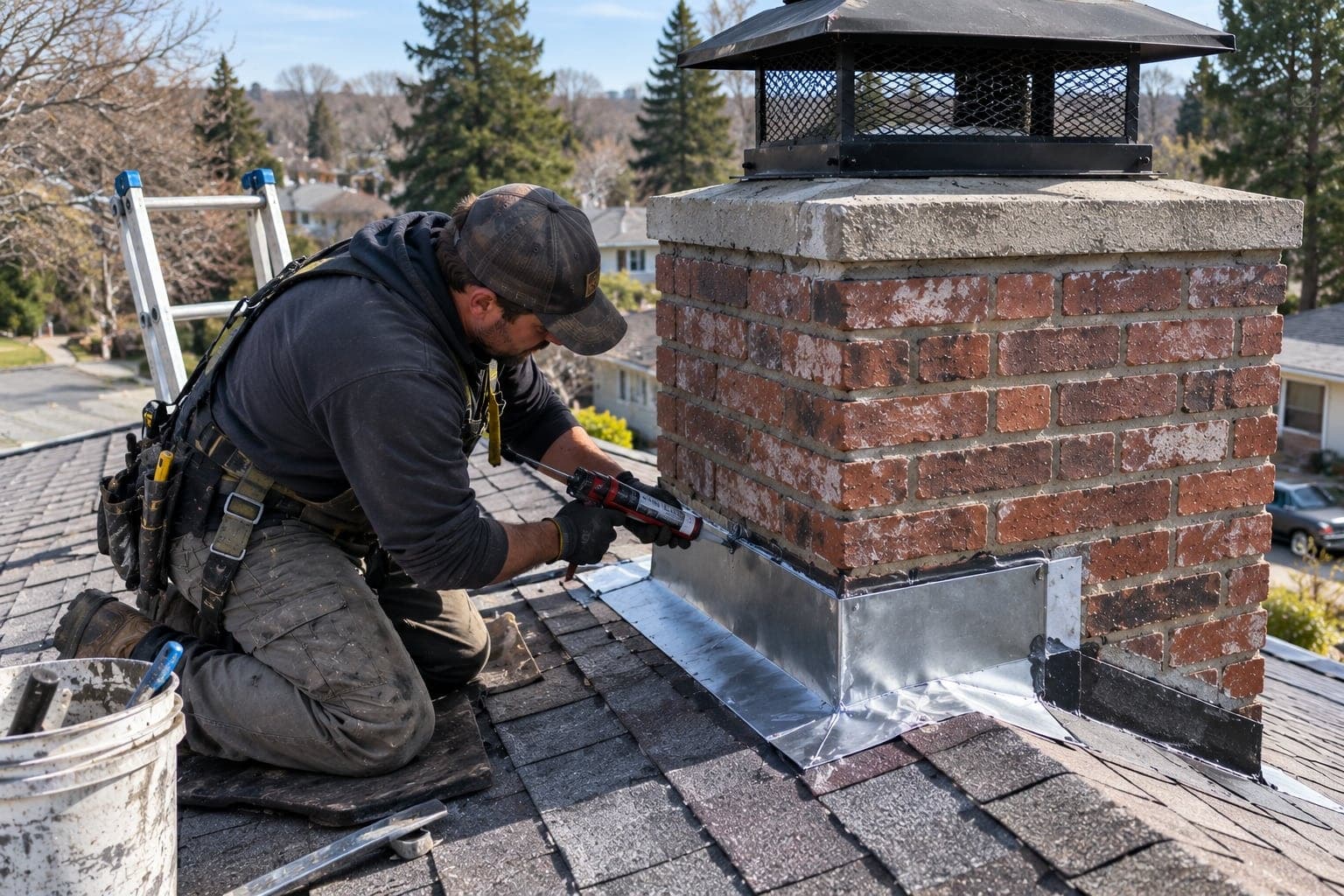
Waterproofing helps when water is soaking in through the brick and mortar faces. It doesn’t help when water is entering through a cracked crown, missing cap, failed flashing or open joints, which are the more common leak points. That’s why a good waterproofing job starts with repairs and ends with the treatment.
Breathable repellents vs sealers
| Feature | Breathable water repellent | Film-forming sealer or paint |
|---|---|---|
| How it works | Penetrates the surface and lines the pores so liquid water beads off | Forms a skin on the surface |
| Water vapor | Can still escape from inside the masonry | Trapped behind the film |
| Appearance | Little or no change | Glossy, darker or painted look |
| Risk | Low when applied to sound masonry | Trapped moisture can cause spalling and peeling |
How it works
- Breathable water repellent
- Penetrates the surface and lines the pores so liquid water beads off
- Film-forming sealer or paint
- Forms a skin on the surface
Water vapor
- Breathable water repellent
- Can still escape from inside the masonry
- Film-forming sealer or paint
- Trapped behind the film
Appearance
- Breathable water repellent
- Little or no change
- Film-forming sealer or paint
- Glossy, darker or painted look
Risk
- Breathable water repellent
- Low when applied to sound masonry
- Film-forming sealer or paint
- Trapped moisture can cause spalling and peeling
The Brick Industry Association’s guidance on clear coatings for brick makes the same distinction: coatings that let water vapor pass are preferred over film-formers that can trap moisture in the wall (BIA Technical Note 6A). Chimney-specific products are usually siloxane- or silane-based repellents.
Where waterproofing fits in the repair order
Stop the big leaks
Repair or replace the cap, crown and flashing. See chimney flashing explained and chimney crown explained.
Repair the masonry
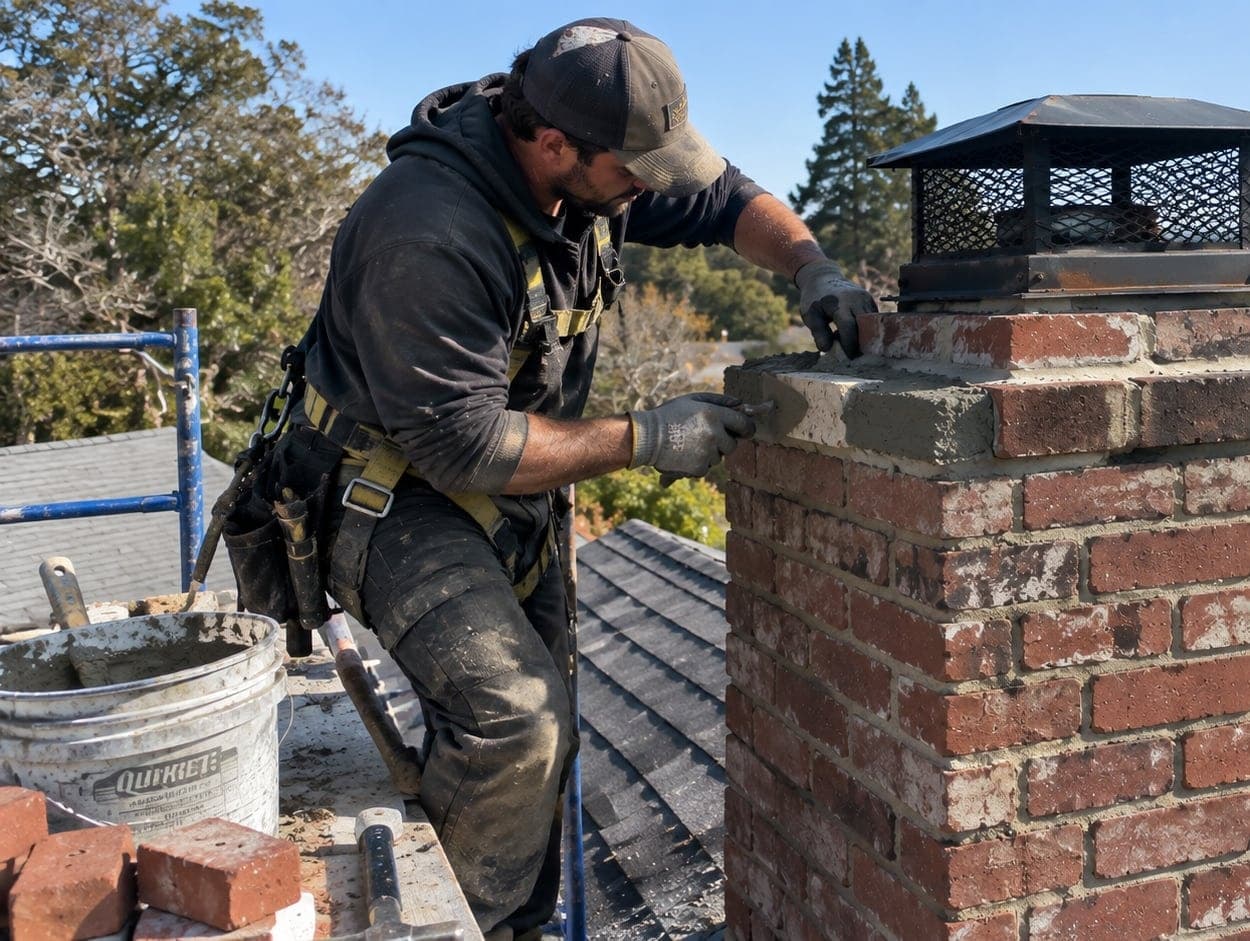
Repoint open joints and replace damaged brick; repellents don’t bridge gaps. See chimney repair vs rebuild.
Clean and dry
Efflorescence, dirt and biological growth are removed, and the masonry is allowed to dry.
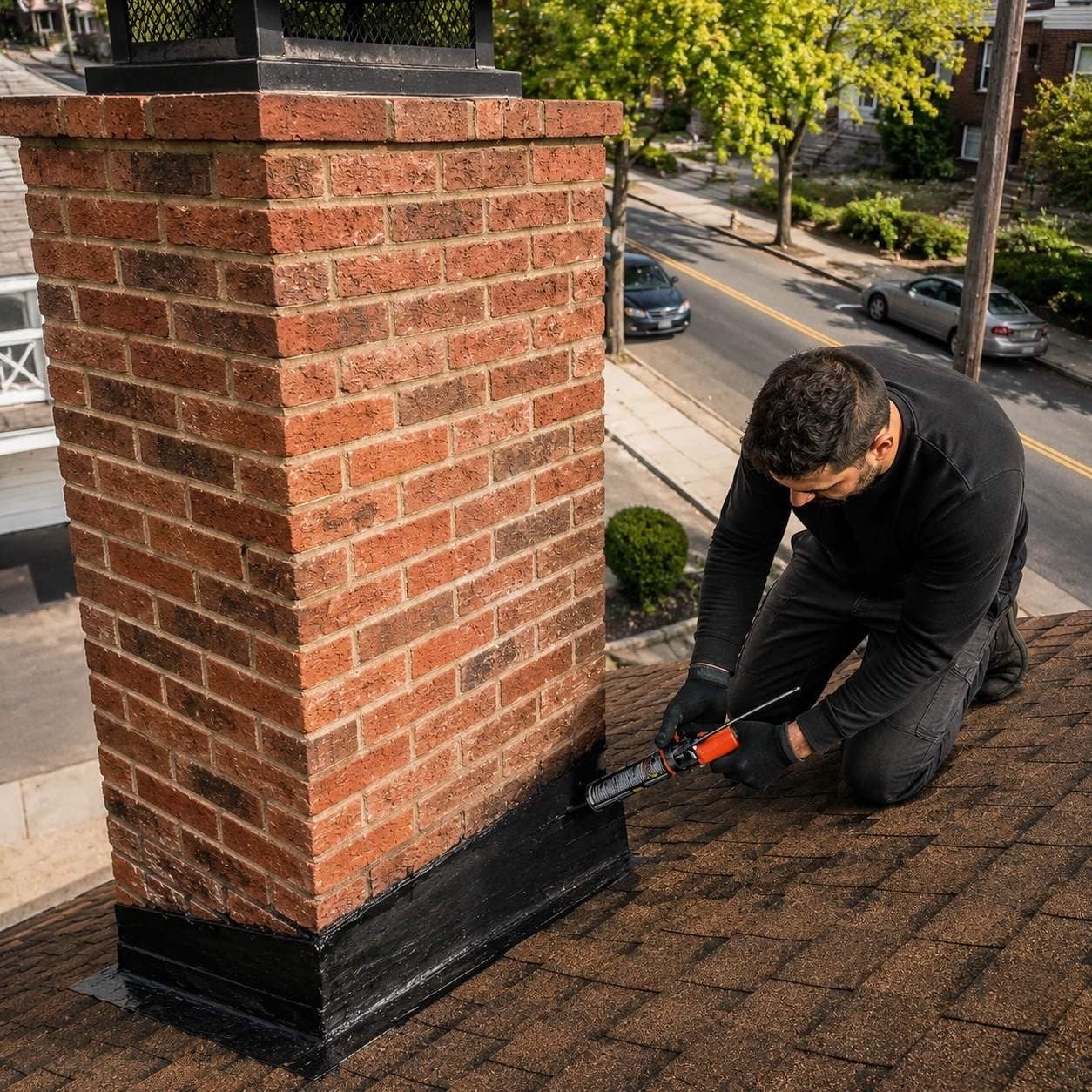
Apply the repellent
The treatment goes on the exposed masonry according to the product’s instructions.
Masonry chimney and fireplace, cutaway
- 1Chimney cap. Metal lid with mesh sides over the flue opening. Keeps rain, debris and animals out.
- 2Crown. The concrete or mortar top of the masonry, sloped to shed water away from the flue.
- 3Flue liner. Clay tile or metal lining that carries smoke up and protects the masonry from heat.
- 4Flashing. Metal that seals the joint between the chimney and the roof.
- 5Brick & mortar. The chimney structure. Mortar joints and brick faces absorb water when they wear.
- 6Smoke chamber. The sloped transition that funnels smoke from the firebox into the flue.
- 7Damper. Metal plate at the throat (or a sealing lid on top) that closes the flue when not in use.
- 8Firebox. Where the fire burns. Firebrick laid in heat-resistant mortar.
- 9Hearth. Non-combustible floor extension in front of the fireplace opening.
Why it matters more in Central Florida
Central Florida’s rainy season brings frequent afternoon storms, and tropical systems add long periods of wind-driven rain (NWS Melbourne). Brick that is saturated for days at a time moves water inward, feeds efflorescence and keeps mortar damp. A repellent reduces how much water the brick takes up in those storms. It won’t stop the humid air that causes chimney odors; that’s a damper and cap problem, covered in Florida humidity and chimneys.
Signs brick is absorbing water
- Brick stays dark and wet long after rain stops, especially on one face.
- White efflorescence on the outside or inside of the chimney. See white stains on a chimney.
- Damp or stained drywall around the chimney even though the flashing checks out.
- Spalling brick faces.
Whether waterproofing is worth doing is decided once the other entry points are ruled out. Our chimney waterproofing service starts with that check, and active leaks are traced under chimney leak repair.
If you aren’t sure which kind of leak you have, why chimneys leak in Florida storms matches the pattern to the source, and brick crumbling or spalling covers the damage trapped moisture can cause. Local leak pages such as chimney leak repair in Maitland describe how a diagnosis is scheduled before any treatment.
References (2)
Facts and figures on this page come from these references.