In brief
Repair when the bricks are sound and the damage is limited to joints, a few bricks or the crown. Rebuild when bricks are loose or have fallen, joints are open all the way through, spalling is widespread, or the chimney leans. The scope follows the worst area, and it starts by stopping the water that caused the damage.
The repair scale
| Repair | What it involves | Typically chosen when |
|---|---|---|
| Repointing (tuckpointing) | Grinding out worn mortar joints and packing in new mortar | Bricks are sound; joints are recessed, sandy or cracked |
| Spot brick replacement | Cutting out damaged bricks and setting matching ones | A limited number of spalled or broken bricks |
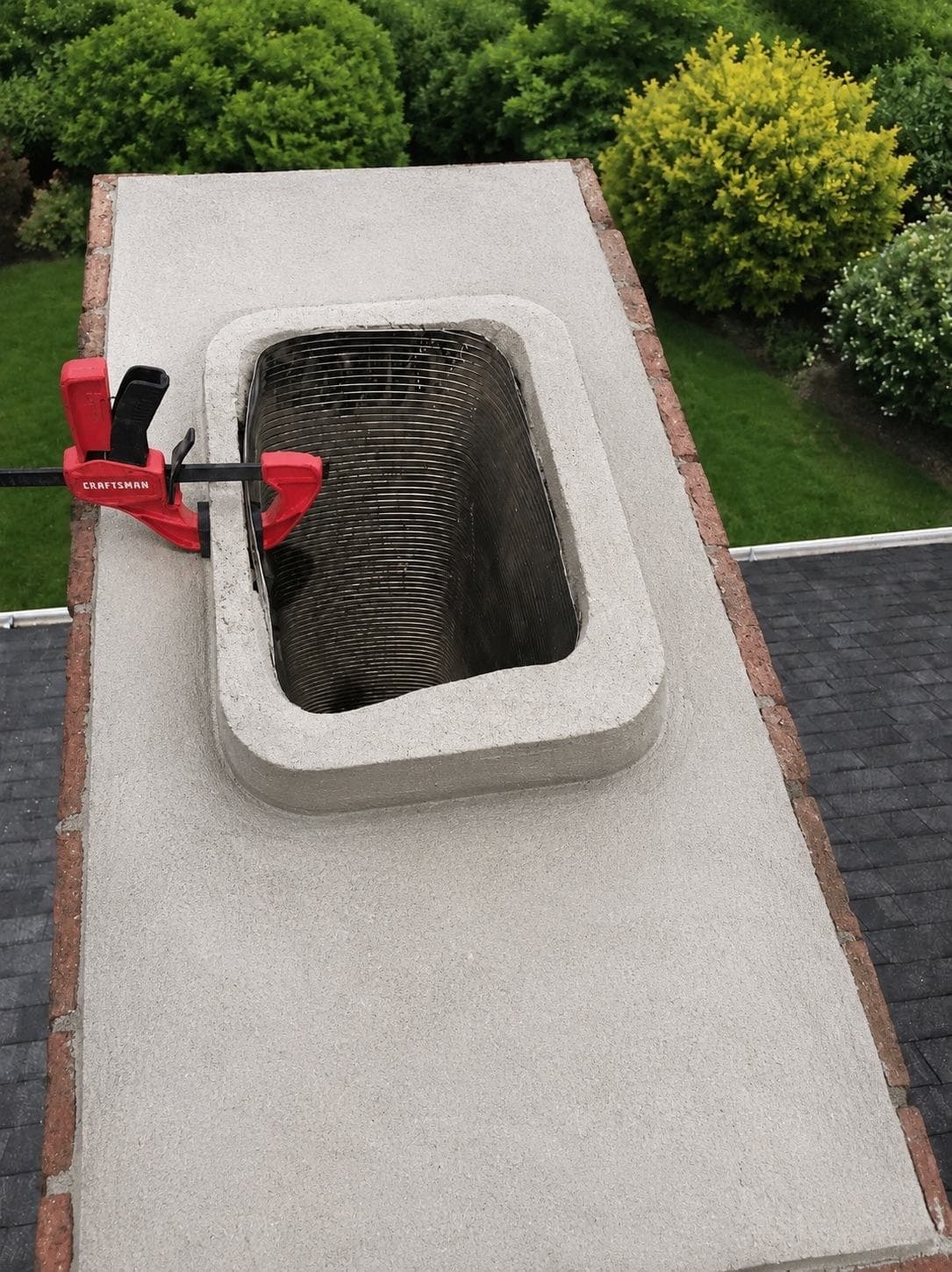
| Crown rebuild | Removing the old crown or wash and forming a new one | The top is cracked, flat or failing, the brick below is sound |
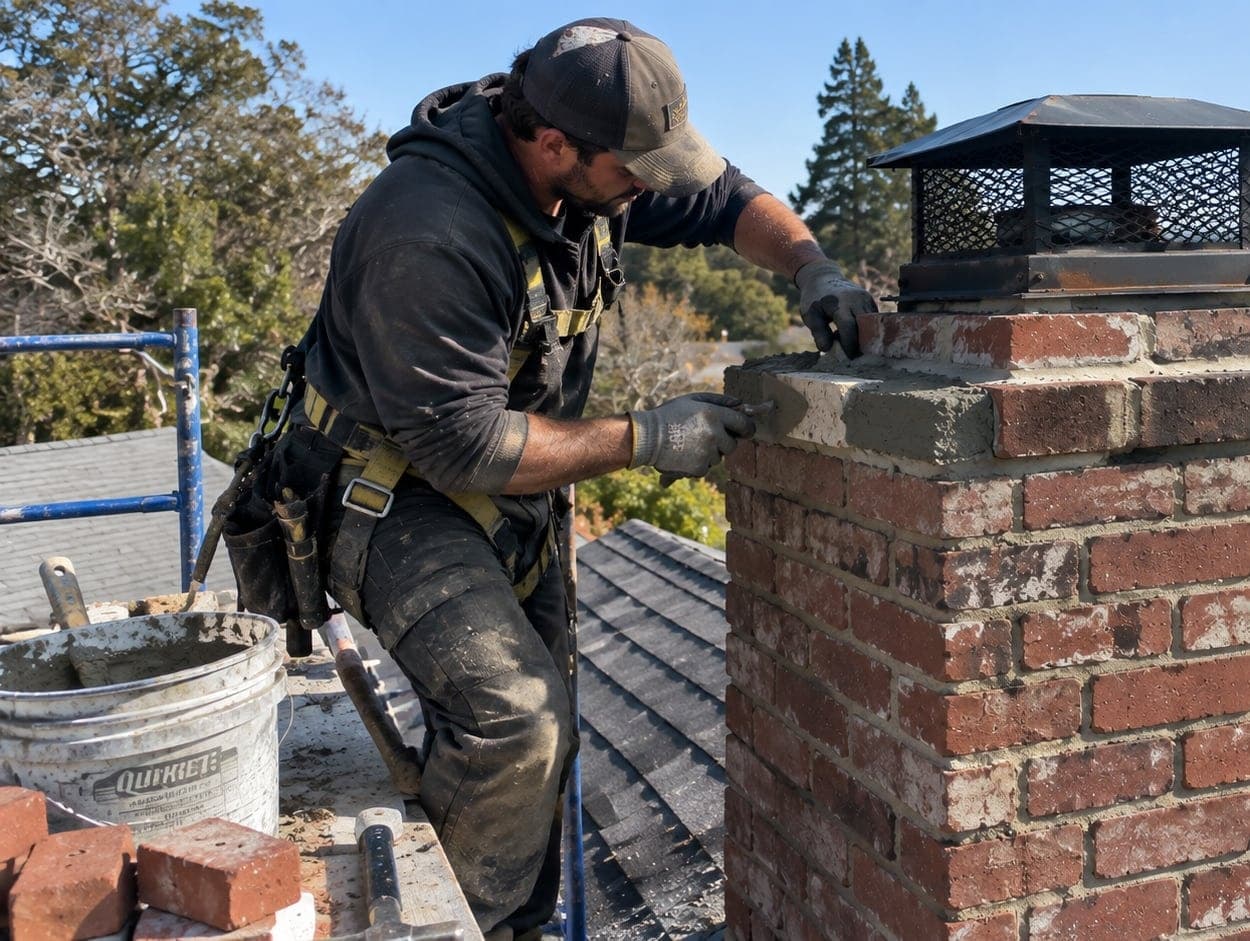
| Partial rebuild | Taking the chimney down to sound masonry, often to the roof line, and relaying it | Loose or badly damaged brick in the upper section |
| Full rebuild | Rebuilding from the foundation or firebox up | Structural movement, lean, or damage through most of the height |
What tuckpointing actually is
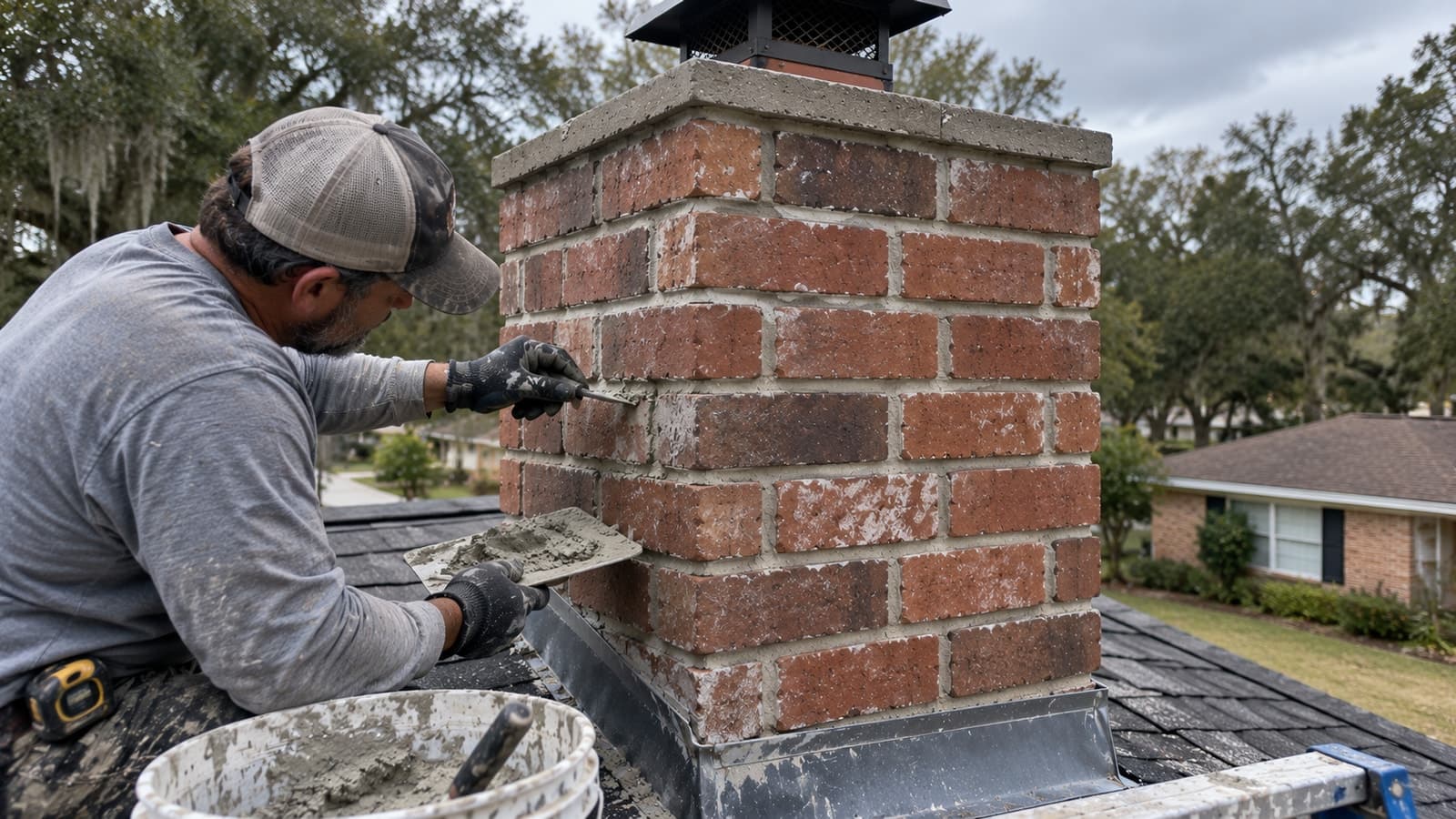
Tuckpointing and repointing are used interchangeably for chimneys: the damaged mortar is removed to a consistent depth, the joint is cleaned, and new mortar is packed in layers and tooled to shape. The key decision is the mortar. The National Park Service’s repointing guidance says new mortar should match the original in strength, composition and appearance and be softer and more permeable than the brick (NPS Preservation Brief 2). Hard, cement-rich mortar in a wall of softer brick pushes stress into the brick faces, which then spall. That matters most on older chimneys, such as those in historic neighborhoods of Winter Park, Sanford and downtown Orlando.
Masonry chimney and fireplace, cutaway
- 1Chimney cap. Metal lid with mesh sides over the flue opening. Keeps rain, debris and animals out.
- 2Crown. The concrete or mortar top of the masonry, sloped to shed water away from the flue.
- 3Flue liner. Clay tile or metal lining that carries smoke up and protects the masonry from heat.
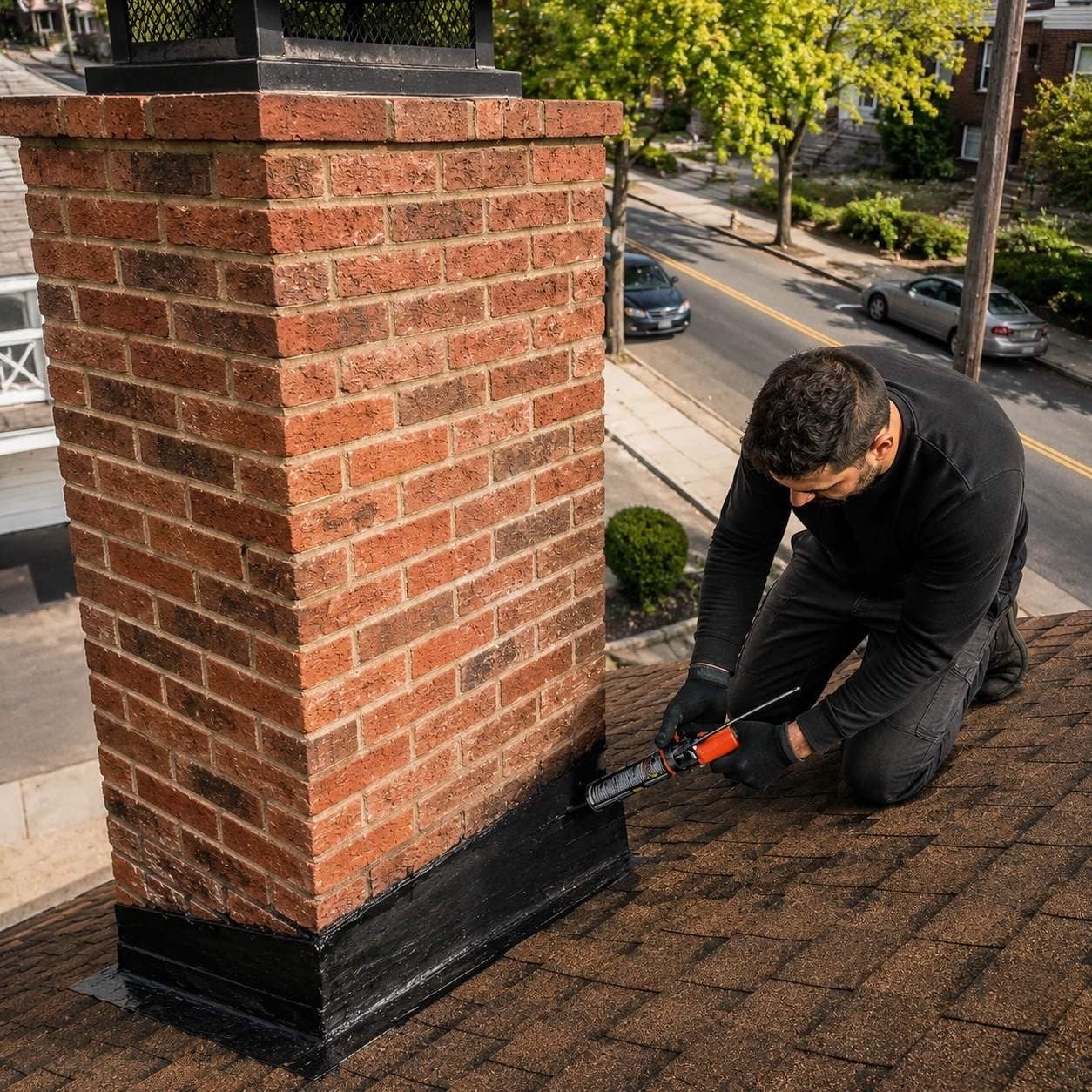
- 4Flashing. Metal that seals the joint between the chimney and the roof.
- 5Brick & mortar. The chimney structure. Mortar joints and brick faces absorb water when they wear.
- 6Smoke chamber. The sloped transition that funnels smoke from the firebox into the flue.
- 7Damper. Metal plate at the throat (or a sealing lid on top) that closes the flue when not in use.
- 8Firebox. Where the fire burns. Firebrick laid in heat-resistant mortar.
- 9Hearth. Non-combustible floor extension in front of the fireplace opening.
How the scope gets decided
Find the water source
Crown, cap, flashing and porous brick are checked first. Repairing masonry without stopping the water that damaged it only restarts the clock.
Test the joints
Joints are probed on every face to see how deep the soft mortar goes.
Check each brick
Spalled, cracked or loose bricks are counted and mapped.
Check for movement
Lean, stair-step cracks and separation from the house point to structure, not surface wear. See a leaning chimney.
Match the scope to the worst area
If the top five feet are loose but the rest is sound, a partial rebuild of that section may be more durable than patching.
Signs that point toward rebuilding
- Bricks that move by hand or have fallen, especially above the roof line.
- Joints open all the way through, so light shows between bricks.
- Widespread spalling on most faces, not just a few bricks.
- A chimney that leans or has pulled away from the house.
- Earlier patching that has failed repeatedly in the same area.
Repairs that don’t last
- Smearing mortar or caulk over joints without removing the old mortar.
- Using hard, high-cement mortar on soft, older brick.
- Painting or sealing brick with a non-breathable coating that traps moisture; see chimney waterproofing explained.
- Repointing below a cracked crown that keeps feeding water into the masonry.
- Choosing a contractor on the smallest scope alone; how to choose a chimney company covers what to verify first.
If mortar is already washing out, the symptom guides on mortar falling out and crumbling brick help you judge urgency. Joint work is covered under chimney tuckpointing, brick and section repairs under chimney masonry repair, and teardown work under chimney rebuild.
For the water side, chimney waterproofing explained covers what repellents can and can’t do, and white stains on a chimney explains what efflorescence says about moisture in the brick. Historic brick is where mortar choice matters most; local pages on chimney repair in Sanford and chimney repair in the City of Orlando describe that housing.
References (1)
Facts and figures on this page come from these references.