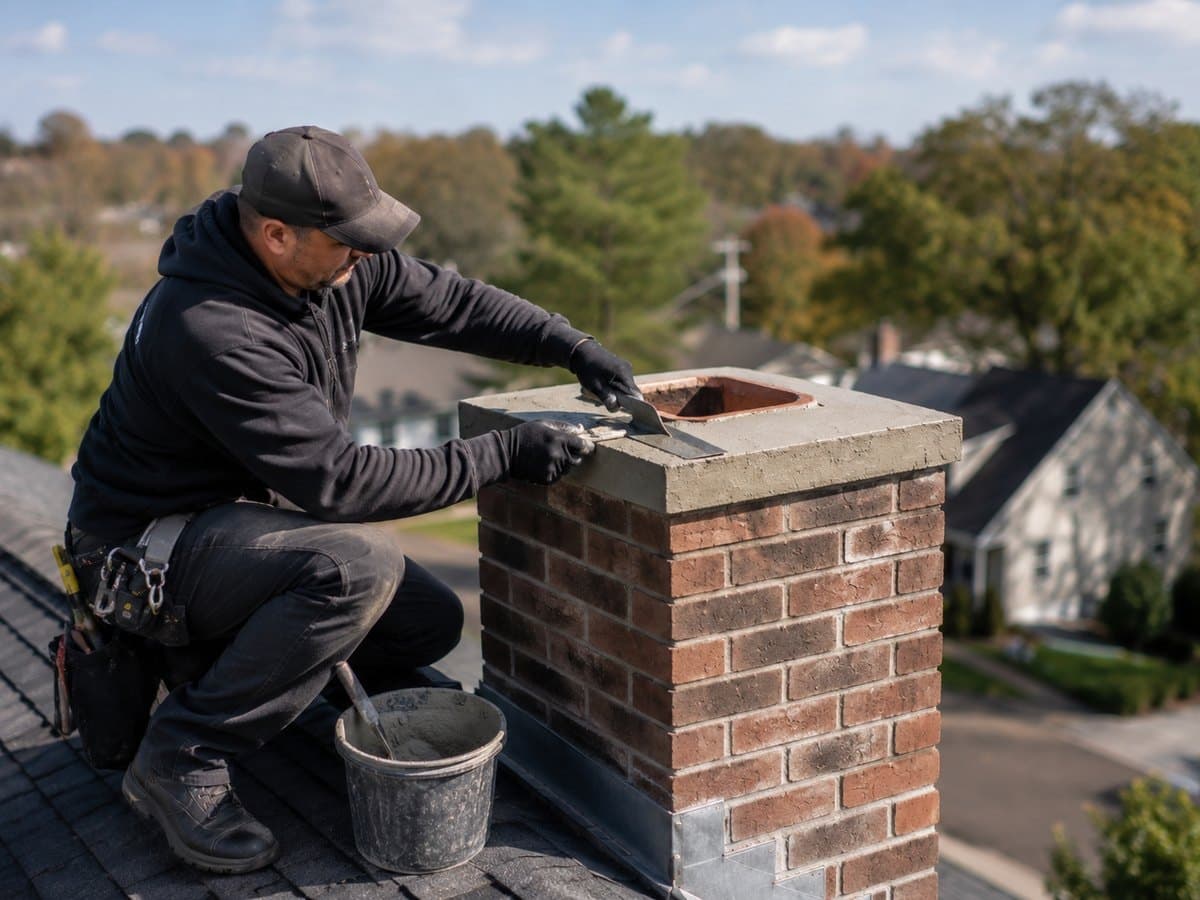
Which one is yours? Census estimates show about one Sanford home in five built before 1970 and 41.7% built in 2000 or later (Census ACS via Census Reporter). The oldest homes cluster in the Sanford Residential Historic District, whose roughly 434 contributing resources date from the 1880s to the early 1930s (NRHP summary). The comparison below shows how differently the two kinds of repair run.
| Feature | Historic-district masonry chimney | Factory-built chase in a newer subdivision |
|---|---|---|
| Built | 1880s–1930s, site-laid brick | Mostly 1990s onward, metal flue in a wood-framed box |
| What usually fails first | Top courses, crown or mortar wash, flashing | Chase cover, storm collar, cladding seams |
| Hidden damage to look for | Missing or broken flue liner, eroded joints inside the attic | Rotted plywood and studs inside the chase |
| Materials rule | Mortar compatible with soft historic brick | Parts compatible with the fireplace’s listing |
| City approval | Certificate of Appropriateness before exterior work | Normally no historic review; HOA rules may apply |
Built
- Historic-district masonry chimney
- 1880s–1930s, site-laid brick
- Factory-built chase in a newer subdivision
- Mostly 1990s onward, metal flue in a wood-framed box
What usually fails first
- Historic-district masonry chimney
- Top courses, crown or mortar wash, flashing
- Factory-built chase in a newer subdivision
- Chase cover, storm collar, cladding seams
Hidden damage to look for
- Historic-district masonry chimney
- Missing or broken flue liner, eroded joints inside the attic
- Factory-built chase in a newer subdivision
- Rotted plywood and studs inside the chase
Materials rule
- Historic-district masonry chimney
- Mortar compatible with soft historic brick
- Factory-built chase in a newer subdivision
- Parts compatible with the fireplace’s listing
City approval
- Historic-district masonry chimney
- Certificate of Appropriateness before exterior work
- Factory-built chase in a newer subdivision
- Normally no historic review; HOA rules may apply
The Certificate of Appropriateness comes first
The City of Sanford requires a Certificate of Appropriateness before any exterior work, including repairs, on a structure in the Residential Historic District. The city has four local historic districts under its seven-member Historic Preservation Board: Downtown Commercial, Sanford Avenue, Sanford Residential and Georgetown Residential. Applications go through the city’s Citizenserve portal (City of Sanford).
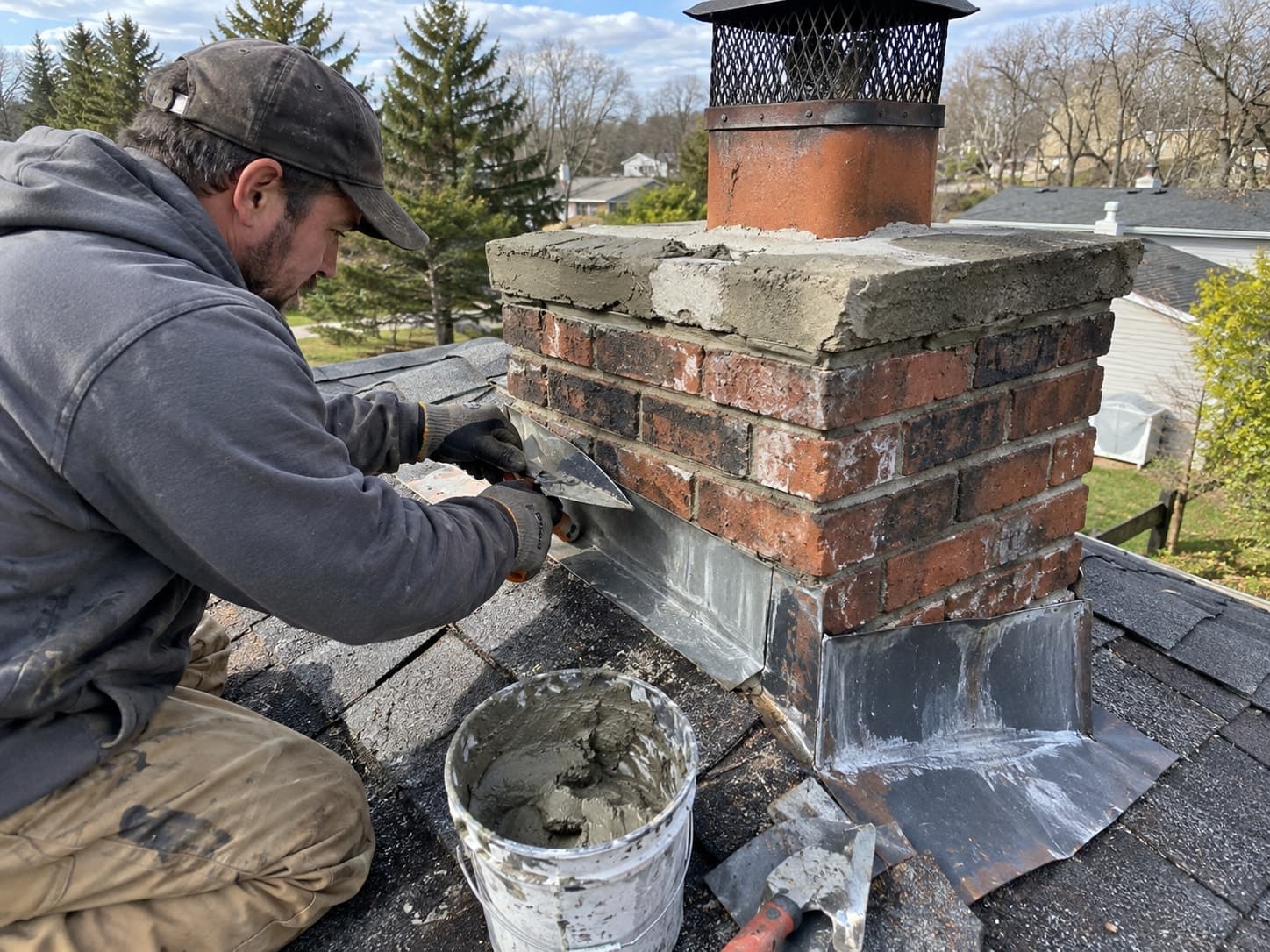
That means a chimney repair in these districts is planned backward from the approval. Some work may be handled by staff and some may go to the board; the city’s Historic Preservation Officer can tell you which applies to a given scope, and that affects how much lead time to allow.
Planning a chimney repair in a Sanford historic district
Find out what’s wrong
Have the chimney evaluated top to bottom, including the flue. You need to know the repair before you can describe it on an application.
Call the Historic Preservation Officer
Ask whether the scope, such as repointing, a crown, a cap or rebuilding the top, can be approved by staff or needs a board hearing.
Specify materials
Mortar mix and color, brick source for any replacements, crown shape and cap style. Photos of the current condition help reviewers.
Apply through Citizenserve
Submit the Certificate of Appropriateness application and fee through the city’s portal.
Repair once approved
If a storm leaves a hole or loose brick in the meantime, ask the city how temporary protection is handled.
Masonry repair on 1880s–1930s chimneys
Chimneys from this period were laid in mortars that, according to the National Park Service, range from pure lime and sand to a variety of lime-cement mixes, since portland cement came into common use only in the early 20th century (NPS Preservation Brief 2). Lime mortar is soft and porous and lets moisture leave through the joints. Repointing it with a hard, cement-rich mortar pushes that moisture into the brick instead. The same brief says masonry cements generally aren’t recommended on historic masonry, and that spot repointing benefits from a mortar analysis so the new mix and sand match the old.
| Repair | When it’s the right call | Compatibility note |
|---|---|---|
| Repointing | Joints recessed, sandy or open, but brick faces sound | Lime-rich mix matched to the old mortar’s color and sand; only the deteriorated joints |
| Rebuilding the top courses | Brick loose above the roofline or the stack leaning at the top | Matching or salvaged brick; original height and corbelling kept |
| Crown or top wash | Old mortar cap cracked or missing, water running down the flue | Crown shape visible from the street may be part of the COA review |
| Relining the flue | No liner, or broken clay tiles, and the fireplace will be used | Mostly internal; any change at the top, like a new cap, is exterior work |
| Flashing | Leaks at the roofline, often after a reroof | Counter-flashing set into mortar joints, not surface-sealed |
The details of each repair are on the pages for repointing and brick repair, tuckpointing worn joints, rebuilding a chimney top, crown repair and relining a damaged flue. If brick faces are already flaking off, start with why chimney bricks crumble.
Chimneys that no longer serve a fireplace
Many old Sanford houses have a stack that still stands above the roof after the fireplace below was closed off. It still takes rain and still carries loose brick at the top, so it needs the same crown, flashing and top-course attention as a working chimney. Changing its height or taking it down is an exterior change for the city to review.
Chase repair in newer Sanford subdivisions
In homes built since the 1990s, factory-built fireplaces with metal flues in framed chases are common, though not universal. That’s an inference from build dates, not a count. Here the repair is closer to roofing, sheet metal and carpentry than masonry, and the order of failure is predictable: water gets in at the top, then works down the inside of the chase.
Where a framed chase lets water in
01Chase cover
- What you may notice
- Rust streaks on the siding or stucco below the top of the chase; standing water visible on the cover from a second-story window.
- How it’s confirmed
- The cover is checked for dishing, rust-through and sealant failure around the flue collar.
02Storm collar and cap
- What you may notice
- Water in the firebox during wind-driven rain, with no stain on the wall.
- How it’s confirmed
- The collar’s seal against the flue pipe and the cap’s fit are checked at the top.
03Cladding and framing
- What you may notice
- Soft or swollen siding, cracked stucco, or peeling paint on the chase walls.
- How it’s confirmed
- Seams and trim are probed for soft wood; the inside of the chase is viewed through the cover opening where possible.
Framing damage is the part that matters most. Once plywood and studs inside the chase stay wet, a new chase cover alone won’t fix it; the rotted sections need replacing before the top is closed up again. The guide to rust stains on a chimney shows how to read the streaks from the ground.
Repair, leak or inspection?
This page covers repairing the chimney itself: historic masonry, crowns, liners, chase tops and framing. When the problem is water showing up inside, chimney leak tracing and repair in Sanford finds where it enters before anything is sealed. If you’re not sure what has failed, start with a Sanford chimney inspection.
Repairs are available throughout the city, from Goldsboro and the historic districts near Lake Monroe to the newer subdivisions. For other work on the house, see chimney and fireplace services in Sanford. The same repair work covers Lake Mary chimney repair options, masonry and chimney repair in Longwood and repair services in Winter Springs, and how chimney repair works covers the details.
References (4)
Where the Sanford numbers and code references come from.