On this page
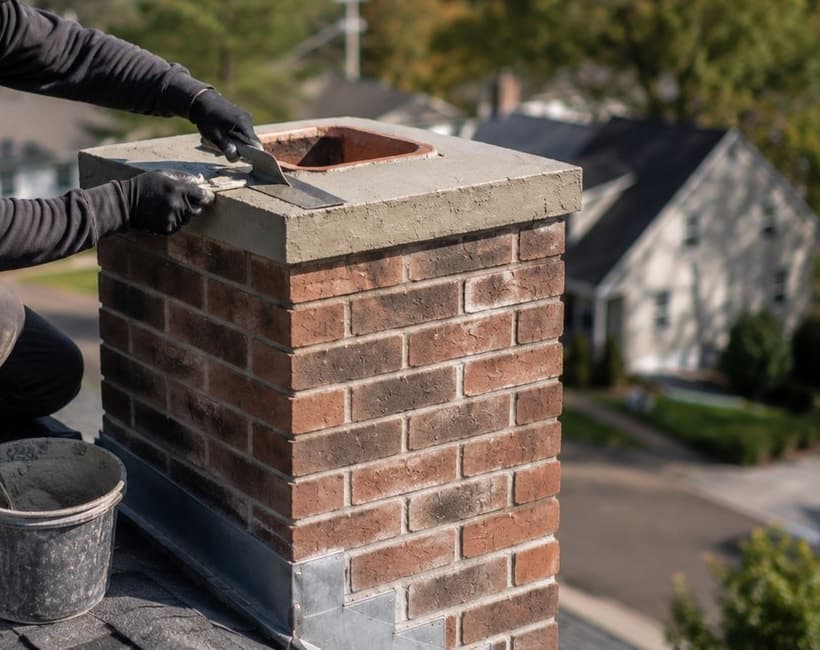
Most masonry chimneys in older Orlando neighborhoods were built with clay flue tiles. Tile works well until it cracks, the mortar joints between sections open up, or water and heat break it down. At that point the brick and wood around the flue are no longer protected from heat, and gases can leak where they shouldn’t. A new liner installed inside the old flue gives the chimney a sound, continuous inner wall again.
Some liner problems can be repaired in place, such as a few damaged tiles or one open joint. That work is covered under chimney liner repair. This page covers installing a new liner for the whole flue.
When a new liner is the right call
- Cracked or shifted clay tile along more than a short section of the flue
- Missing or open mortar joints between tiles, found on an inspection
- No liner at all, which is still found in some older chimneys
- After a chimney fire, which often cracks tile throughout the flue
- A new wood or gas insert or stove, which needs a flue sized to the appliance
- A flue that is far too large for the appliance, which drafts poorly and builds creosote
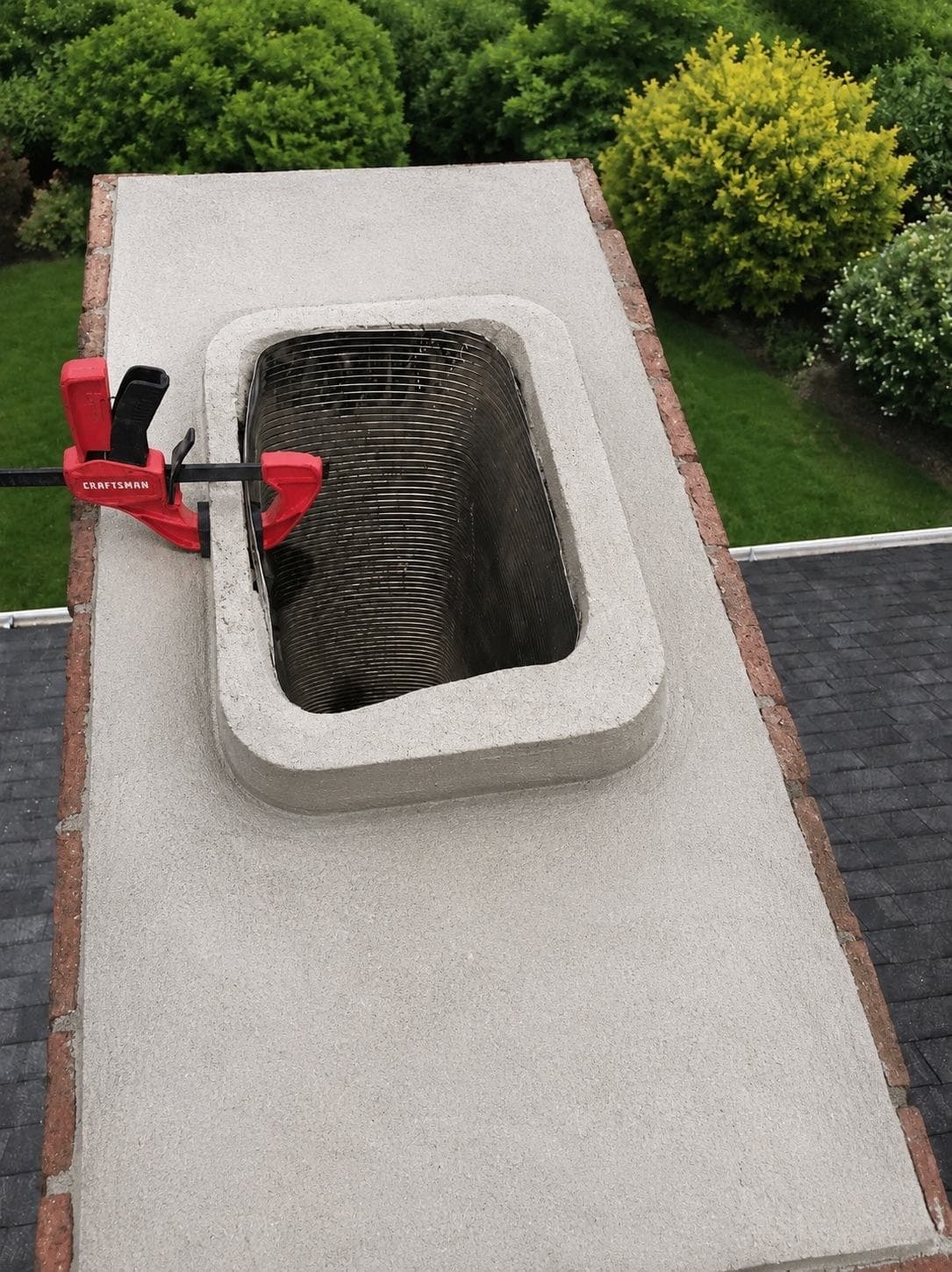
The decision starts with an inspection. A Level 2 chimney inspection evaluates the full length of the flue (CSIA’s Level 2 procedure calls for a video scan or a similar inspection), and its findings should show you why relining is being recommended.
Types of liners
| Liner type | Used for | Notes |
|---|---|---|
| Rigid stainless steel | Straight flues, wood stoves and inserts | Very durable; needs a straight run to install |
| Flexible stainless steel | Flues with offsets or bends; most relines | Most common relining method; sized to the appliance outlet |
| Insulated stainless liner | Wood-burning appliances and flues with reduced clearances | Insulation keeps flue gases hotter (less creosote) and adds heat protection |
| Cast-in-place liner | Larger masonry flues with structural concerns | A cementitious lining poured around a form; specialist work |
| Aluminum liner | Some gas appliances only, where the appliance instructions allow it | Never for wood-burning fireplaces, inserts or stoves |
Not every chimney can take every liner. The fuel, the appliance’s listing, the flue’s shape and the clearance between the flue and nearby framing decide which systems qualify, and whether the liner needs insulation around it.
Liners for relining existing chimneys are tested and listed for the purpose, and the installation follows the liner manufacturer’s instructions, NFPA 211 (NFPA) and the Florida Building Code’s chimney chapter (FBC Residential, Chapter 10).
Liner sizing: why the flue has to match the fire
A flue that is too small for the fireplace can’t move the smoke, so some of it rolls into the room. A flue that is too large lets the smoke slow down and cool, which is exactly the condition that makes creosote condense. For open masonry fireplaces, the code ties flue size to the fireplace opening: a round flue needs at least 1/12 of the opening area, and a square flue at least 1/10 (FBC-R R1003.15.1). Wood inserts and stoves are sized to the appliance outlet and the manufacturer’s instructions instead.
Before relining, the fireplace opening or appliance outlet, the existing flue and the chimney height are measured. If a flue has been oversized for years, heavy deposits are common, and removing hardened creosote may need to happen before a liner can go in.
Liners for fireplace inserts and wood stoves
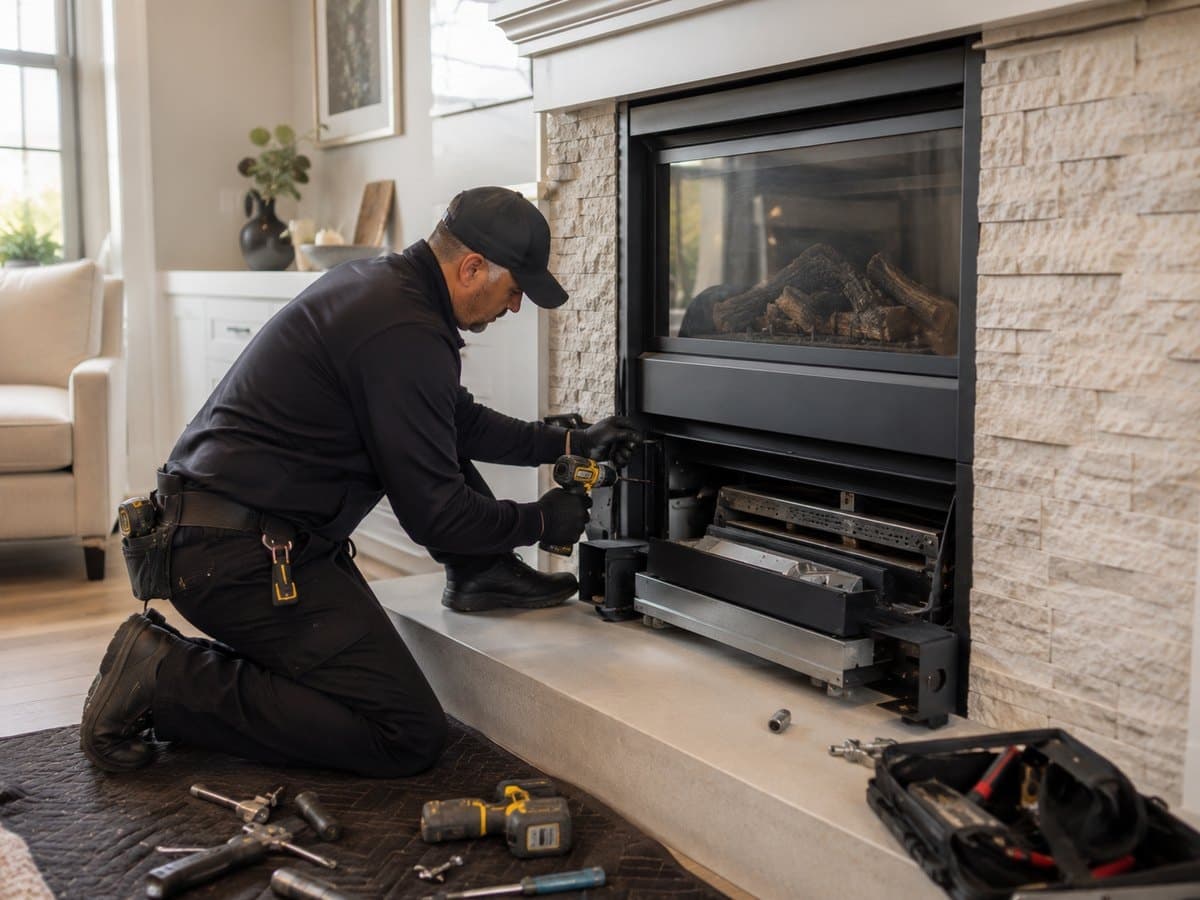
A fireplace insert slides into an existing masonry fireplace. It burns hotter and more efficiently than an open fire, which means cooler exhaust that condenses faster, and it has a much smaller outlet than the original flue was built for. Wood insert and stove instructions generally call for a liner connected directly to the appliance and running to the top of the chimney. Venting an insert into an oversized clay flue tends to cause poor draft and fast creosote buildup. The insert itself is covered on fireplace insert installation.
Gas inserts and log sets
Gas appliances vent to their own instructions, often through a co-linear or co-axial liner, under the fuel gas code. That work is covered on gas fireplace installation, and any new gas piping is quoted as separate, permitted work.
How a liner is installed
Inspect and measure
Flue inspection, dimensions, height and any offsets, plus the appliance the liner will serve.
Clean the flue
The old flue is cleaned so debris and creosote don’t interfere with the new liner.
Prepare the path
Where the old tile is too tight or broken, it may need to be opened up so the liner and insulation fit.
Install the liner
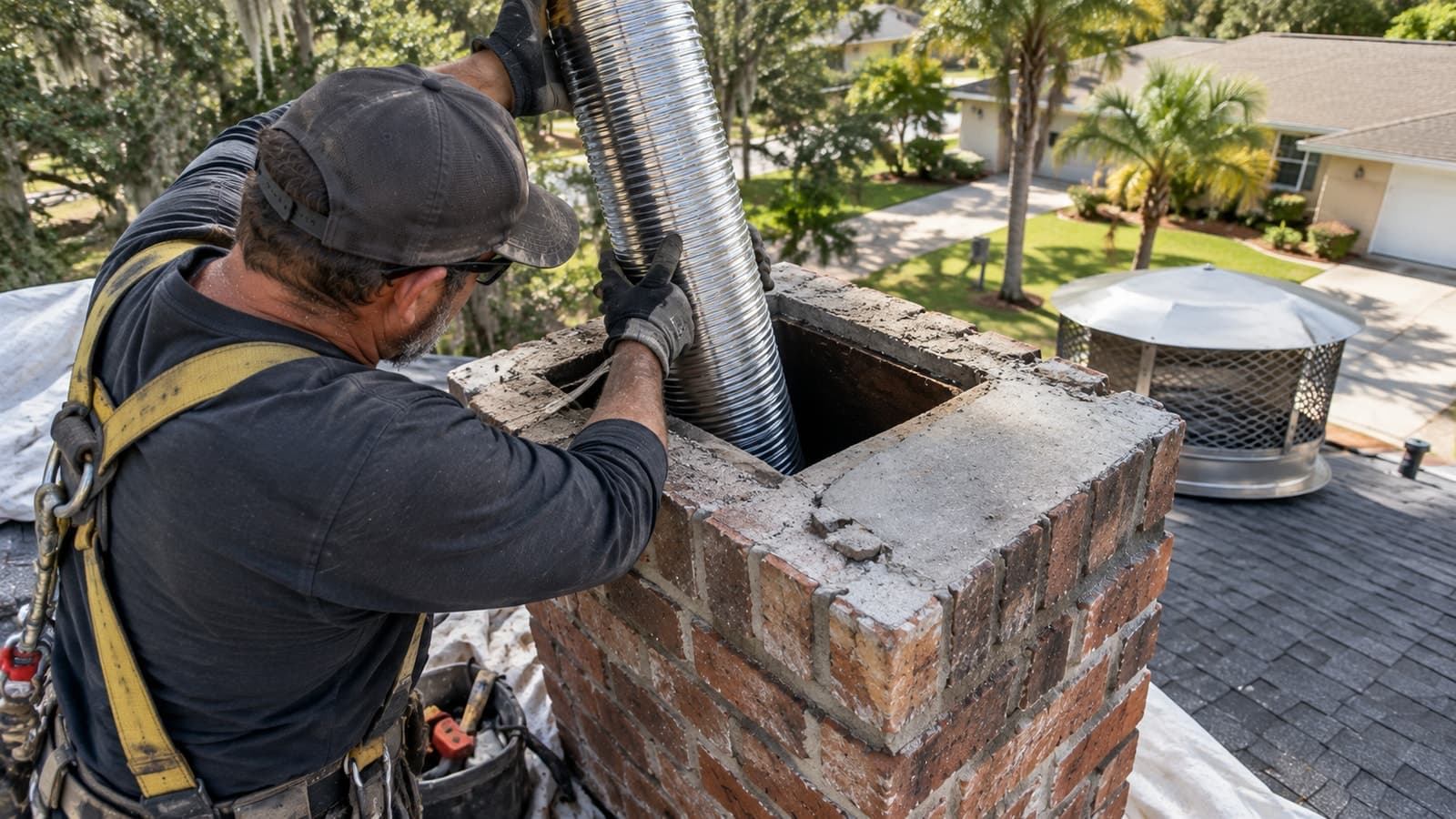
The liner is lowered from the top, connected at the bottom to the appliance or fireplace, and insulated where required.
Seal the top
A top plate and cap close the flue and keep rain and animals out.
Confirm draft
A final check and a draft test confirm the installation.
Sizing the liner to the appliance
A liner is sized to what it is venting, not to the hole it goes in. This gets skipped surprisingly often, and both errors cause problems.
Undersized, the appliance cannot get rid of its exhaust and the fireplace smokes or the appliance shuts down. Oversized, the flue gases cool too much on the way up, which weakens the draft and — on a solid-fuel appliance — accelerates creosote condensation on the liner walls. An oversized flue is a common finding when an old open fireplace has had a stove or insert put into it.
What determines the liner size and type
- The appliance's flue collar diameter and its manufacturer's specification
- Fuel: wood, gas or an oil-fired appliance, each with different requirements
- Total flue height, which affects draft
- The internal dimensions of the existing masonry flue, measured rather than assumed
- Offsets in the chimney, and whether a rigid or flexible liner can pass them
- Whether the chimney is on an exterior wall, which runs colder and affects insulation
Where the internal condition or the offsets are the unknown, a camera scan of the flue settles it before anything is ordered. That is cheaper than discovering on installation day that the liner will not pass an offset.
Insulation blankets
A stainless liner can be fitted bare or wrapped in an insulation blanket. The blanket does three things: it keeps flue gases hotter so the chimney draws better, it reduces creosote condensation on a wood-burning flue, and it maintains the clearance to combustibles that some listings require.
The trade-off is space. An insulated liner takes up more room in the flue, so a tight masonry chimney may not take both the liner size the appliance needs and a blanket around it. That is a measurement question, not a preference, and it is one of the main reasons the flue gets measured properly first.
Liner systems compared
| System | How it works | Where it fits |
|---|---|---|
| Flexible stainless | A corrugated liner fed down the flue from the top and connected at the appliance | The usual choice. Passes offsets a rigid liner cannot. |
| Rigid stainless | Straight sections joined together | Straight flues. Slightly better flow than corrugated. |
| Insulated stainless | Either of the above wrapped in a ceramic blanket or poured insulation mix | Exterior-wall chimneys, solid fuel, and where a listing requires it |
| Cast-in-place | A cement-based mix formed around an inflated tube inside the existing flue | Badly deteriorated masonry where the liner also has to add structural strength |
| Co-axial / co-linear | Two small liners, or a concentric pipe, for a direct-vent gas appliance | Gas inserts that need both exhaust and combustion air |
The guide to chimney liner types goes through the materials in more detail, and where the existing clay liner is only partly damaged, liner and flue tile repair may be the better answer than a full reline.
Relining for a gas appliance
Not every reline is for a wood fire. Two gas situations come up regularly here.
A gas insert going into an existing masonry fireplace needs its own liner run the full height, because the appliance is sealed and cannot vent into an oversized masonry flue. And an older gas appliance venting into a large unlined or oversized flue may be condensing — flue gases cooling below their dew point and depositing moisture and acid inside the chimney, which attacks the masonry from the inside out.
Where the gas supply also has to change as part of that work, it is covered on our page about getting gas to the fireplace. Choosing between an insert, a log set and a built-in unit is covered under fireplace conversion.
Liner installation is available across Orlando, Winter Park, Maitland, Windermere, Oviedo, Clermont and the rest of the areas we serve. Estimates are free and follow a measured survey of the flue rather than preceding one.
References (2)
Facts and figures on this page come from these references.