A planned community with a short history
Celebration is an unincorporated community and census-designated place in Osceola County, planned by the Disney Development Company in the early 1990s. The first homes were built in the summer of 1996, and a pattern book set the look of the town in early-20th-century styles (Celebration, Florida). In Census estimates for 2020–2024 it had 13,667 residents, a median home value of $635,000 and a median build year of 2004. Just 0.9% of homes predate 1980, and 69.8% were built in 2000 or later (Census ACS via Census Reporter).
The figure that sets Celebration apart is housing type. Only 38.0% of homes are detached houses. The rest are townhomes, condos and apartments. That makes the dryer vent, which every unit has, a bigger part of the picture than the fireplace, which many don’t.
Dryer vents in shared buildings
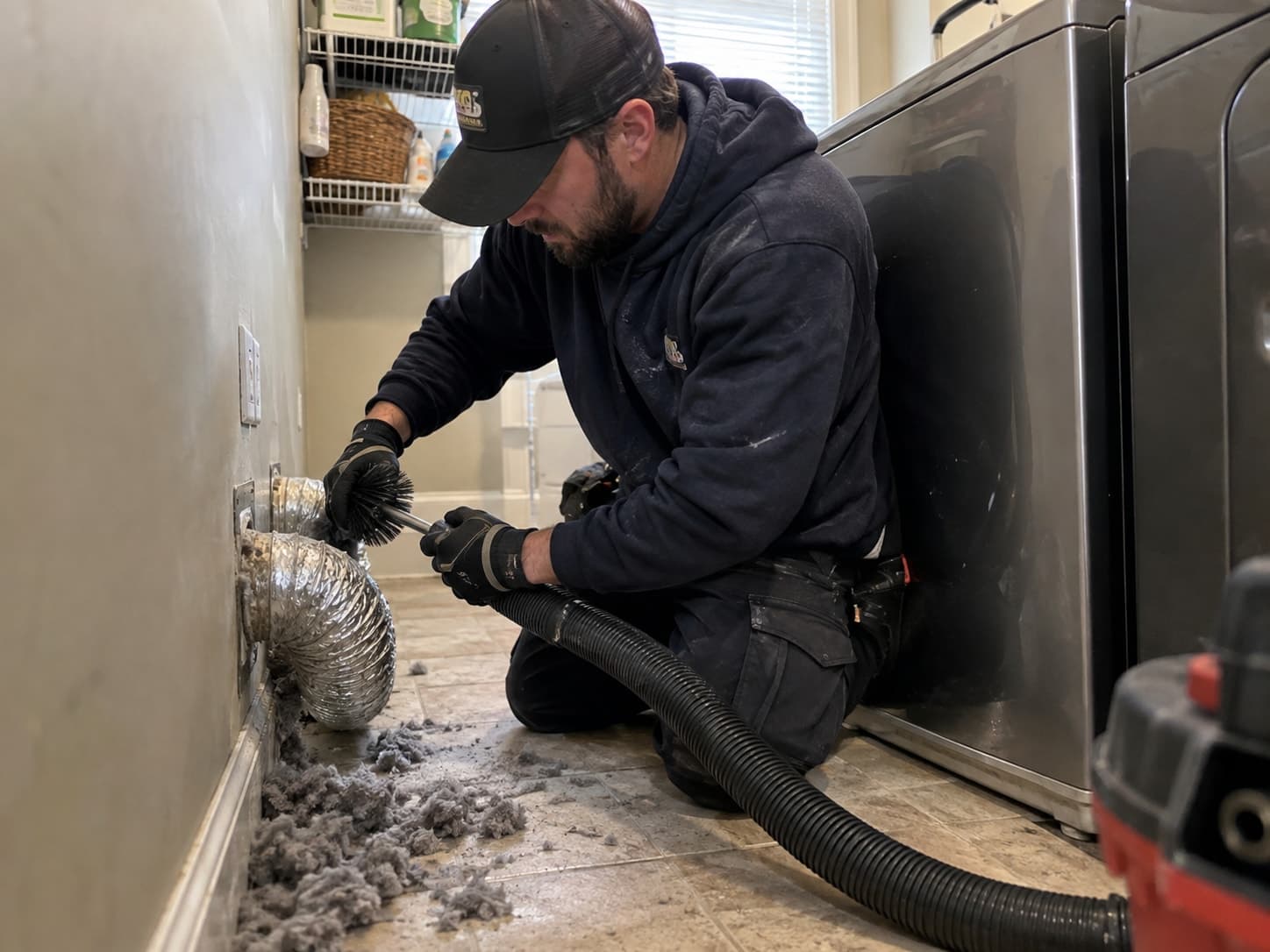
In a townhome or a unit in a larger building, the dryer rarely sits against an outside wall. The duct may run through an interior wall, between floors or up to a roof cap, and part of that path can pass through structure the association controls. Long runs with several turns collect lint fastest, and a clog in one unit’s duct is invisible to everyone until drying slows down.
Dryer vent system, from dryer to termination
- 1Lint screen. Catches most lint inside the dryer. What gets past it collects in the duct.
- 2Transition duct. Short connector from the dryer to the wall. Easily crushed behind the machine.
- 3Duct run. Smooth 4-inch metal duct through walls, floors or the attic.
- 4Elbows. Every bend adds resistance and counts against the allowed duct length.
- 5Roof cap. Roof termination, common on two-story homes. Hard to see and to clean.
- 6Wall hood. Side-wall termination. Must open freely and has no screen.
- 7Backdraft damper. Flap that opens under airflow and closes to keep out air, rain and pests.
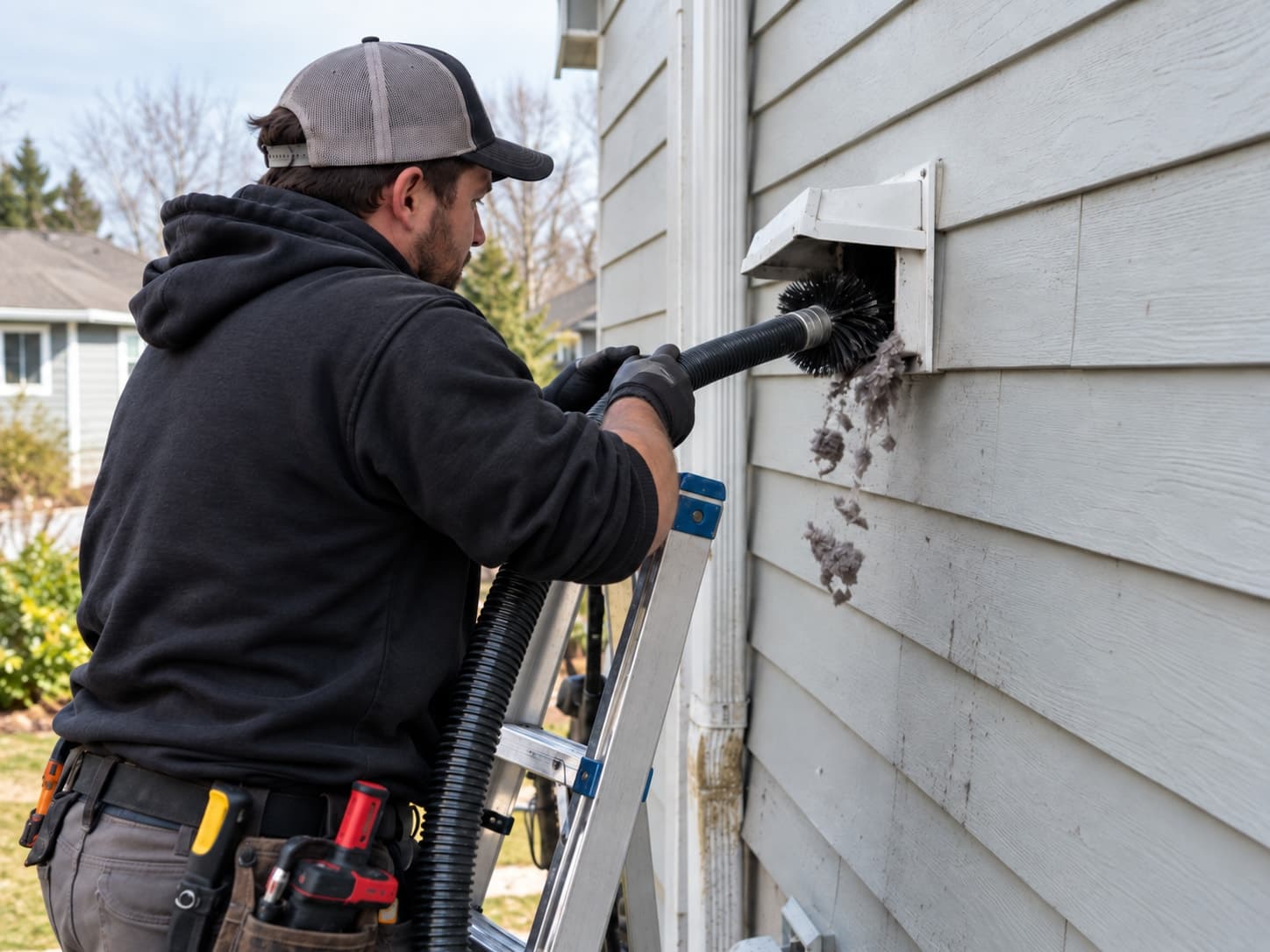
Dryer vent cleaning works from the dryer end and the outside end so the whole run is cleared, and roof dryer vent cleaning covers ducts that end on the roof. A termination with a stuck flap, a broken hood or a screen should be replaced with a damper cap, which is what dryer vent cover replacement involves; Florida’s residential code forbids screens on dryer terminations (FBC-Residential M1502). If there’s barely any air at the outside hood while the dryer runs, see no airflow from the dryer vent for likely causes.
Condo or townhome? Check who owns the vent
In many associations the owner is responsible for the duct inside the unit, while the association controls the roof, exterior walls and terminations. Your declaration and the association’s maintenance chart say where the line falls, and that decides who schedules and approves work on the outside end.
Traditional façades, modern fireplaces
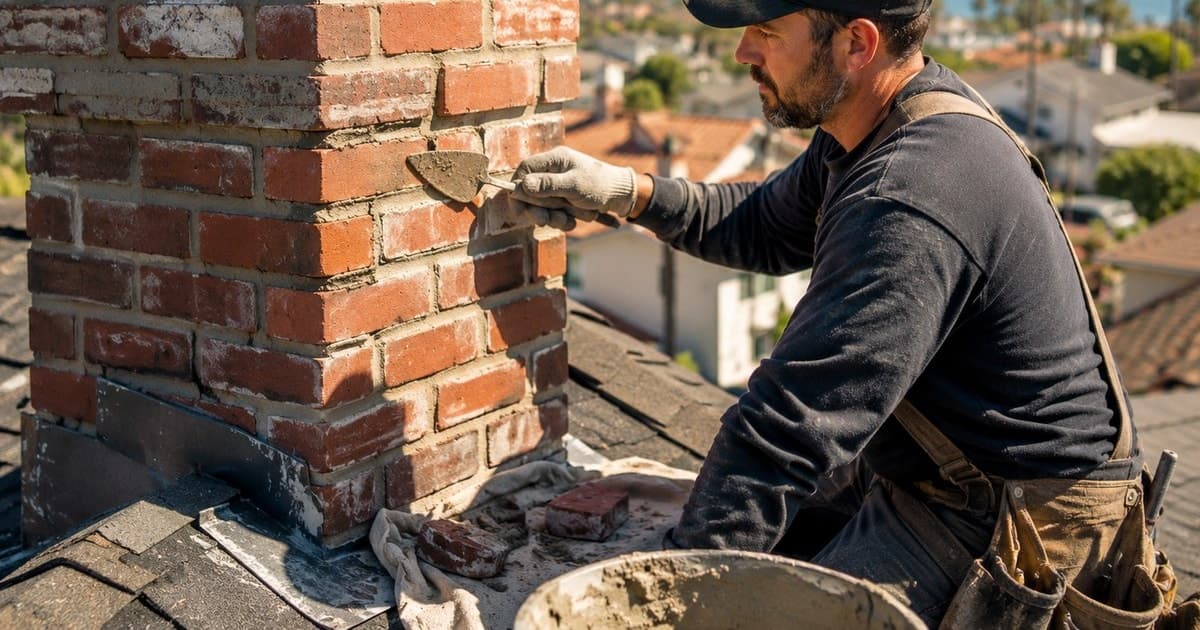
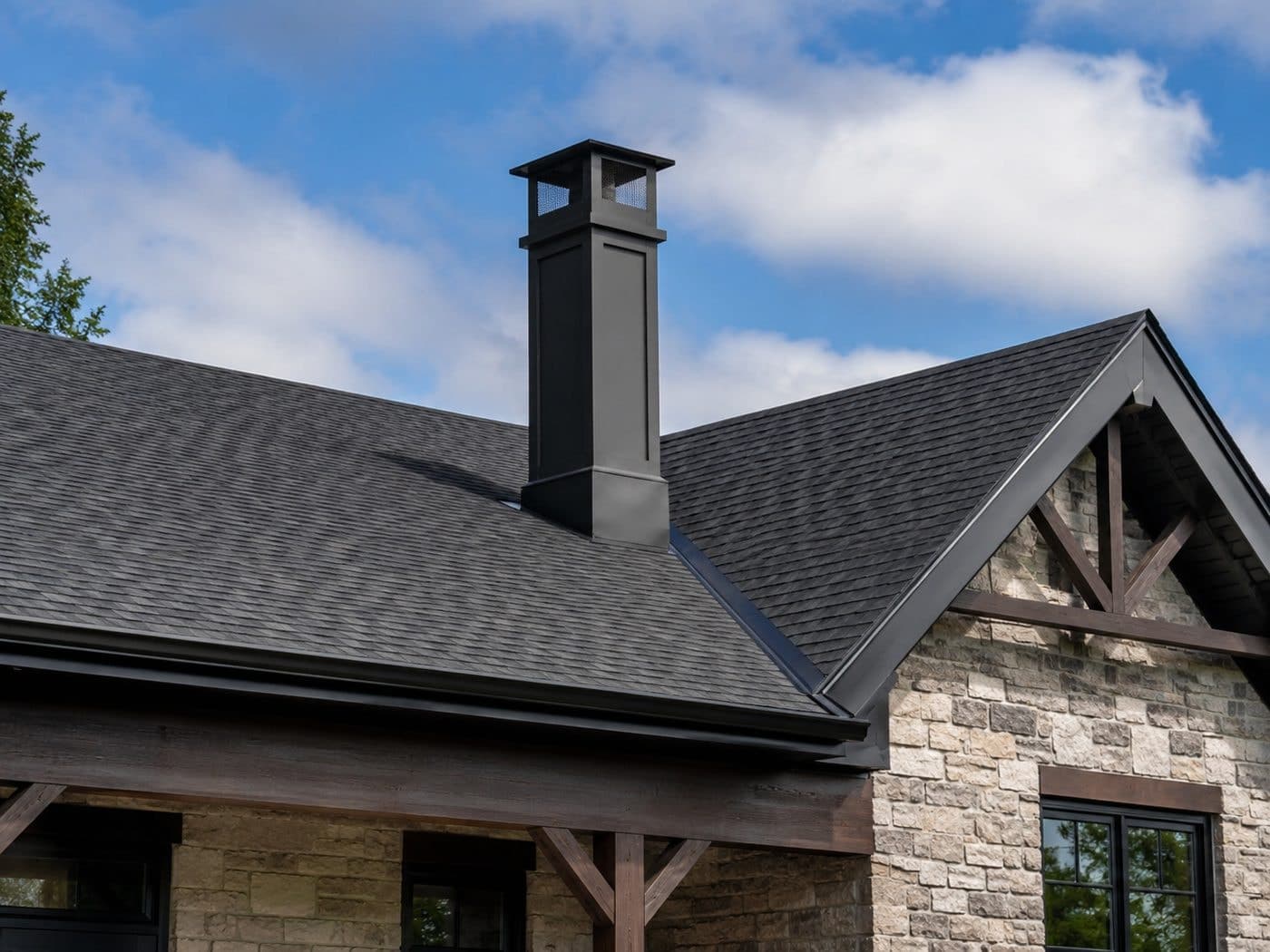
Houses designed to look like they were built in 1910 can have chimneys that look like masonry from the street. Given build dates from the late 1990s on, most fireplaces here are more likely factory-built units in framed chases finished to match the house, with gas and electric units in some homes. That is an inference from age, not a count, and the finish can hide what’s underneath. These steps tell you what you have.
Identify your fireplace in five minutes
Look inside the firebox
Firebrick set in mortar suggests masonry. Flat panels, often with a printed or molded pattern, inside a metal box suggest factory-built.
Find the rating plate
Factory-built fireplaces carry a metal label, usually behind the lower grille or inside the side wall, with the maker, model and listing.
Check the flue shape
With a flashlight, a round metal pipe points to factory-built. A square or rectangular clay tile points to masonry.
Look at the top from the street
A flat metal cover on a boxed chase means factory-built; a mortar or concrete crown on brick means masonry.
Write down the model number
It is the key to correct replacement parts, from refractory panels to caps. Our prefab fireplace life guide explains why the listing matters.
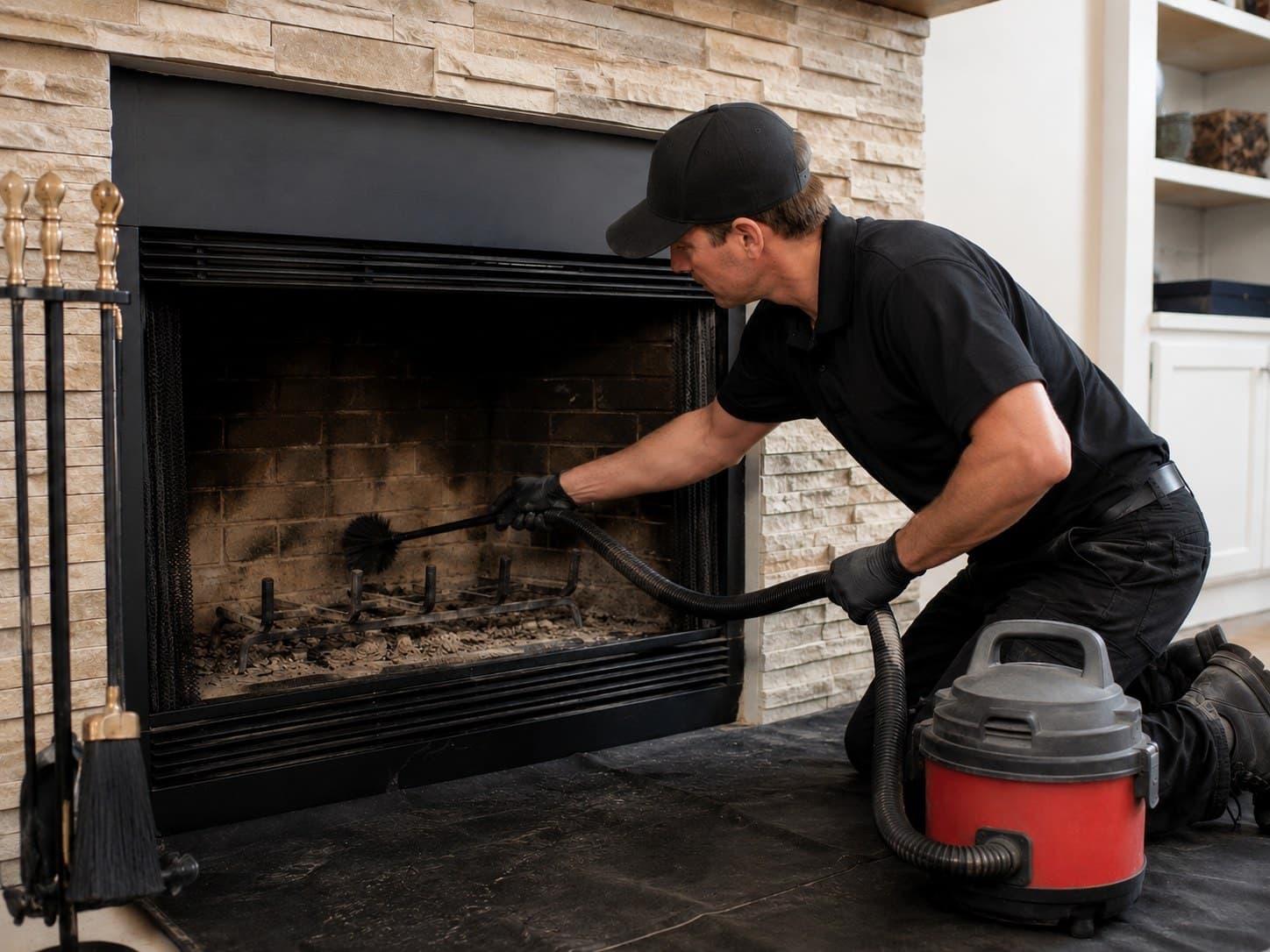
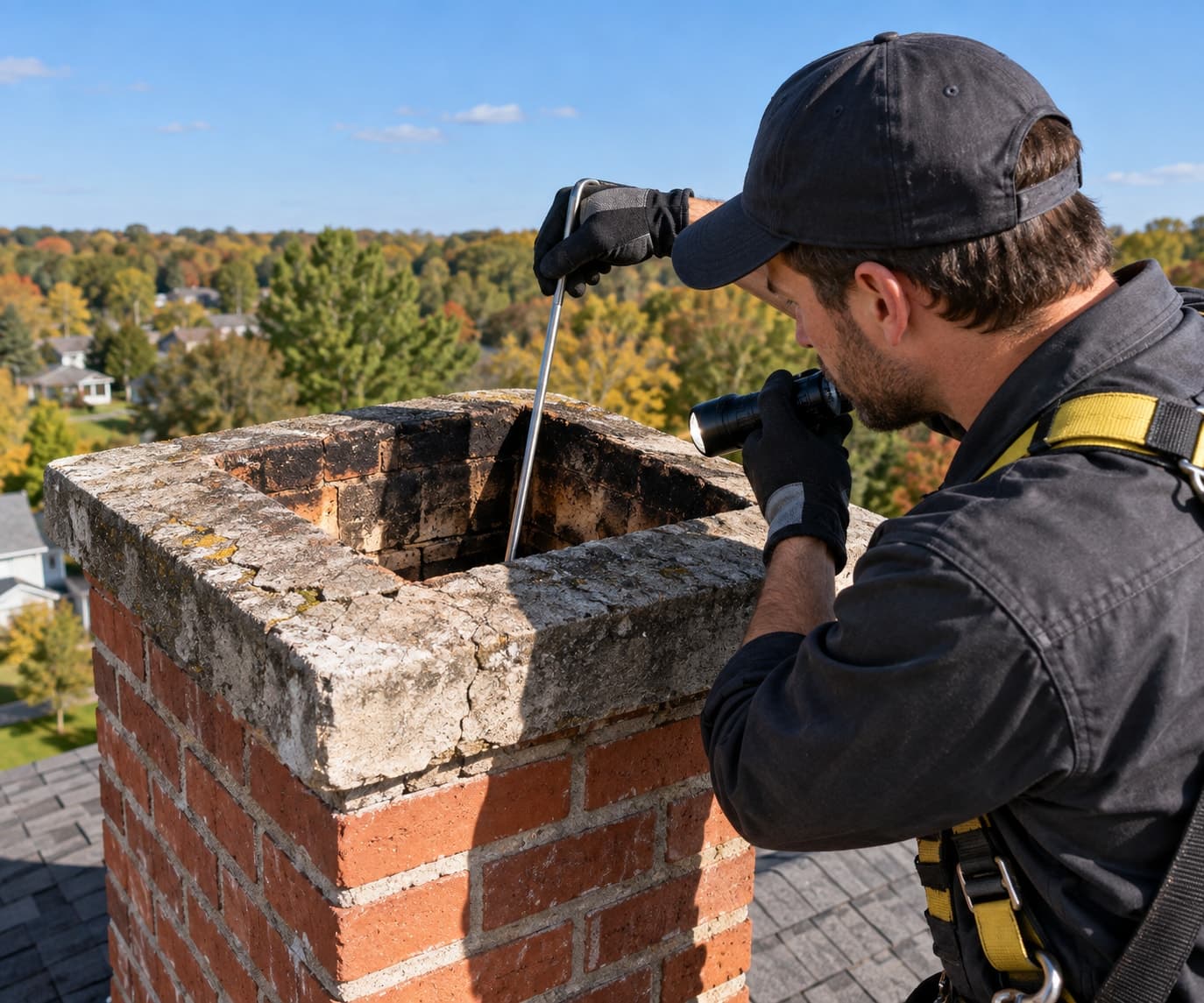
The oldest Celebration homes are now close to 30 years old, which is the age when original chase covers and fireplace components start to show wear. A replacement chase cover fixes a cover that rusts or ponds water; a yearly chimney and fireplace inspection catches cracked panels, loose flue joints and damp chase framing early.
The Architectural Review Committee
Celebration’s residential owners association has design guidelines, and its Architectural Review Committee reviews applications for exterior changes at meetings held monthly at Town Hall (Celebration ARC). Roofing, exterior paint and structural changes are the kinds of projects that go through review. Replacing a chase cover or a vent cap with an identical one may be treated differently from changing its style, color or height, so ask Town Hall before work that changes how the roofline looks. Leave time in the schedule for the monthly review cycle.
After a hurricane
During Hurricane Milton in October 2024, wind gusts were routinely above 75 mph across most of Central Florida (ClickOrlando). Wind of that strength can lift the edge of a chase cover, loosen a termination cap or bend a roof dryer vent cap so its damper no longer closes. After a named storm, look at the roofline from the street and book a storm damage chimney inspection if something looks shifted.
Other services for Celebration homes
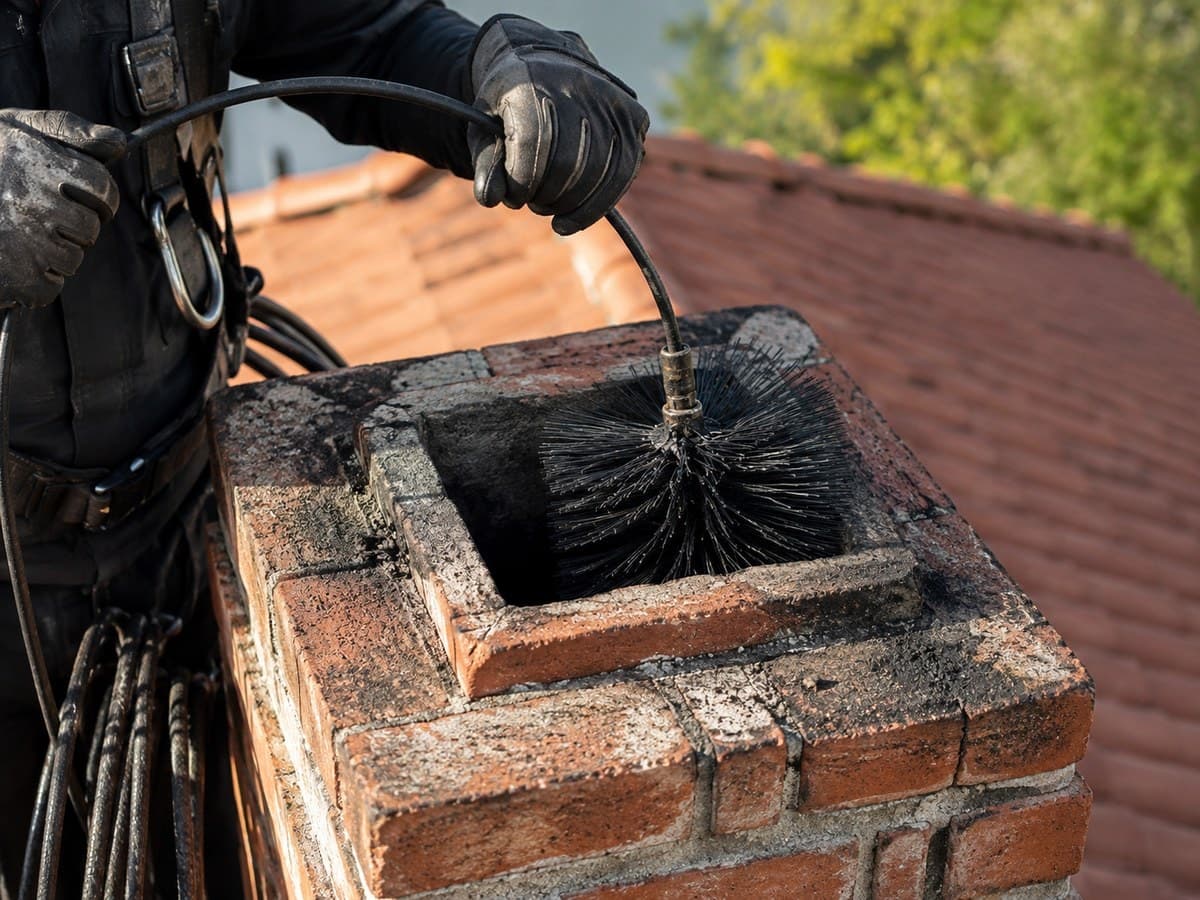
Wood-burning fireplaces used on the few cool nights of the year still need chimney sweeping from time to time, and a stain that appears after heavy rain is traced to its source through leak diagnosis before the chase cover or siding is touched. Cracked refractory panels, a damper that sticks or loose glass doors are fireplace repairs work, done with parts listed for the model. Homes with gas units can book yearly gas fireplace service, and a townhome with an unexplained slow dryer is a good candidate for a dryer vent inspection before anything is replaced. Celebration is in Osceola County; the nearest city pages are Kissimmee and St. Cloud.
References (5)
Facts and figures on this page come from these references.