On this page
A wood fire depends on the whole system working together: a firebox that holds heat, a damper that opens fully, a smooth smoke chamber, a clear flue of the right size, and a house that isn’t fighting the draft. When one piece is off, the fireplace smokes, burns poorly or becomes unsafe. Wood fireplace repair is mostly diagnosis: finding which piece it is.
Common wood fireplace problems
Symptom, likely cause, and how it’s confirmed
01Smoke comes into the room
- What you may notice
- Smoke rolls out of the opening, especially at startup.
- How it’s confirmed
- Damper position, flue condition and a draft test with and without exhaust fans running.
02Fire won’t stay lit or burns weakly
- What you may notice
- Wood smolders, blackens glass and makes little heat.
- How it’s confirmed
- Wood moisture, air supply, and whether the flue is oversized or cold.
03Cracked or crumbling firebox
- What you may notice
- Cracks in firebrick, gaps in mortar joints, or broken refractory panels.
- How it’s confirmed
- Close inspection of the firebox walls, floor and back.
04Damper stuck or won’t seal
- What you may notice
- Handle won’t move, plate rusted, or drafts with the damper closed.
- How it’s confirmed
- Damper plate, frame and linkage checked; top-sealing damper considered.
05Debris or tile in the firebox
- What you may notice
- Pieces of clay tile, mortar or nesting material on the grate.
- How it’s confirmed
- Inspection of the flue to find the source.
Why wood fireplaces smoke in Florida homes
Draft comes from warm flue gases rising. Several things common in Central Florida work against it. Mild outdoor temperatures give weak draft. Tight, air-conditioned houses with exhaust fans create negative pressure that pulls air down the chimney. Short chimneys on single-story homes have less natural pull. Most draft problems are solved by clearing or resizing the flue, adjusting the opening, or giving the house a source of makeup air, not by a bigger fire.
- Crack a nearby window slightly for the first few minutes of a fire
- Warm the flue before lighting the main fire, following the fireplace maker’s guidance, so the draft is already moving up
- Turn off kitchen and bath exhaust fans while starting the fire
- Burn dry, split hardwood in a small, hot fire rather than a large smoldering one
After months without a fire
Most wood-burning fireplaces around Orlando go unlit from March to December. That long idle stretch causes its own set of repairs, separate from wear from burning. Throat dampers rust in the closed position. Creosote left from last winter absorbs humidity and smells. Birds and squirrels move into an uncapped flue. Rain that got past a cap or chase cover rusts the damper and, in factory-built units, the firebox floor. None of it shows until the first cold night.
Before the first wood fire of the season
- Open and close the damper: it should move freely and seat fully
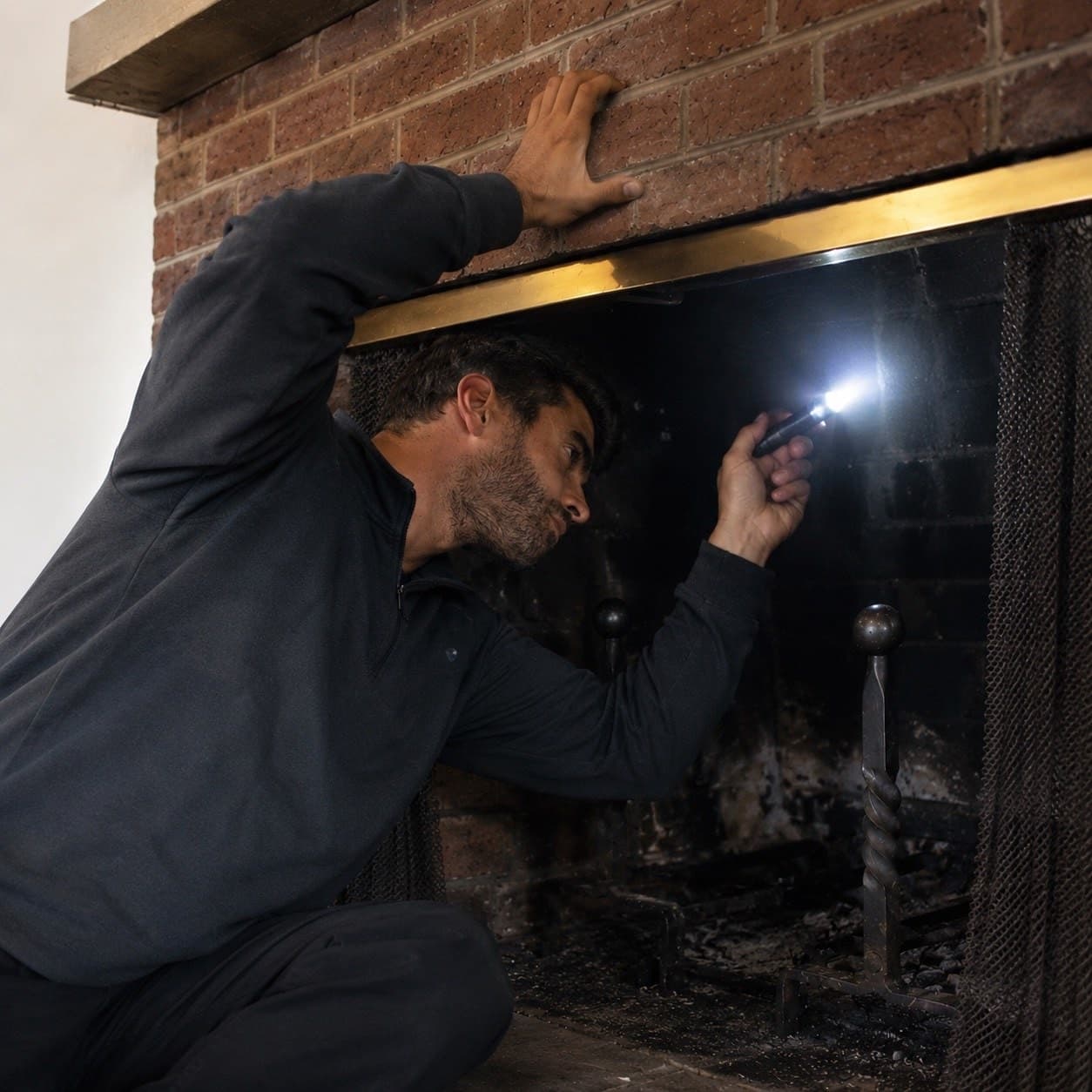
- Look up past the damper with a flashlight for nesting material, debris or daylight where there shouldn’t be any
- Check the firebox for fresh cracks, loose firebrick or crumbling refractory panels
- Look for rust flakes or water marks on the damper and firebox floor
- Make sure the glass doors and mesh screen open, close and latch
- Test smoke and carbon monoxide alarms in the room
Anything on that list that doesn’t pass is worth a look before lighting. If the chimney hasn’t been swept in a while, a routine chimney sweep and a check of the firing path usually go together.
Masonry vs. factory-built wood fireplaces
Masonry fireplaces are repaired piece by piece: firebrick, mortar, damper, smoke chamber and liner. Factory-built wood fireplaces are listed systems (UL 127, Intertek), so repairs use the manufacturer’s parts, such as refractory panels, grates and dampers. When a factory-built unit has a rusted-through firebox or warped walls, it’s usually at the end of its life, and prefab fireplace replacement is the safe fix.
How a repair visit works
Describe the problem
When it happens, how the fire behaves, and what’s changed in the house recently.
Inspect
Firebox, damper, smoke chamber and a look up the flue; a draft test if the fireplace smokes.
Explain the cause
What is failing and the options to fix it, including simple changes you can make.
Repair
Firebox, damper, smoke chamber or flue work as agreed.
Test
A test fire or smoke test to confirm the fireplace draws properly.
What wood-burning fireplace repair covers
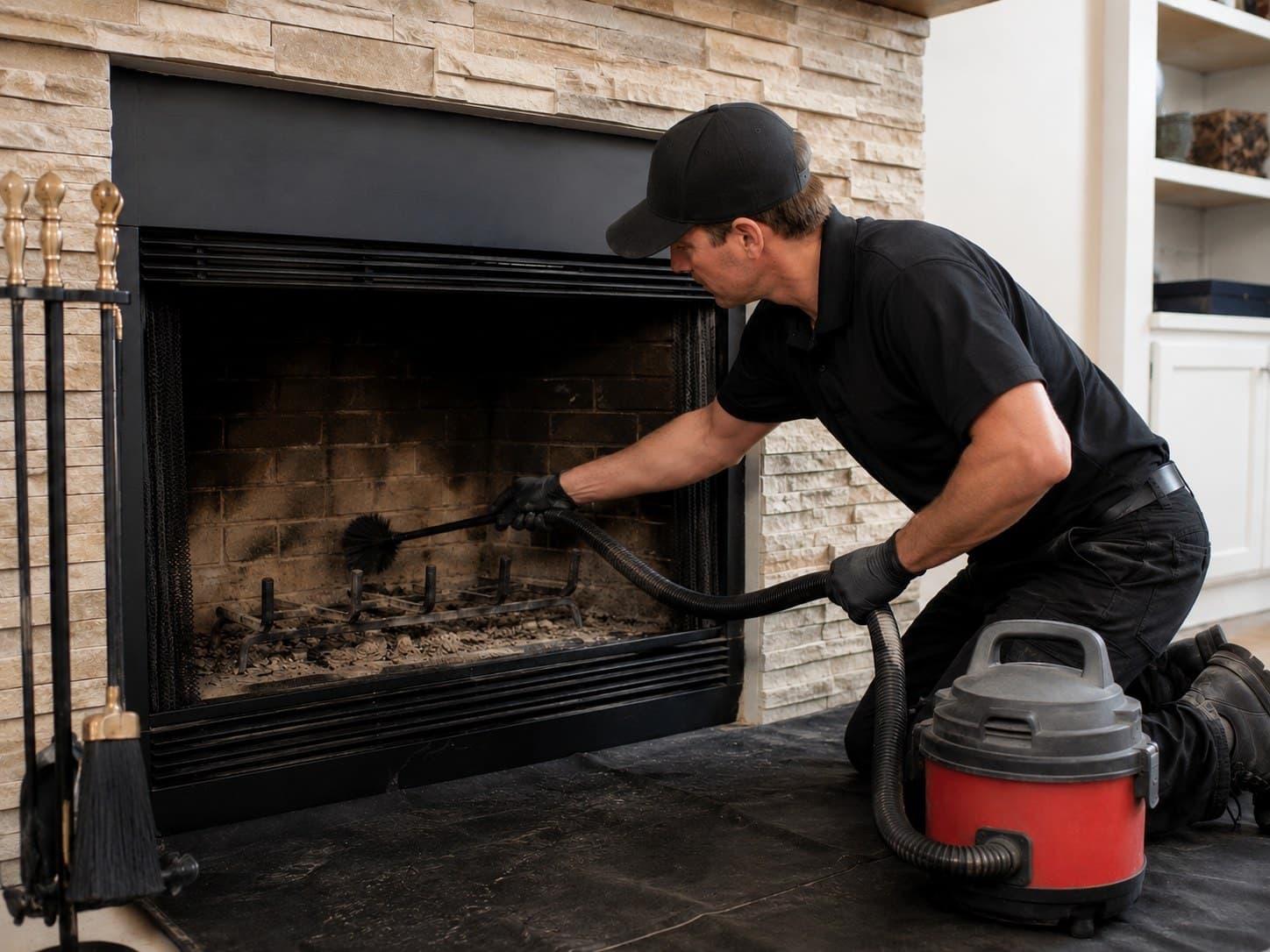
An open wood fireplace has relatively few parts, and almost all of them fail in ways you can see once the firebox is empty and clean.
The components that get repaired
- Firebrick and mortar joints in the firebox floor and walls
- The damper: seized, warped, or missing its handle
- The smoke chamber, where rough corbelling or missing mortar affects draft
- The lintel above the opening, which rusts and can lift the joints above it
- The grate, and the hearth extension in front of the opening
- The flue liner above, which is a separate job but frequently the real problem
The thing to establish before spending anything: whether you will actually use it. A wood fireplace in Central Florida gets lit a handful of times a year, and a full repair to burn wood is a significant outlay for that. Plenty of these jobs end as a change of fuel once the owner has both numbers in front of them.
If the complaint is that it smokes rather than that something is broken, the diagnosis is on smoking fireplace and draft correction. Repairs are carried out across the Greater Orlando service area with free estimates.
References (2)
Facts and figures on this page come from these references.