Which way is the air moving?
| Feature | Air coming into the room | Air going up the chimney |
|---|---|---|
| What you feel | Warm, humid or odorous air at the opening | A pull at the opening; a room that won’t stay cool |
| When it’s worse | Exhaust fans, dryer or AC running; windy days | Hot afternoons; upstairs rooms with open doors |
| Side effects | Musty or campfire smell, humidity near the hearth | Higher cooling bills |
| Usual cause | Open or leaky damper plus negative house pressure | Open or leaky damper plus stack effect |
What you feel
- Air coming into the room
- Warm, humid or odorous air at the opening
- Air going up the chimney
- A pull at the opening; a room that won’t stay cool
When it’s worse
- Air coming into the room
- Exhaust fans, dryer or AC running; windy days
- Air going up the chimney
- Hot afternoons; upstairs rooms with open doors
Side effects
- Air coming into the room
- Musty or campfire smell, humidity near the hearth
- Air going up the chimney
- Higher cooling bills
Usual cause
- Air coming into the room
- Open or leaky damper plus negative house pressure
- Air going up the chimney
- Open or leaky damper plus stack effect
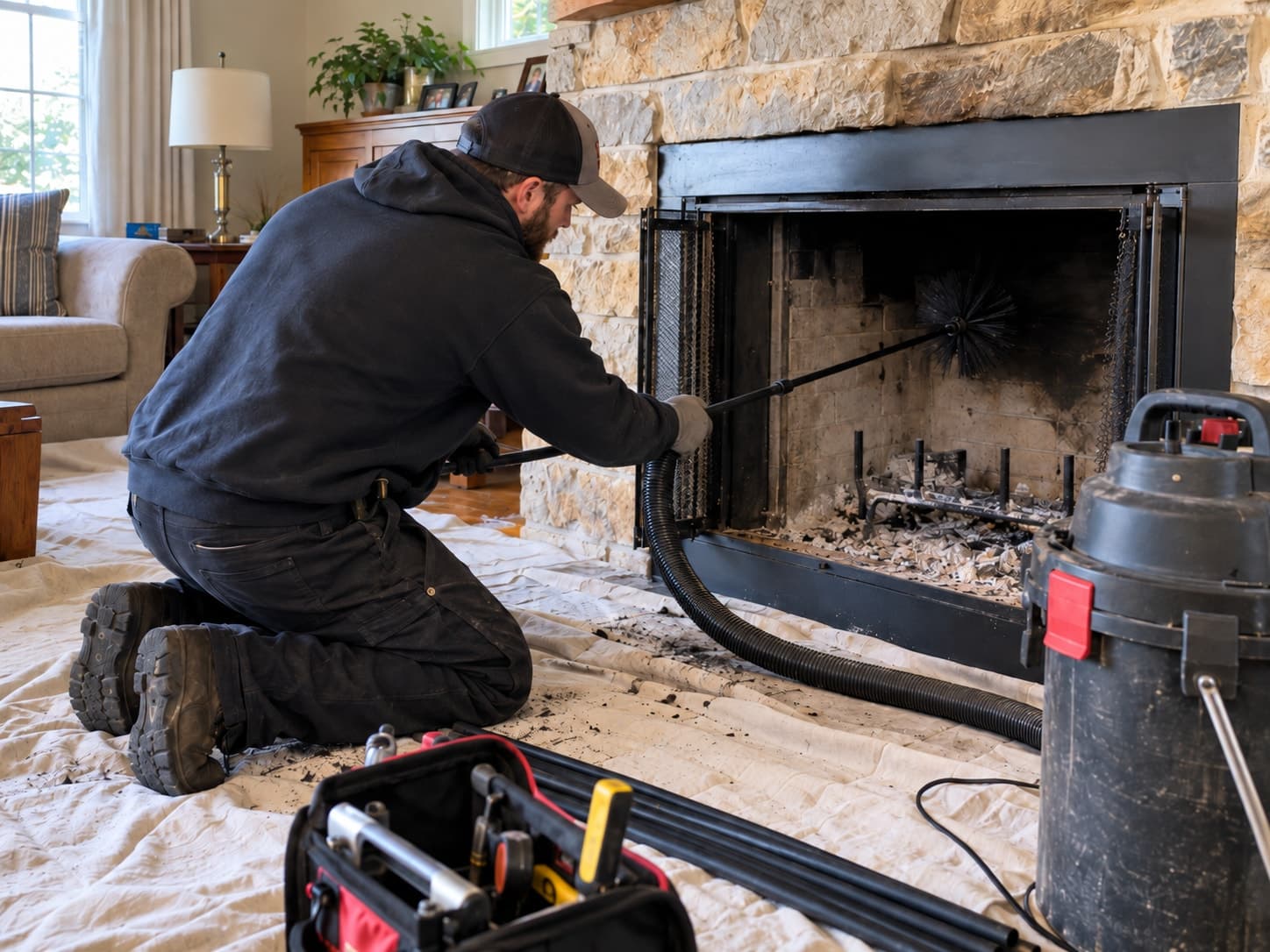
Air-conditioned homes are often slightly under negative pressure when bath fans, the kitchen hood or the dryer are running. The easiest place for replacement air to come from is an open chimney, and it brings chimney smells with it. The effect on odors is covered in why a fireplace smells in humid weather.
Possible causes
01Damper left open
- What you may notice
- Handle or lever in the open position; you can see up the flue.
- How it’s confirmed
- Checking the damper position. See how to tell if your damper is open or closed.
02Damper that no longer seals
- What you may notice
- Closed damper but air still moving; rust or warping on the plate.
- How it’s confirmed
- Checking the damper plate and frame for rust, warping and gaps.
03No damper at all
- What you may notice
- Nothing to open or close; some older and some gas-log fireplaces.
- How it’s confirmed
- Confirming whether a throat damper can be added or a top-sealing damper is the better option.
04Gas-log fireplace with a clamped-open damper
- What you may notice
- A clip or stop holding the damper partly open next to gas logs.
- How it’s confirmed
- Checking the log set’s instructions. This is a safety requirement for many gas logs; don’t remove it.
05No cap, or wind at the chimney top
- What you may notice
- Drafts worse in wind; rain or debris in the firebox.
- How it’s confirmed
- Checking the cap and chimney top; see a missing or damaged cap.
Ways to stop it
| Option | How it helps | Good to know |
|---|---|---|
| Repair or replace the throat damper | Restores a closeable plate above the firebox | Old cast-iron dampers rarely seal tightly even when working |
| Top-sealing damper | A lid at the top of the flue with a gasket, opened by a cable | Seals better, and keeps rain and animals out; not for use with gas logs unless approved |
| Glass doors | A second barrier at the opening | Useful with any damper; see doors that won’t close |
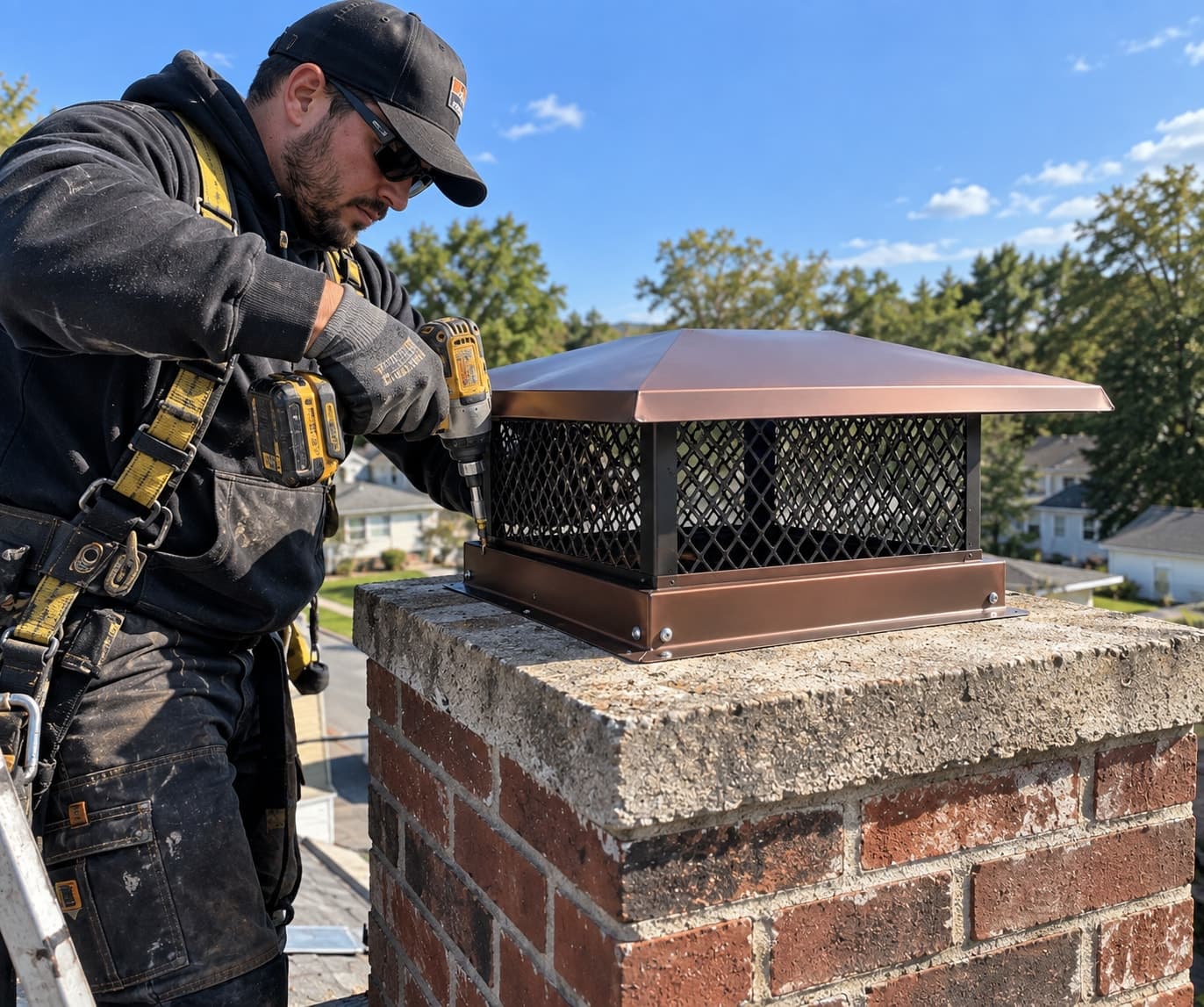
| Chimney cap | Reduces wind and rain at the top | Doesn’t stop airflow on its own |
| Balancing house pressure | Less pull from fans and the dryer | A dryer vent that is clogged or disconnected can make this worse |
Safe checks you can do
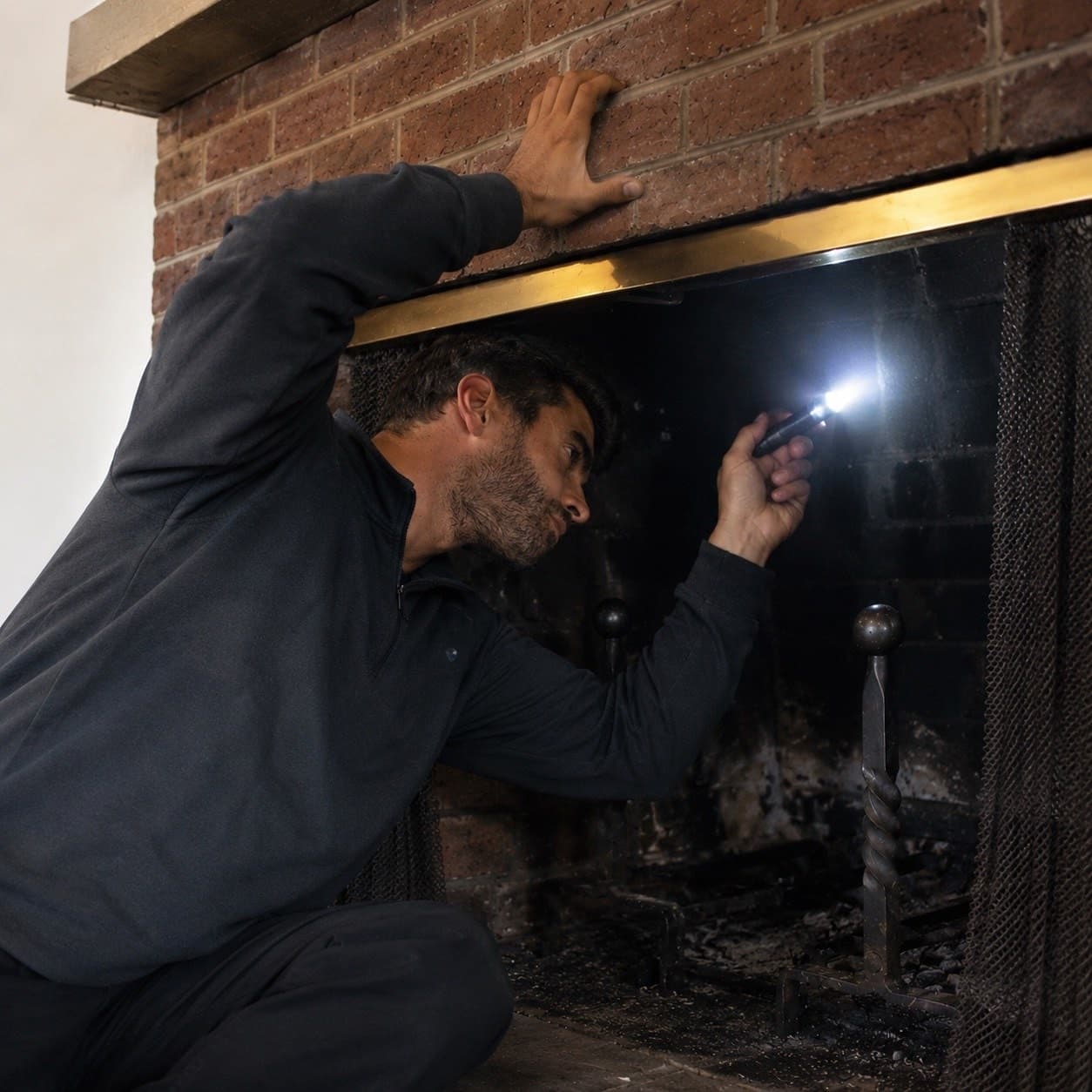
- With the fireplace cold, confirm the damper is fully closed and look up with a flashlight for gaps around the plate.
- Hold a tissue or incense stick near the opening with the damper closed. Movement shows air is still getting through.
- Repeat with the bath fans and kitchen hood on. If the draft gets stronger, the house is pulling air down the chimney.
- Check for a gas log set and any clip holding the damper open. Leave that in place.
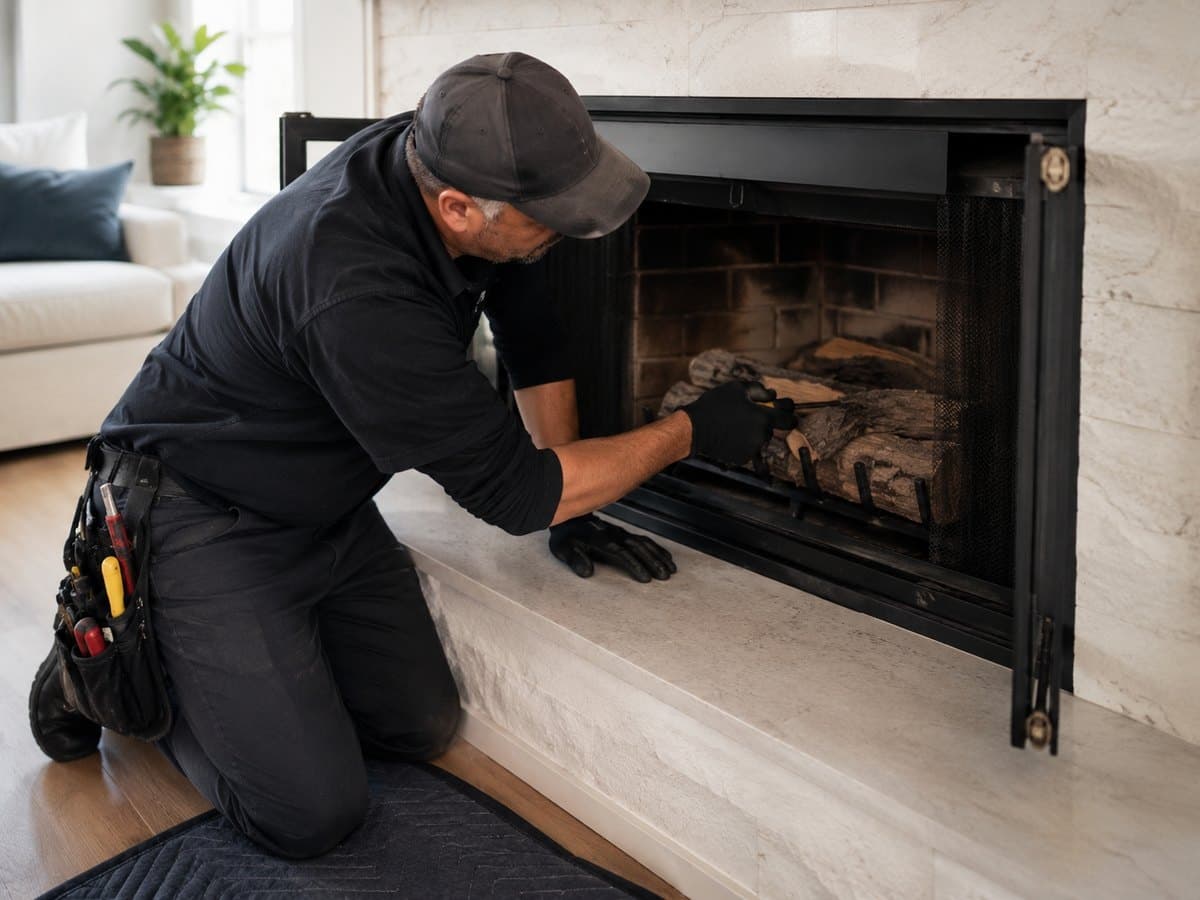
- Close the glass doors, if you have them, between uses.
Never block a flue that serves gas logs or a gas appliance
Gas log sets and some gas appliances rely on an open flue to carry exhaust out. Stuffing the flue, adding a plug or closing a clamped damper can send carbon monoxide into the house. If you want to seal the fireplace and it has gas logs, have the setup checked first.
Red flags
- Strong smoke, soot or odor smells coming into the house when the fireplace isn’t used.
- A damper so rusted it has holes or pieces missing: water is coming down the flue.
- A CO alarm or symptoms when gas logs or other gas appliances run.
What a professional check involves
Identify the setup
Wood-burning, gas logs or factory-built, and what kind of damper, if any.
Check the damper
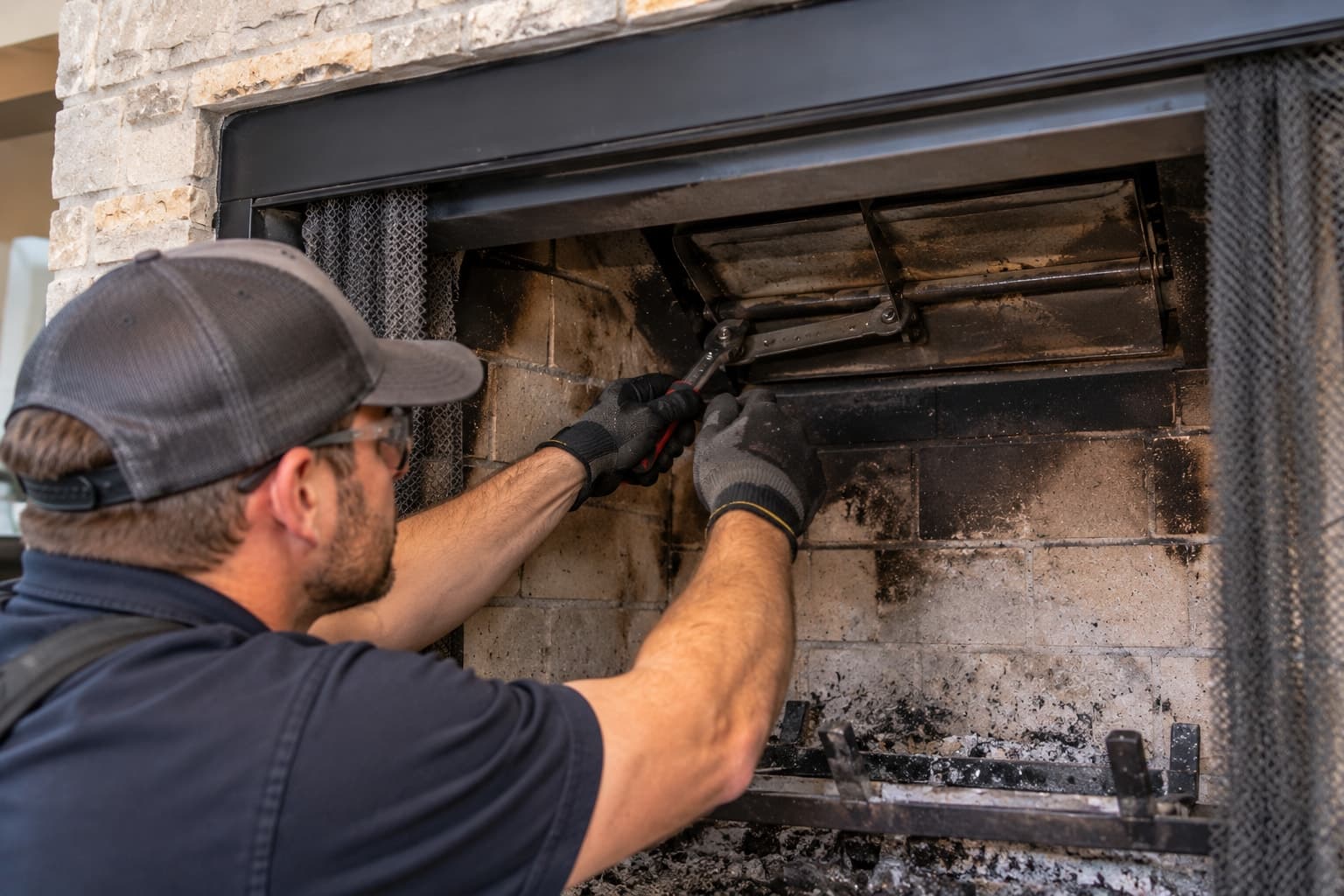
The plate, frame and handle are checked for rust, warping and how tightly they close.
Check the top
The cap and the top of the flue are checked, especially if a top-sealing damper is being considered.
Recommend the right seal
Damper repair, a top-sealing damper, doors, or a combination that fits how the fireplace is used.
Sealing the air path
| Where the air comes through | Where it’s fixed |
|---|---|
| Warped or rusted throat damper | damper repair or a top-sealing damper |
| Open fireplace front | glass fireplace doors |
| Open flue top | a chimney cap |
| Gaps around a factory-built unit | a fireplace inspection |
The same air path carries odors; see why a chimney smells when it’s humid. Local: fireplace repair around Orlando or Ocoee fireplace service. Top-sealing and throat dampers compared explains which one seals better.