On this page
“Chimney repair” covers a lot of very different jobs. On one house it means a new stainless chase cover on a framed chase; on the next it means repointing the top courses of a 1950s brick chimney. The fix depends on two things: what kind of chimney you have, and which component is letting you down. This page helps you work out both, then points you to the page for that repair.
It explains chimney repair in depth for all of Greater Orlando. For a repair at a specific address, the local pages cover each city, starting with chimney repair for City of Orlando homes.
Start with what you’re noticing
Most repair calls begin with a symptom, not a diagnosis. The table below lists the symptoms we hear about most often, the parts that usually cause them, and where to read more. It’s a starting point: the same stain can come from two or three different places, which is why the inspection comes first.
| What you notice | Components we check first | Where to go next |
|---|---|---|
| Water in the firebox, or a stain on the ceiling or wall beside the chimney | Cap, chase cover or crown, flashing, masonry or siding, storm collar | Chimney leak repair |
| Orange or brown streaks running down siding or stucco from the top of the chimney | Galvanized chase cover rusting through, rusted cap or fasteners | Chase cover replacement |
| Soft, swollen or stained siding on a framed chimney box; paint peeling on the chase | Chase cover, storm collar, siding seams, framing and sheathing underneath | Prefab chimney & chase repair |
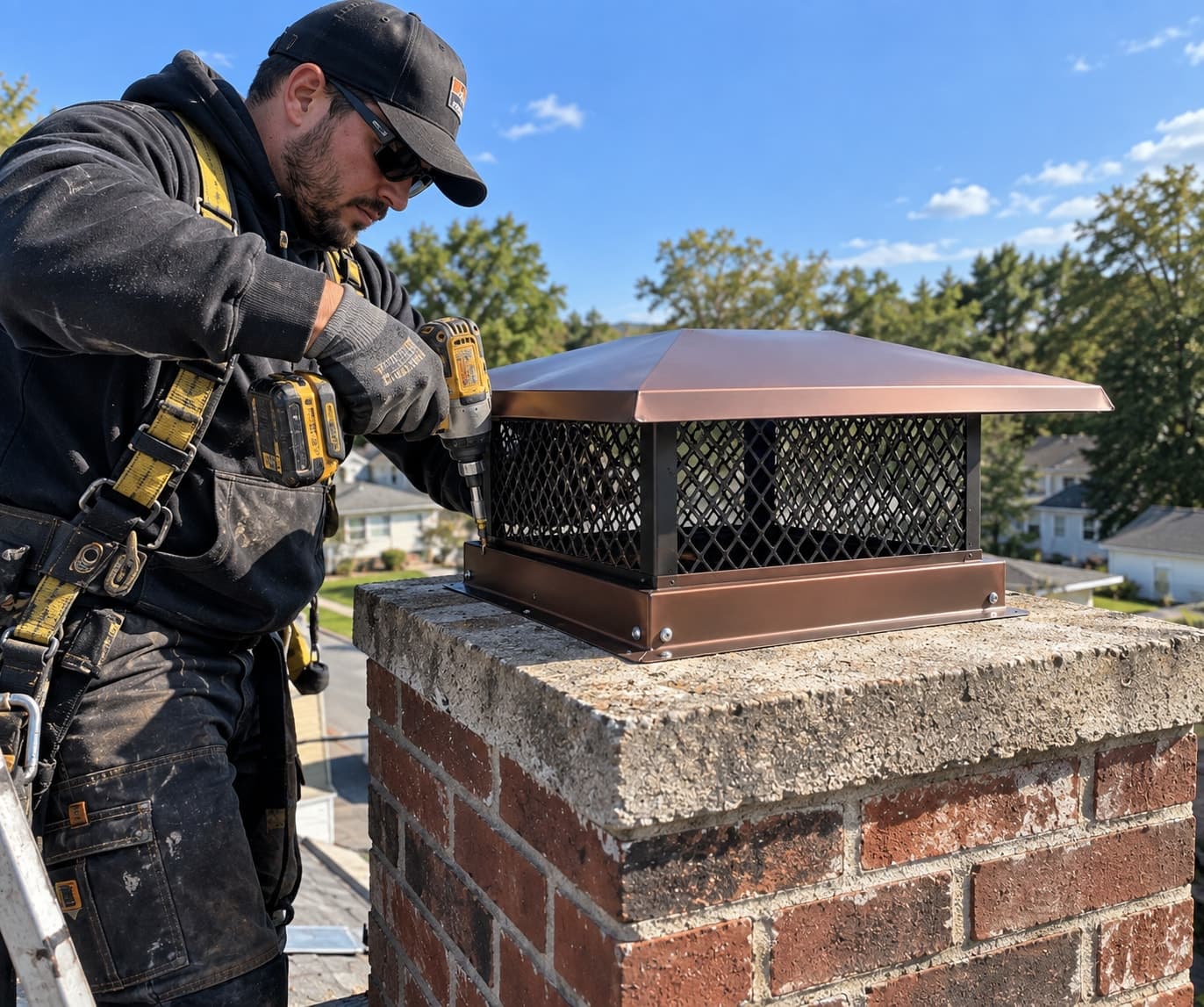
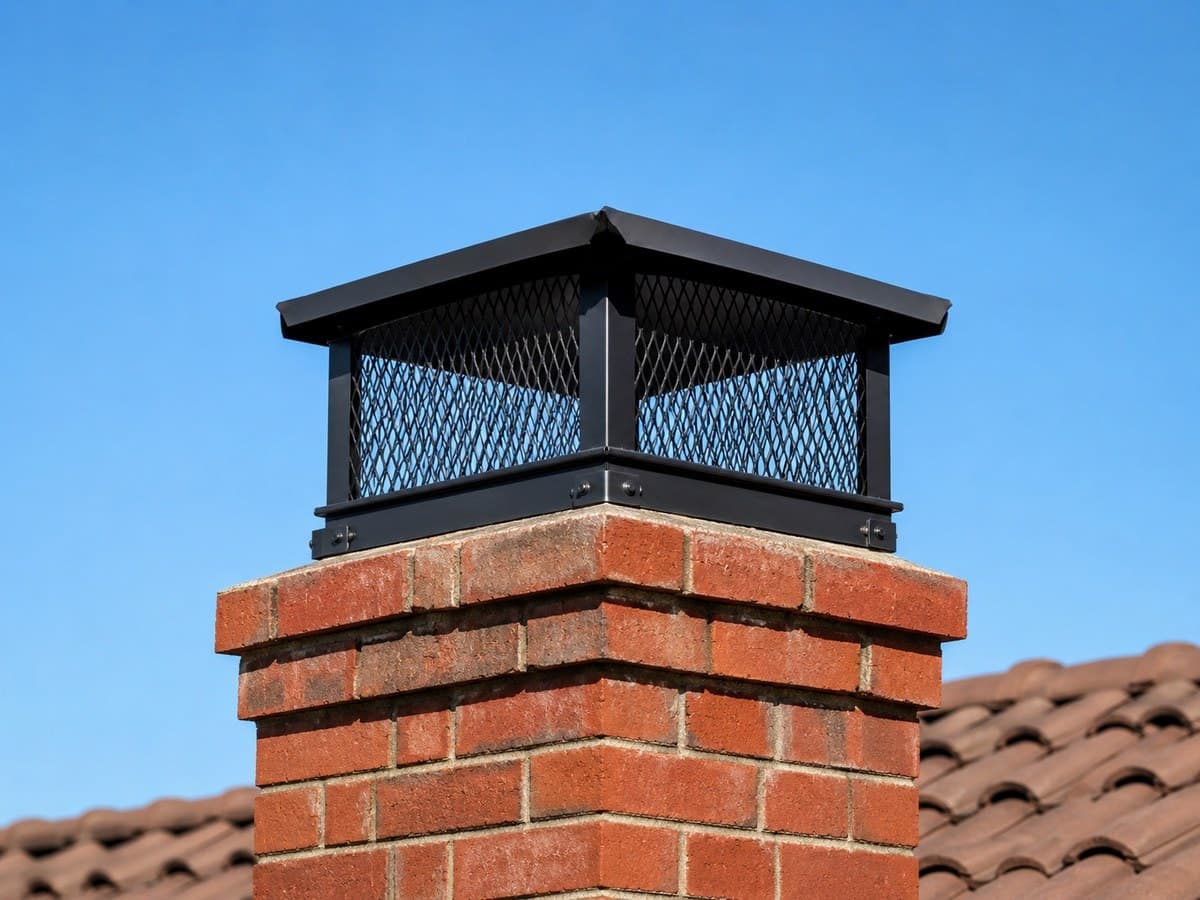
| Cap bent, loose or gone after a storm; birds or animals getting in | Chimney cap, its mesh and its fastening | Chimney caps (and a storm inspection if there was wind damage) |
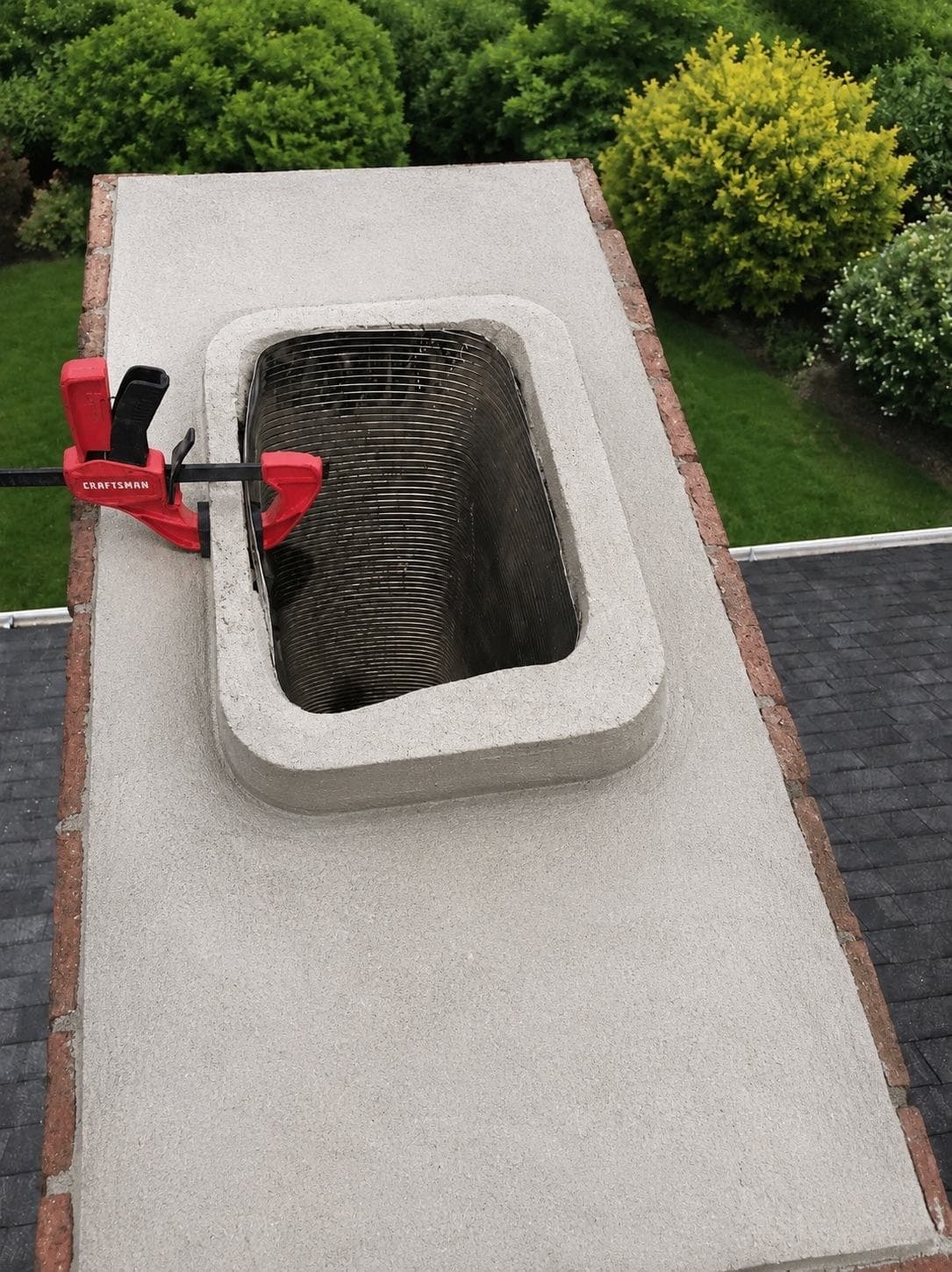
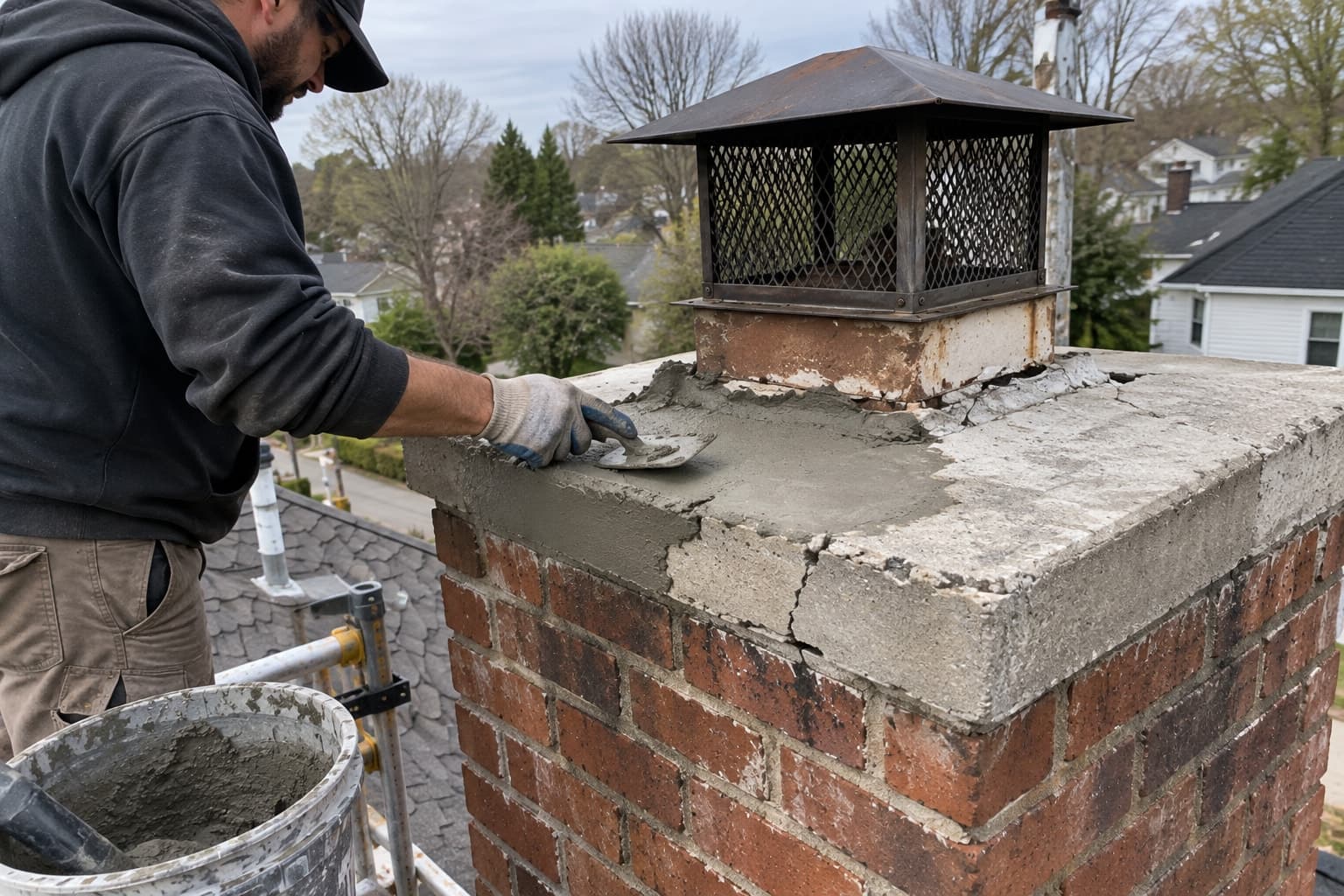
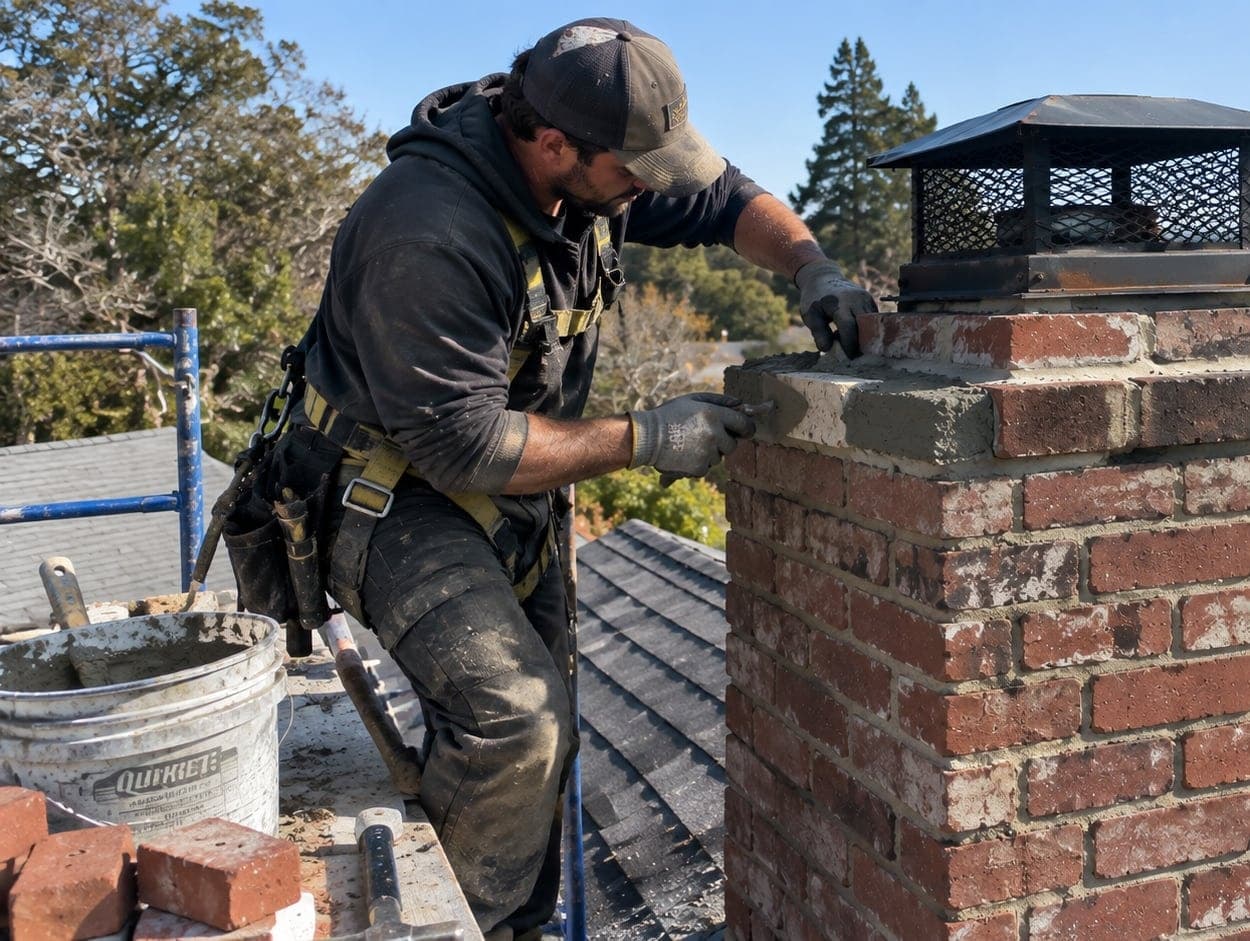
| Cracks across the concrete top of a brick chimney; chunks on the roof | Masonry crown, flue tile, top brick courses | Chimney crown repair |
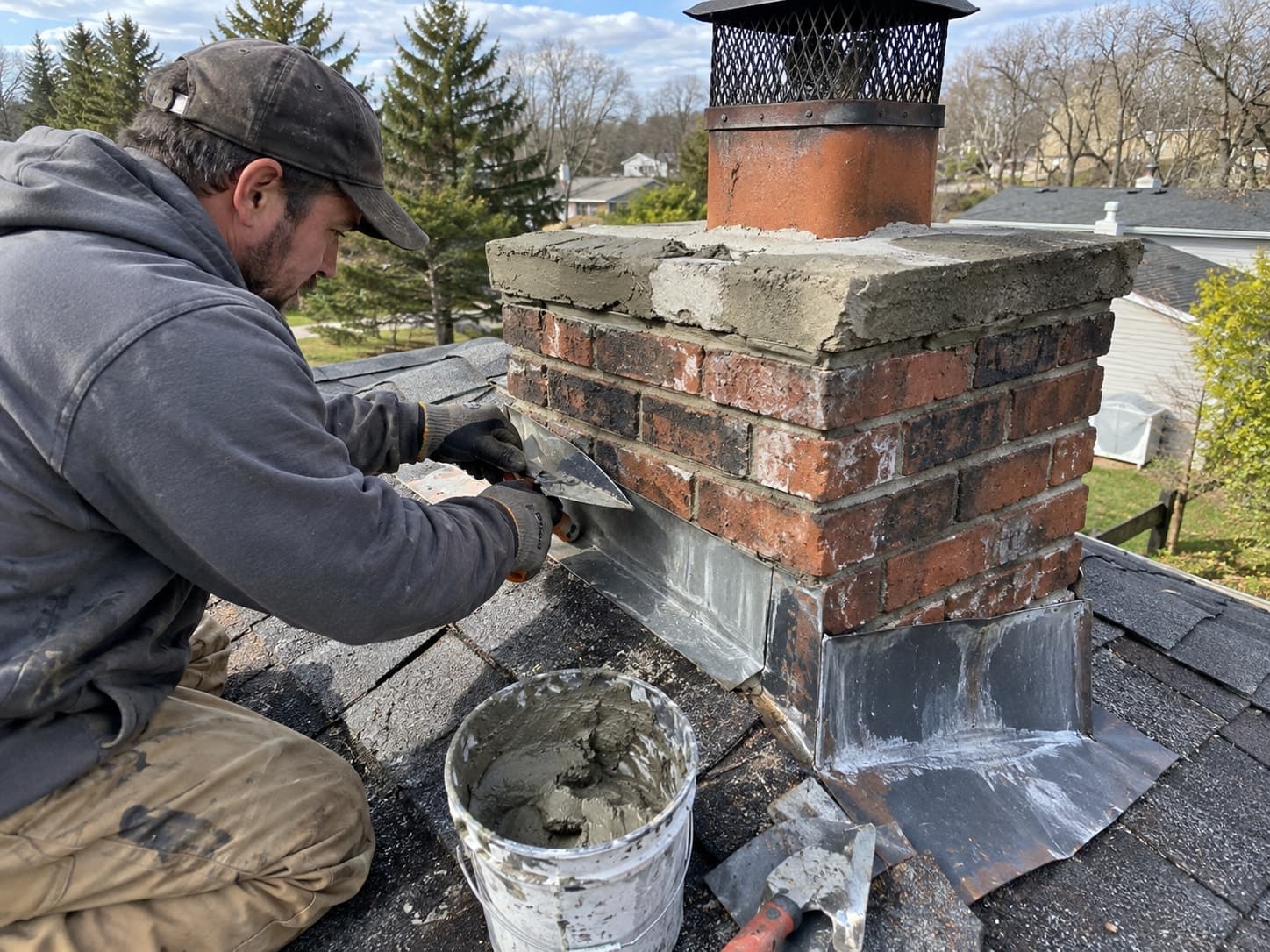
| Leak where the chimney meets the roof, often during wind-driven rain | Step and counter-flashing, cricket, sealant joints, roof covering | Chimney flashing repair |
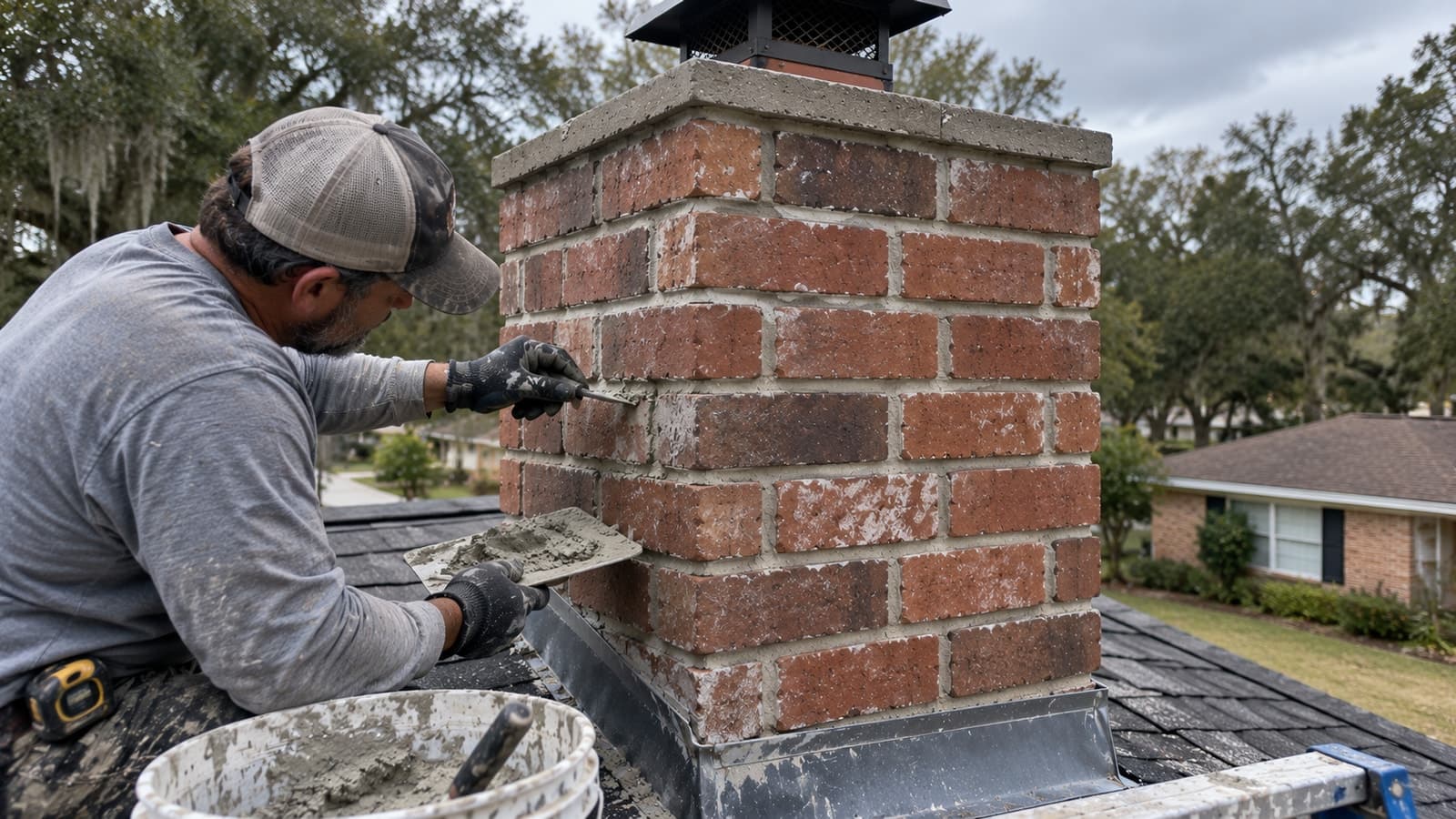
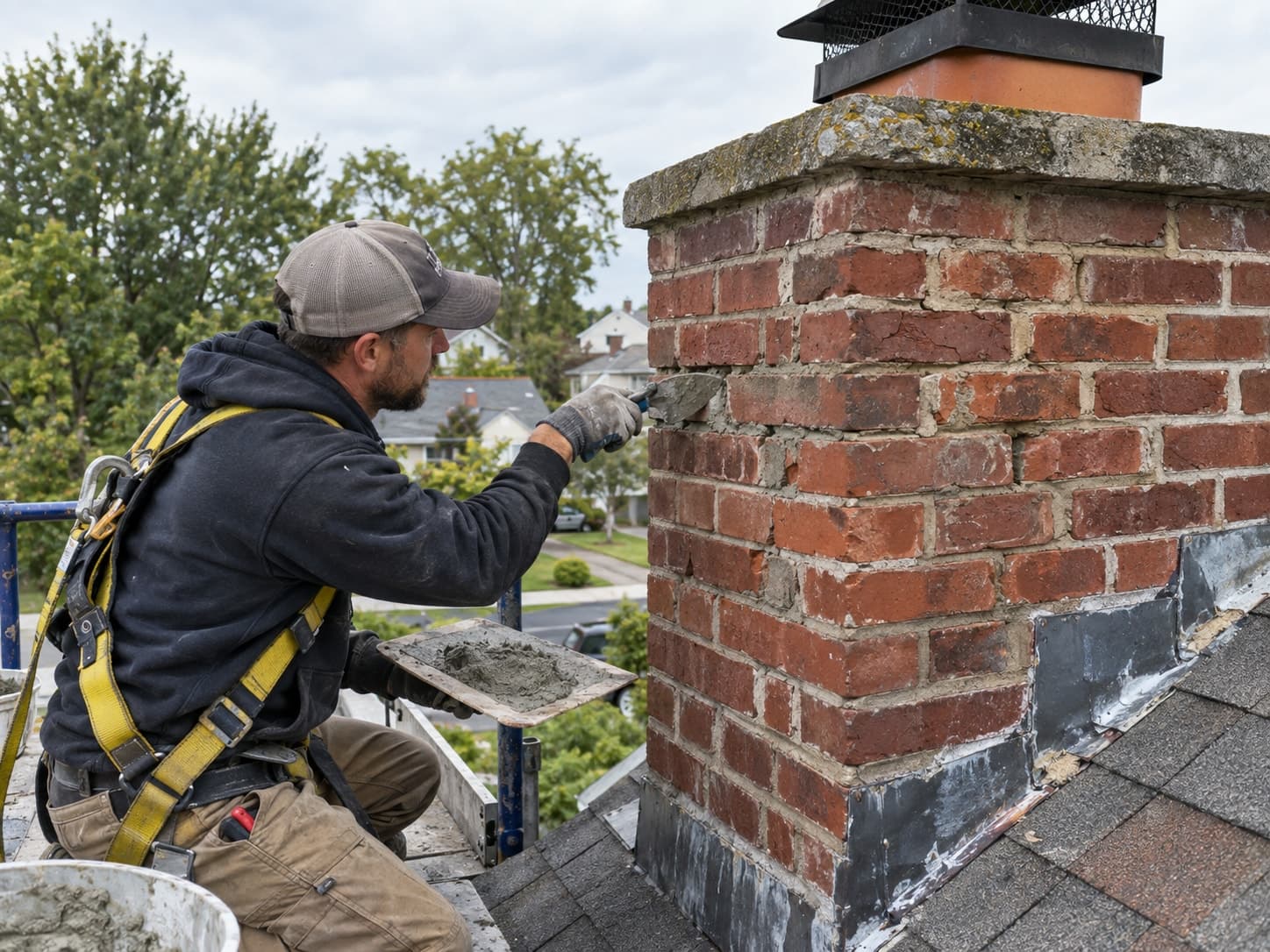
| Missing or crumbling mortar, loose or flaking bricks, white staining | Mortar joints, brick faces, crown, water entry above | Chimney masonry repair |
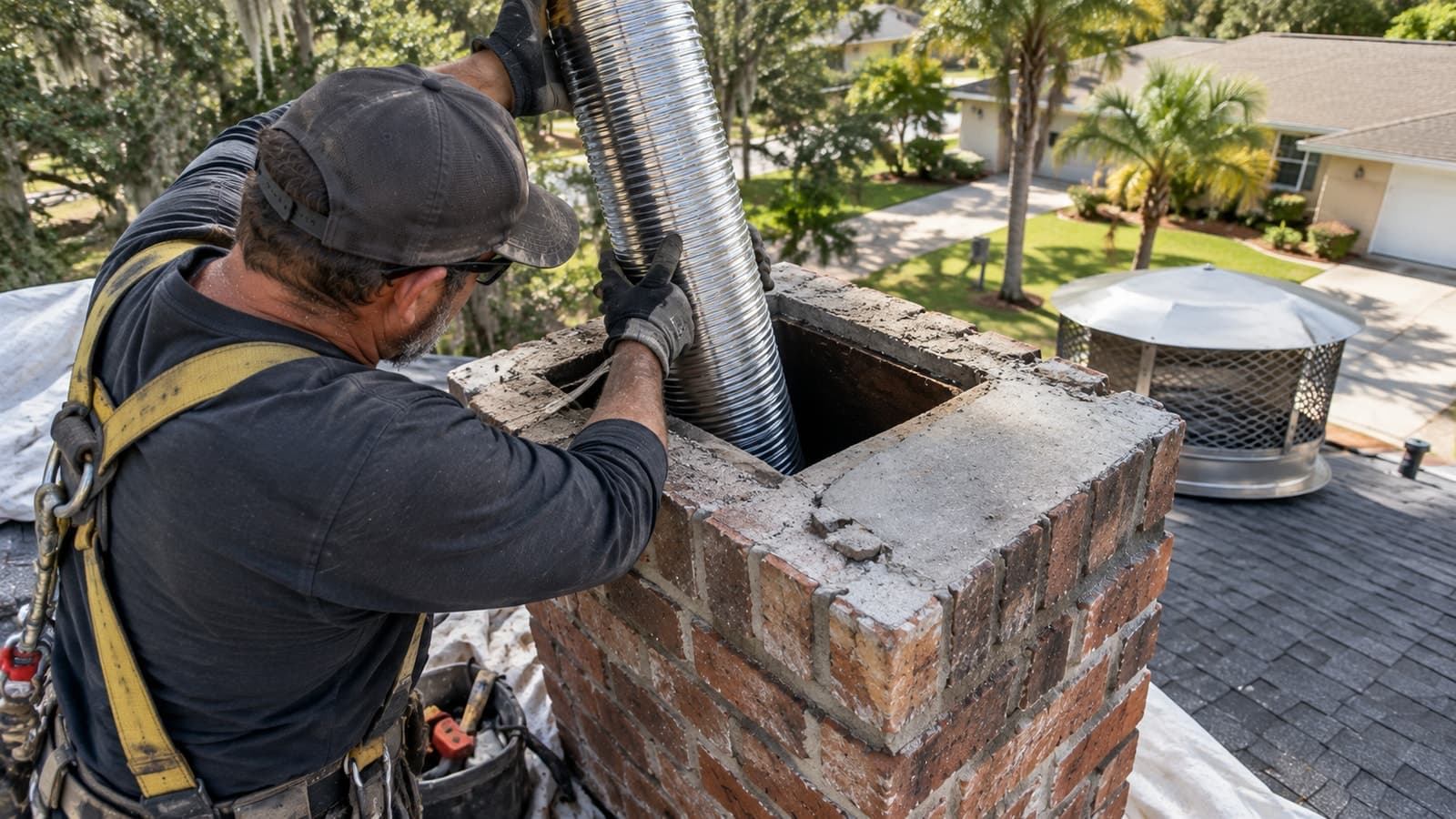
| Cracked or missing flue tiles found on a flue inspection | Clay flue liner, liner joints, smoke chamber | Chimney liner |
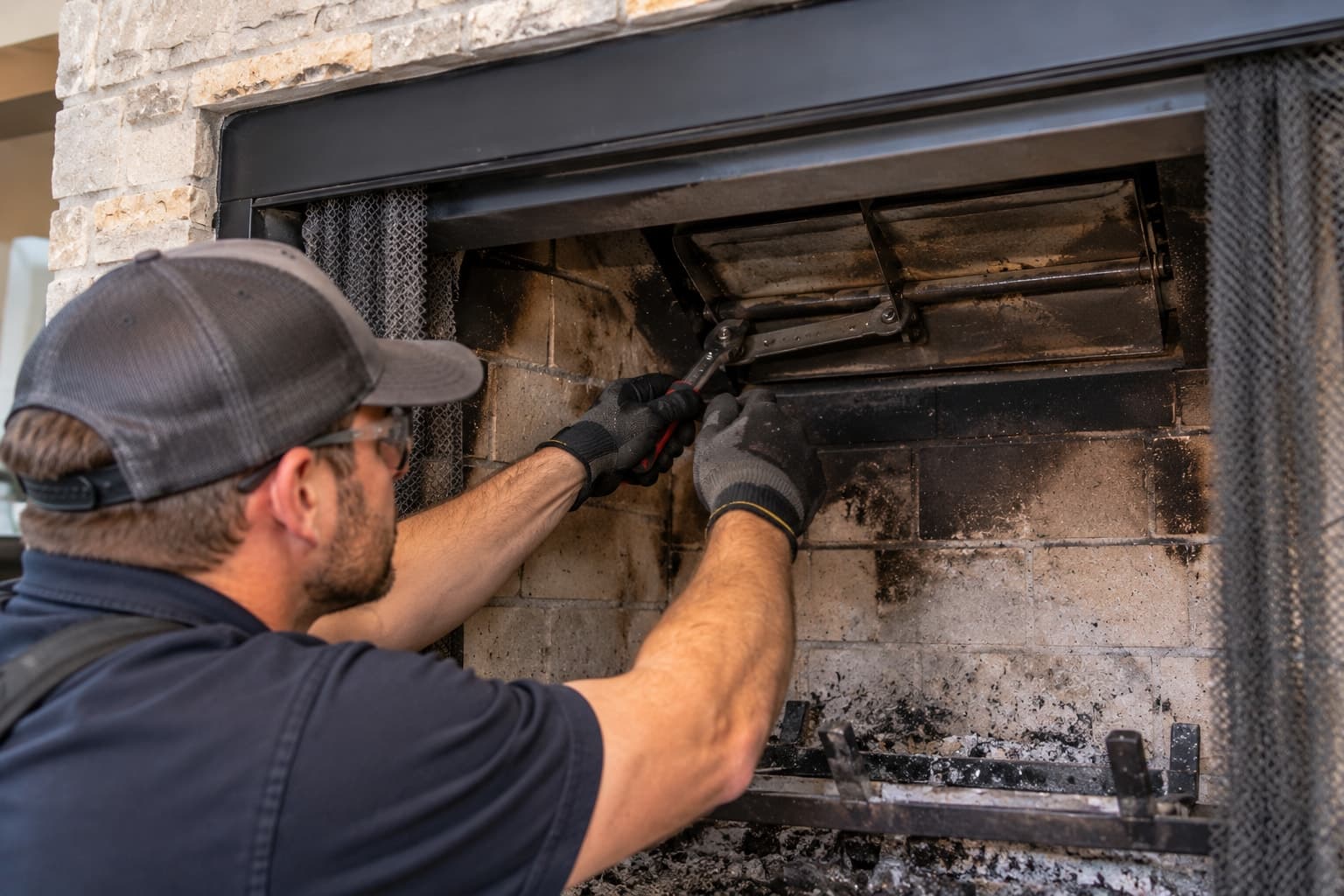
| Damper won’t open or close; humid air and odor coming into the room | Throat damper, top-sealing damper option | Chimney damper repair |
If water is the issue, and in Central Florida it often is, the chimney leak diagnosis page walks through every entry point in order and explains how each one is confirmed. If you just want to understand the symptom before calling anyone, the guide to why water comes through a chimney is written for that.
Masonry chimney or factory-built? The repair depends on it
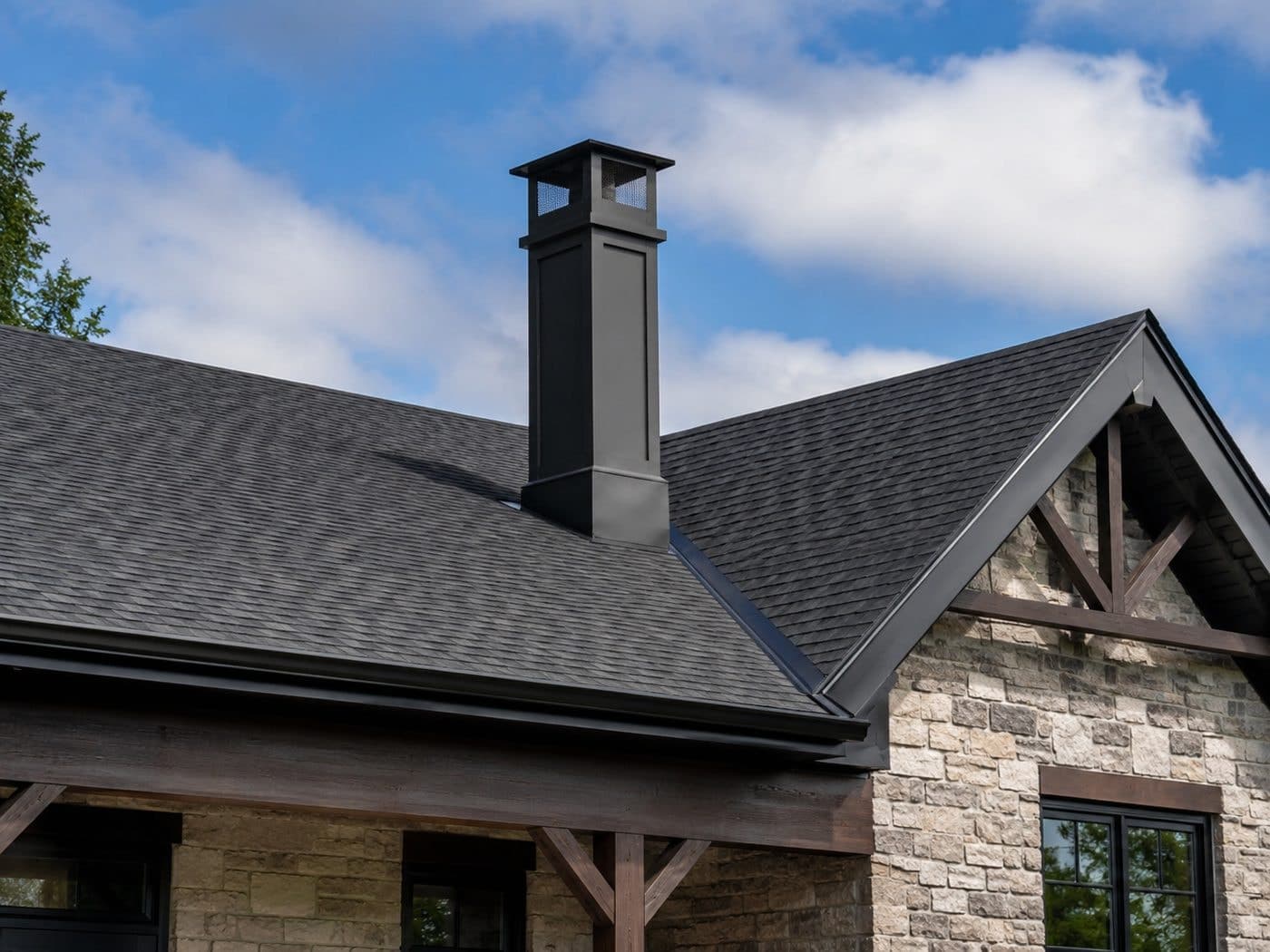
Central Florida has two very different chimney systems, and they fail in different ways. A masonry chimney is brick or block, with a clay tile or metal liner inside and a mortar or concrete crown on top. A factory-built (prefab) chimney is a metal flue pipe running up through a wood-framed box, the chase, which is finished in siding or stucco and topped with a sheet-metal chase cover.
Factory-built fireplaces and framed chimney chases are common in many newer Orlando-area homes, while older neighborhoods have more brick chimneys. You can’t always tell from the street, because a stucco-finished chase can look a lot like a masonry chimney. The quickest checks are the top of the chimney (a flat metal pan versus a concrete crown with a clay flue tile sticking up) and the firebox (refractory panels with a metal surround and louvers versus firebrick). Our prefab chimney and chase repair page has a full side-by-side identification guide.
| Feature | Masonry chimney | Factory-built chimney in a framed chase |
|---|---|---|
| Top of the chimney | Cracked or poorly sloped crown; cap loose or missing | Chase cover rusting, sagging or holding water; termination cap damaged |
| Walls | Eroded mortar joints, spalled brick, water absorbed through porous masonry | Open siding seams, failed caulk, stucco cracks, rot in the framing behind |
| Roof line | Step and counter-flashing failure; no cricket on a wide chimney | Chase flashing or siding-to-roof details letting water behind the cladding |
| Flue | Cracked clay tiles, open joints, deteriorated mortar | Damaged or corroded pipe sections, missing storm collar, separated joints |
| Typical repair trade | Mason work: crown, repointing, rebuild of top courses | Sheet metal, carpentry and listed replacement parts |
Top of the chimney
- Masonry chimney
- Cracked or poorly sloped crown; cap loose or missing
- Factory-built chimney in a framed chase
- Chase cover rusting, sagging or holding water; termination cap damaged
Walls
- Masonry chimney
- Eroded mortar joints, spalled brick, water absorbed through porous masonry
- Factory-built chimney in a framed chase
- Open siding seams, failed caulk, stucco cracks, rot in the framing behind
Roof line
- Masonry chimney
- Step and counter-flashing failure; no cricket on a wide chimney
- Factory-built chimney in a framed chase
- Chase flashing or siding-to-roof details letting water behind the cladding
Flue
- Masonry chimney
- Cracked clay tiles, open joints, deteriorated mortar
- Factory-built chimney in a framed chase
- Damaged or corroded pipe sections, missing storm collar, separated joints
Typical repair trade
- Masonry chimney
- Mason work: crown, repointing, rebuild of top courses
- Factory-built chimney in a framed chase
- Sheet metal, carpentry and listed replacement parts
Chimney repair services
Pick the repair that matches your chimney
- Chimney Leak Repair Find where the water is actually getting in (cap, chase cover, flashing, crown, masonry, siding or storm collar) before anything is sealed or replaced.
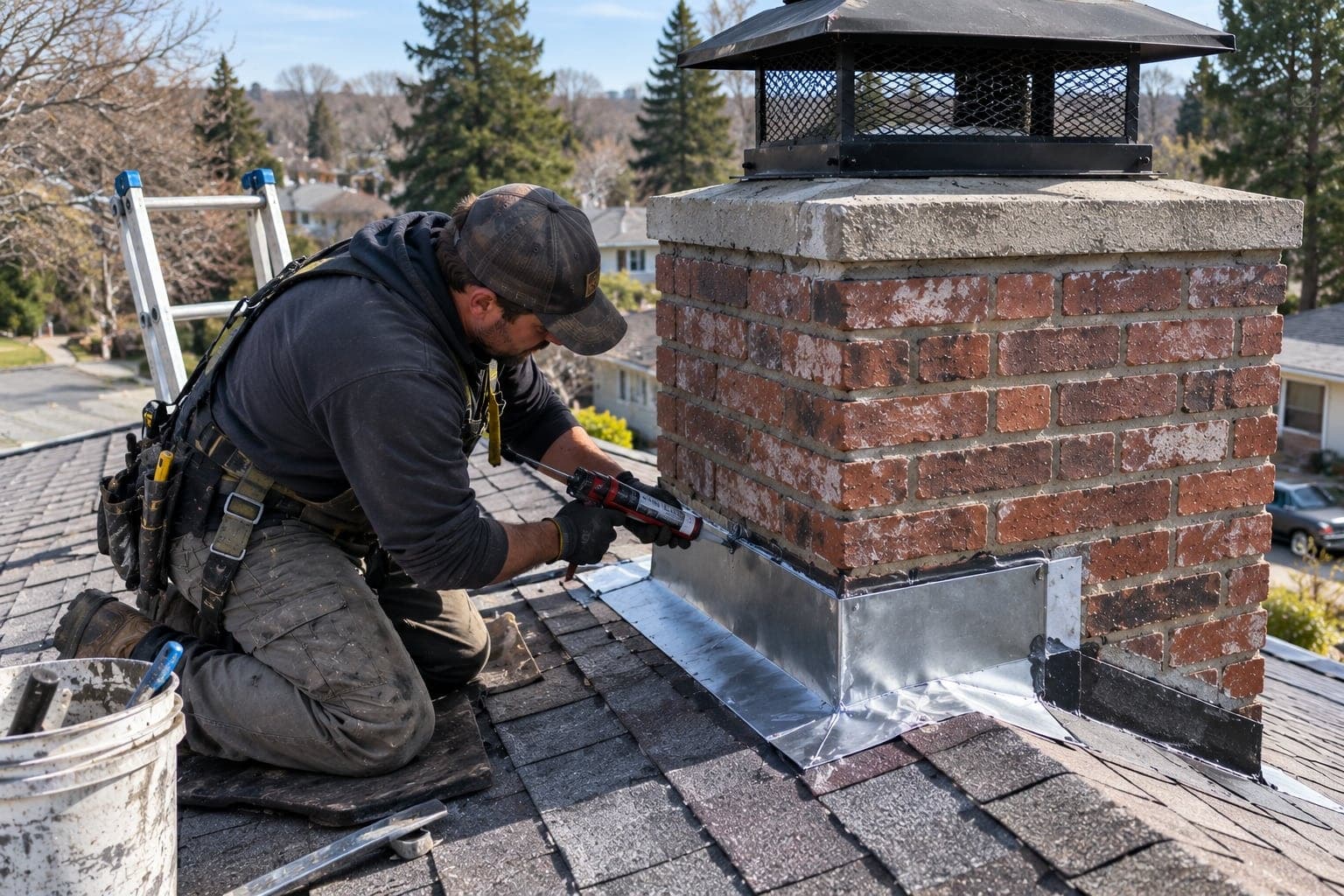
- Chase Cover Replacement Custom-measured stainless or galvanized chase covers with proper slope and drip edges for framed chimney chases.
- Prefab Chimney & Chase Repair Framing, siding and stucco, storm collars and metal flue components on factory-built chimneys.
- Chimney Caps Replacement caps, animal guards and termination caps that keep rain, debris and wildlife out.
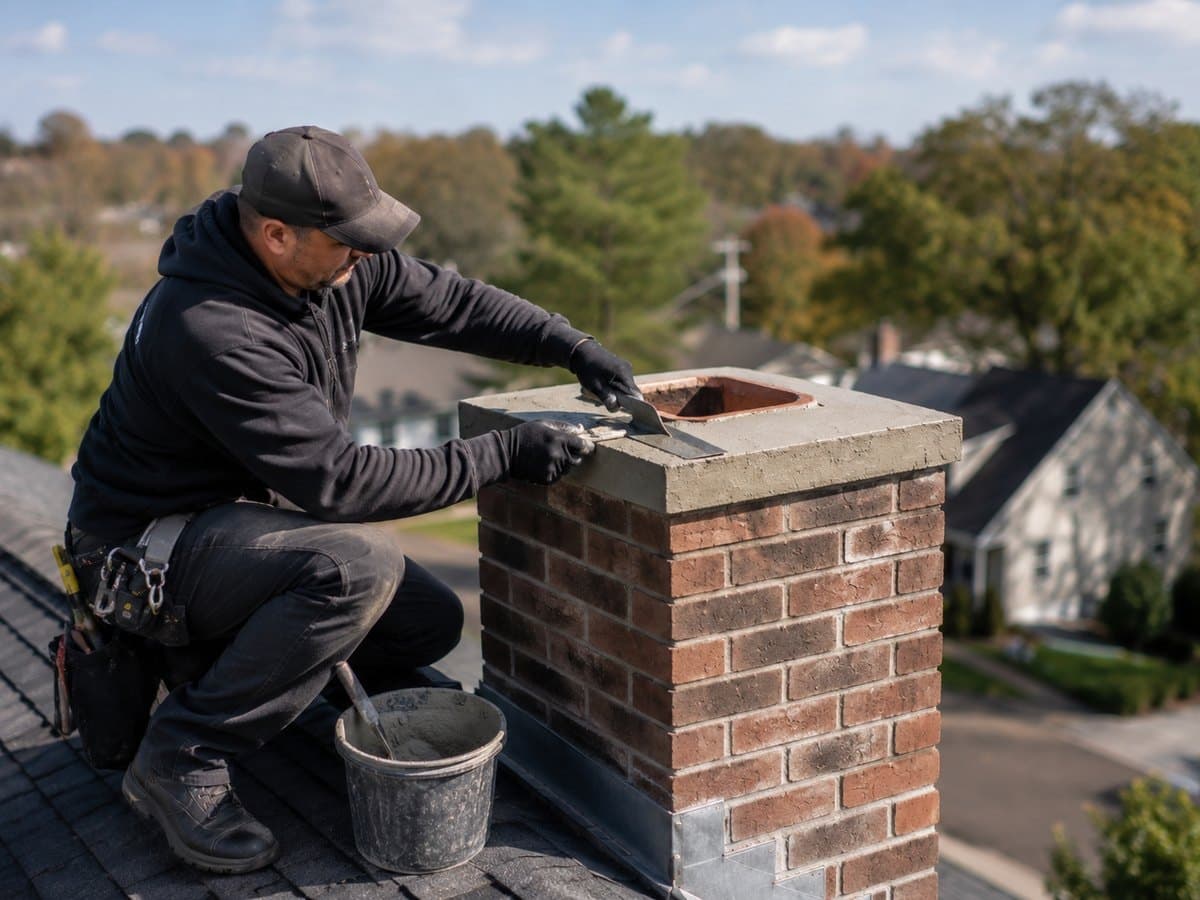
- Chimney Crown Repair Sealing hairline cracks or re-forming a properly sloped crown on a masonry chimney.
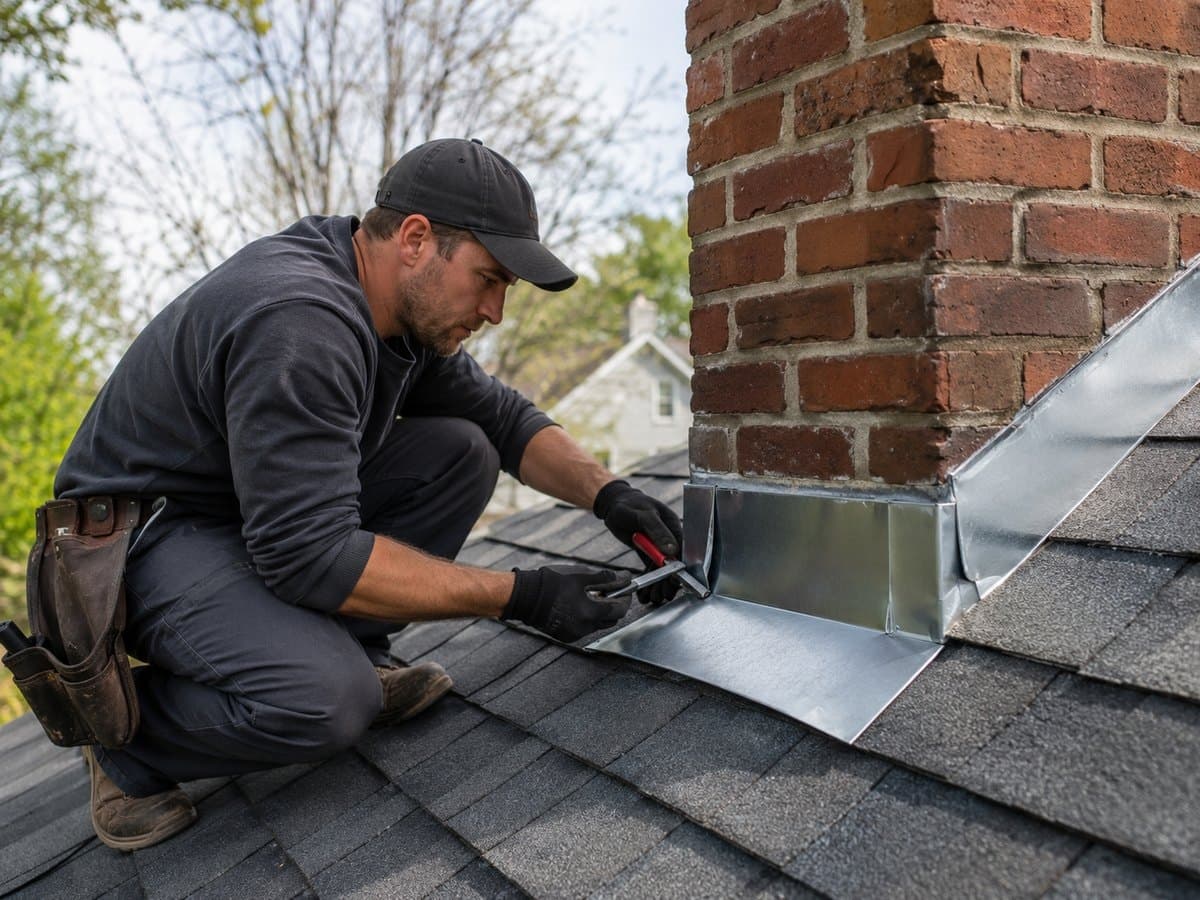
- Chimney Flashing Repair Step flashing, counter-flashing and crickets where the chimney meets shingle, tile or metal roofs.
- Chimney Masonry Repair Repointing, brick replacement and rebuilding the top of older brick chimneys.
- Chimney Liner Repair or relining when flue tiles are cracked or the liner no longer suits the appliance.
- Chimney Damper Repair Stuck or rusted dampers, and top-sealing dampers that keep humid outside air out of the house.
How a chimney repair gets scoped
A good repair estimate is built on evidence. The process is the same for a small fix or a big one.
From symptom to approved repair
You describe the symptom
Where the stain or damage shows up, when it happens (every rain, only heavy storms, only with wind from one direction), and anything that changed recently, like a new roof or a storm. Photos help.
Inspection of the whole system
We look at the top of the chimney, the walls or cladding, the roof interface and the inside: firebox, damper and flue. On a leak, we follow the water path instead of stopping at the first defect we find.
Findings you can see
What was found is shown and explained, so you understand the rusted pan, the open flashing joint or the cracked crown before deciding.
Repair options explained
Where there is a real choice (seal versus replace, galvanized versus stainless, patch versus rebuild), we explain the trade-offs and what each option does and doesn’t fix.
Your approval before work
Nothing is repaired until you’ve reviewed the findings and approved the scope. If hidden damage turns up once the work starts, such as rotted framing under a chase cover, we stop, document it and talk to you before going further.
Repair, rebuild or replace?
| What’s wrong | Usual repair | Where it’s covered |
|---|---|---|
| Hairline cracks in the crown | Crack sealing or a crown coating | Crown repair |
| Crumbling or recessed mortar joints | Raking out and repointing the joints | Tuckpointing and repointing |
| Spalled, cracked or loose individual bricks | Brick replacement with matched mortar | Brick and masonry repair |
| Cracked, offset or missing flue tiles | Tile repair, resurfacing or relining | Liner repair |
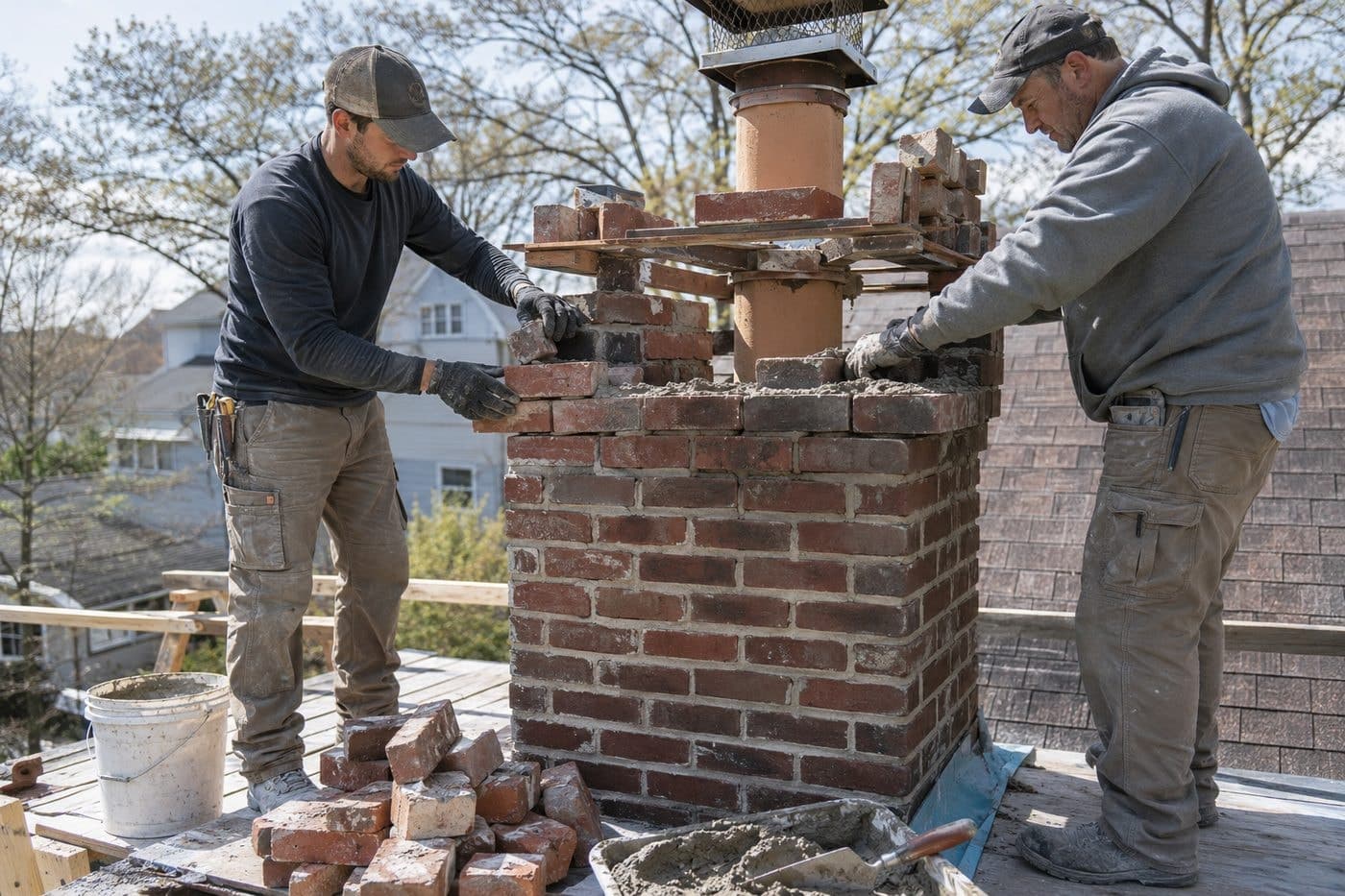
| Loose brick through the top courses, a broken crown, storm damage above the roof | Partial rebuild from the roof line up | Chimney rebuilding |
| Brick that absorbs water after the repairs are done | A breathable water repellent | Waterproofing |
Most problems caught early are repairs, not rebuilds. The decision shifts when the part can no longer do its job, when water has already damaged what’s underneath, or when the design was wrong from the start (a flat chase cover, a crown with no overhang). On a masonry chimney, that’s the line between crown repair and rebuilding the top of the chimney. On factory-built systems, parts must match the manufacturer’s listing; if they can’t be sourced, the conversation may turn to replacing the prefab fireplace.
Why water drives most repairs here
In a climate like Central Florida’s, most chimney damage traces back to water. Orlando averages about 51.5 inches of rain a year (CurrentResults, NCEI normals), and the National Weather Service in Melbourne notes that June through September are the wettest months, when afternoon sea-breeze thunderstorms can drop heavy rain in a short time. Humidity stays high all year, so wood and steel that get wet dry out slowly.
Hurricanes add wind-driven rain and flying debris. After a named storm, a storm damage chimney inspection checks caps, chase covers, flashing and masonry so you know what the storm actually did.
Roofer or chimney company?
Where the chimney meets the roof, the two trades overlap. Roofers handle the roof covering and underlayment; chimney technicians handle the chimney above it, including caps, chase covers, crowns and the chimney side of the flashing. Many leaks sit right at that line, so it helps if whoever inspects first looks at both, and says clearly which trade the repair belongs to.
What affects the cost of a chimney repair
We don’t publish prices for repairs, because two jobs with the same name can be very different in scope. These are the things that move the number:
- Which component is failing, and whether more than one is involved
- Material choice, such as stainless versus galvanized sheet metal
- Custom fabrication versus a standard-size part
- Chimney height, roof pitch and roof covering (tile needs more care than shingle)
- Access: two-story walls, pool enclosures, landscaping
- Hidden damage found once the old part comes off
- Permits, where the work requires one
Which repair page you need
Chimney repair covers a dozen quite different jobs. If you already know the symptom, these will get you there faster than reading the whole page.
By what you have noticed
- Water is getting in A stain on the ceiling, damp in the firebox, or dripping during heavy rain.
- The cap has gone Blown off in a storm, or rusted through.
- Mortar is falling out Eroded joints and sand collecting at the base of the stack.
- Something inside the flue A suspected liner problem you cannot see from either end.
- It smokes into the room A draft problem rather than a structural one.
- It cannot wait Active water ingress, storm damage or smoke in the house.
Estimates are free across all of them, and a repair visit that ends by telling you nothing needs doing yet is a legitimate outcome.
References (2)
Facts and figures on this page come from these references.