On this page
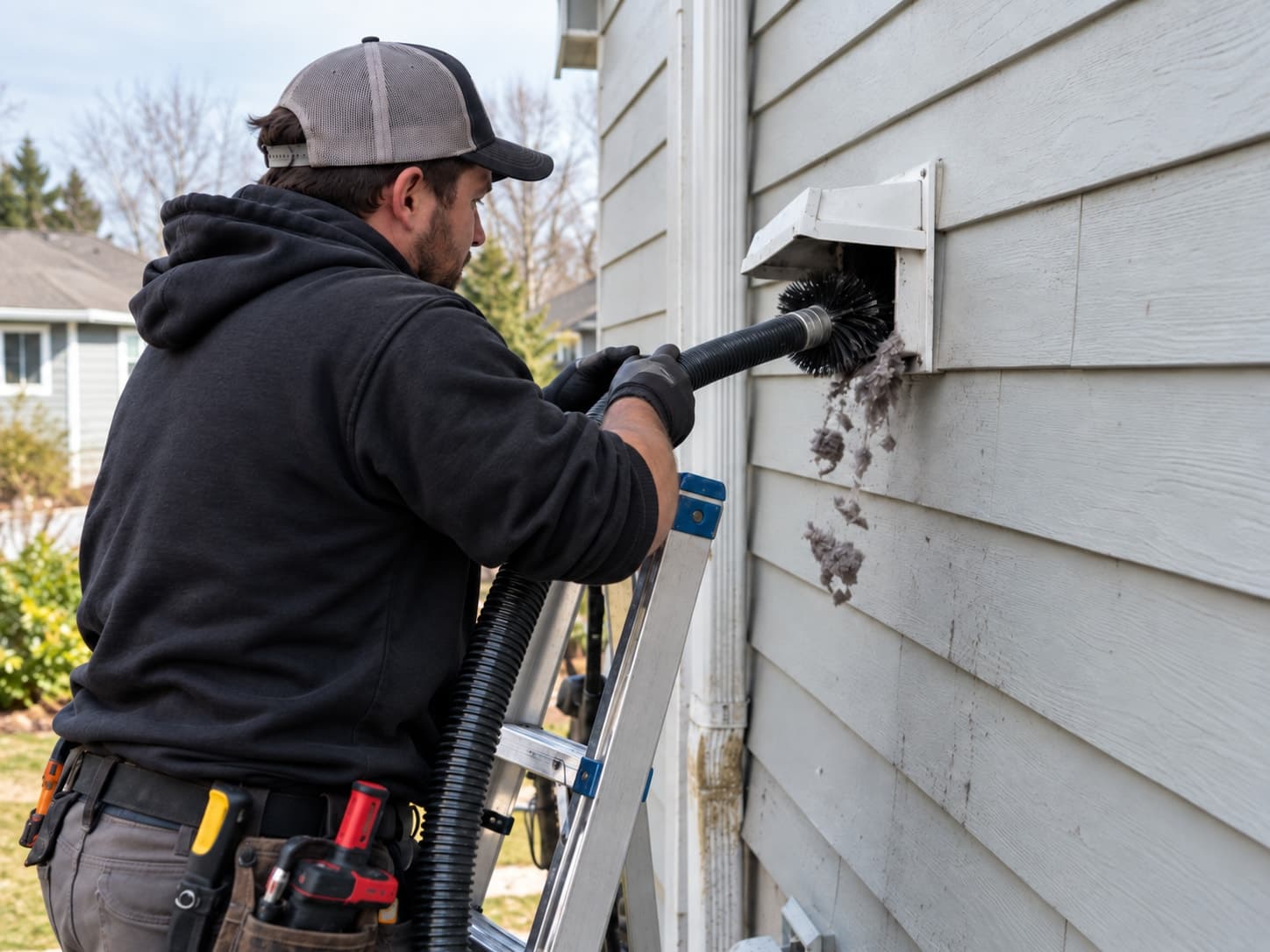
A dirty vent slows the air down. A blocked vent stops it. The symptoms are hard to miss: clothes still damp after a full cycle, a hot laundry room, a dryer that shuts itself off, or a flap outside that doesn’t move at all. A blocked vent is also a fire risk, because the dryer’s heat has nowhere to go.
Completely blocked? Stop using the dryer
Don’t run more loads to “push it through.” Heat and lint build up in the dryer and duct, and a gas dryer’s exhaust, which can contain carbon monoxide, may spill into the house. Leave the dryer off until the vent is cleared, and keep CO alarms working if the dryer is gas.
Blockage, heavy lint or routine cleaning?
| What you see | What it usually means | Service |
|---|---|---|
| Drying is gradually slower; the outside flap still lifts | Normal lint buildup along the duct | Routine vent cleaning |
| Lint behind the dryer, in the attic or stuffed in the cap | Years of buildup, or lint escaping the duct | Heavy lint removal |
| Little or no air at the outside vent; the flap doesn’t move | Something is obstructing the duct or the termination | Blockage removal (this page) |
What blocks dryer vents
Common obstructions and how they’re found
01Packed lint plug
- What you may notice
- Gradual slowdown, then almost no airflow.
- How it’s confirmed
- Rods and brush meet a dense mat, usually at an elbow or near the cap.
02Bird or rodent nest
- What you may notice
- Chirping or scratching near the outside vent; nesting material at the cap.
- How it’s confirmed
- Cap opened; nest removed once any birds have left, and a proper cap fitted.
03Crushed or kinked duct
- What you may notice
- Problem started after the dryer was moved or work was done in the attic.
- How it’s confirmed
- Transition hose and accessible duct checked; hidden runs traced from the attic or chase.
04Disconnected duct in the attic or wall
- What you may notice
- Lint or humidity in the attic, laundry room or wall cavity.
- How it’s confirmed
- Airflow at the cap compared with the dryer outlet; attic run inspected.
05Stuck or clogged termination flap
- What you may notice
- Flap stuck shut, painted over or blocked by a screen.
- How it’s confirmed
- Cap inspected and operated; replaced if damaged or non-compliant.
06Debris at a low exit
- What you may notice
- A vent near the ground behind shrubs, mulch or an AC unit.
- How it’s confirmed
- Termination cleared and checked for soil, leaves or irrigation water in the first section.
Nesting birds
Birds nesting in a dryer vent cap need care: many species are protected while nesting. Stop using the dryer until the vent is cleared, since the heat and lint can harm the birds and the nest blocks the exhaust.
How a blockage is cleared
Confirm the blockage
Airflow at the exterior or roof cap is measured with the dryer running.
Locate it
Transition hose checked first, then rods and brush worked along the run to find where airflow stops.
Clear it
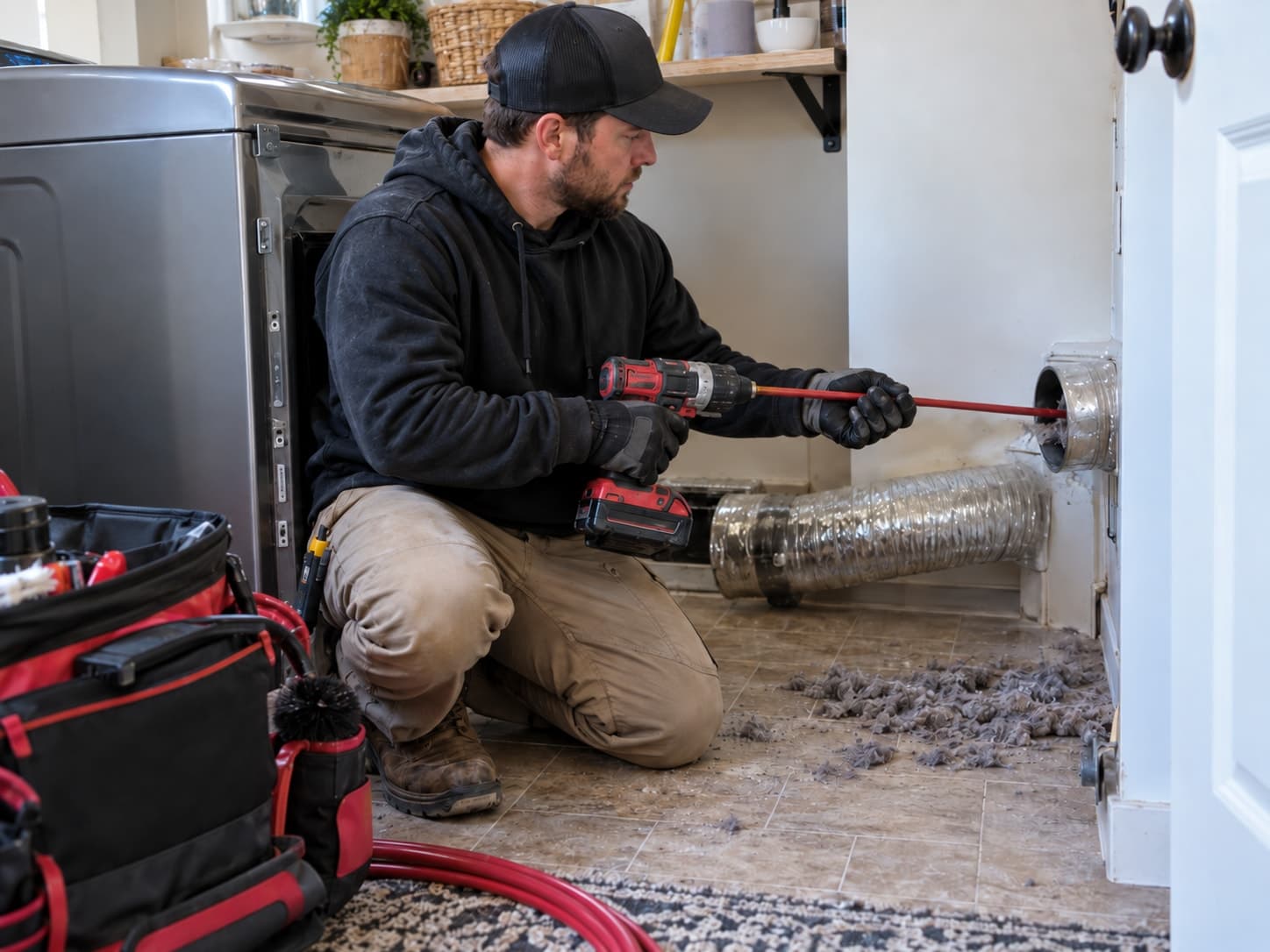
Rotary tools break up lint plugs; nests and debris are pulled from the cap end; crushed sections are cut out.
Repair the cause
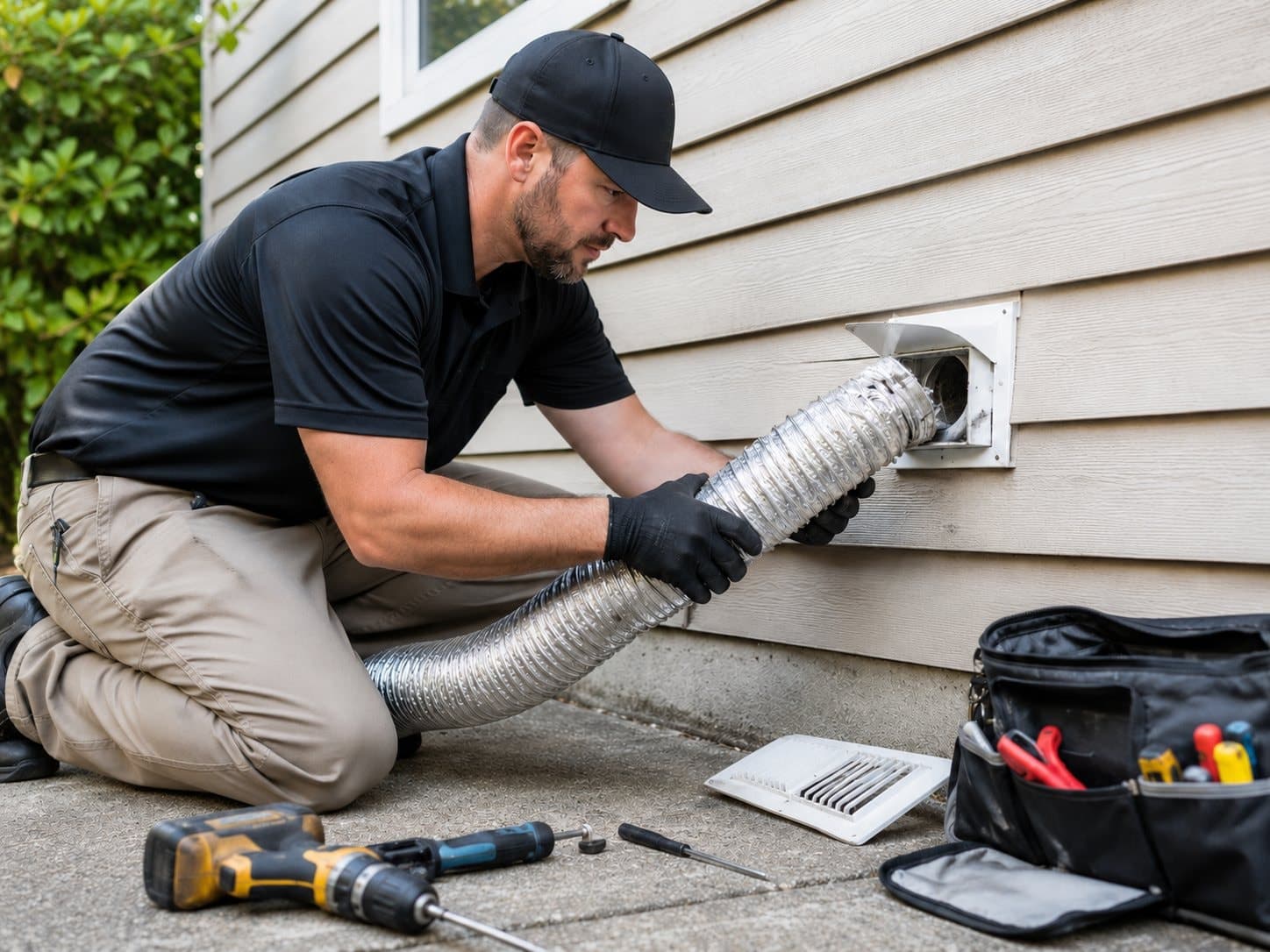
Crushed or disconnected duct is replaced with rigid metal duct, and a failed or screened cap is replaced.
Re-test
Airflow measured again to confirm the vent is fully open.
Roof terminations are cleared from the roof end as well as from inside, which depends on safe roof access; that part is covered under roof vent cleaning.
Preventing repeat blockages
Repeat blockages usually trace back to how the vent was built: too long, too many elbows, flexible foil in hidden spaces, a screened or undersized cap, or a roof termination that traps lint. The Florida Building Code limits dryer ducts to 35 feet, reduced for each elbow, unless the dryer manufacturer allows more (FBC-R M1502). If your vent keeps clogging, a shorter, straighter vent route can fix the cause. Condo and townhome communities with many roof vents can plan blockage checks across every unit through our services for associations and property managers.
When to stop using the dryer
A slow dryer is an annoyance. A dryer that cannot exhaust at all is a fire risk, and the symptoms that separate the two are worth knowing.
Symptoms and what they mean
01A burning smell during a cycle
- What you may notice
- Hot, scorched or dusty smell from the machine or the laundry room.
- How it’s confirmed
- Stop using it and unplug it. Lint against a hot element is exactly how dryer fires start.
02The dryer cuts out mid-cycle
- What you may notice
- The machine stops and will not restart until it cools.
- How it’s confirmed
- It is tripping its thermal cut-out because heat cannot escape. The cut-out is doing its job; the duct is the problem.
03The cabinet is too hot to touch
- What you may notice
- The top or sides are uncomfortably hot.
- How it’s confirmed
- Heat that should be going out of the duct is staying in the machine. Stop using it.
04No air at the outside vent
- What you may notice
- Nothing coming out of the exterior hood with the dryer running.
- How it’s confirmed
- A complete blockage, or a duct that has come apart inside the wall.
05Clothes damp after a full cycle
- What you may notice
- Everything needs a second run.
- How it’s confirmed
- Restricted rather than blocked. Book it, but it is not tonight's problem.
06Lint appearing around the dryer
- What you may notice
- Fluff collecting on the floor or wall behind the machine.
- How it’s confirmed
- Usually the transition hose has come loose or split.
The first three are urgent. Our page on urgent call-outs covers how that is handled, and calls are answered 24 hours Sunday through Friday.
Blockage clearing is available across Orlando, Winter Park, Altamonte Springs, Kissimmee, Oviedo and the rest of the Central Florida service area, with free estimates. Where the same duct keeps blocking, the run itself is usually the problem rather than the cleaning interval — see dryer vent lint removal on long runs.
References (2)
Facts and figures on this page come from these references.