On this page
The firebox is the brick box the fire actually sits in. In a masonry fireplace it has two layers: an inner lining of firebrick, a dense brick made to handle high heat, and the structural masonry behind it. The lining is sacrificial. It takes the heat, the expansion and contraction of every fire and the occasional log dropped against it, so the wall behind it doesn’t have to. When the lining cracks, loses mortar or starts to lean, the protection it gives the rest of the chimney starts to go with it.
This page covers masonry fireboxes only. If your firebox is lined with molded panels in a metal box, it is factory-built and the fix is different: see replacing prefab refractory panels. Firebox work is one part of our fireplace repair services, which also cover dampers, doors and hearths.
What a sound masonry firebox looks like
Masonry chimney and fireplace, cutaway
- 1Chimney cap. Metal lid with mesh sides over the flue opening. Keeps rain, debris and animals out.
- 2Crown. The concrete or mortar top of the masonry, sloped to shed water away from the flue.
- 3Flue liner. Clay tile or metal lining that carries smoke up and protects the masonry from heat.
- 4Flashing. Metal that seals the joint between the chimney and the roof.
- 5Brick & mortar. The chimney structure. Mortar joints and brick faces absorb water when they wear.
- 6Smoke chamber. The sloped transition that funnels smoke from the firebox into the flue.
- 7Damper. Metal plate at the throat (or a sealing lid on top) that closes the flue when not in use.
- 8Firebox. Where the fire burns. Firebrick laid in heat-resistant mortar.
- 9Hearth. Non-combustible floor extension in front of the fireplace opening.
Section R1001.5 of the Florida Building Code, Residential describes the target a repair should meet. It is useful as a yardstick when you are looking at your own fireplace:
| Requirement | What it means | What failure looks like |
|---|---|---|
| Firebrick lining at least 2 in. thick | A full-thickness heat-rated lining, not a skim coat or thin tile | Brick faces flaking away until the lining is visibly thinner in the hottest area |
| Back and side walls at least 8 in. of solid masonry, lining included | The lining is backed by solid brick, block or concrete | Gaps or hollow sounds behind the lining; daylight or insulation visible through a joint |
| Firebrick to ASTM C27 or C1261 | Tested refractory brick, not common red brick | Ordinary brick used in a past repair, often cracked or crumbling faster than the brick around it |
| Medium-duty refractory mortar to ASTM C199 | Mortar made for firebox temperatures | Joints that powder, fall out or were filled with a gray portland-cement mix |
| Joints no wider than 1/4 in. | Tight, thin joints between bricks | Wide mortar beds, or joints that have washed out to open gaps |
Which firebox damage needs attention
Not every crack is a repair. Firebrick is designed to live with heat, and fine surface cracks show up in almost every fireplace that gets used. The questions that matter are whether the lining is still continuous, still attached and still thick enough. For a step-by-step way to judge your own fireplace before calling anyone, see our guide to whether a cracked firebox is safe.
Common firebox problems and how they are checked
01Hairline cracks in firebrick
- What you may notice
- Thin surface lines across a brick face, with both sides still flush and solid.
- How it’s confirmed
- Tapping and probing the brick to confirm it is sound, and checking the crack doesn’t continue into the joints or the wall behind.
02Cracked fire brick split through
- What you may notice
- A brick broken into pieces, one piece sitting proud of the others, or a crack you can see into.
- How it’s confirmed
- Probing for movement and looking at the neighbouring joints; a split brick is usually cut out and replaced.
03Gaps in firebox joints
- What you may notice
- Mortar recessed, crumbling or missing; dark lines of soot running deep between bricks.
- How it’s confirmed
- Raking a joint to see how deep the loss goes and whether the brick behind it is still bedded.
04Spalling firebrick
- What you may notice
- Brick faces flaking or popping off in layers, often in the back wall where the fire sits.
- How it’s confirmed
- Measuring how much face has been lost and looking for water staining, since moisture speeds spalling.
05Loose or missing brick
- What you may notice
- Bricks that rock when touched, or a hole in the lining.
- How it’s confirmed
- Checking the surrounding courses and the backing masonry for heat damage or hidden voids.
06Bulging rear wall
- What you may notice
- The back wall leaning or bellied into the firebox, with joints opening in a curved pattern.
- How it’s confirmed
- Sighting along the wall, probing for loose courses and checking whether the lining is still tied to the masonry behind it.
07Cracks that start above the firebox
- What you may notice
- Cracks radiating from the damper frame or lintel, rust staining at the top of the opening.
- How it’s confirmed
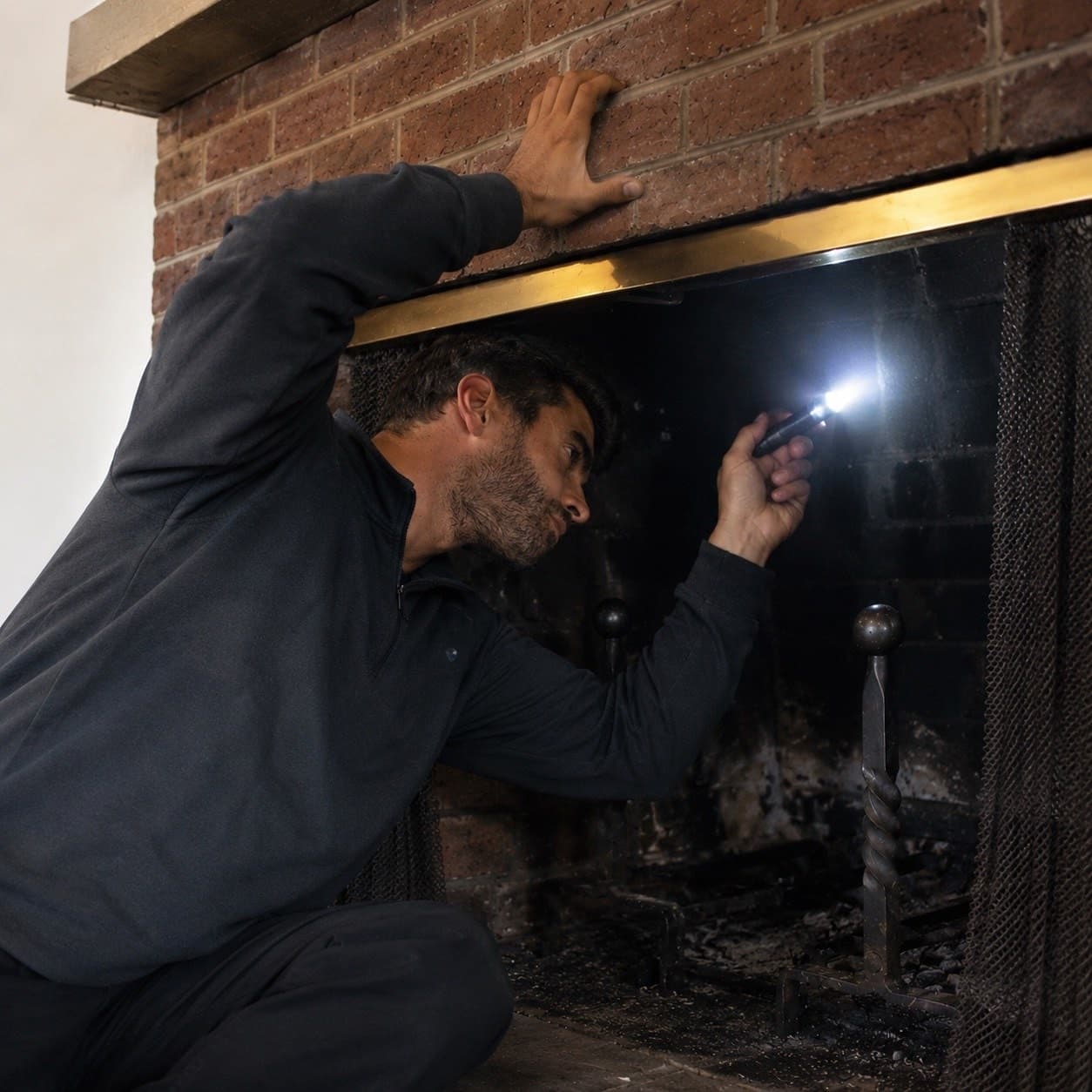
- Looking up at the damper and smoke chamber with a light; rusting steel expands and can crack the brick around it.
A bulging back wall should not be patched
When the rear wall of a firebox bows forward, the lining has separated from the structure behind it. Pointing the joints can make it look tidy for a season, but the wall can keep moving and eventually drop bricks into the fire. The fix is to take the bulged section down and relay it.
Repair options, from smallest to largest
Fireplace mortar joint repair (repointing)
When the bricks are sound but the joints are open, the failed mortar is raked out to solid material and the joints are refilled with refractory mortar. Joint width matters here: firebox joints are meant to be thin, so the aim is to fill voids fully without building up wide, heavy beds that crack again. Premixed refractory mortar sold in tubs or tubes is common for small areas; for laying firebrick, the product label should state that it is refractory mortar meeting ASTM C199, not simply “high-temperature” or “heat-resistant.”
Firebrick replacement
Split, loose or badly spalled bricks are cut out one at a time and new firebrick is set in refractory mortar. Firebrick comes in standard and split (thinner) sizes, and older fireplaces sometimes use colors or sizes that are hard to match exactly, so a repaired area may look a little different from the rest. Function comes first: a matching color is nice, but the brick has to meet the standard and fit the lining thickness.
Rebuilding a wall or the whole firebox
When damage is spread across a wall, or the back wall has bulged, the lining for that wall is taken down and relaid. A full firebox rebuild takes out the whole lining (back, sides and sometimes the inner hearth floor) and lays it new. That is also the point to correct past mistakes, such as common brick used as lining or a firebox rebuilt with wide joints. Where the structural masonry behind the lining is damaged too, that work comes before the new lining goes in.
Fireplace brick repair outside the firebox
Brick on the face of the fireplace and on the hearth extension isn’t firebrick and doesn’t see the same heat, so it is repaired with ordinary masonry methods. Two spots need extra care. Where the face brick meets the firebox opening, a crack can open a path for sparks into the wall behind. And a loose or cracked hearth extension has to stay non-combustible and solid in front of the fire. Loose hearth brick or tile is reset; a hearth that is too small for the opening is a separate problem the hub page explains.
When the firebox is only the symptom
Relaying brick without asking why it failed is how the same repair gets done twice. Before work is scoped, these are the upstream causes worth ruling out:
- Water from above. Rain entering through a missing cap or cracked crown soaks the firebox and smoke chamber; wet masonry that is then heated spalls and cracks faster. A chimney cap or crown repair belongs in the same plan.
- A rusting damper. A cast-iron damper frame that rusts can swell and crack the brick around it. If yours also sticks or won’t seal, damper repair or replacement is often done alongside the firebox.
- Overfiring. Very large, hot fires, or burning scrap lumber and packaging, push the lining past what it is designed for.
- A steel heat-circulating unit. Some masonry fireplaces are built around a steel firebox liner with air channels. The code allows these units (R1001.5.1), but when the steel has rusted through, the repair is a different job from relaying brick and depends on the unit.
How a masonry firebox repair is done
Confirm the fireplace type
Masonry firebrick or factory-built panels, and whether a steel liner sits behind the brick. That decides every step after this.
Inspect the lining and what is above it
Brick, joints and back wall are checked by hand and with a light, and the damper and smoke chamber are looked at for water or rust that caused the damage.
Agree the scope
Repointing, individual brick replacement, a wall relay or a full rebuild, with the reasons for each explained before work starts.
Protect the room and remove failed material
The hearth and floor are covered, and loose mortar and damaged brick are removed down to sound masonry.
Relay with refractory materials
Firebrick is set in refractory mortar with thin joints, keeping the lining flush and continuous.
Cure before a full fire
The mortar maker’s curing instructions are followed, which usually means letting it dry and then starting with small fires.
What affects the cost of firebox repair
- How many joints or bricks need work, versus a full wall or firebox
- Whether the back wall has bulged and must be taken down
- Damage to the structural masonry behind the lining
- Firebrick size and color, and how closely it needs to match
- Upstream fixes needed first, such as a cap, crown or damper
- A steel heat-circulating liner behind the brick
Related pages
- Is a cracked firebox safe? Cosmetic versus hazardous cracks, what to check yourself and the red flags.
- Is my fireplace safe to use? A broader safety check before the first fire of the season.
- Smoke chamber repair Parging and sealing the space above the damper.
- Refractory panel replacement For factory-built fireplaces lined with molded panels.
The hardware in the firebox
While the firebrick is being assessed, the metal in the firebox is worth checking. These are cheap components that cause disproportionate damage when they fail.
- The grate. Bars burn through and the middle sags. A collapsed grate drops the fire onto the firebox floor, which concentrates heat on the firebrick and is a common reason floor cracks appear.
- The ash dump door. A cast-iron door in the firebox floor on many older masonry fireplaces. When it rusts open or will not seat, it is an air leak straight into the firebox and a route for damp to rise out of the ashpit.
- Andirons and the fireback. Largely decorative now, but a cracked fireback stops protecting the rear wall, which is the hottest part of the firebox.
- The lintel. The steel angle across the top of the opening. It rusts and can expand, opening the joints above it. Worth looking at when the opening is being worked on anyway.
Where the ashpit below is packed with decades of damp ash, that comes out too — it is a persistent source of smell and it holds moisture against the masonry. That work is covered on fireplace cleaning.
Firebox repairs are carried out across Orlando, Winter Park, College Park, Maitland and the rest of the Central Florida service area, with free estimates.
References (2)
Facts and figures on this page come from these references.