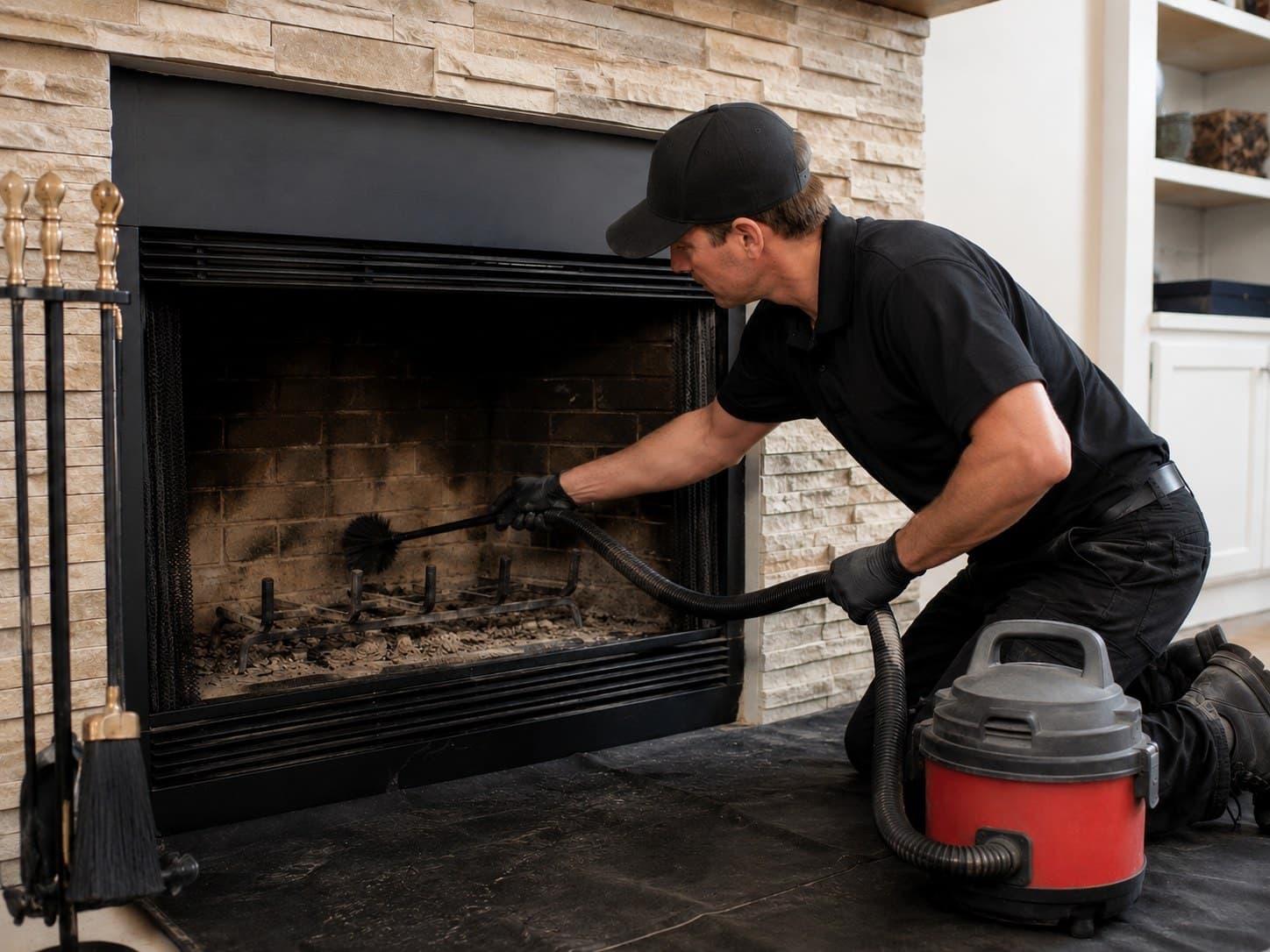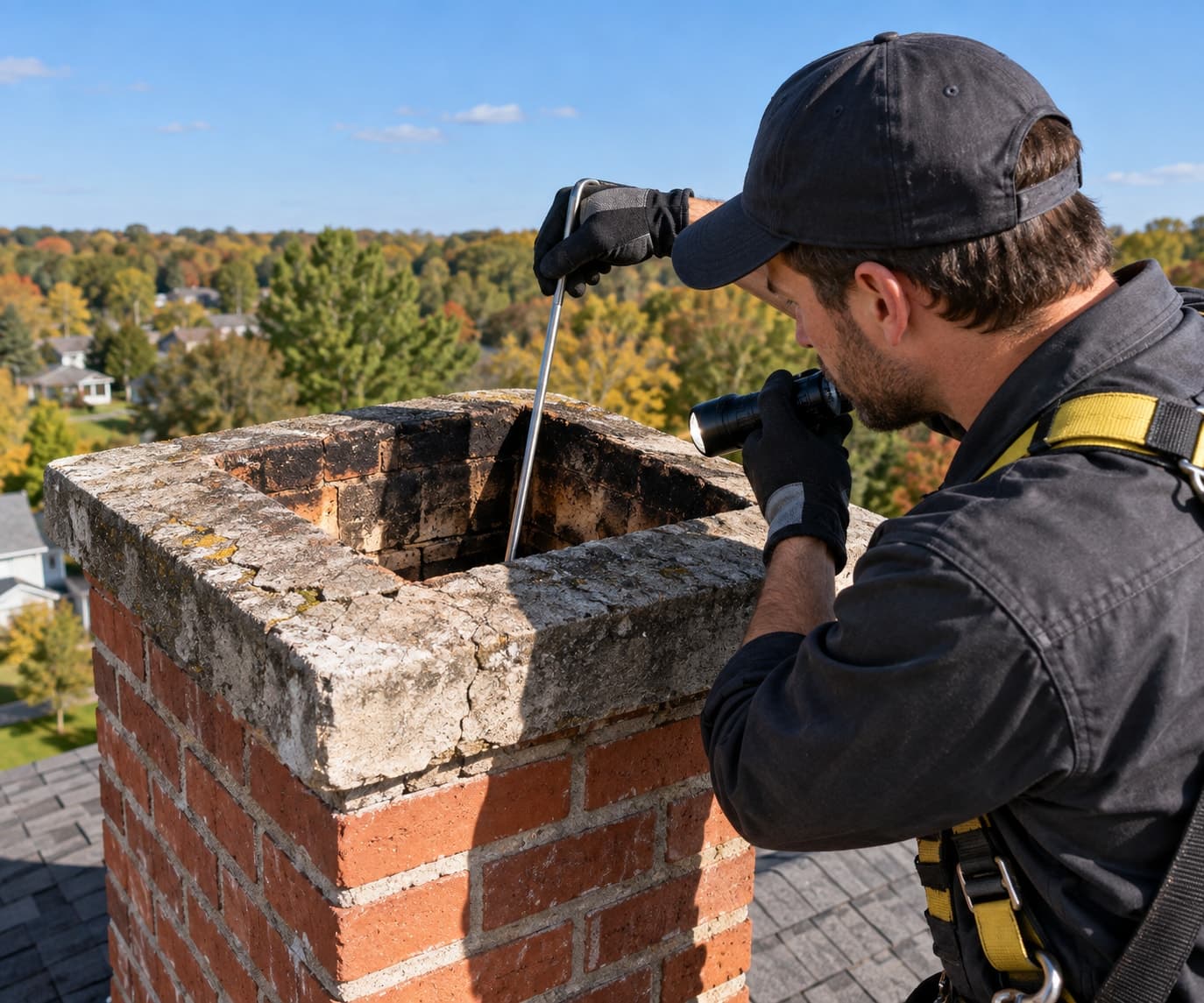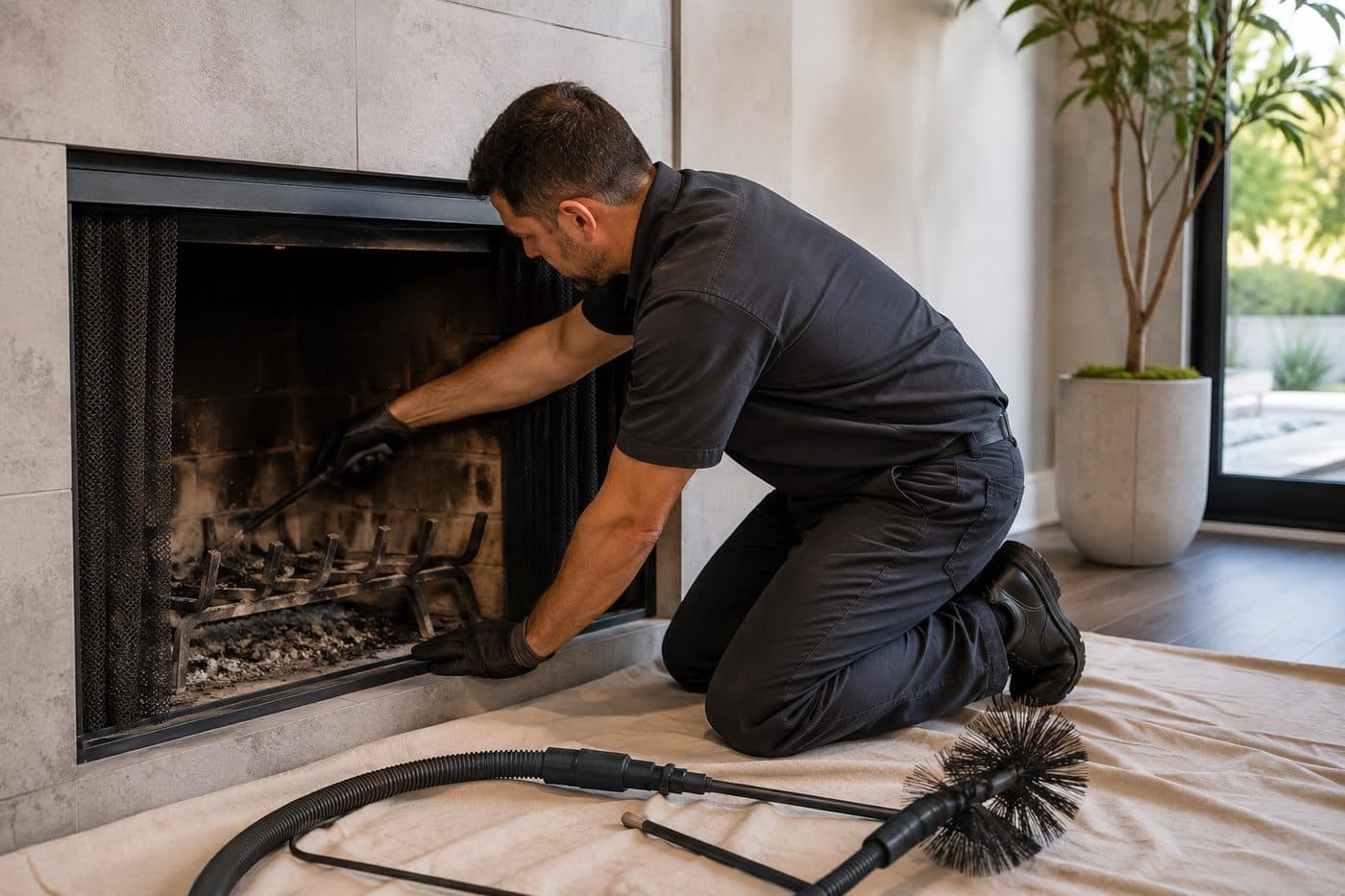
First, which kind of firebox do you have?
“Firebox” means the part the fire sits in, but there are two very different kinds, and cracks mean different things in each.
| Feature | Masonry firebox | Factory-built firebox |
|---|---|---|
| Lining | Individual firebricks laid in mortar joints | Large molded refractory panels, often with a brick pattern |
| Behind the lining | Solid brick, block or concrete | A steel box, with framing close around the unit |
| Where cracks matter | Through bricks and along joints | Across panels, at edges and where panels meet |
| Who sets the limit | Building code and sound masonry practice | The manufacturer’s manual for that model |
| Usual fix | Repointing, brick replacement or relining | Replacement panels made for the model |
Lining
- Masonry firebox
- Individual firebricks laid in mortar joints
- Factory-built firebox
- Large molded refractory panels, often with a brick pattern
Behind the lining
- Masonry firebox
- Solid brick, block or concrete
- Factory-built firebox
- A steel box, with framing close around the unit
Where cracks matter
- Masonry firebox
- Through bricks and along joints
- Factory-built firebox
- Across panels, at edges and where panels meet
Who sets the limit
- Masonry firebox
- Building code and sound masonry practice
- Factory-built firebox
- The manufacturer’s manual for that model
Usual fix
- Masonry firebox
- Repointing, brick replacement or relining
- Factory-built firebox
- Replacement panels made for the model
If you can’t tell which you have, look for metal edges around the opening, louvers above or below it and a metal rating plate; those point to a factory-built unit. The guide to masonry and factory-built fireplaces covers the differences in more depth.
Why fireboxes crack, most likely first
01Normal heating and cooling
- What you may notice
- Fine surface lines on bricks or panels, faces still flush, nothing loose.
- How it’s confirmed
- Checking the crack stays on the surface and the brick or panel is firm when pressed.
02Eroded mortar joints (masonry)
- What you may notice
- Joints recessed or crumbling, soot lines running deep between bricks, sand on the hearth.
- How it’s confirmed
- Probing joints to see how deep the loss goes and whether bricks are still bedded.
03Aging or overheated panels (factory-built)
- What you may notice
- Cracks across the back panel, crumbling surface where the fire sits, a panel leaning forward.
- How it’s confirmed
- Comparing damage with the model’s manual and checking panel retainers.
04Water from the chimney top
- What you may notice
- Rust on the damper or grate, stains in the firebox, flaking brick faces, damage that worsens after the rainy season.
- How it’s confirmed
- Tracing water back to the cap, crown or chase cover before the firebox itself is repaired.
05Overfiring
- What you may notice
- Warped metal parts, discolored doors or frames, cracks appearing after an unusually big fire.
- How it’s confirmed
- Looking at the whole unit, including the damper and chimney, for heat distortion.
06Impact
- What you may notice
- A chipped or split brick or panel exactly where logs land or the grate sits.
- How it’s confirmed
- Matching the damage to the log and grate position; usually a single brick or panel.
07Movement in the structure (masonry)
- What you may notice
- A crack that runs continuously through several bricks and joints, or a back wall bowing forward.
- How it’s confirmed
- Looking at the hearth, face and chimney outside for matching cracks or settlement.
A firebox can also crack as a result of a chimney fire. If you heard loud popping or a roar from the chimney, or found flaky, puffed-up creosote afterward, the guide to signs of a past chimney fire explains what to look for before the fireplace is used again.
What you can check safely
Do these with the fireplace completely cold, ideally a day after the last fire, and with ashes cleared out so you can see the floor.
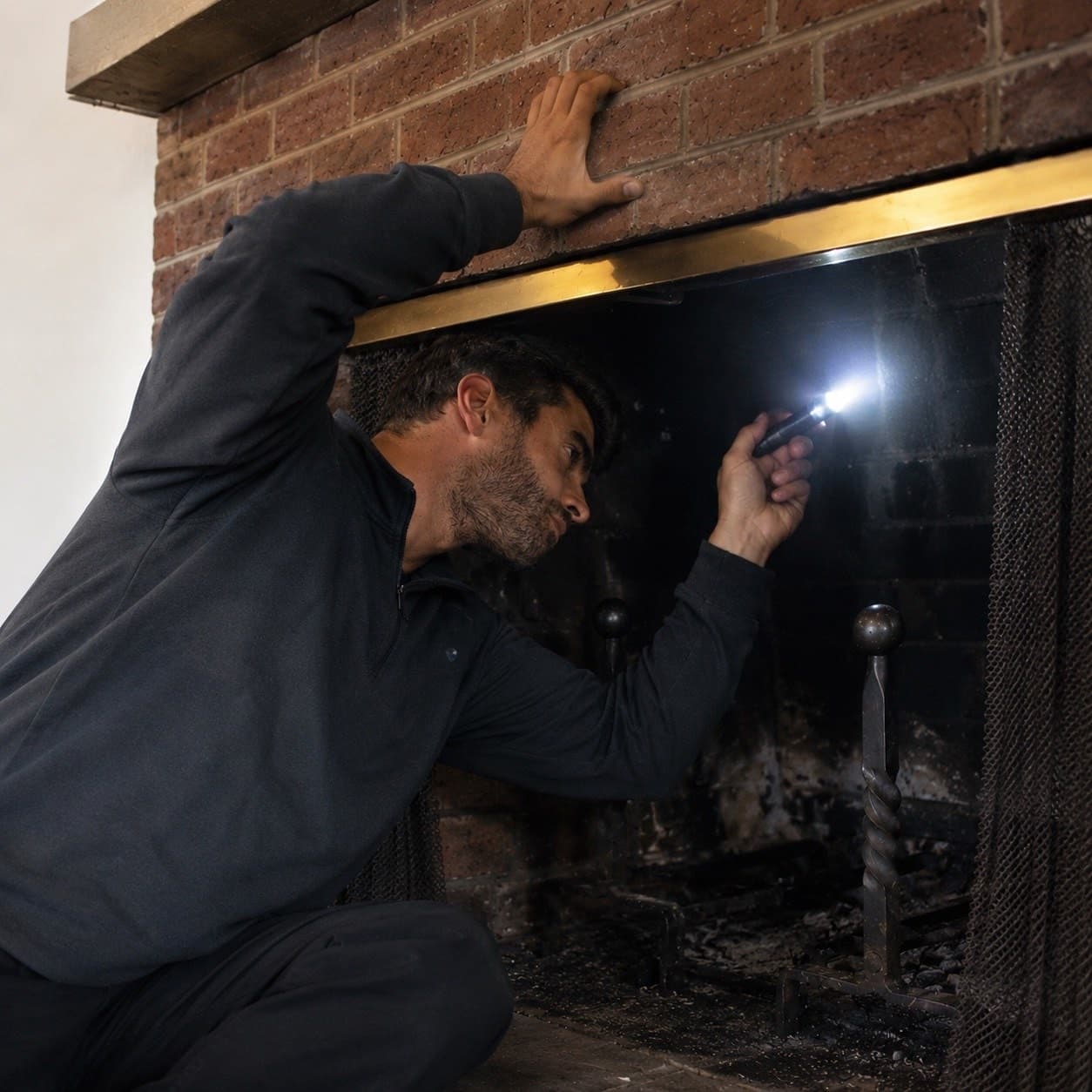
A flashlight check of the firebox
- Shine the light across each wall at a low angle. Cracks and bulges show up as shadows.
- Press gently on any cracked brick or panel with your hand. It should not move.
- Look along mortar joints (masonry). They should be full and roughly flush, not open gaps.
- Check where panels meet each other and the floor (factory-built). Joints should be tight.
- Look for anything behind the lining: bare steel, gray or white insulation, or old brick.
- Photograph each wall with a coin or tape measure in the frame to show crack width.
- Find the rating plate on a factory-built unit and note the manufacturer and model.
- Look up at the damper for rust or scale that may be falling onto the firebox floor.
Don’t pry out bricks or panels to look behind them, and don’t fill cracks with caulk or patching compound before anyone has seen them. Patches hide exactly what the diagnosis needs to see, and many are not rated for firebox heat.
Cosmetic crack or hazard?
| What you see | Usually | Next step |
|---|---|---|
| Hairline cracks, brick or panel firm and flush | Cosmetic | Keep burning normally; recheck at the yearly inspection |
| Crack you can see into, but nothing loose | Needs assessment | Measure it; for prefab units compare with the manual’s limit |
| Mortar recessed or crumbling along several joints | Repair needed | Repoint before heavy use |
| Brick or panel moves, or a piece has fallen out | Unsafe | No fires until replaced |
| Metal, insulation or backing masonry visible | Unsafe | No fires; have the firebox and what’s behind it checked |
| Back wall bowing forward | Unsafe | No fires; the wall needs relaying |
| Steel firebox rusted through or perforated (prefab) | Unsafe | Usually a replacement, not a repair |
For factory-built fireplaces the manual is the rulebook. One widely sold model’s owner’s manual, for example, calls hairline cracks normal and says to replace refractory that is crumbly or has cracks wider than 1/4 inch (Majestic BE36/BE42 manual, PDF). Your model may use different wording, so check its own manual.
Red flags: keep the fireplace cold
Don’t light another fire if you see any of these
Gaps that expose metal, insulation or the masonry behind the lining. Loose, shifted or missing firebrick or panel pieces. Mortar joints eroded into open channels. A rear wall leaning into the firebox. A steel firebox that is rusted through, flaking or has holes. Smoke or heat marks on the wall or mantel above the opening. These all mean heat can reach places it isn’t supposed to.
Why the caution: in a masonry fireplace the lining protects the structural masonry and, behind that, any wood framing near the chimney. In a factory-built unit, the panels are what keep flame off a steel box that is designed to sit close to combustible framing. A single fire against a failed lining is enough to do damage you can’t see from the room.
What a professional diagnosis involves
Identify the fireplace
Masonry or factory-built, and for prefab units the manufacturer and model from the rating plate, so the right standard or manual is applied.
Look at the whole firebox
Every wall and the floor are checked for crack width, movement, joint loss and what is visible behind the lining.
Look above and outside
Damper, smoke chamber and flue are checked for water, rust and heat damage, and the chimney top for the leak that may be driving the problem. This is part of a standard chimney and fireplace inspection.
Match the fix to the cause
Repointing or new firebrick for masonry, model-specific panels for factory-built units, and water or damper repairs where they caused the damage.
Say plainly when repair isn’t enough
A rusted-through steel firebox or a discontinued model with failed panels can point to replacing the factory-built unit rather than patching it.
Where to go next
Repairing the firebox
| Type of firebox | Where it’s fixed |
|---|---|
| Masonry firebrick with cracked or missing joints | firebox repair |
| Factory-built unit with cracked panels | refractory panel replacement |
| Metal box rusted through or warped | prefab fireplace replacement |
| Cracks after a chimney fire | an inspection before any use |
Refractory panels explained covers the factory-built side. Local fireplace work: firebox and damper repair in Lake Mary or fixing fireplaces in Clermont. On a factory-built unit, rust behind the panels is a related problem: see a rusted factory-built firebox.
References (3)
Facts and figures on this page come from these references.