The signs in brief
A fast chimney fire is loud: cracking, popping or a roar like a train, dense smoke and an intense hot smell, sometimes flames or sparks from the top. A slow one is often missed, and the evidence comes later: puffy, honeycombed creosote, a warped damper or cap, cracked flue tiles, or creosote flakes on the roof. If a fire is happening now, get out and call 911.
What a chimney fire is
Wood smoke cools as it rises through the chimney, and some of it condenses on the flue walls as creosote, a black, flammable residue. The Chimney Safety Institute of America explains that when enough creosote builds up and the flue gets hot enough, it can ignite (CSIA). That fire burns inside the flue, not in the firebox, and it can reach temperatures far higher than the chimney was designed to handle for long.
CSIA lists the conditions that speed up creosote buildup: a restricted air supply (glass doors closed during a fire, a damper not opened fully, a house short of make-up air), unseasoned wood, and a flue that runs cooler than normal. Small, smoldering fires on a mild evening tick more of those boxes than a hot fire on a cold night.
Signs of a chimney fire in progress
A fast-burning chimney fire is hard to miss. CSIA describes loud cracking and popping, a lot of dense smoke, and an intense, hot smell, and says people often compare the sound to a freight train or a low-flying airplane.
Signs a chimney fire is happening now
- A loud roaring or rumbling from the chimney, like a train or low aircraft
- Cracking and popping from inside the flue, not the logs
- Dense smoke pouring from the fireplace or from the top of the chimney
- Flames or showers of sparks shooting from the chimney top
- An intense, hot, acrid smell
- A chimney wall or chase that feels unusually hot inside the house
If you think the chimney is on fire: get out and call 911
Get everyone out of the house, and call 911 from outside. Don’t go back in for anything. A chimney fire can spread to the framing around the chimney and to the roof, and that is a job for the fire department. Tell the dispatcher it is a chimney fire, and stay outside until firefighters say it is safe.
Even if the fire goes out quickly or the fire department finds no spread, don’t light the fireplace again until it has been inspected. The next section explains why.
Slow-burning fires nobody noticed
According to CSIA, the majority of chimney fires go undetected. Slow-burning fires don’t get enough air or fuel to be dramatic, but they still reach very high temperatures and can damage the chimney and nearby parts of the house as much as a loud one. They are usually found during a later inspection, from the evidence they leave behind:
Clues that a chimney fire has already happened
01Puffy or honeycombed creosote
- What you may notice
- Creosote that looks expanded, bubbly or like a honeycomb instead of a flat coating.
- How it’s confirmed
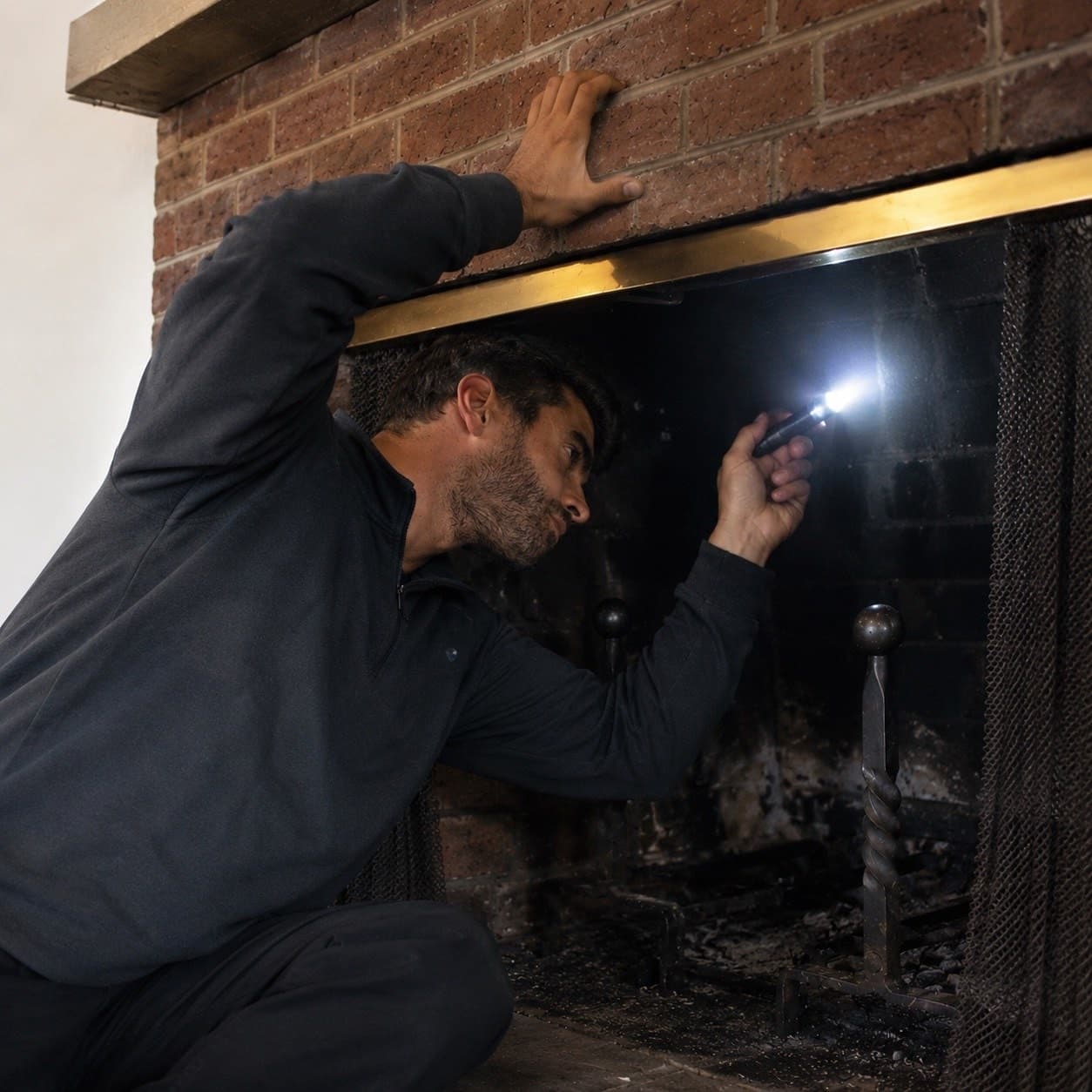
- Seen on the smoke shelf, damper area and flue walls during an inspection.
02Warped damper or metal parts
- What you may notice
- A damper plate that no longer sits flat or won’t close properly; distorted metal components.
- How it’s confirmed
- Damper operation is tested and the metal inspected from the firebox.
03Cracked or collapsed flue tiles
- What you may notice
- Pieces of clay tile on the smoke shelf or in the firebox; smoke escaping where it shouldn’t.
- How it’s confirmed
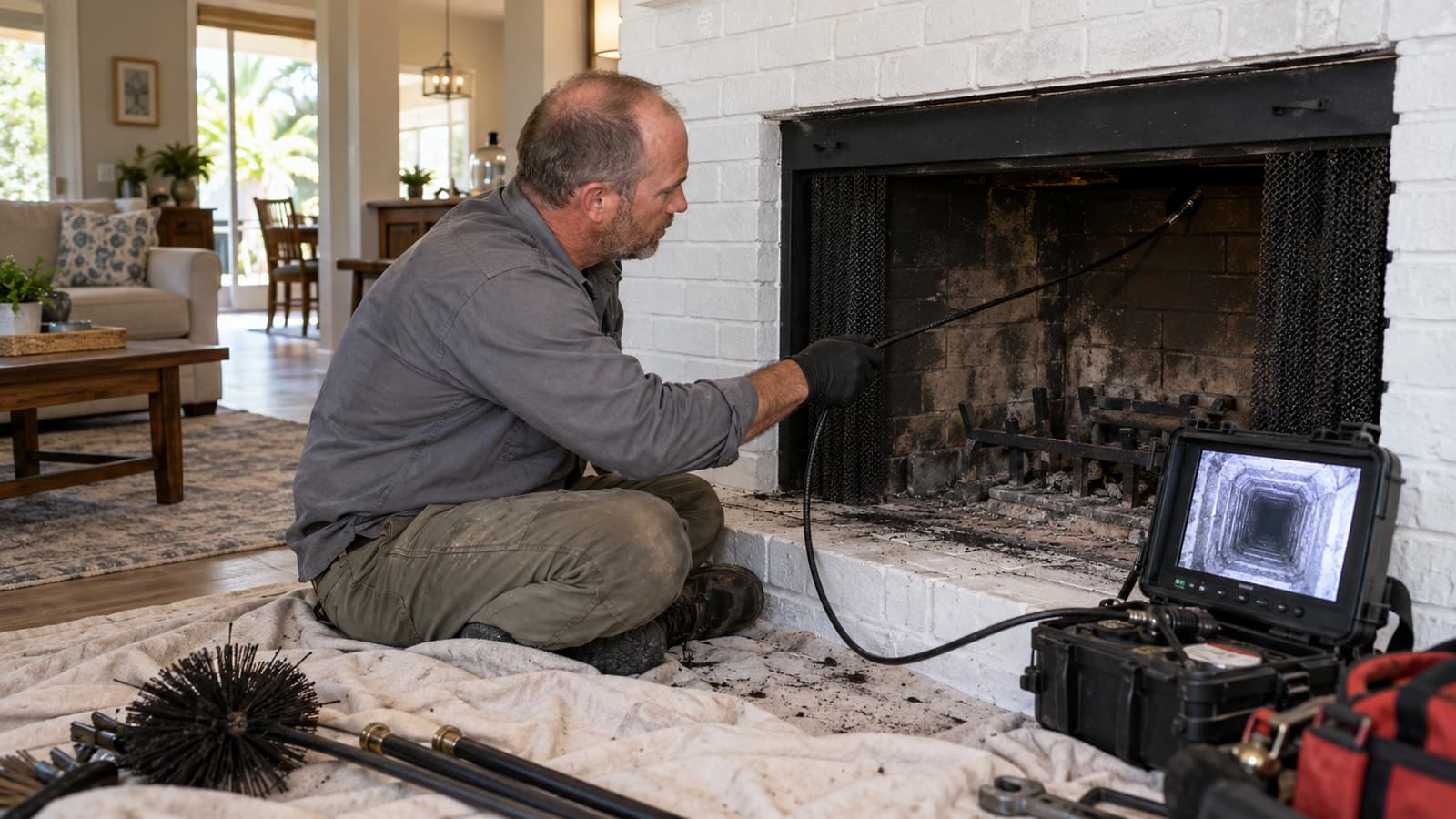
- A full-length flue inspection shows cracks, missing pieces and displaced tiles; CSIA’s Level 2 procedure uses a video scan for this.
04Discolored or distorted cap
- What you may notice
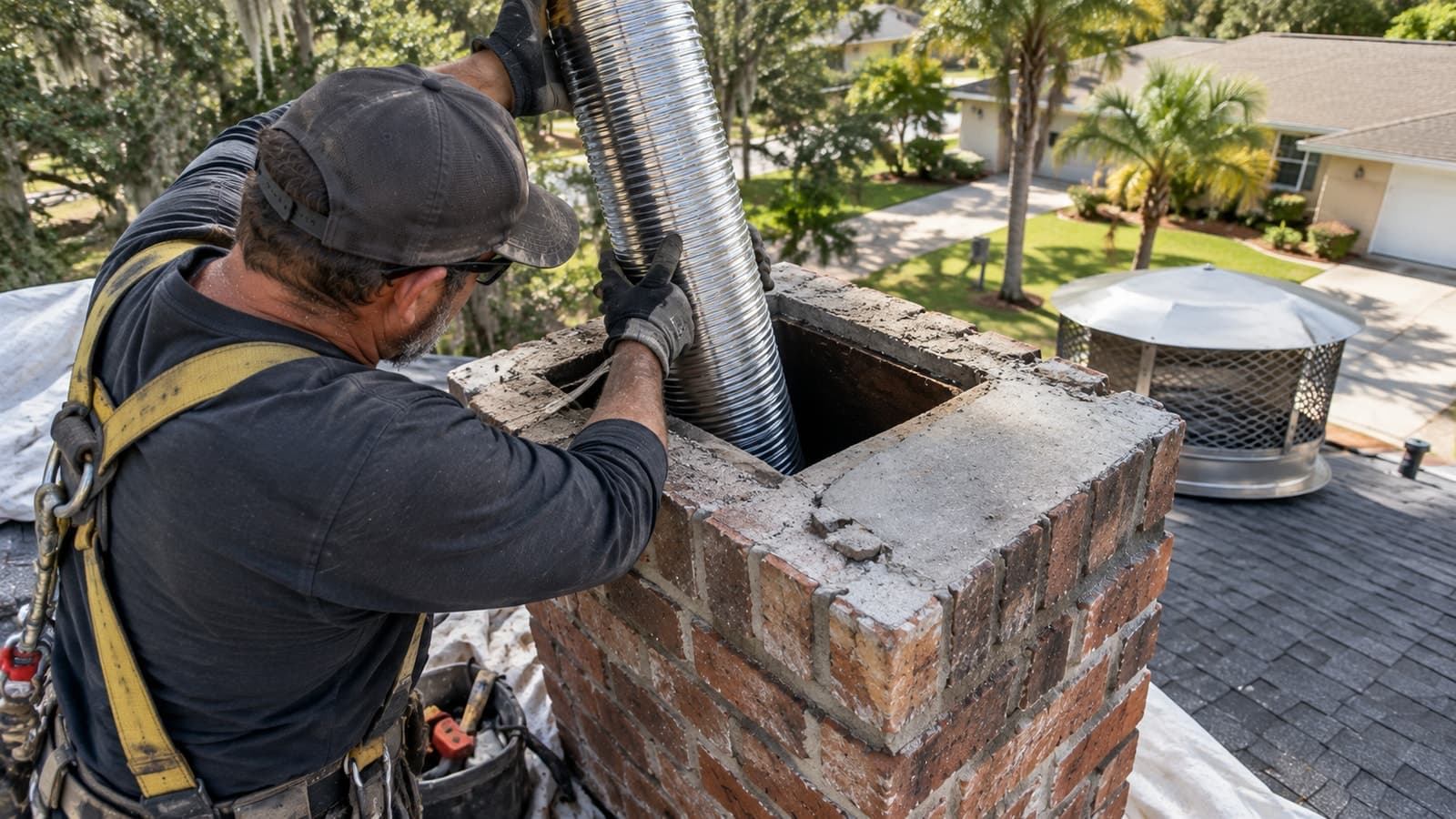
- A rain cap that looks heat-discolored or bent out of shape.
- How it’s confirmed
- Visual check of the cap and flue top from the roof.
05Creosote flakes outside
- What you may notice
- Black, flaky debris on the roof or on the ground around the house.
- How it’s confirmed
- Roof and yard check near the chimney.
06Roof or antenna damage
- What you may notice
- Scorched or damaged roofing near the chimney; a heat-damaged antenna.
- How it’s confirmed
- Roof inspection around the chimney.
07Cracks and smoke leaks in the masonry
- What you may notice
- New cracks in exterior brick; smoke seeping through mortar joints or in the attic when the fireplace is used.
- How it’s confirmed
- Exterior masonry and attic checked for cracks and soot trails.
Source for the list: CSIA’s chimney fire guidance. If you notice any of these, stop using the fireplace and have it inspected before the next fire.
Masonry chimney and fireplace, cutaway
- 1Chimney cap. Metal lid with mesh sides over the flue opening. Keeps rain, debris and animals out.
- 2Crown. The concrete or mortar top of the masonry, sloped to shed water away from the flue.
- 3Flue liner. Clay tile or metal lining that carries smoke up and protects the masonry from heat.
- 4Flashing. Metal that seals the joint between the chimney and the roof.
- 5Brick & mortar. The chimney structure. Mortar joints and brick faces absorb water when they wear.
- 6Smoke chamber. The sloped transition that funnels smoke from the firebox into the flue.
- 7Damper. Metal plate at the throat (or a sealing lid on top) that closes the flue when not in use.
- 8Firebox. Where the fire burns. Firebrick laid in heat-resistant mortar.
- 9Hearth. Non-combustible floor extension in front of the fireplace opening.
Factory-built chimneys
Factory-built fireplaces use a metal chimney pipe inside a framed chase. Those systems are tested and listed as a whole, and a chimney fire can warp or separate pipe sections or damage the unit in ways that can only be judged against the manufacturer’s specifications. Treat a suspected fire in a factory-built system the same way: no more fires until it has been inspected, and any damaged parts replaced with parts the manufacturer allows.
After a chimney fire: what to do
CSIA’s advice after a chimney fire is direct: don’t use the chimney until it has been swept and evaluated by a qualified chimney professional (CSIA: After a chimney fire). CSIA’s Level 2 procedure lists a building or chimney fire as one of the events that calls for a Level 2 inspection, which includes a video scan of the flue (CSIA Level 2 SOP). Our guide to Level 1 vs Level 2 inspections explains the difference.
Steps after a chimney fire (or a suspected one)
Don’t light another fire
Not even a small one to “test” it. A cracked liner or damaged framing can let the next fire reach the house.
Photograph what you can see
From the ground and inside: debris on the roof or in the yard, the firebox, the damper, any stains or cracks. Date the photos.
Call your insurer
Ask what they need and before what point. CSIA notes that chimney fire damage is often treated as a covered loss, but your policy and insurer decide that, not a chimney company or a website.
Ask for documentation before sweeping
CSIA suggests asking for the damaged sections and the creosote to be photographed before the chimney is swept, because sweeping removes evidence.
Sweep, then inspect the flue
After cleaning, a full-length look at the flue shows cracked tiles, open joints and damaged sections that deposits would otherwise hide. CSIA lists a chimney fire as a reason for a Level 2 inspection; a chimney inspection is where that evaluation starts.
Repair before reuse
Damaged liners are repaired or replaced, often with a stainless liner in a masonry chimney; see flue liner repair. If concealed framing may be affected, a Level 3 with limited opening may be recommended.
How to prevent a chimney fire
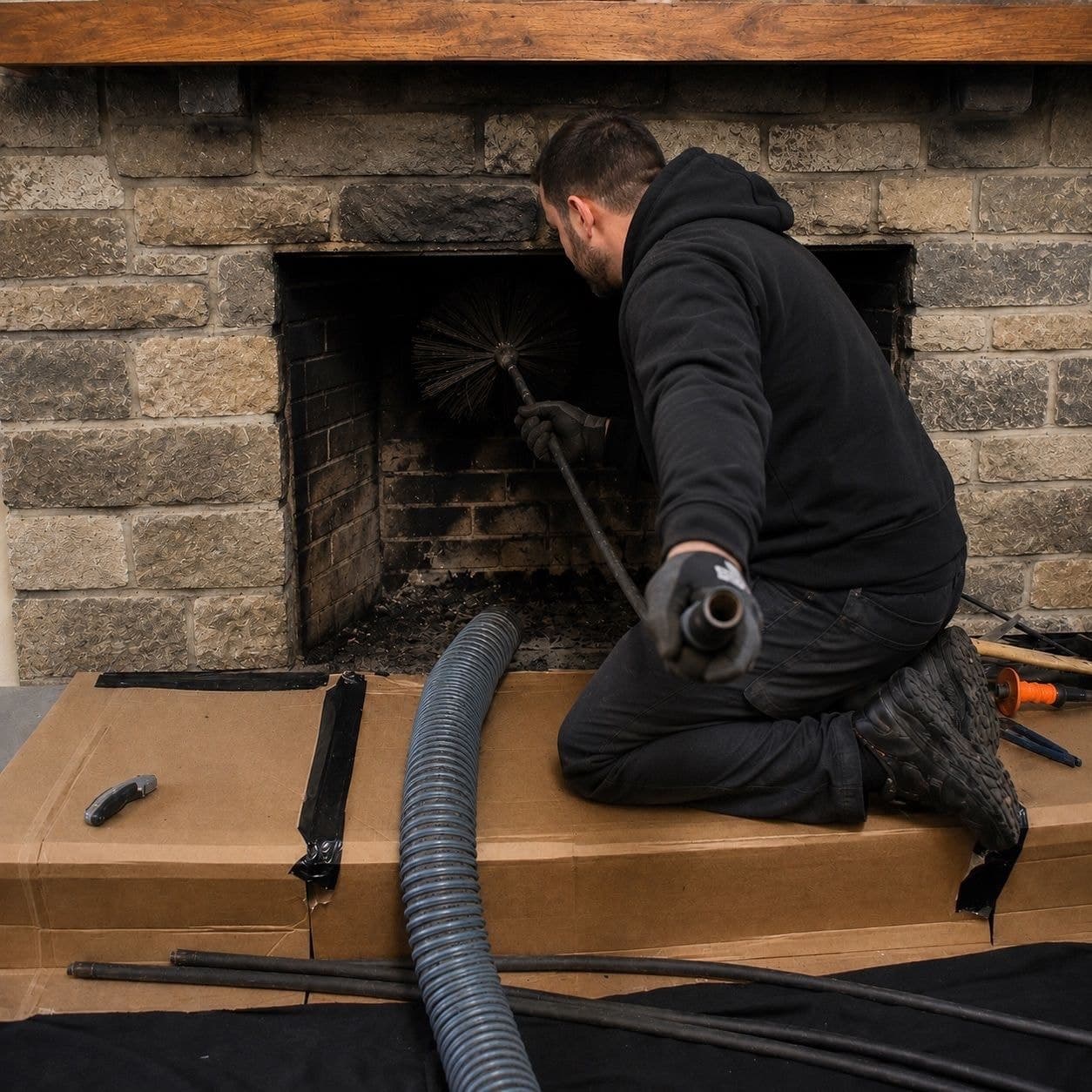
CSIA puts it simply: clean chimneys don’t catch fire. Prevention comes down to making less creosote and removing what does form.
- Burn only dry, seasoned wood. Wet or green wood burns cool and smoky and builds creosote faster.
- Give the fire air. Open the damper fully, and keep glass doors open while the fire is burning unless the manufacturer says otherwise. Smoldering fires are creosote factories.
- Don’t burn paper, trash or cardboard. The U.S. Fire Administration also advises against burning paper in a fireplace (USFA fireplace safety card).
- Have the chimney inspected every year and cleaned when needed. The USFA recommends a yearly professional inspection and cleaning; NFPA 211 calls for inspection at least once a year and cleaning when deposits call for it.
- Remove glazed creosote properly. Shiny, tar-like glaze doesn’t brush off like soot. It takes specialist creosote removal, not a harder sweep.
- Keep a working cap on top. A cap with an intact screen keeps out nests and debris, which restrict draft, and stops sparks from reaching the roof.
Florida fireplaces still build creosote
A fireplace lit only a few times a year builds deposits slowly, but short, low fires on mild evenings, often with the doors half-closed, are exactly the conditions CSIA links to faster creosote buildup. Light use is a reason to inspect yearly, not a reason to skip it.
Standard fire safety still applies too. The USFA advises keeping anything that can burn at least 3 feet from the fireplace, using a screen to stop sparks, putting the fire out before bed or leaving the house, and storing ashes in a metal container with a lid, outside and at least 10 feet from the home. For timing, see how often a Florida chimney should be inspected and cleaned.
The symptom pages cover what the damage looks like afterward: flue liner damage, heavy creosote and black stains on a chimney. Burning dry wood is the best prevention, which firewood in Florida covers. For a sweep before the season, local pages such as chimney sweeps in Lake Mary describe scheduling.
References (5)
Facts and figures on this page come from these references.