The short version
NFPA 211, the national standard for chimneys, fireplaces and vents, defines three levels of inspection (NFPA 211). They aren’t grades of quality or price tiers. Each level is matched to a situation, and each one includes everything in the level below it. The question to ask is not “how thorough do I want this to be?” but “has anything happened, or is anything about to change?”
| Item | Level 1 | Level 2 | Level 3 |
|---|---|---|---|
| When it fits | Chimney in continued use, same appliance, same fuel, nothing unusual has happened | Sale or transfer, a storm or other external event, a chimney fire, a malfunction, a change of appliance or fuel, relining | A Level 1 or 2 points to a hidden hazard that can’t be evaluated any other way |
| What is examined | Readily accessible parts of the chimney interior and exterior, the fireplace or appliance, and the connection | Everything in Level 1, plus all accessible areas: roof, attic, crawl space and basement around the chimney | Everything in Level 2, plus concealed areas |
| Flue interior | What can be seen from the firebox and the top | Video scan (or a similar inspection) of the full flue | Video scan, plus access through opened construction |
| Tools and access | No tools needed to open panels or doors | Common tools to open or move panels and doors; ladders; roof access | Removal of parts of the building or chimney, such as a crown, chase siding or an interior wall |
| Changes to the house | None | None | Some demolition, which then needs repair |
The scope descriptions above follow the Chimney Safety Institute of America’s standard operating procedure for a Level 2, which is written around NFPA 211 (CSIA Level 2 SOP, masonry chimney), and industry summaries of the three levels (Highs Chimney).
What a Level 1 covers
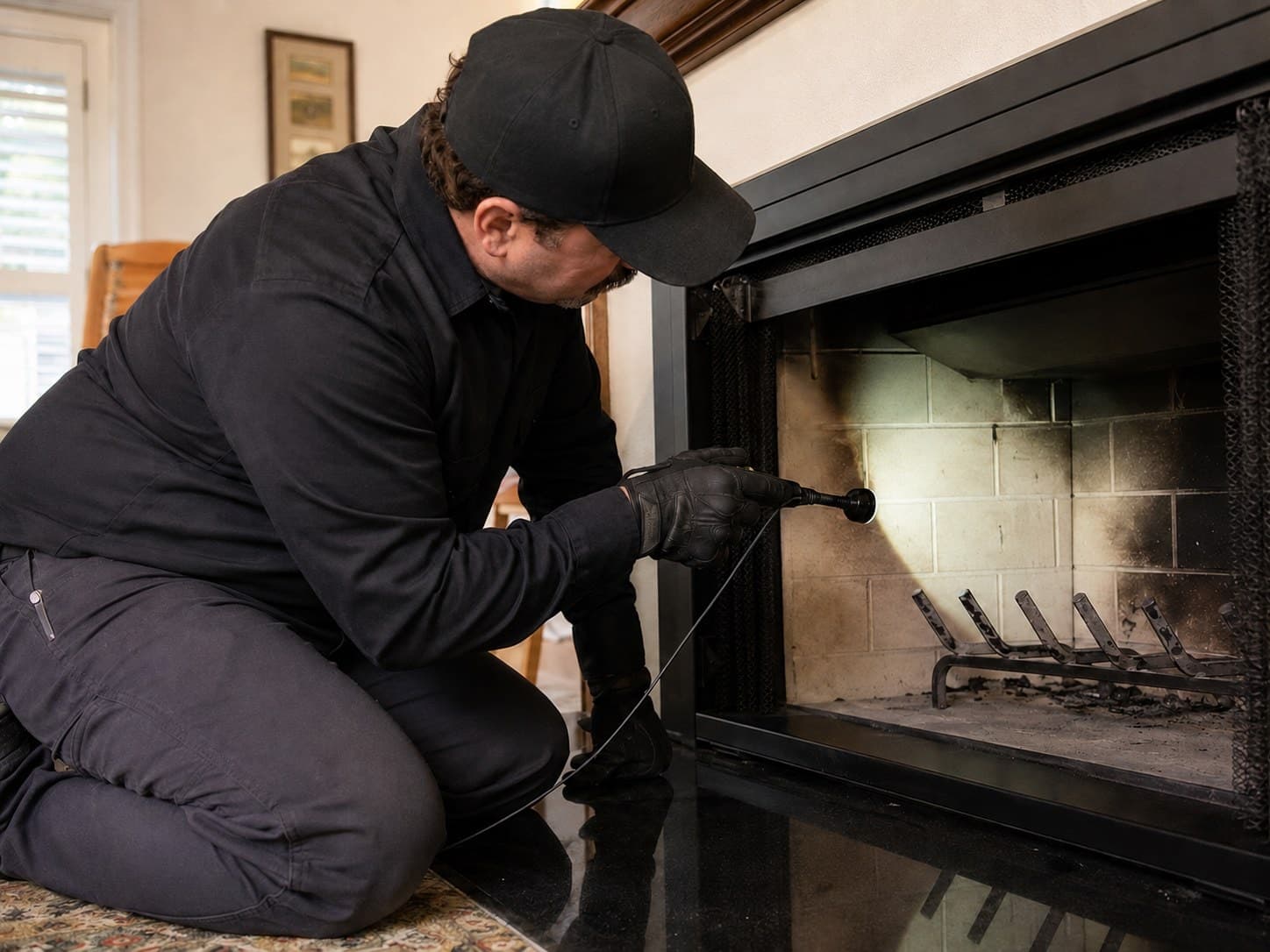
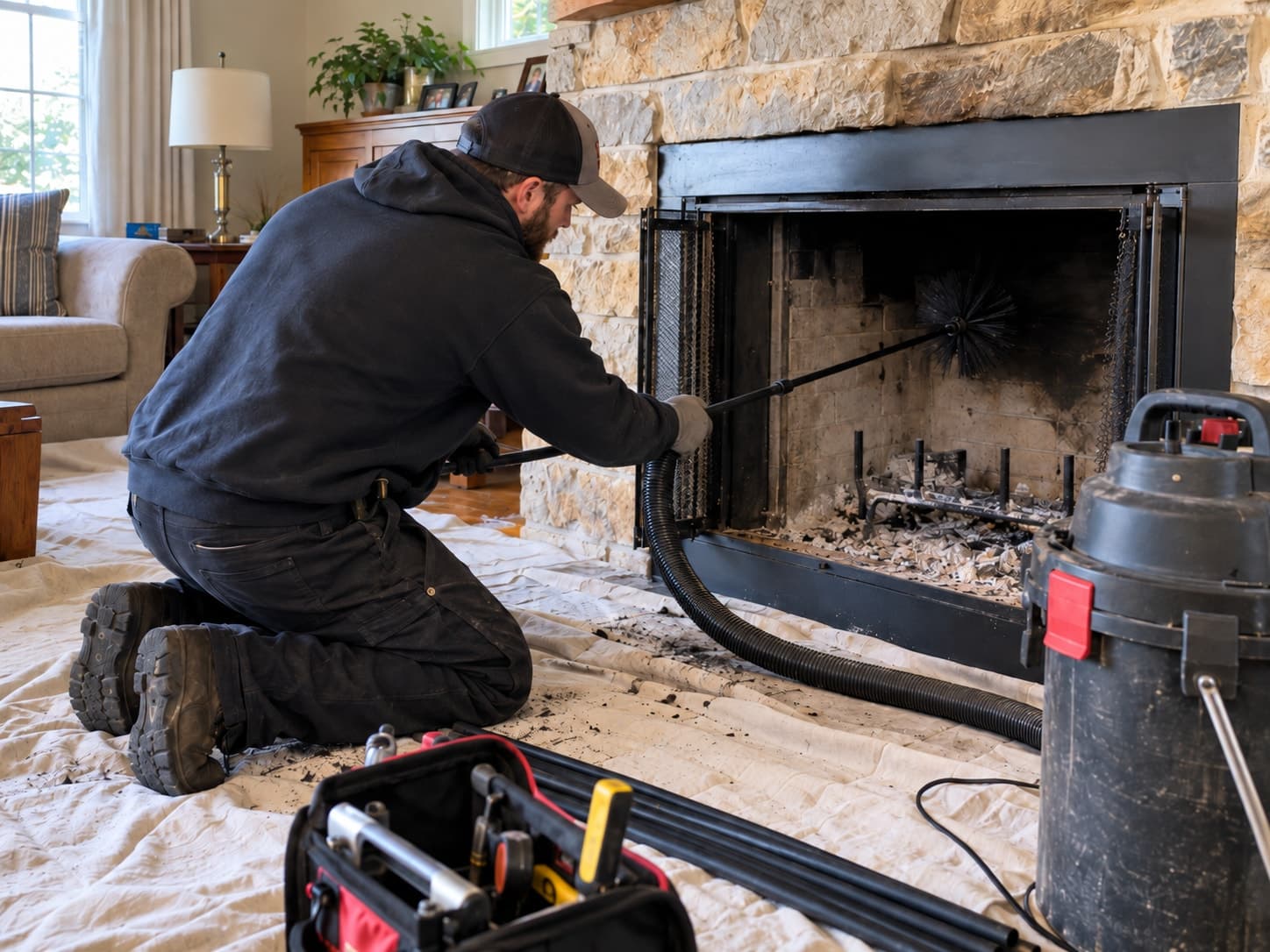
A Level 1 is the routine yearly check for a system you’ll keep using the way you have been. The technician looks at the parts that can be reached and seen without opening anything up, confirming the chimney is structurally sound, free of obstructions and deposits that call for cleaning, and that the fireplace is installed and connected as it should be.
Typical Level 1 items
- Firebox walls or panels, hearth and hearth extension
- Damper operation and the area just above it
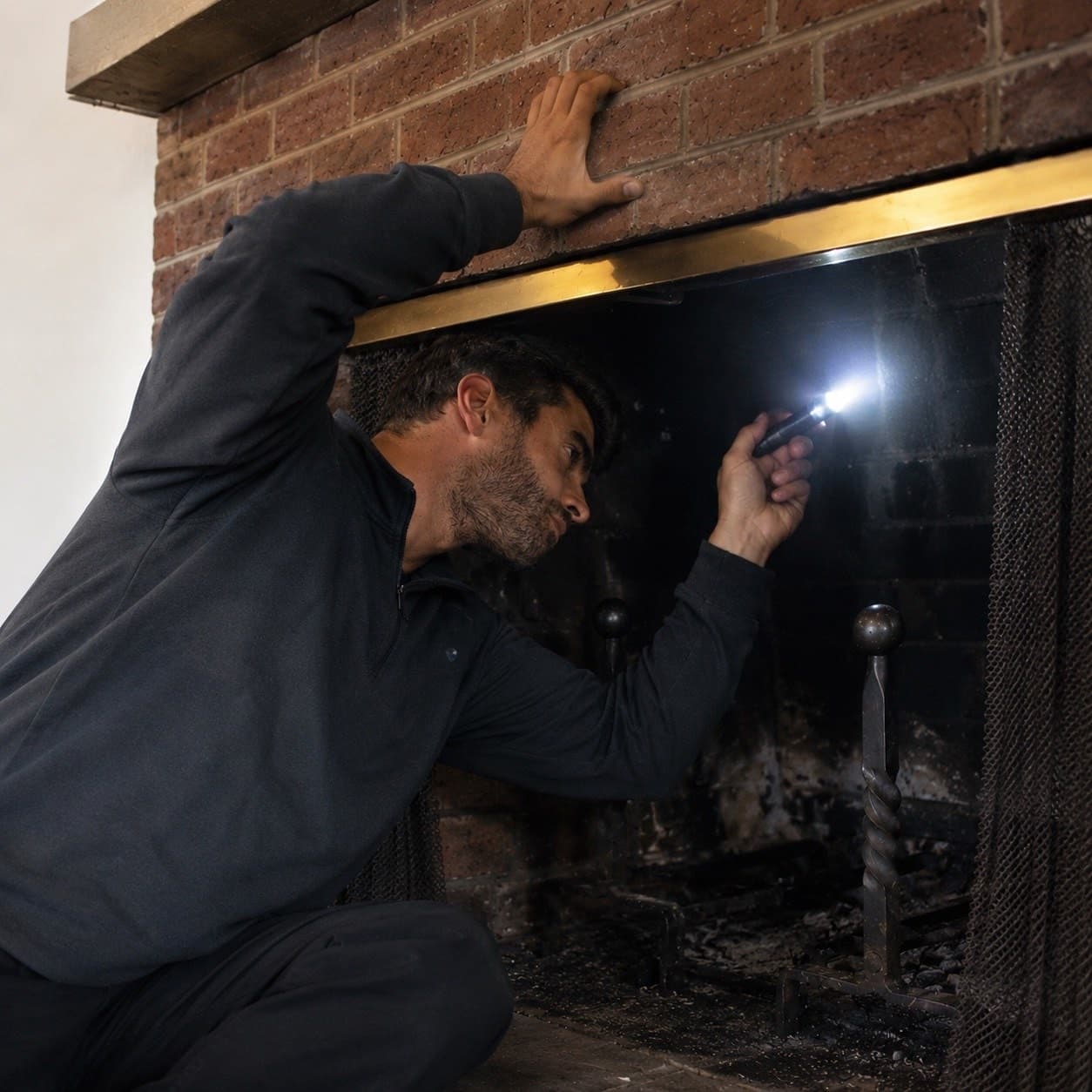
- Visible smoke chamber and flue from below, with a light
- Cap, crown or chase cover and flue top, where the roof can be reached safely
- Soot, creosote or debris that means the flue needs sweeping
- Clearances to combustibles that are visible from the room
A Level 1 is often done alongside a chimney sweep, because the sweep is when the flue is most accessible. What it can’t do is tell you much about the flue walls between the smoke chamber and the top. On most chimneys that is the majority of the flue.
When a Level 2 is called for
CSIA’s Level 2 procedure lists the circumstances plainly: when the conditions of use are changing (a new appliance, or replacing one with a different fuel, efficiency or type), when a Level 1 isn’t enough to judge whether the venting system is serviceable, when the property is being sold, when you plan to line or reline the chimney, and after a building or chimney fire, a weather or seismic event, or any operating malfunction likely to have damaged the chimney (CSIA).
| Feature | Level 1 is usually enough | Move up to a Level 2 |
|---|---|---|
| Ownership | You’ve owned the home for years and know its history | You’re buying or selling, or just moved in |
| Weather | An ordinary rainy season with no visible changes | A hurricane, tropical storm or nearby lightning strike, or a cap or cover that has shifted |
| Use | Same fireplace, same fuel, same habits | Adding an insert, switching wood to gas or gas logs, or adding or replacing an appliance |
| Flue | Liner untouched | Planning to line or reline the flue |
| Incidents | No smoke problems, no unusual sounds or smells | A chimney fire (or signs of one), smoke spilling into the room, a malfunction or a house fire |
| Last inspection | A Level 1 found nothing it couldn’t evaluate | A Level 1 couldn’t confirm the flue is serviceable |
Ownership
- Level 1 is usually enough
- You’ve owned the home for years and know its history
- Move up to a Level 2
- You’re buying or selling, or just moved in
Weather
- Level 1 is usually enough
- An ordinary rainy season with no visible changes
- Move up to a Level 2
- A hurricane, tropical storm or nearby lightning strike, or a cap or cover that has shifted
Use
- Level 1 is usually enough
- Same fireplace, same fuel, same habits
- Move up to a Level 2
- Adding an insert, switching wood to gas or gas logs, or adding or replacing an appliance
Flue
- Level 1 is usually enough
- Liner untouched
- Move up to a Level 2
- Planning to line or reline the flue
Incidents
- Level 1 is usually enough
- No smoke problems, no unusual sounds or smells
- Move up to a Level 2
- A chimney fire (or signs of one), smoke spilling into the room, a malfunction or a house fire
Last inspection
- Level 1 is usually enough
- A Level 1 found nothing it couldn’t evaluate
- Move up to a Level 2
- A Level 1 couldn’t confirm the flue is serviceable
In Central Florida the storm trigger comes up more often than most. After a named storm, CSIA’s list makes the weather event itself a Level 2 trigger for exactly this reason: wind and water work on parts that a quick look from the firebox can’t see. A post-storm chimney inspection is built around those parts. For a purchase, an inspection timed to the sale fills the gap left by a general home inspection. If a chimney fire is the reason, our guide to the signs of a chimney fire covers what to look for first.
What a Level 2 flue scan looks for
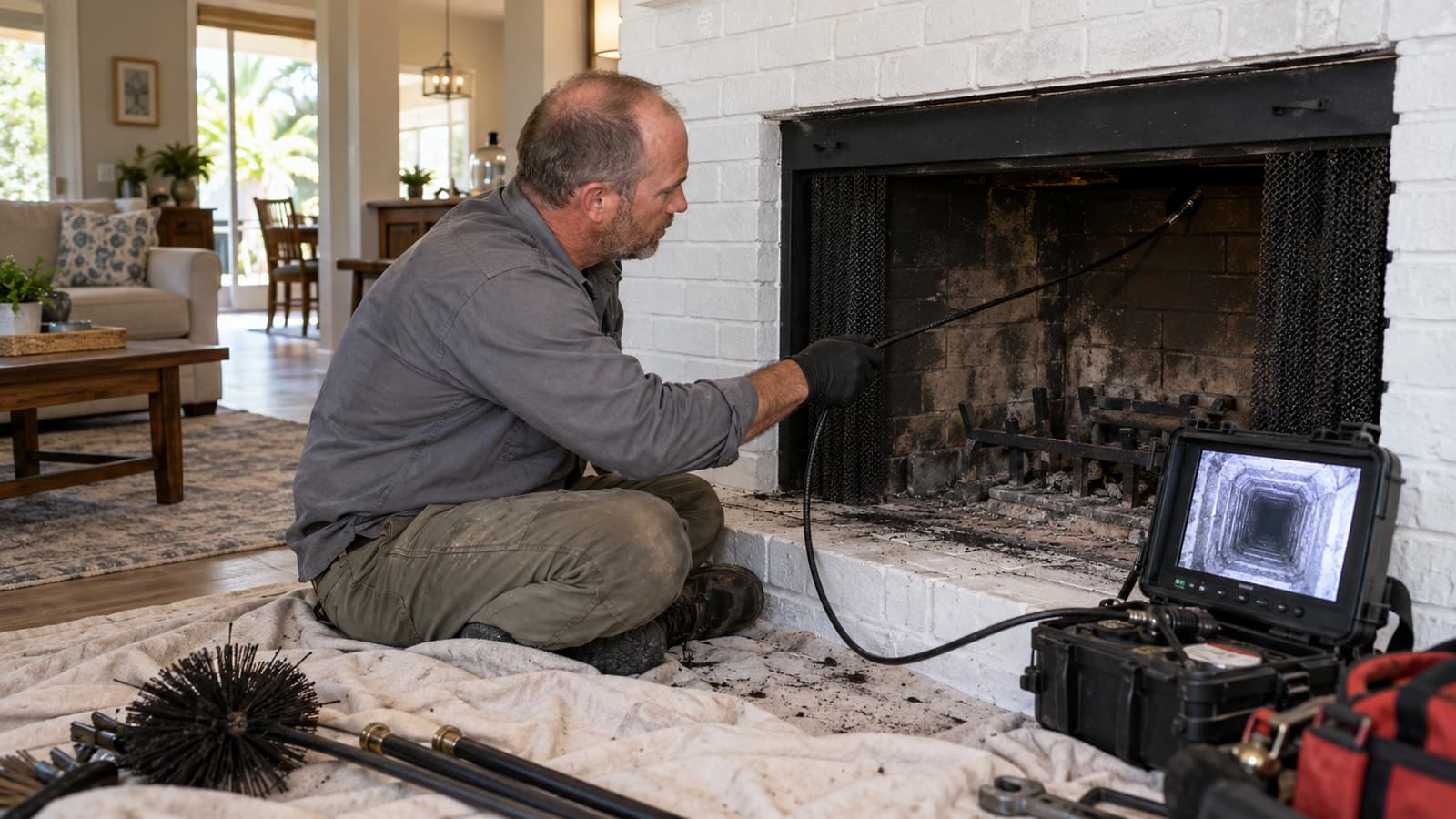
CSIA makes a video scan (or a similar inspection) of the chimney interior a required part of a Level 2, and asks the inspector to note if a scan wasn’t possible because of flue size or multiple offsets. The scan travels the full height of each flue, which is the only practical way to see most of it. These are the conditions CSIA’s procedure has the inspector look for:
Conditions a Level 2 flue scan looks for
01Cracked or broken flue tiles
- What you may notice
- Usually nothing obvious from the room. Sometimes tile fragments on the smoke shelf.
- How it’s confirmed
- The scan follows each tile section, looking for vertical and horizontal cracks and missing pieces.
02Offset or shifted tiles, and gaps at the joints
- What you may notice
- No visible sign. Can follow settling, a storm, lightning or a chimney fire.
- How it’s confirmed
- The scan shows ledges where one tile no longer lines up with the next, and open joints where mortar is missing.
03Glazed or heavy creosote
- What you may notice
- Tar smell, shiny black deposits near the damper, flakes on the smoke shelf.
- How it’s confirmed
- Deposits are judged by type and thickness along the flue, not just at the bottom.
04Water damage
- What you may notice
- Rust on the damper, stains near the fireplace, a musty smell after rain.
- How it’s confirmed
- Staining, spalled tile faces, rust trails and deposits washed down the flue show where water enters.
05Unused openings into the flue
- What you may notice
- Old thimbles or connector holes from a previous appliance, sometimes hidden behind a wall.
- How it’s confirmed
- CSIA asks the inspector to watch for these during the scan and recommend sealing them.
06Excessive offsets or a narrowing flue
- What you may notice
- Poor draft or smoke in the room on some days.
- How it’s confirmed
- The scan shows the angle of any bend and whether the flue area gets smaller inside it.
07Separated or corroded sections (factory-built chimneys)
- What you may notice
- Rust flakes in the firebox, light visible at a joint, a rattle in wind.
- How it’s confirmed
- Each pipe joint is followed up the chase to the termination cap.
Masonry chimney and fireplace, cutaway
- 1Chimney cap. Metal lid with mesh sides over the flue opening. Keeps rain, debris and animals out.
- 2Crown. The concrete or mortar top of the masonry, sloped to shed water away from the flue.
- 3Flue liner. Clay tile or metal lining that carries smoke up and protects the masonry from heat.
- 4Flashing. Metal that seals the joint between the chimney and the roof.
- 5Brick & mortar. The chimney structure. Mortar joints and brick faces absorb water when they wear.
- 6Smoke chamber. The sloped transition that funnels smoke from the firebox into the flue.
- 7Damper. Metal plate at the throat (or a sealing lid on top) that closes the flue when not in use.
- 8Firebox. Where the fire burns. Firebrick laid in heat-resistant mortar.
- 9Hearth. Non-combustible floor extension in front of the fireplace opening.
The rest of a Level 2: roof, attic and crawl space
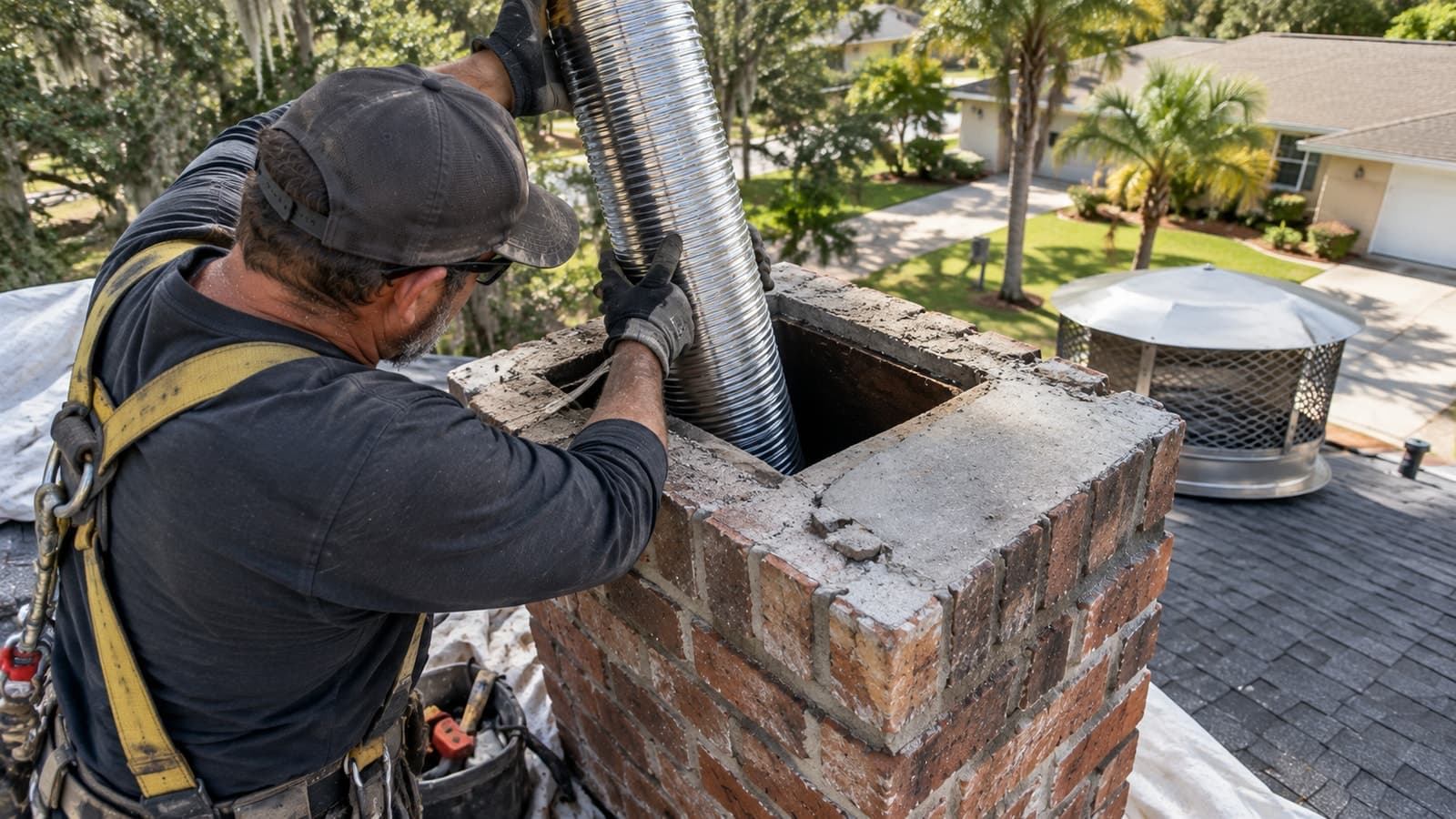
The video scan is the best-known part, but a Level 2 also requires access to the roof and to accessible attics, basements and crawl spaces around the chimney. In the attic, the inspector checks clearances where the chimney passes through the floor and roof, looks for electrical wiring touching the chimney, and looks for water damage, especially just below the flashing. On the roof, the crown or chase cover, the flashing and any cricket are examined, along with the rain cap. CSIA’s procedure says that if an area can’t be accessed, or the owner asks that it not be, the exception and the reason should be noted in the report.
Read the limitations as carefully as the findings
A Level 2 is only as complete as the access it had. If the attic was blocked by stored items or the roof was too wet to walk, ask what wasn’t checked and whether it’s worth a return visit. A clean report with a long list of exceptions tells you less than it seems to.
When a Level 3 happens
A Level 3 adds removal of parts of the building or chimney, but only where that is needed to reach an area that has to be inspected. Examples are taking off a crown, opening chase siding, or cutting into drywall beside a chimney. It is not a routine upgrade. It is normally recommended when a Level 1 or Level 2 has turned up evidence of a serious hidden problem, such as signs that a chimney fire has damaged framing, or water that has clearly been getting into a chase for a long time.
Because a Level 3 means demolition, it should come with a clear explanation of what will be opened, why, and what it will take to close it back up. If a Level 2 has recommended one, it is reasonable to ask to see the photos or video frames that led to that recommendation first.
Which one do you need?
A quick way to decide
Has the home changed hands, or is it about to?
If yes, a Level 2. It is the level NFPA 211 and CSIA associate with a sale or transfer.
Has anything happened to the chimney?
A hurricane, a lightning strike nearby, a chimney fire, smoke pouring into the room, or a cap or chase cover that moved: a Level 2.
Is anything about to change?
An insert, gas logs in a wood fireplace, a different appliance, or a new liner: a Level 2 before the work, so the flue is known to be suitable.
None of the above?
A Level 1 once a year, as NFPA 211 calls for, with a sweep when the inspection finds deposits.
If you’re unsure, describe the history when you book. The level should follow from the facts, and a good inspector will explain why a particular level fits. The chimney and fireplace inspection page describes what each visit includes.
The level you need often starts with a symptom. Signs a chimney liner is damaged, a chimney damaged in a storm and smoke coming into the room each explain which findings point toward a deeper look. If you are buying, what a general home inspection leaves out covers the purchase timeline. For how inspections are arranged in specific towns, see chimney inspection in the City of Orlando or inspections around Oviedo.
References (4)
Facts and figures on this page come from these references.