On this page
- Do I need a chimney liner?
- Masonry flue or factory-built chimney pipe?
- Signs of a damaged flue liner
- How liner damage is diagnosed
- Repair options: from a single tile to full relining
- When repair becomes relining
- Liner damage after a chimney fire or lightning
- What affects the cost of liner repair
- Establishing the damage before choosing the repair
Look up a brick chimney from the firebox with a flashlight and you’ll usually see square or rectangular clay tiles stacked on top of each other. That column of tile is the flue liner. It keeps the heat of a fire away from the brick and any nearby framing, gives the smoke a smooth, correctly sized path to the top, and stands up to the acidic moisture that condenses out of smoke. When the liner fails, the chimney can still look perfectly fine from the yard.
This page covers liner repair and relining for masonry chimneys. It explains how liner damage is found and the repair options for each kind of damage. Installing a new liner for the whole flue, including liners for inserts and stoves, is covered on chimney liner installation.
Masonry chimney and fireplace, cutaway
- 1Chimney cap. Metal lid with mesh sides over the flue opening. Keeps rain, debris and animals out.
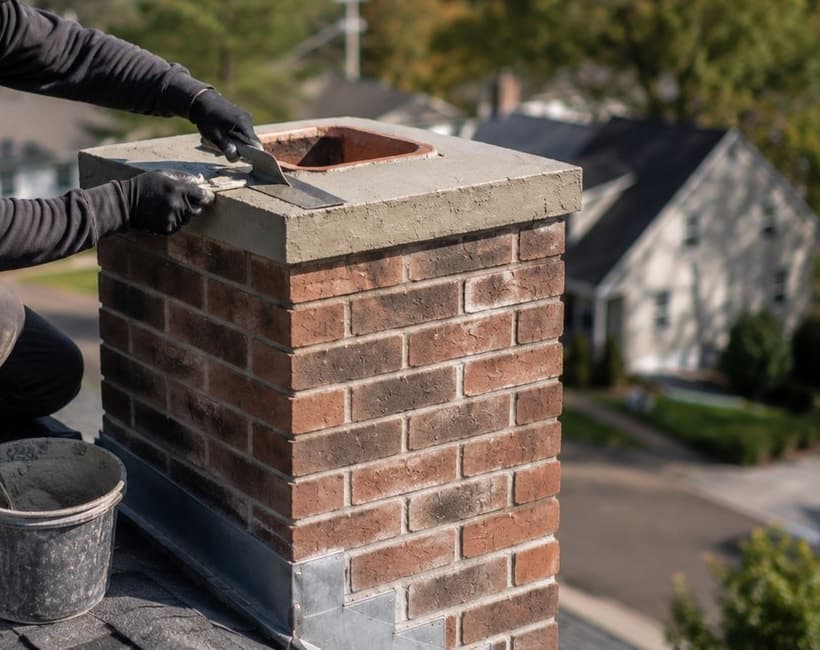
- 2Crown. The concrete or mortar top of the masonry, sloped to shed water away from the flue.
- 3Flue liner. Clay tile or metal lining that carries smoke up and protects the masonry from heat.
- 4Flashing. Metal that seals the joint between the chimney and the roof.
- 5Brick & mortar. The chimney structure. Mortar joints and brick faces absorb water when they wear.
- 6Smoke chamber. The sloped transition that funnels smoke from the firebox into the flue.
- 7Damper. Metal plate at the throat (or a sealing lid on top) that closes the flue when not in use.
- 8Firebox. Where the fire burns. Firebrick laid in heat-resistant mortar.
- 9Hearth. Non-combustible floor extension in front of the fireplace opening.
Do I need a chimney liner?
Yes, if you have a masonry chimney that is used or will be used. The Florida Building Code requires masonry chimneys to be lined, and lists the acceptable materials: clay flue lining meeting ASTM C315, chimney lining systems listed to UL 1777, factory-built chimneys listed for installation inside masonry, or other approved materials that resist corrosion, erosion, softening and cracking from flue gases and condensate (FBC-Residential R1003.11).
The real question for most homeowners is whether the liner they already have is still doing its job. These are the situations where it deserves a close look:
- An older brick chimney that may have been built without tile, or with tile that has spent decades exposed to water and flue gases.
- A fireplace that is about to go back into service after years of sitting unused, or one you’ve just inherited with a house purchase.
- A new appliance or fuel, such as a wood insert or stove going into an existing fireplace. The liner has to suit the appliance, not just the old open fireplace.
- After a chimney fire, a nearby lightning strike or a hurricane, any of which can crack tiles without leaving marks outside.
- Tile fragments or grit turning up on the smoke shelf or in the firebox.
Masonry flue or factory-built chimney pipe?
Relining applies to masonry chimneys. Many newer Central Florida homes have a factory-built fireplace instead, vented through round metal chimney pipe inside a framed chase. That pipe is the flue itself, and it is part of a tested, listed system. It isn’t relined the way a brick flue is.
| Feature | Masonry chimney with clay tile | Factory-built chimney pipe |
|---|---|---|
| What you see looking up | Square or rectangular clay tiles with mortar joints | A round, smooth metal pipe, often with visible seams |
| How the outside looks | Brick, block or stone, usually with a concrete crown | A framed box with siding or stucco and a metal chase cover |
| Typical damage | Cracked, offset or missing tiles; eroded joints | Separated joints, corrosion, dents or heat warping |
| How it’s fixed | Tile repair, a stainless steel liner or a cast-in-place liner | Damaged sections replaced only with listed parts compatible with that chimney system |
What you see looking up
- Masonry chimney with clay tile
- Square or rectangular clay tiles with mortar joints
- Factory-built chimney pipe
- A round, smooth metal pipe, often with visible seams
How the outside looks
- Masonry chimney with clay tile
- Brick, block or stone, usually with a concrete crown
- Factory-built chimney pipe
- A framed box with siding or stucco and a metal chase cover
Typical damage
- Masonry chimney with clay tile
- Cracked, offset or missing tiles; eroded joints
- Factory-built chimney pipe
- Separated joints, corrosion, dents or heat warping
How it’s fixed
- Masonry chimney with clay tile
- Tile repair, a stainless steel liner or a cast-in-place liner
- Factory-built chimney pipe
- Damaged sections replaced only with listed parts compatible with that chimney system
If your flue is metal pipe in a chase, the right page is repairing a factory-built chimney and its chase, where replacement sections have to match the manufacturer’s listed system.
Signs of a damaged flue liner
Most liner damage is invisible from the room. A few clues do show up, and each has a specific way of being confirmed.
What you might notice, and how it’s confirmed
01Cracked flue tiles
- What you may notice
- Usually nothing at all. Sometimes thin shards or reddish grit on the smoke shelf.
- How it’s confirmed
- A full-length inspection of the flue, looking for vertical and horizontal cracks through the tile walls.
02Open or eroded mortar joints between tiles
- What you may notice
- Smoke staining on the outside of the brick, or a smoky smell in rooms beside the chimney.
- How it’s confirmed
- A close look at each joint; gaps show as dark lines or missing mortar at the tile seams.
03Offset or shifted tiles
- What you may notice
- Poor draft or a fire that smokes even with the damper wide open.
- How it’s confirmed
- Inspection shows ledges where one tile no longer lines up with the next.
04Spalling or flaking tile
- What you may notice
- Flat flakes of clay collecting behind the damper, often after long periods of water entry.
- How it’s confirmed
- Flue inspection plus a look at the crown, cap and top tile for the water source.
05Damage from a chimney fire
- What you may notice
- Puffy or honeycombed creosote, a warped damper, flakes of creosote on the roof or ground.
- How it’s confirmed
- Full-length inspection of the liner, since fire can crack tiles along the whole flue.
How liner damage is diagnosed
A liner can’t be judged from the firebox or from the top of the chimney alone. Assessing it properly means evaluating the full length of the flue, which is part of a Level 2 inspection under NFPA 211 (CSIA’s Level 2 procedure uses a video scan or a similar inspection for this). A Level 2 is also the level called for after a chimney fire or a weather event, and when the system changes, such as relining or adding a new appliance. Our chimney and fireplace inspection page covers what that visit includes, and the guide to Level 1 versus Level 2 inspections explains which one fits your situation.
Ask to see the evidence
Relining is a significant job. Whoever recommends it should be able to show you exactly where the cracks, gaps or offsets are in the flue, and explain why a partial repair won’t do. Asking for the evidence and the findings in writing is reasonable before you approve the work.
Repair options: from a single tile to full relining
The right repair depends on how much of the flue is damaged, where, and what will burn in the fireplace afterward.
| Option | How it works | Fits when | Limits |
|---|---|---|---|
| Top tile or partial tile repair | The cracked or broken tile at the top of the flue, above the roofline, is removed and replaced, often together with the crown around it | Damage is limited to the exposed top section, typically from water or storms | Only reachable near the top; doesn’t address damage farther down |
| Joint and crack resurfacing | A heat-rated resurfacing material is applied inside the existing tile to fill open joints and minor cracks | The tiles are sound and in line, with gaps and small cracks only | Not a fix for broken, missing or badly offset tiles |
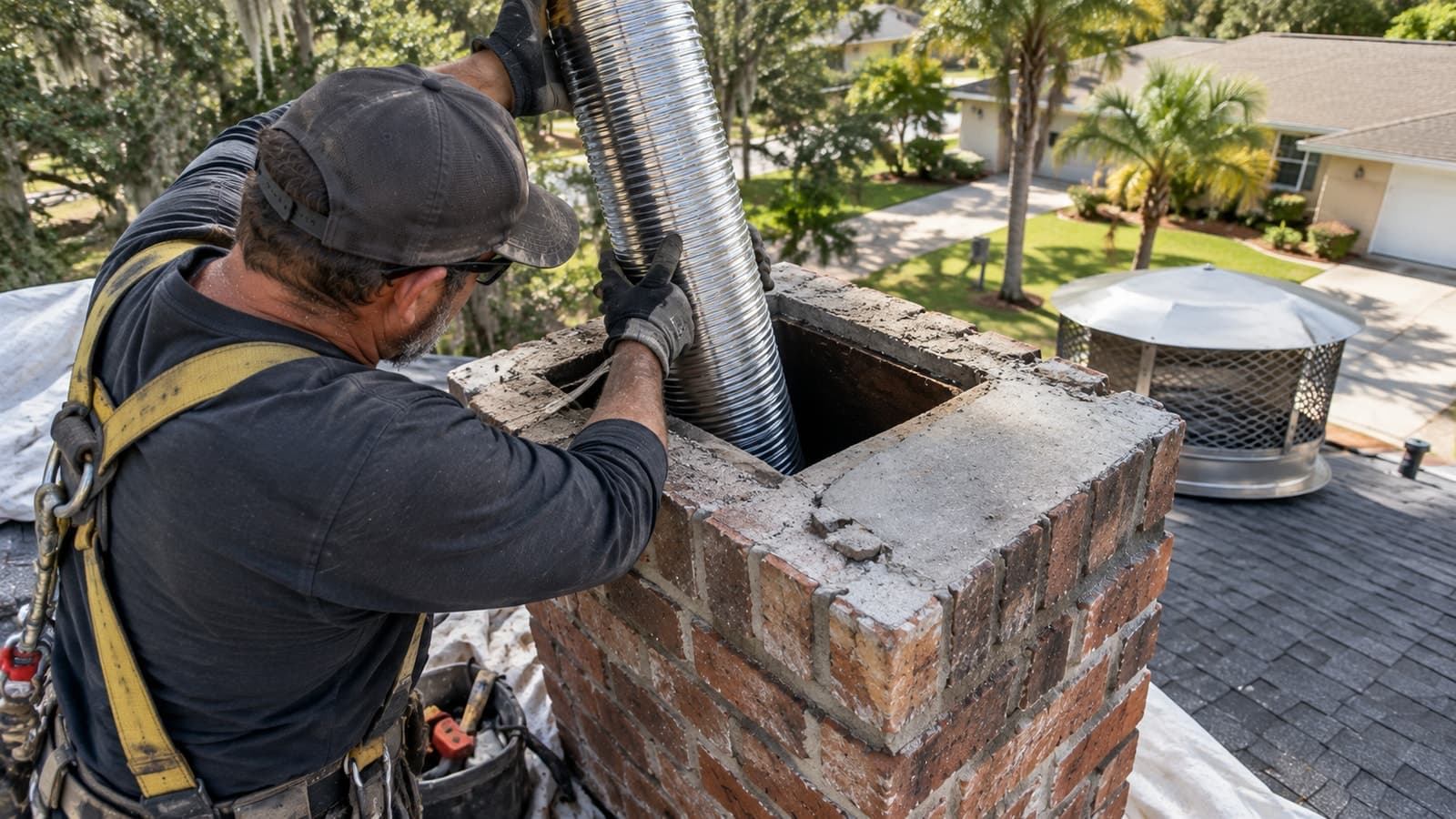
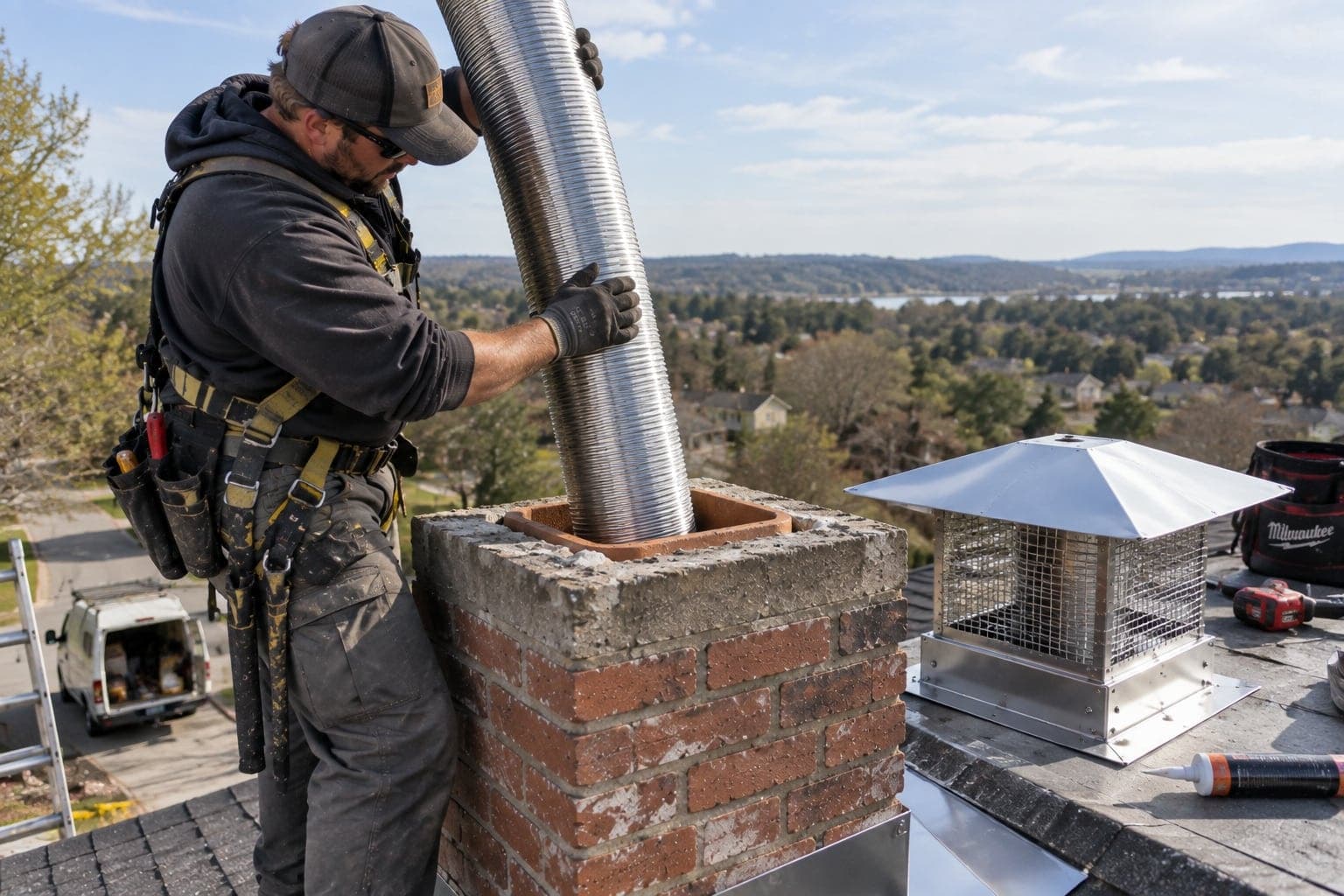
| Stainless steel liner | A listed stainless steel liner, rigid or flexible, is run down the existing flue and connected at the bottom and top | Tiles are cracked in several places, a new insert or stove is being installed, or the flue is the wrong size | The liner must suit the appliance and the listing; sizing and insulation matter |
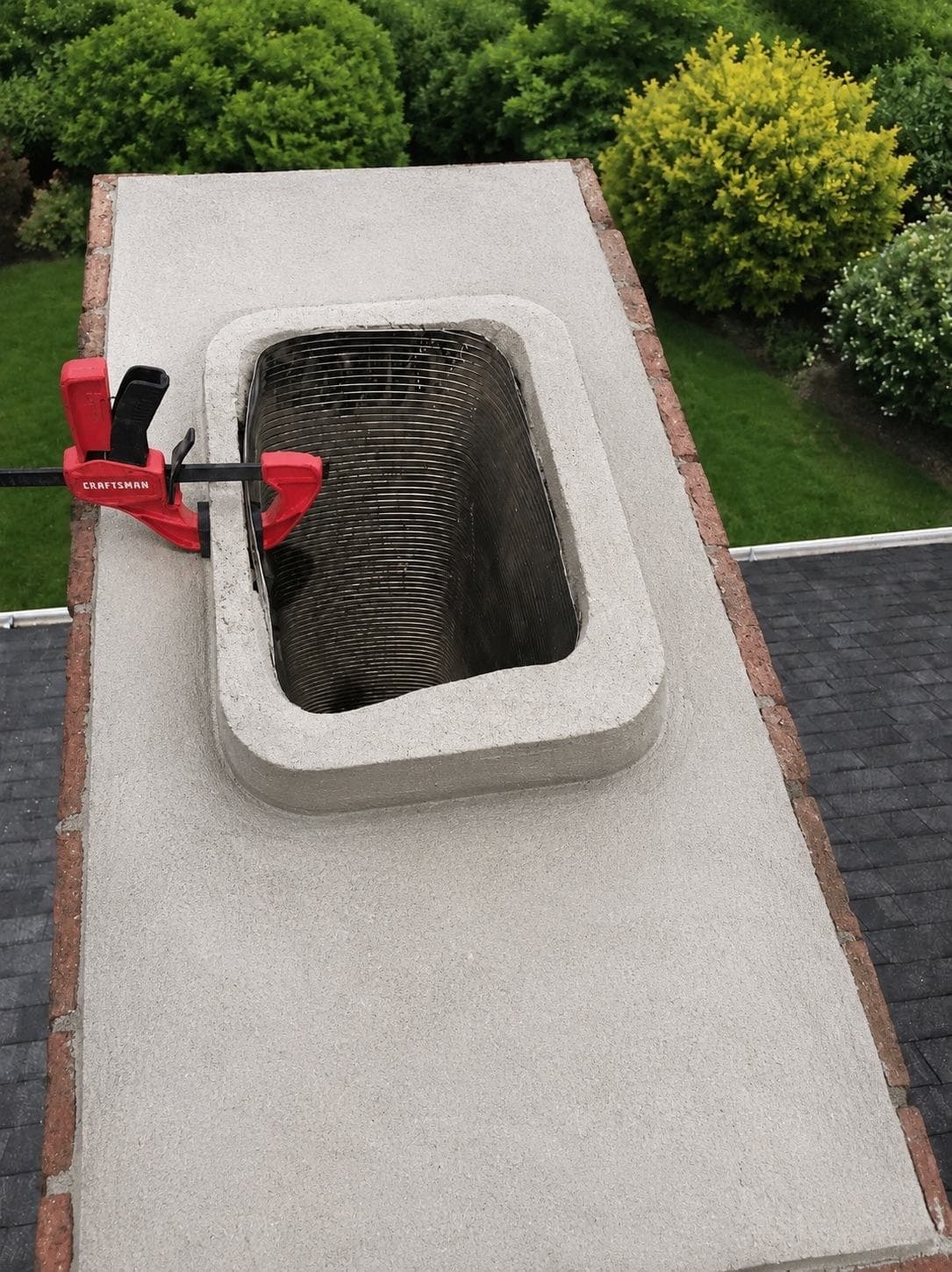
| Cast-in-place liner | A cement-based lining is poured or pumped around a form inside the flue, creating a new seamless liner | The old flue is badly deteriorated, unlined or irregular, or extra structural support is wanted | Reduces the flue’s internal size; a specialist system with its own installation rules |
Stainless steel chimney liners
A stainless steel liner is the most common way to reline a masonry chimney. Rigid liners suit straight flues; flexible liners follow offsets. The code recognizes liner systems listed to UL 1777, and those systems come with installation instructions that set the connections, the top plate and cap, and whether insulation around the liner is required for the clearances in your chimney. Following that listing is what makes a liner a liner, rather than a length of pipe dropped down a chimney.
Stainless relining is also the usual answer when the damage is spread through the flue, because repairing individual tiles halfway down a chimney is rarely practical.
Cast-in-place liners
Cast-in-place systems create a new, continuous liner inside the old one. They are a good fit for chimneys where the existing tile is badly broken or missing, or for older chimneys with irregular flues that a metal liner won’t pass through. Because the lining takes up space inside the flue, the finished opening has to be checked against what the fireplace or appliance needs.
When repair becomes relining
Repair works when the damage is limited and the tiles are still in line: a broken top tile, a few open joints, minor cracks. Once cracks run through several tiles, sections have shifted or gone missing, or a new insert or stove is going in, patching tile halfway down a flue stops being practical. At that point the job is a new liner for the whole flue, sized to what will burn in it. That work, including sizing rules and liner materials, is on chimney liner installation and relining.
Liner damage after a chimney fire or lightning
A chimney fire can reach temperatures around 2,000 °F, which the Chimney Safety Institute of America notes can melt mortar, crack tiles, collapse liners and damage the surrounding masonry (CSIA). Many chimney fires go unnoticed: they burn briefly inside the flue and leave clues rather than flames. Our guide to the signs of a past chimney fire lists what to look for.
Lightning is the other Central Florida cause. A strike on or near a chimney can crack the crown, loosen brick and fracture tiles inside. Neither kind of event should be followed by another fire until the liner has been inspected along its full length.
Don’t use the fireplace with a cracked liner
Cracks and gaps in the liner let heat reach the brick and any framing close to the chimney, and let smoke and gases escape into the walls. If a liner has been found cracked, keep the fireplace out of service until it has been repaired or relined.
What affects the cost of liner repair
Liner work is priced after the flue inspection, because the extent of the damage decides the method. The main factors are listed below.
- Repair method: top tile, resurfacing, stainless steel or cast-in-place
- Height of the chimney and number of flues
- Flue size and shape, and whether there are offsets
- Whether insulation is required by the liner listing
- Appliance being connected, such as a wood insert
- Roof pitch, roof covering and access
- Related work at the top, such as a new crown or cap
Establishing the damage before choosing the repair
Liner damage is the one chimney problem that is essentially invisible. You cannot see it from the firebox, you cannot see it from the roof, and the symptoms — a smell, a draft problem, a stain — are shared with half a dozen other faults.
That makes a camera scan of the flue the sensible first step rather than an upsell. It establishes how many tiles are affected, where they sit and whether the damage is localised enough to repair or extensive enough to need relining. Those are very different pieces of work and guessing between them is expensive.
After a chimney fire, a lightning strike or a significant impact, a scan is not optional — heat and shock damage tiles along the height of the flue with nothing visible from either end.
References (3)
Facts and figures on this page come from these references.