Short answer
Burn seasoned wood at 20 percent moisture or less, split and stacked off the ground away from the house, with the top covered and the sides open. In Florida’s humid summers that takes at least six months, so check with a moisture meter. Never burn treated or painted wood, trash, cardboard or palm fronds.
Dry wood is the whole game
Wet wood wastes its heat boiling off water, burns cool and smoky, and leaves more creosote in the flue. The EPA’s Burn Wise program recommends wood that is properly seasoned, with a moisture content of 20 percent or less, split and stored so it can dry (EPA Burn Wise). A simple moisture meter, pushed into a freshly split face, tells you where you stand.
Seasoning wood in Florida’s humidity
- Split logs before stacking; split wood dries far faster than rounds.
- Stack off the ground on pallets or a rack, in a single row with air around it.
- Cover the top of the stack but leave the sides open so air moves through.
- Give it time: plan on at least six months, and check with a meter rather than the calendar. Humid summers slow drying.
- Bring in only what you’ll burn in a day or two; wood kept indoors can carry insects.
Keep the woodpile away from the house
Stacks against walls invite termites and other pests into the structure and keep the wall damp. Store firewood away from the house and off the ground.
What to burn, and what never to burn
| Feature | Good fuel | Never burn |
|---|---|---|
| Wood | Seasoned hardwoods such as oak; seasoned softwoods for kindling | Wet or green wood |
| Treated material | — | Pressure-treated, painted or stained wood; plywood and particleboard |
| Paper | Newspaper for starting | Cardboard, wrapping paper and trash, which flare and send embers up the flue |
| Other | Manufactured logs used per their label | Palm fronds, driftwood, plastics, and flammable liquids to start the fire |
Wood
- Good fuel
- Seasoned hardwoods such as oak; seasoned softwoods for kindling
- Never burn
- Wet or green wood
Treated material
- Good fuel
- —
- Never burn
- Pressure-treated, painted or stained wood; plywood and particleboard
Paper
- Good fuel
- Newspaper for starting
- Never burn
- Cardboard, wrapping paper and trash, which flare and send embers up the flue
Other
- Good fuel
- Manufactured logs used per their label
- Never burn
- Palm fronds, driftwood, plastics, and flammable liquids to start the fire
Building a cleaner fire
Open the damper fully
Check it with a flashlight before lighting; see how fireplace dampers work.
Warm the flue
In a cold chimney, a rolled newspaper lit near the damper for a moment helps start the draft.
Start small and hot
Kindling and small splits first, then larger pieces once there’s a bed of coals.
Keep it burning, not smoldering
A bright fire with visible flames produces less smoke and creosote than a closed-down, smoky one.
Let it burn out
Don’t close the damper until the embers are completely out; see fireplace carbon monoxide.
Ash disposal
Ashes can hold live embers for days. The U.S. Fire Administration advises putting cooled ashes in a metal container with a lid and storing it outside, away from the house (USFA). Never put ashes in a paper bag, cardboard box or a plastic trash can.
Burn bans and outdoor rules
Drought-related burn restrictions in Central Florida are aimed mainly at outdoor burning, and counties publish their own open-burning rules (Orange County EPD). If you’re unsure whether a restriction covers your fireplace or fire pit, check with your county.
When the fire tells you something’s wrong
- Smoke coming into the room: see a fireplace smoking into the room.
- A roaring or rumbling sound from the chimney: get out and call 911.
- Black, shiny deposits above the damper: see creosote buildup.
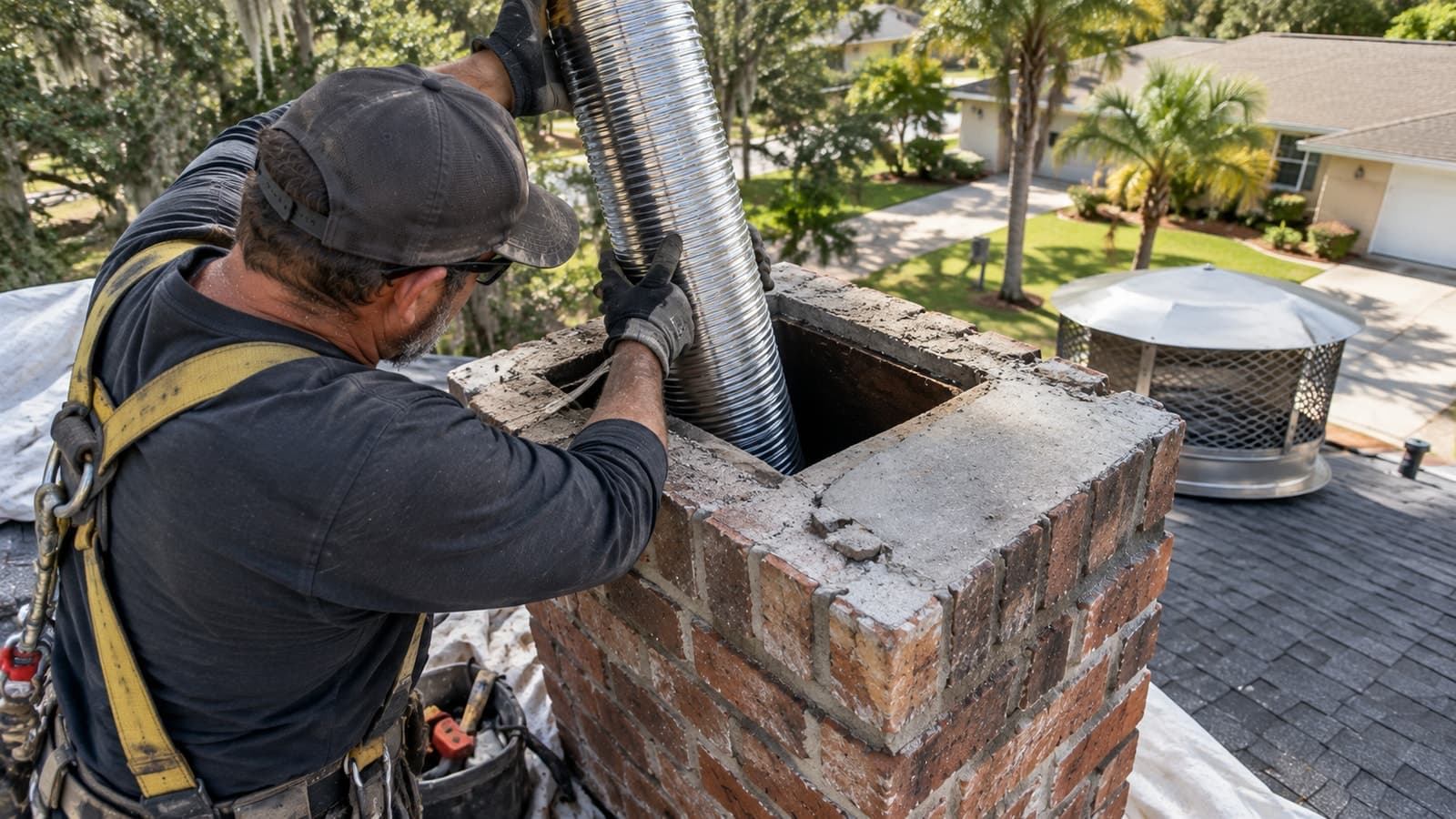
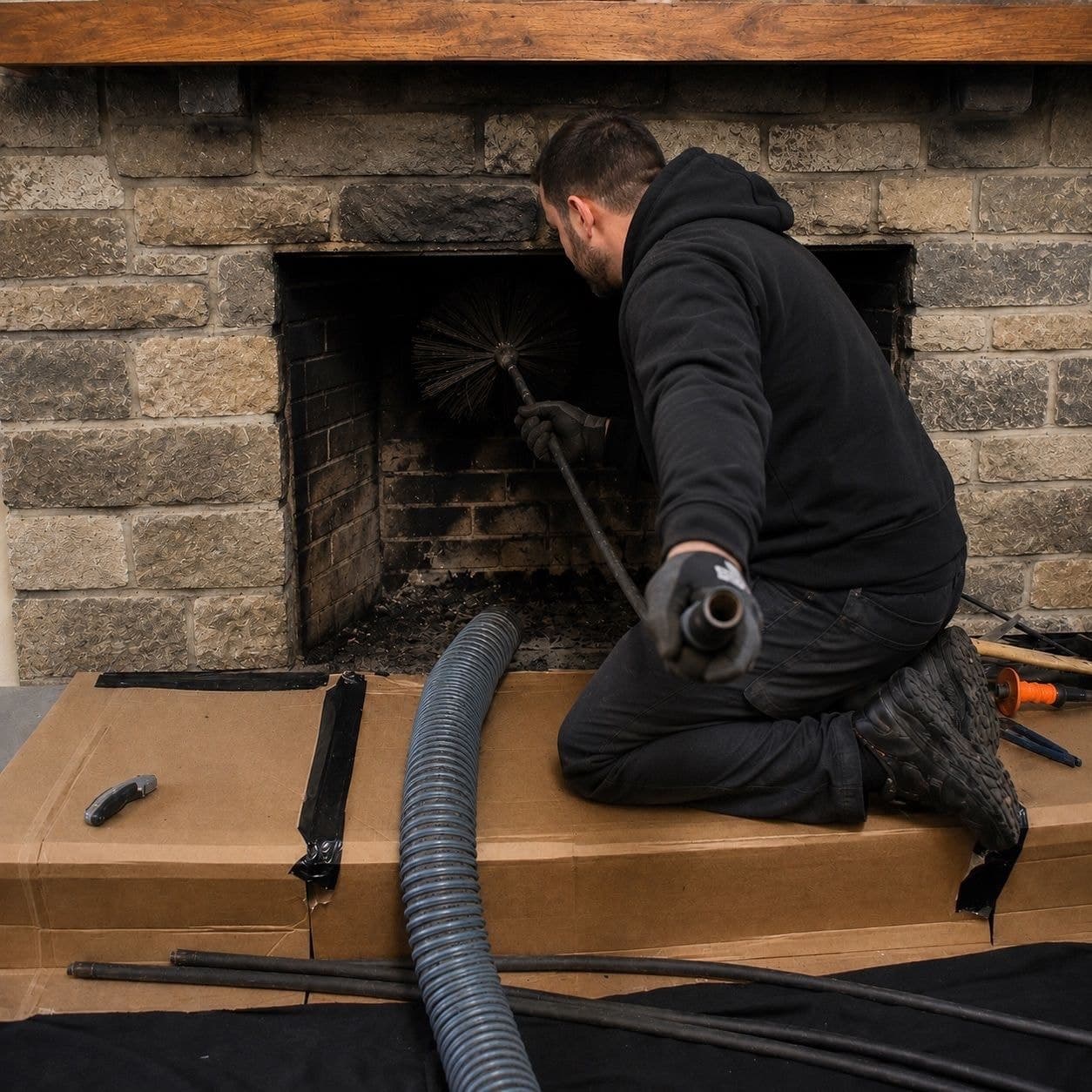
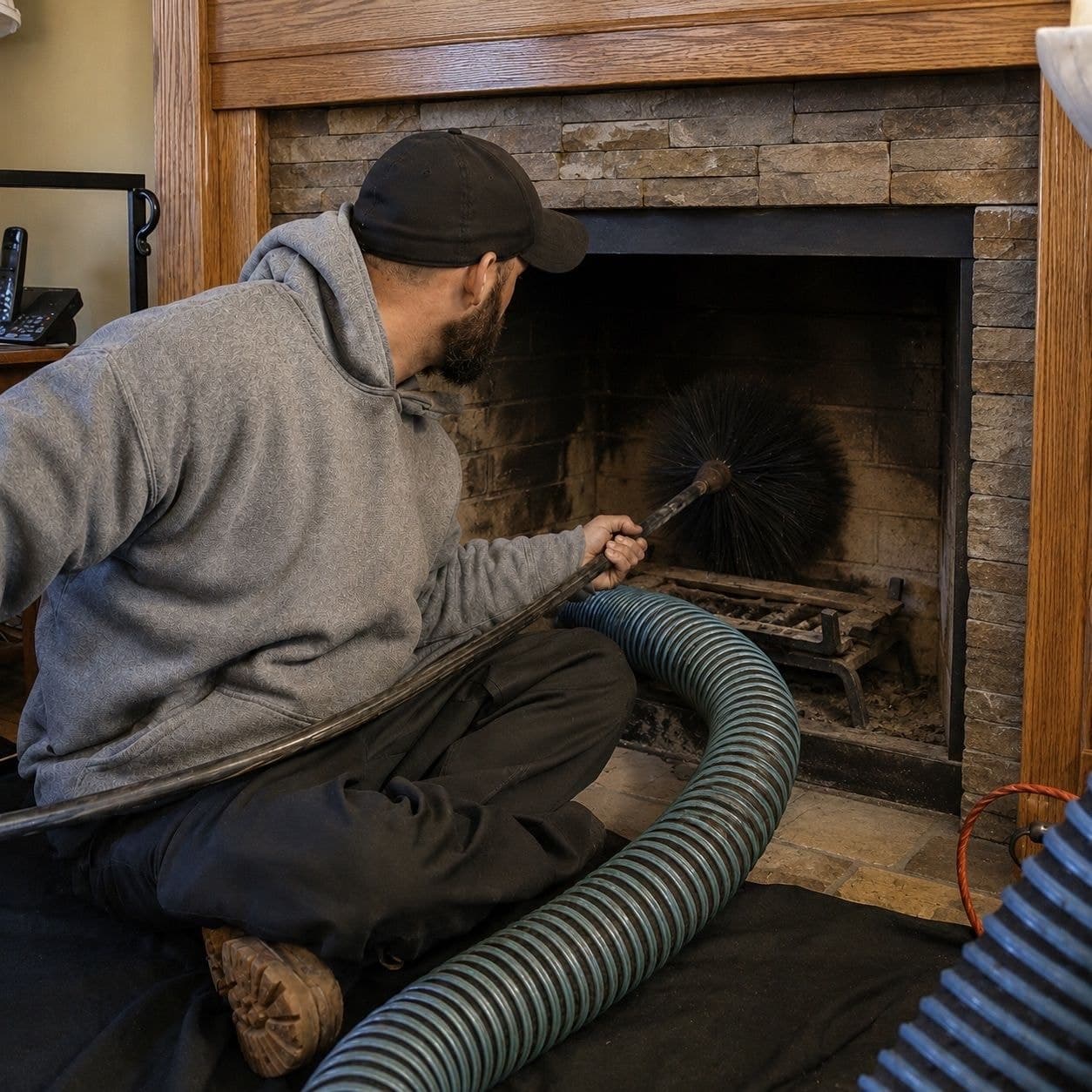
Even with good wood, the flue needs a yearly check. A chimney sweep before the first cool front of the season is a sensible routine; what happens during a sweep explains the visit. Keep rugs and furniture back from the opening as the hearth and mantel clearance guide describes.
If a fire keeps smoking or leaves heavy deposits even with dry wood, the problem is probably in the chimney; the smoke chamber guide and signs of a chimney fire cover two common causes. For a sweep before the first cool front, local pages such as chimney sweeps in Mount Dora describe timing in Lake County.
References (3)
Facts and figures on this page come from these references.