What creosote is
When wood burns, smoke carries unburned gases, water vapor and tiny particles up the flue. As the smoke cools on the flue walls, those condense into deposits. Dry, dusty deposits are mostly soot. Sticky, flammable deposits are creosote. The cooler and smokier the fire, the more creosote forms, which is why slow, smoldering fires and wet wood are the main culprits (CSIA).
Masonry chimney and fireplace, cutaway
- 1Chimney cap. Metal lid with mesh sides over the flue opening. Keeps rain, debris and animals out.
- 2Crown. The concrete or mortar top of the masonry, sloped to shed water away from the flue.
- 3Flue liner. Clay tile or metal lining that carries smoke up and protects the masonry from heat.
- 4Flashing. Metal that seals the joint between the chimney and the roof.
- 5Brick & mortar. The chimney structure. Mortar joints and brick faces absorb water when they wear.
- 6Smoke chamber. The sloped transition that funnels smoke from the firebox into the flue.
- 7Damper. Metal plate at the throat (or a sealing lid on top) that closes the flue when not in use.
- 8Firebox. Where the fire burns. Firebrick laid in heat-resistant mortar.
- 9Hearth. Non-combustible floor extension in front of the fireplace opening.
The three forms of buildup
| Form | What it looks like | Risk | Typical removal |
|---|---|---|---|
| Soot and first-stage creosote | Dry, dusty, black powder that brushes off easily | Low when thin; flammable when thick | Standard chimney sweep |
| Second-stage creosote | Crunchy, flaky, granular deposits | Moderate to high | Sweep with more aggressive brushing |
| Third-stage (glazed) creosote | Shiny, tar-like coating that drips or hardens like glass | Highest; burns hot and long | Specialized removal, sometimes chemical treatment, plus inspection |
| Puffy, honeycombed creosote | Deposits that look expanded and bubbly | A sign of a past chimney fire | Inspection before any further use |
Why creosote builds up faster
01Unseasoned or wet wood
- What you may notice
- Hissing, steaming logs, fires that are hard to keep going.
- How it’s confirmed
- Moisture content of the wood; seasoned firewood should be dry enough to split cleanly and not hiss. EPA Burn Wise covers what good firewood looks like.
02Smoldering, low-oxygen fires
- What you may notice
- Doors kept closed with a small, smoky fire; damper partly closed.
- How it’s confirmed
- How the fireplace is being used; a restricted damper or doors cut off the air the fire needs.
03A cold, oversized or unlined flue
- What you may notice
- Heavy deposits concentrated near the top of the chimney.
- How it’s confirmed
- Checking flue size against the fireplace and the condition of the liner. See a damaged chimney liner.
04Restricted draft
- What you may notice
- Smoke spilling into the room, a sooty cap screen.
- How it’s confirmed
- Checking the cap screen, flue and damper for restrictions; see a fireplace smoking into the room.
Florida’s version of the problem
In Central Florida most fireplaces are lit a handful of times a year, so it is easy to assume creosote isn’t a concern. Two things work against that. Occasional fires in a cold flue are often short and smoky, which is when creosote forms. And creosote left in the flue through a humid summer absorbs moisture and gives off the acrid smell described in why a fireplace smells when it’s humid. Light use lowers the buildup rate, but it doesn’t make an inspection unnecessary; the Florida inspection-frequency guide explains the schedule.
Safe checks you can do
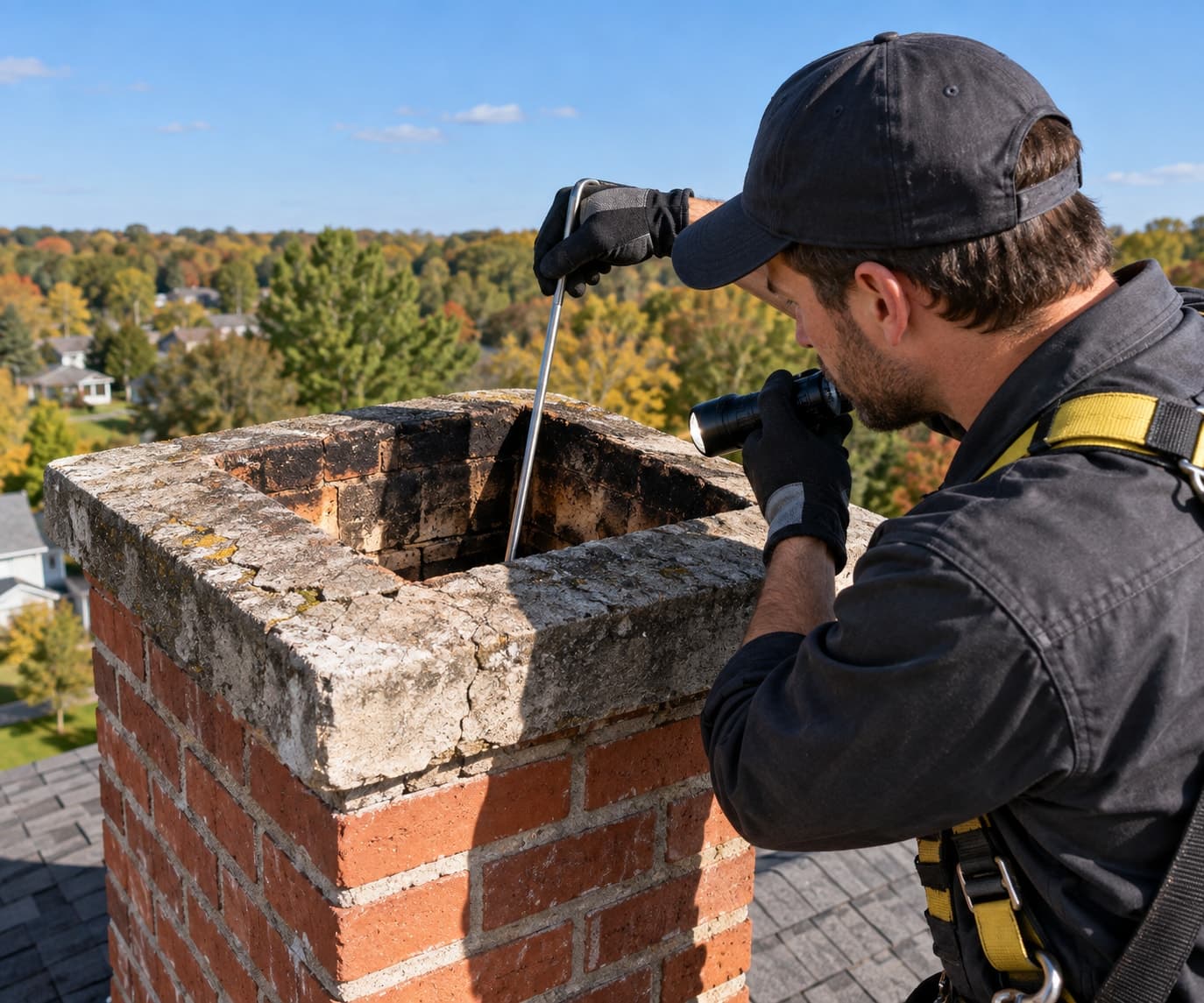
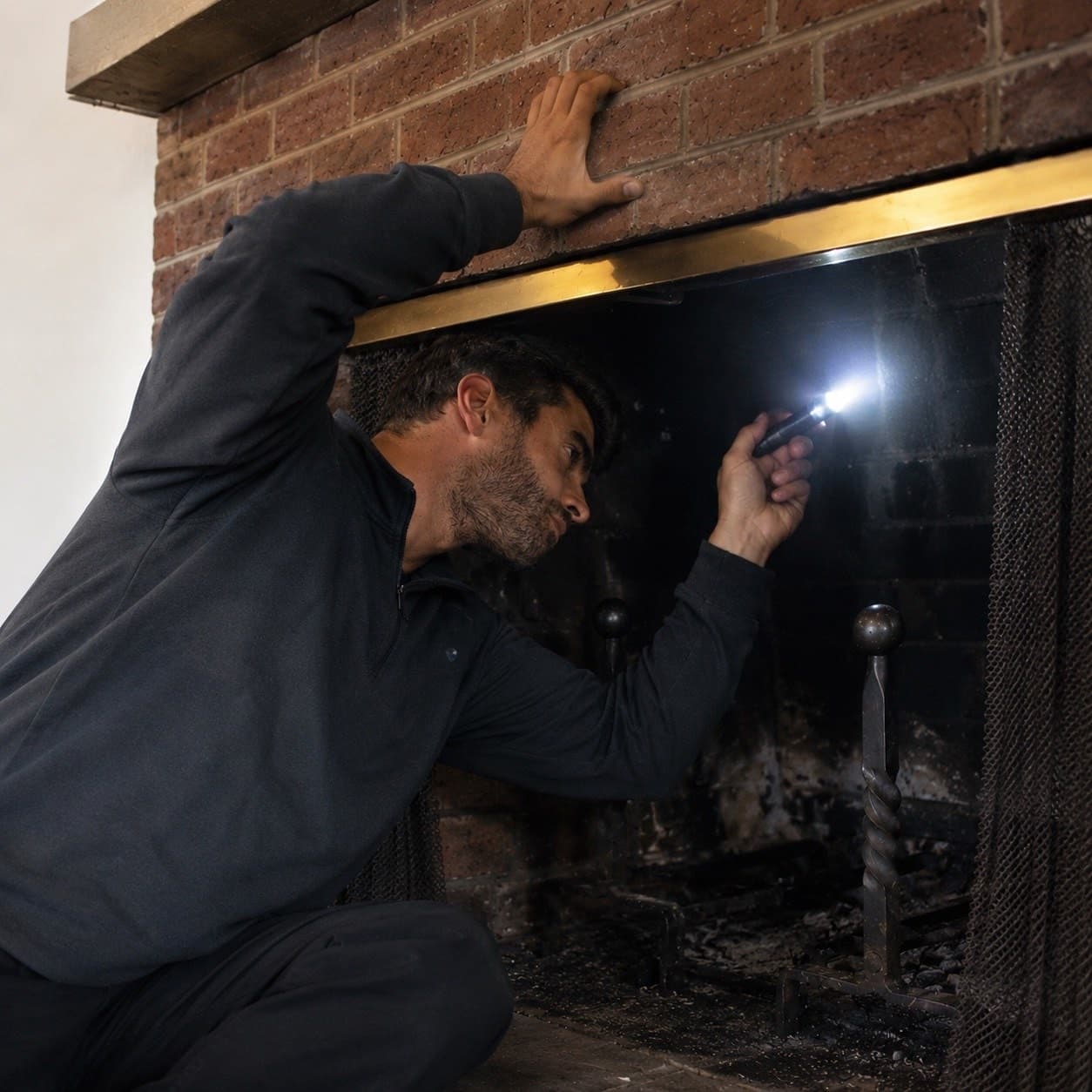
- With the fireplace completely cold, open the damper and shine a flashlight up the flue and onto the smoke shelf.
- Scratch a deposit on the damper or smoke shelf lightly with a fireplace tool. If the scratch is deeper than about 1/8 inch, or the surface is glossy, schedule a sweep before the next fire.
- Look at the cap screen from the ground with binoculars: a black, clogged screen means heavy buildup. Heavy black streaks down the outside are covered in black stains on a chimney.
- Notice any strong, acrid smell from the fireplace in humid weather.
- Keep a note of how many fires you burn each season; it helps set the cleaning schedule.
Signs of a chimney fire: get out and call 911
A loud roaring or rumbling sound, a strong hot smell, dense smoke, or flames or sparks shooting from the chimney top can mean a chimney fire. Get everyone out and call 911. Don’t use the fireplace again until the whole flue has been inspected; the CSIA recommends inspection after any chimney fire.
Red flags
- Shiny, tar-like glaze anywhere in the flue or on the damper.
- Puffy, honeycombed creosote, cracked flue tiles or warped metal, which suggest a past chimney fire.
- Creosote dripping or running out of the damper area in hot weather.
- Flakes of creosote on the roof or ground around the chimney.
What creosote removal involves
Identify the stage
The flue is examined to see how thick the buildup is and whether glaze is present.
Match the method
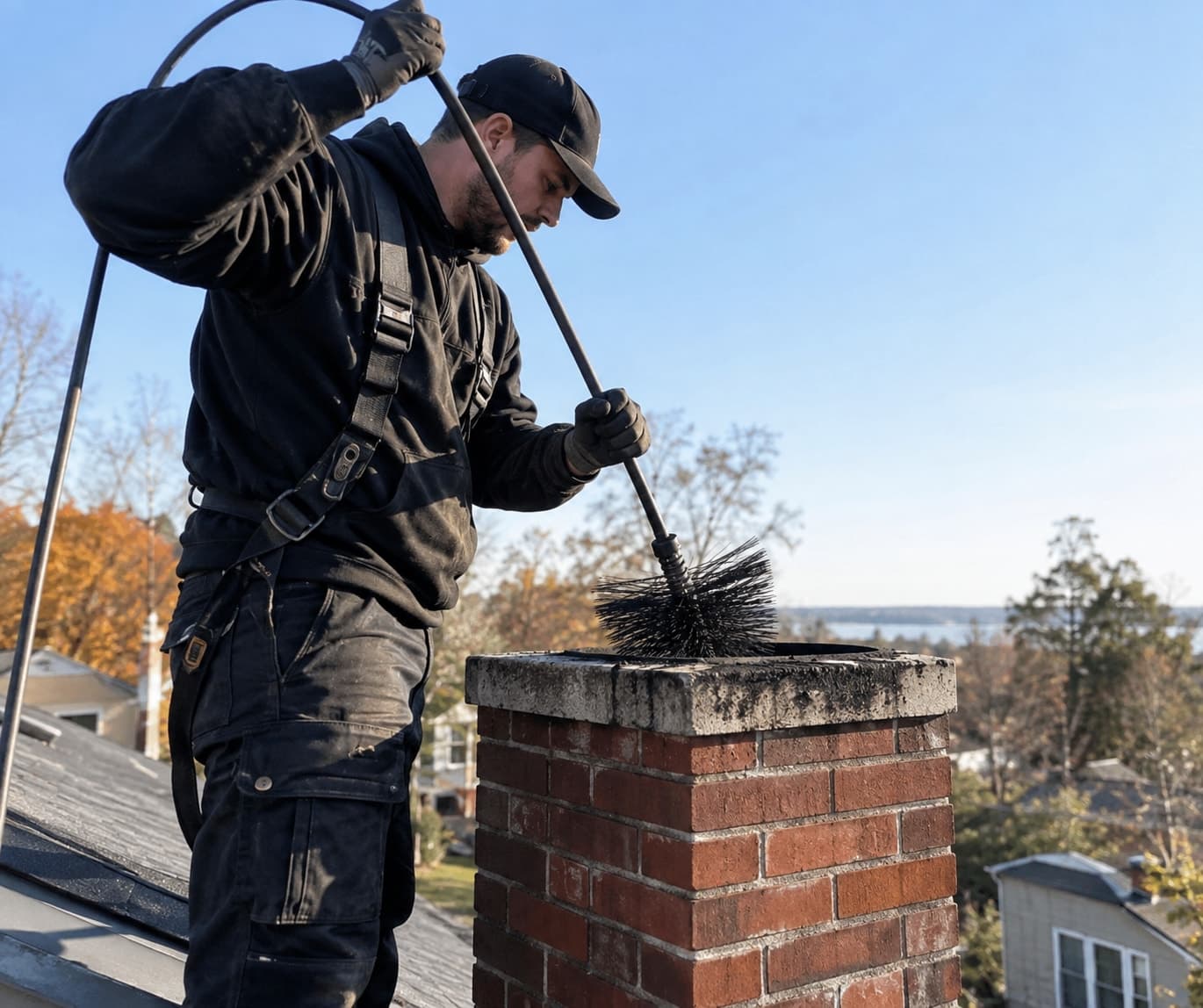
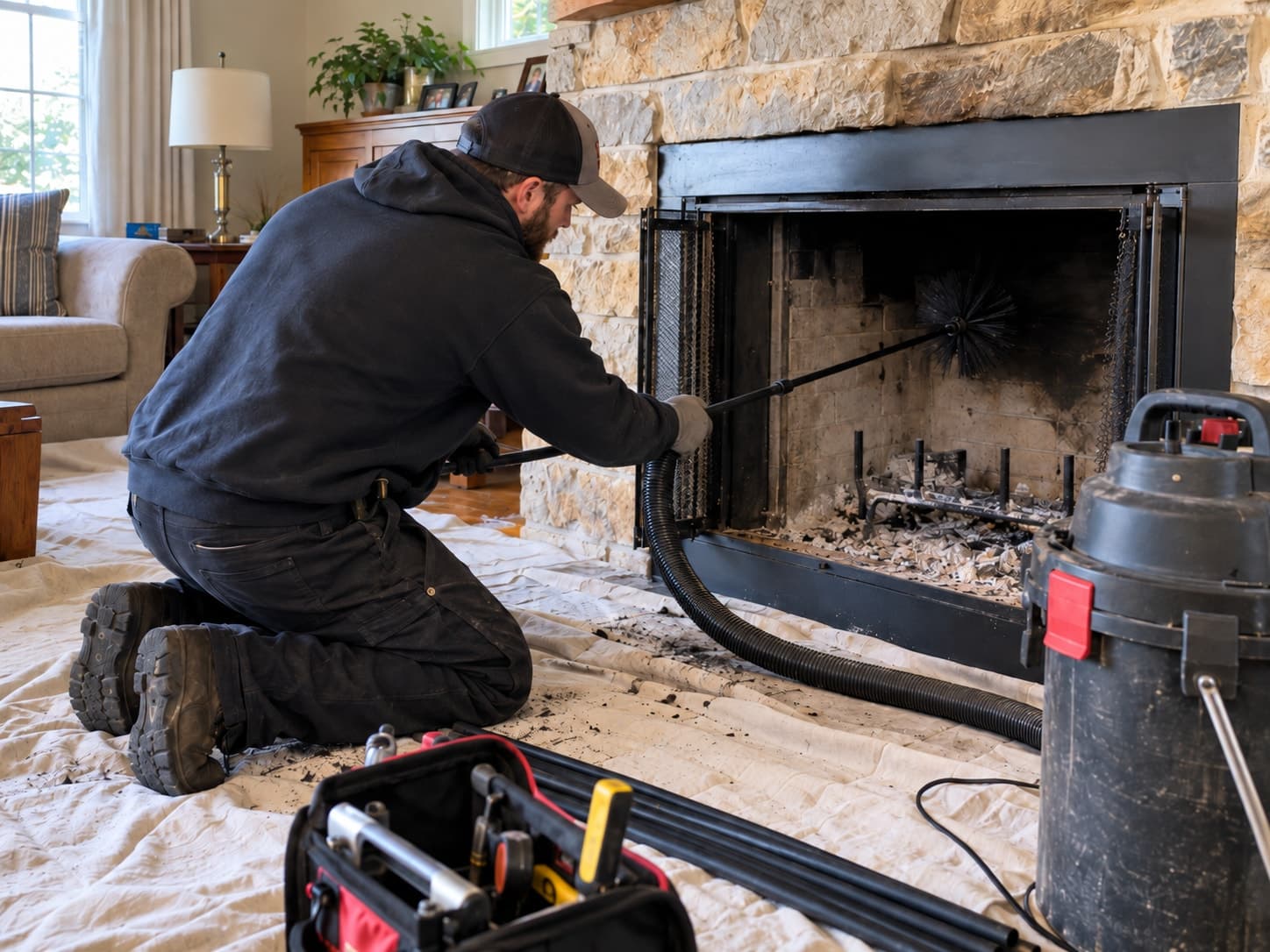
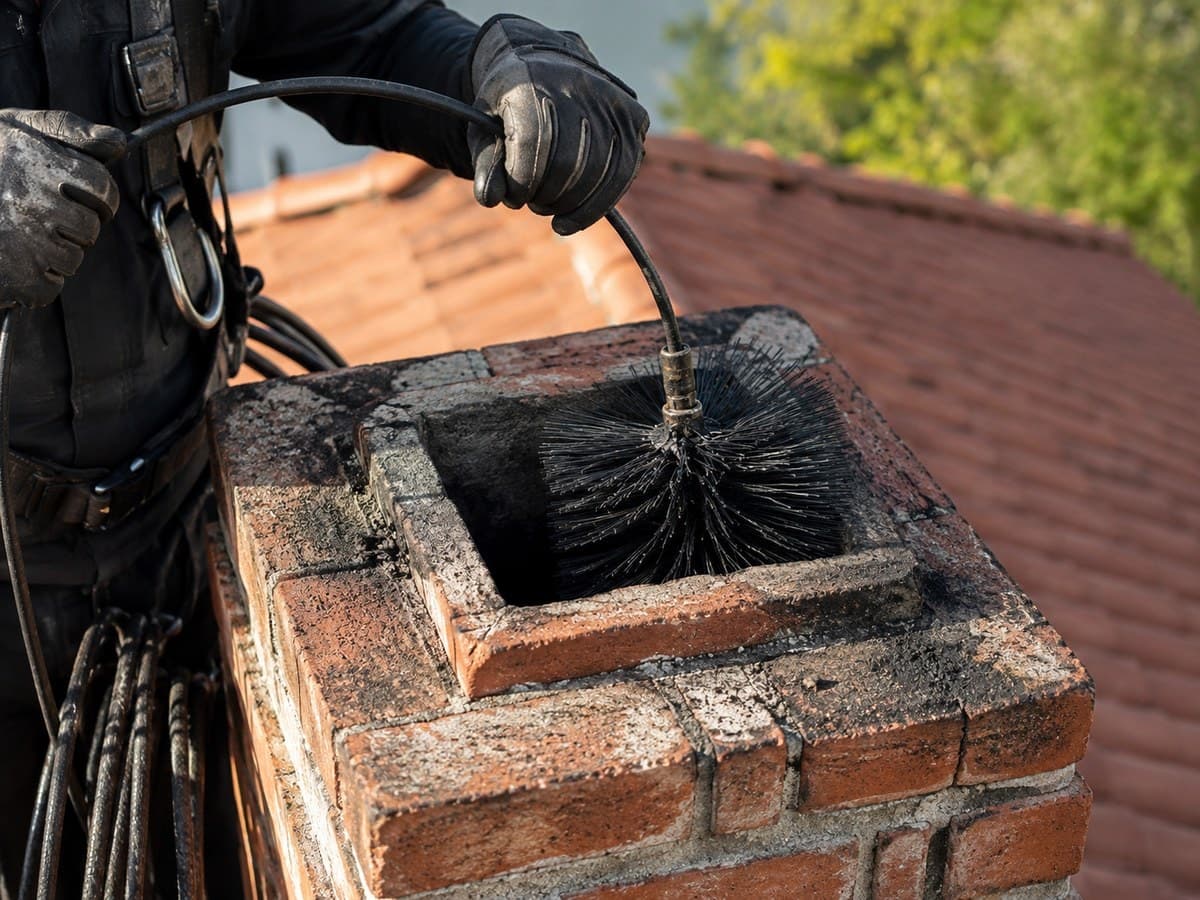
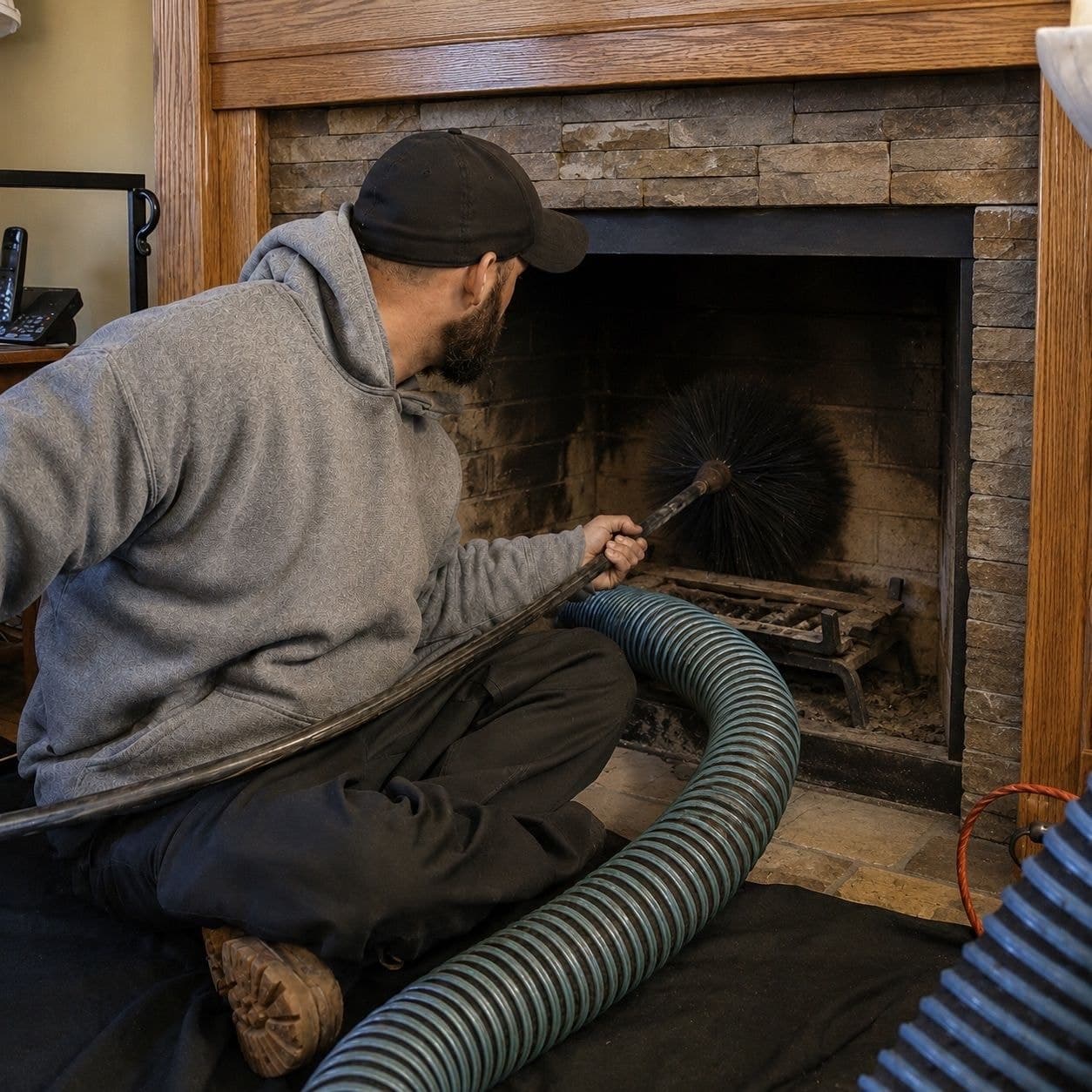
Brushes for soot and flaky creosote; rotary tools or chemical treatments for glazed deposits.
Inspect the flue after cleaning
Cracks and damage are only visible once the deposits are off, so the flue is inspected again after heavy removal.
Fix the reason
Burning habits, draft or flue size are addressed so the buildup doesn’t return as quickly.
Sweep, deep cleaning or creosote removal?
| Kind of deposit | Where it’s fixed |
|---|---|
| Dry, flaky soot and first-stage creosote | a routine chimney sweep |
| Heavier, crunchy deposits and a dirty smoke chamber | chimney cleaning |
| Shiny, glazed third-stage creosote | glazed creosote removal |
| Signs of a past chimney fire | a chimney inspection before any use |
How often a Florida fireplace needs sweeping depends on use, not the calendar; see how often to clean and inspect a chimney in Florida. Local: chimney sweeping in Lake Mary or Clermont chimney cleaning.
References (3)
Facts and figures on this page come from these references.