If a CO alarm sounds
Get everyone, including pets, into fresh air right away and call 911. Don’t go back inside until responders say it is safe. Don’t ignore an alarm because nobody feels sick.
The short answer
Yes. Carbon monoxide is a colorless, odorless gas produced whenever fuel burns incompletely. The CPSC lists fireplaces among the fuel-burning appliances that can produce it (CPSC). A fireplace that vents properly sends it up the chimney. Problems come from venting that fails, fires that smolder, and gas appliances that burn poorly.
What makes it more likely
| Situation | Why CO can enter the room |
|---|---|
| Blocked flue (nest, debris, fallen tile) | Exhaust can’t get out and spills back through the opening. See a blocked chimney. |
| Damper closed too early | Smoldering embers keep producing CO after the flames die down |
| Negative pressure in the house | Exhaust fans, a dryer or a tight house pull air down the chimney |
| Cracked or missing liner | Exhaust leaks into spaces around the chimney. See liner types and relining. |
| Gas logs with the damper closed | Gas exhaust has no way out |
| Poor gas combustion | Soot and yellow, lazy flames signal incomplete burning. See gas fireplace soot. |
| Vent-free unit in a closed or small room | All exhaust stays in the room |
Symptoms to know
The CPSC describes early carbon monoxide symptoms as similar to the flu without the fever: headache, fatigue, shortness of breath, nausea and dizziness. Higher exposure brings confusion, vomiting, loss of coordination and loss of consciousness (CPSC Carbon Monoxide Questions and Answers). A clue is that symptoms ease when you leave the house and return when you come back, or that several people and pets feel unwell at once.
Where CO alarms should go
- On every level of the home, and outside sleeping areas, as the CPSC recommends.
- Follow the alarm maker’s instructions for placement relative to fuel-burning appliances.
- Test them monthly and replace batteries as directed; replace the alarm at the end of its stated life.
- Don’t rely on a smoke alarm to detect CO unless it is a combination unit.
Habits that reduce the risk
- Open the damper fully before lighting a fire and leave it open until the embers are completely out. How dampers work explains the types.
- Crack a nearby window when the house is tight or exhaust fans are running.
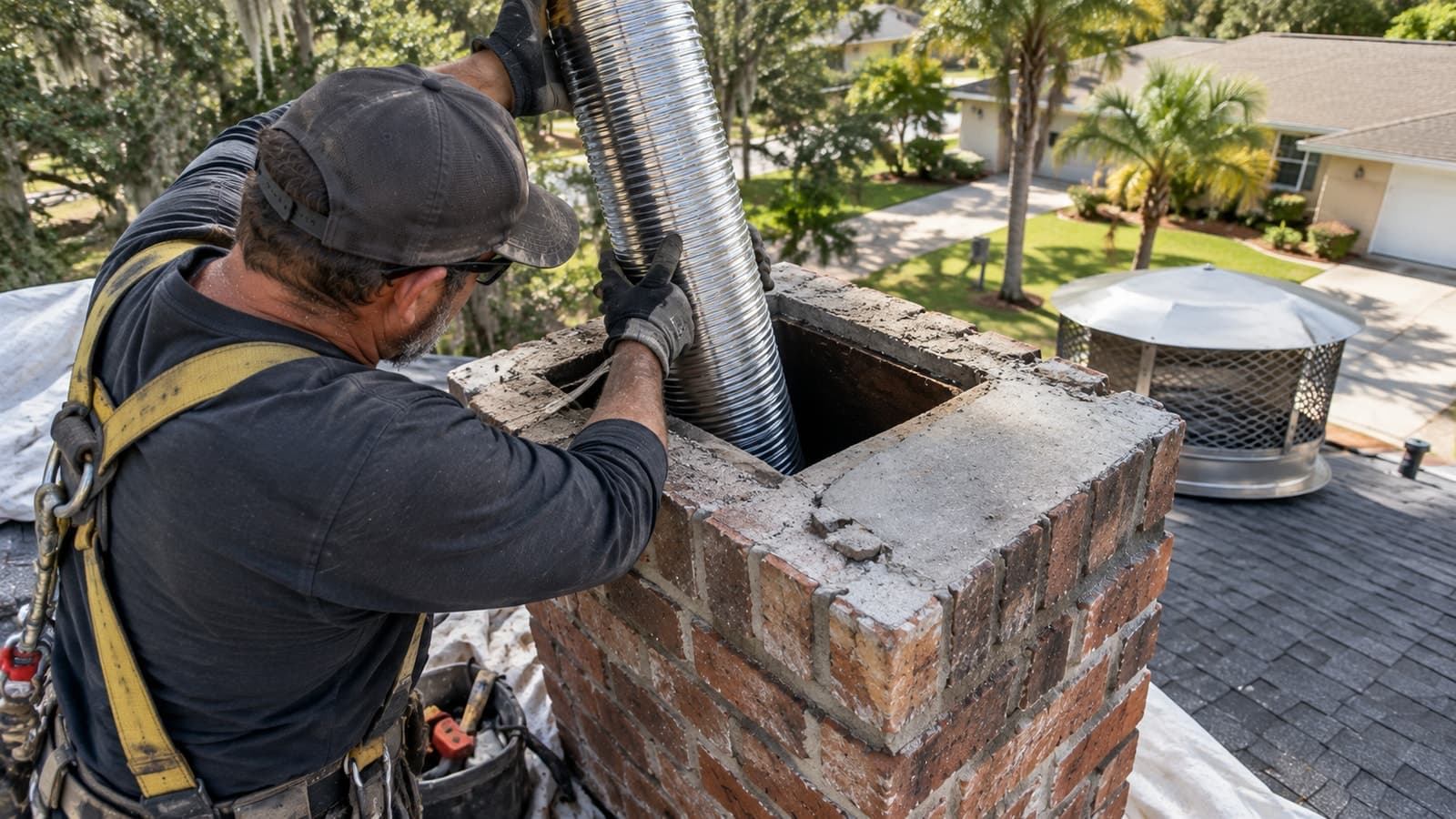
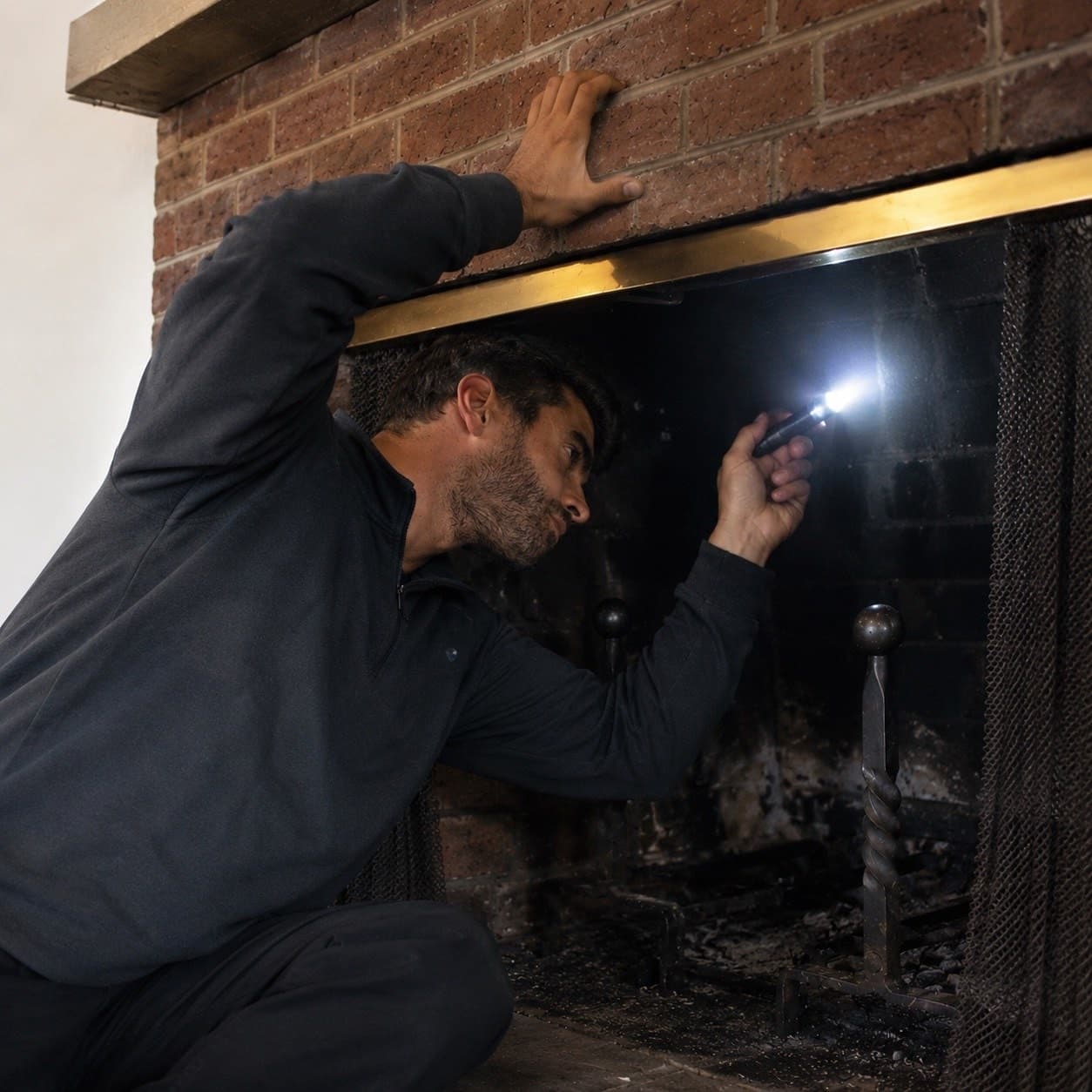
- Have the chimney or vent inspected yearly; see how often to inspect a chimney in Florida.
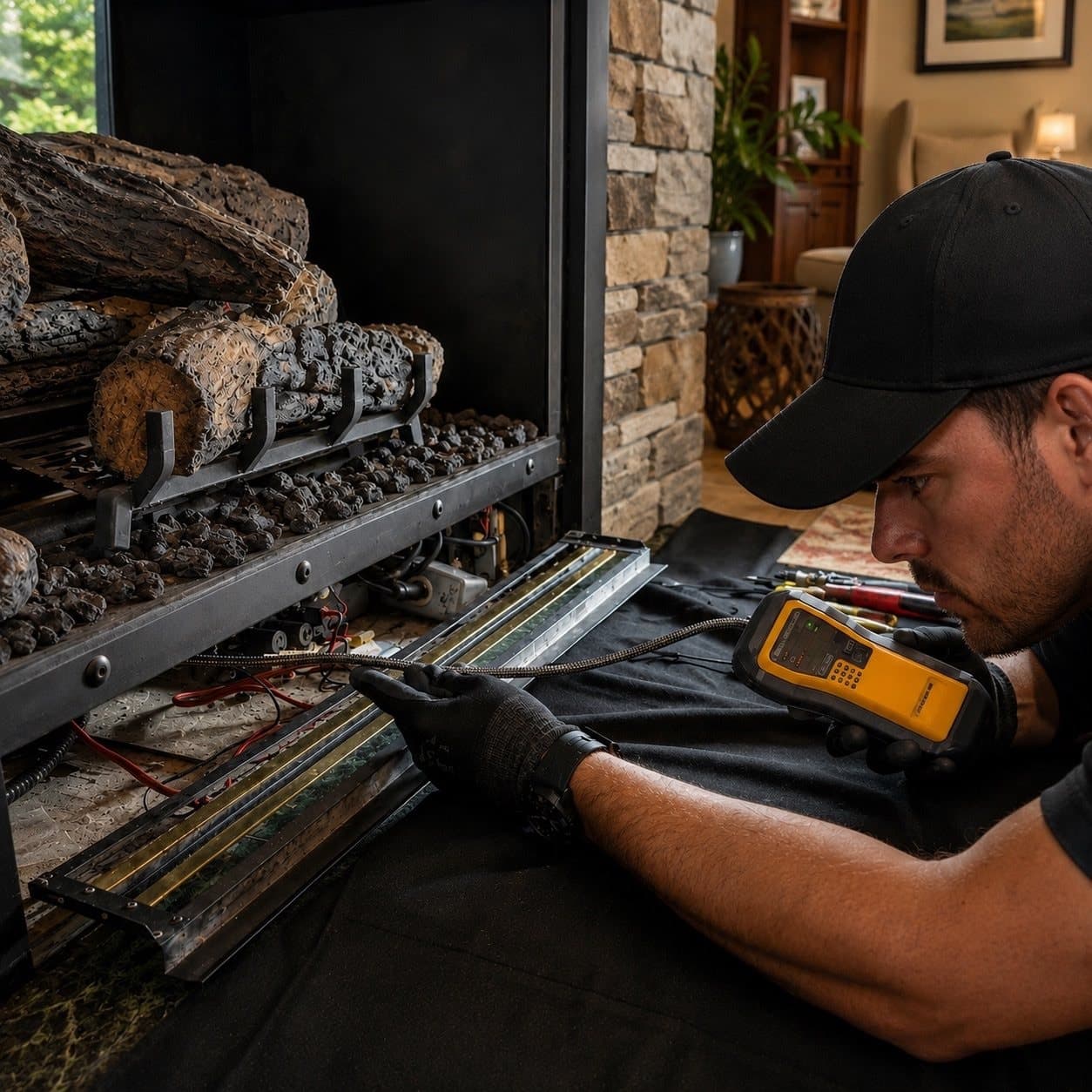
- Have gas fireplaces serviced yearly, and never run one with cracked glass or soot.
- Follow room-size and ventilation rules for vent-free units exactly.
Masonry chimney and fireplace, cutaway
- 1Chimney cap. Metal lid with mesh sides over the flue opening. Keeps rain, debris and animals out.
- 2Crown. The concrete or mortar top of the masonry, sloped to shed water away from the flue.
- 3Flue liner. Clay tile or metal lining that carries smoke up and protects the masonry from heat.
- 4Flashing. Metal that seals the joint between the chimney and the roof.
- 5Brick & mortar. The chimney structure. Mortar joints and brick faces absorb water when they wear.
- 6Smoke chamber. The sloped transition that funnels smoke from the firebox into the flue.
- 7Damper. Metal plate at the throat (or a sealing lid on top) that closes the flue when not in use.
- 8Firebox. Where the fire burns. Firebrick laid in heat-resistant mortar.
- 9Hearth. Non-combustible floor extension in front of the fireplace opening.
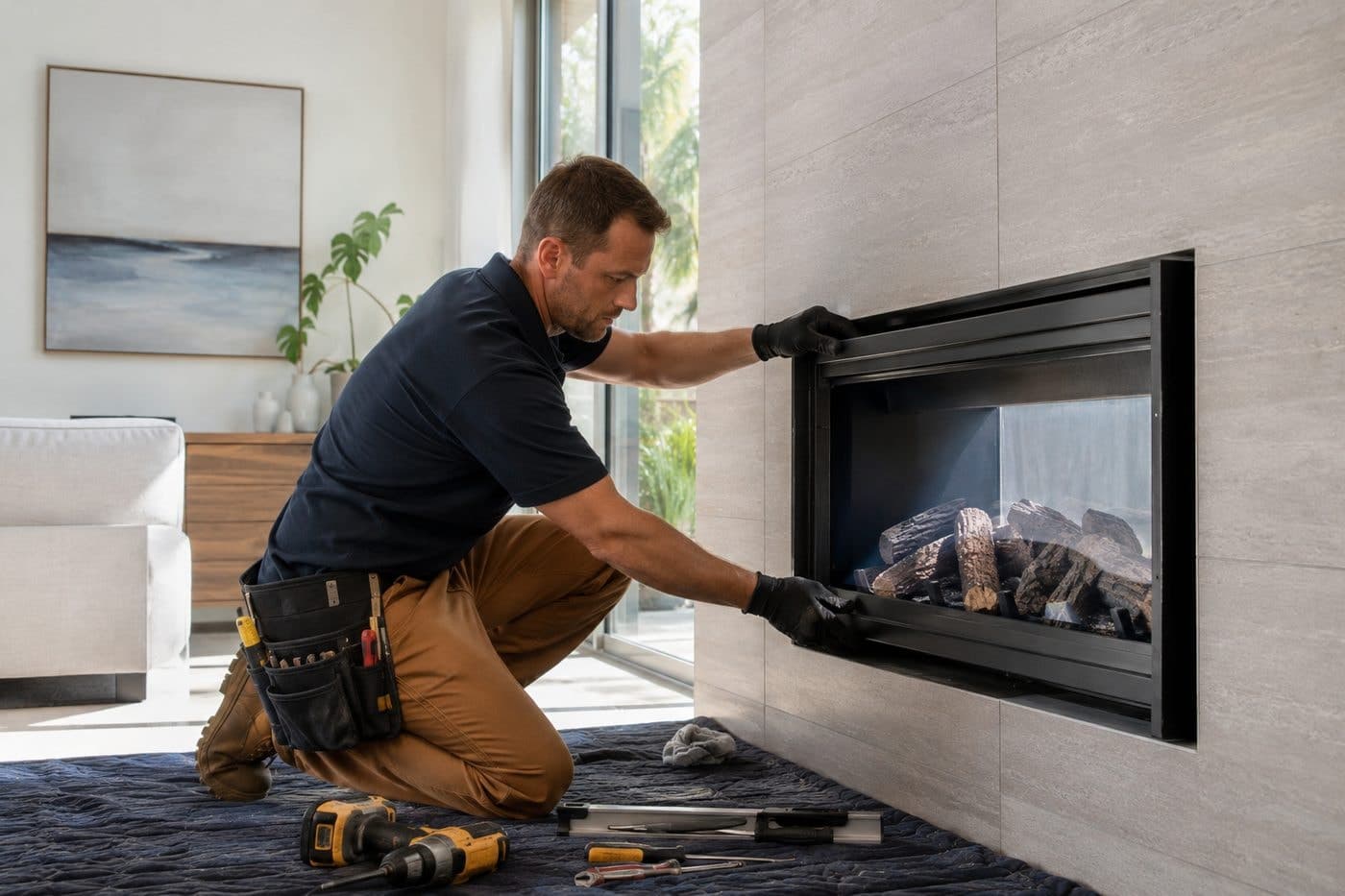
A chimney inspection checks the venting path, and gas fireplace service checks combustion and safety controls. The gas fireplace guide explains how vented and vent-free units differ.
The venting problems behind CO often show up as other symptoms first: a gas fireplace that smells like gas, a fireplace smoking into the room or a gas fireplace that shuts itself off. The clearances guide covers the other everyday safety checks.
References (2)
Facts and figures on this page come from these references.