Gas smell or CO alarm? Leave first
If you smell gas, leave the home without switching anything on or off and call the gas utility or 911 from outside. If a carbon monoxide alarm sounds, get everyone into fresh air and call 911. See a gas fireplace that smells like gas.
First: is the burner or the pilot going out?
Watch through the glass. If the small pilot flame stays lit while the main flames go out, the unit has stopped calling for heat (settings, thermostat, a control or a safety switch) or the valve has lost enough signal to hold the burner open. If the pilot goes out as well, the problem is in the pilot or its sensor, and the guide to a pilot that won’t stay lit covers it in more detail.
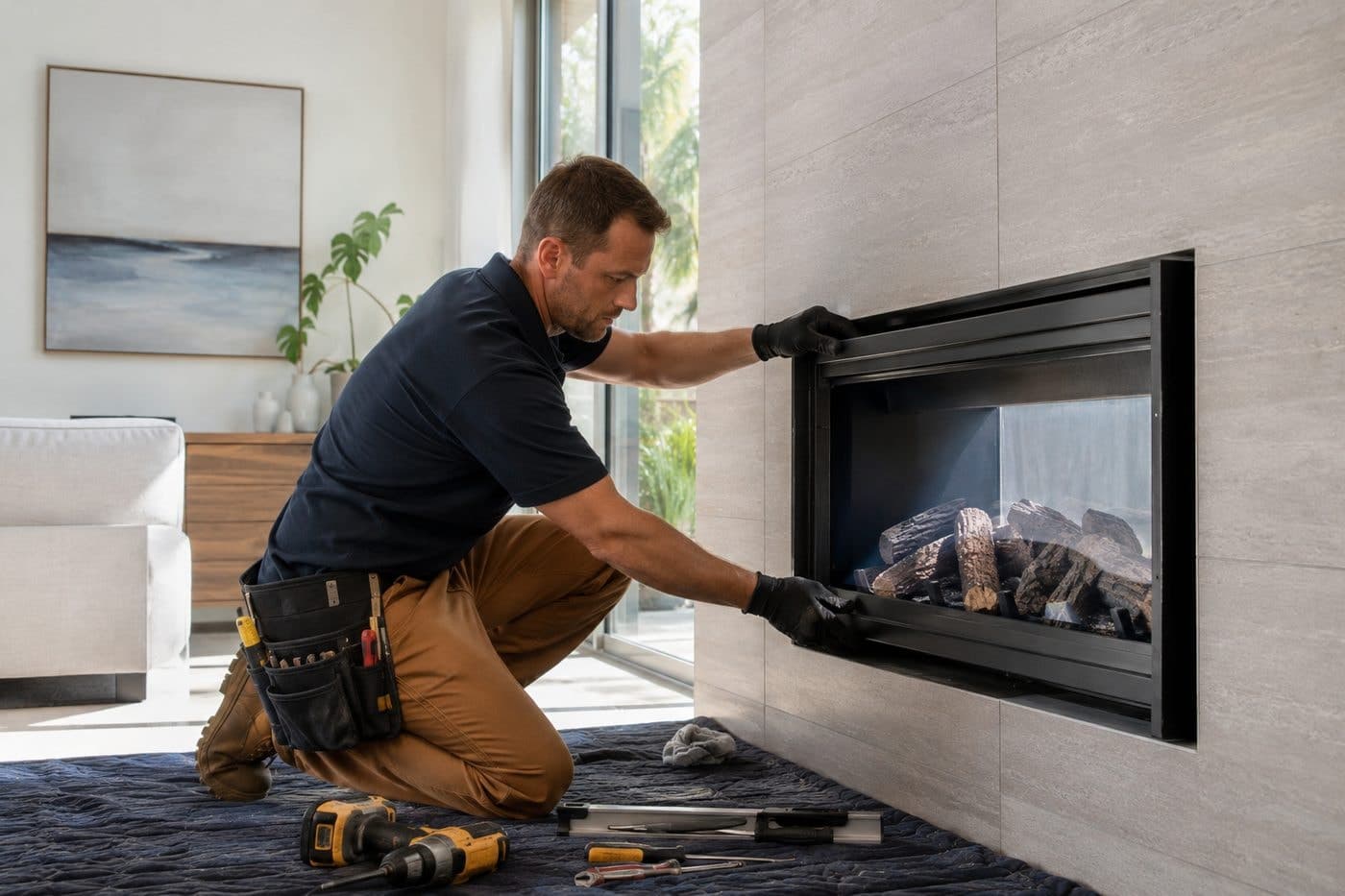
Match the pattern
| Pattern | Most likely cause |
|---|---|
| Burner goes off when the room warms up, comes back later | Thermostat mode on the remote or wall thermostat, working as designed |
| Goes off after a set time | Timer setting |
| Burner goes off after a few minutes; pilot stays lit | Weak thermopile, a spill switch tripping, or a control fault |
| Burner and pilot both go out | Thermocouple or thermopile, dirty pilot, draft at the pilot |
| Vent-free unit goes off after running a while in a closed room | Oxygen depletion sensor responding to room air |
| Goes off on windy days | Downdraft at the vent termination affecting the pilot or spill switch |
| Goes off and the unit shows a flashing light | Electronic ignition fault code or lockout |
Possible causes
01Thermostat or timer settings
- What you may notice
- Remote shows a temperature or clock icon; shutoff happens when the room is warm.
- How it’s confirmed
- Switching the remote to manual on/off mode and seeing whether the shutoff stops. See remote problems.
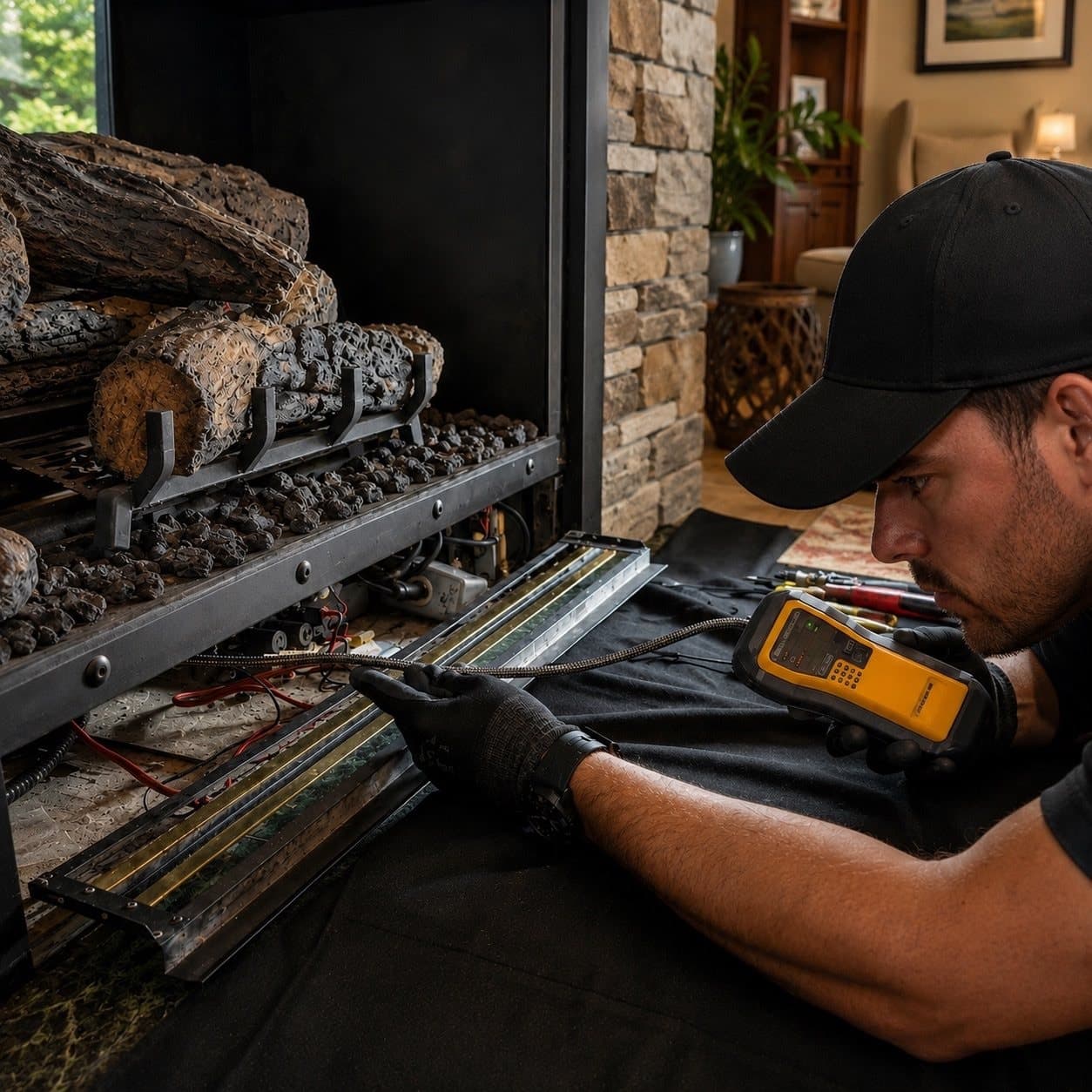
02Weak thermopile or thermocouple
- What you may notice
- Burner drops out after a few minutes; worse after the unit has been idle for months.
- How it’s confirmed
- Measuring millivolt output against the manufacturer’s specification.
03Dirty or misaligned pilot
- What you may notice
- Pilot flame small, yellow or not wrapping the sensor; spider webs and dust after the off-season.
- How it’s confirmed
- Cleaning and adjusting the pilot assembly, which requires disassembly.
04Spill switch or high-limit switch
- What you may notice
- Shutoff on a vented unit, sometimes with a smell of exhaust or on windy days.
- How it’s confirmed
- Finding why exhaust is spilling: a blocked or damaged vent, a loose termination cap, or a downdraft. See a blocked chimney.
05Oxygen depletion sensor (vent-free units)
- What you may notice
- A vent-free unit that shuts off after running in a closed room.
- How it’s confirmed
- Checking room size and ventilation requirements and cleaning or testing the ODS pilot.
06Gas supply or pressure
- What you may notice
- Flame shrinks before shutting off; worse when other gas appliances run; propane tank low.
- How it’s confirmed
- Checking supply and manifold pressure against the rating plate. See a weak flame.
Safe checks for homeowners
- Check the remote for thermostat or timer mode and try manual mode.
- Replace batteries in the remote, receiver and any battery backup pack.
- Watch whether the pilot stays lit when the burner goes off, and note how long it runs first.
- Note the weather: shutoffs on windy days point to the vent termination.
- For vent-free units, confirm the room is not closed off and follow the manual’s ventilation instructions.
- Test your carbon monoxide alarm.
Never bypass a safety switch
Spill switches, high-limit switches and oxygen depletion sensors shut the burner off because exhaust may be entering the room or the room air is getting poor. Jumping or removing them to keep the fireplace running removes that protection. Leave the unit off and have the cause found.
Red flags
- Shutoffs together with a smell of exhaust, headaches or a CO alarm.
- Soot on the glass or around the fireplace: see soot on the glass and a yellow flame.
- A loud bang when the burner relights.
- A vent-free unit shutting off repeatedly. Stop using it.
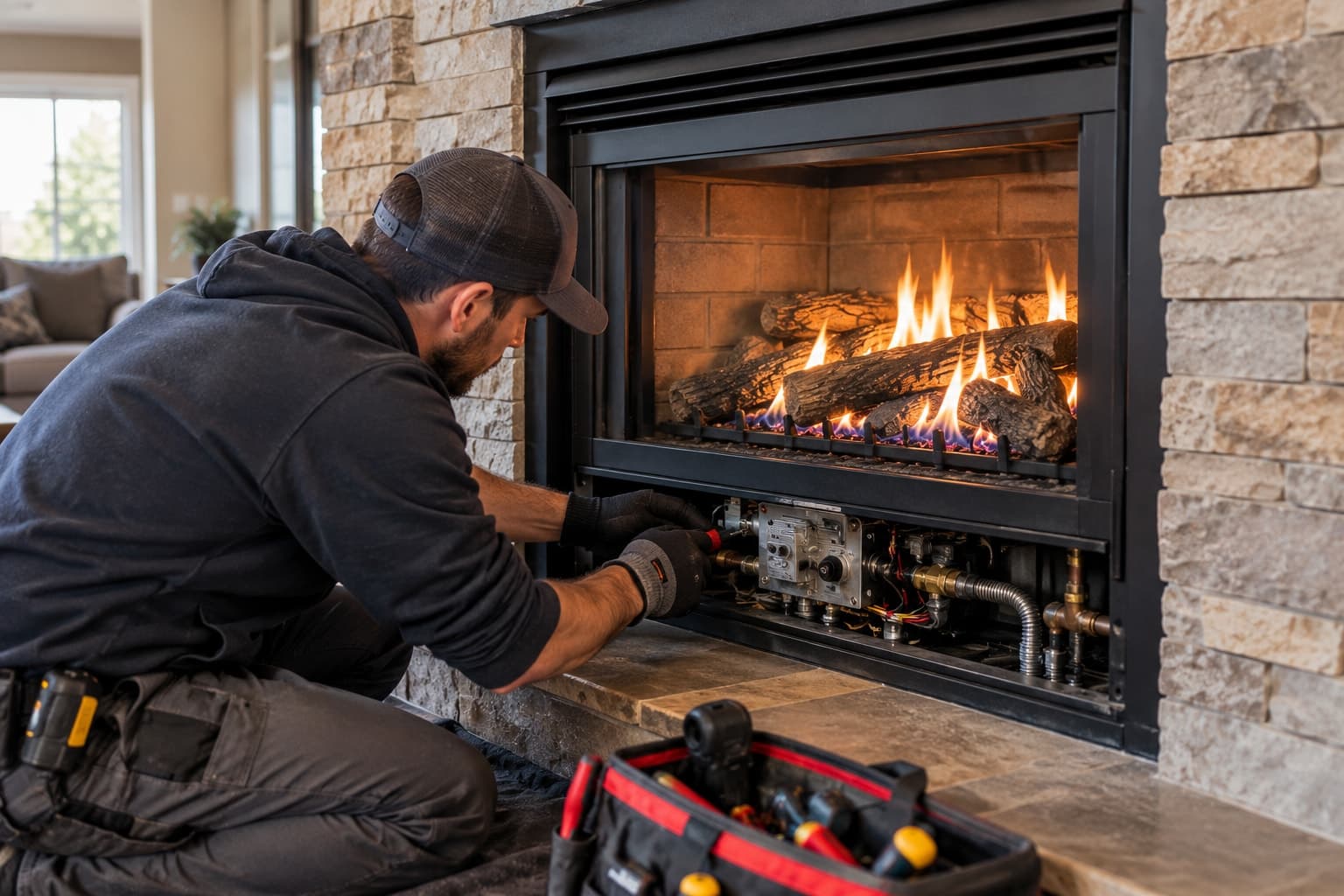
What a technician checks
Controls and settings
Remote mode, receiver, wall switch and any fault codes.
Pilot and sensors
Pilot flame, thermocouple or thermopile output, and flame sensor on electronic ignition.
Safety devices
Spill switch, high-limit and ODS are tested, and the reason they tripped is traced.
Venting and supply
The vent or chimney is checked for blockage and the termination for damage; gas pressure is measured.
Which fix for which shutoff
| Cause confirmed | Where it’s fixed |
|---|---|
| Thermostat, timer or remote setting | reset the setting; no visit needed |
| Weak flame sensor or dirty pilot | gas fireplace repair or a service visit |
| Spill switch tripping from a venting problem | a vent and chimney inspection before further use |
A shutoff caused by venting is a carbon monoxide question; see fireplace carbon monoxide. If the flame is also shrinking, compare with a low or weak flame.
References (2)
Facts and figures on this page come from these references.