The basic chain
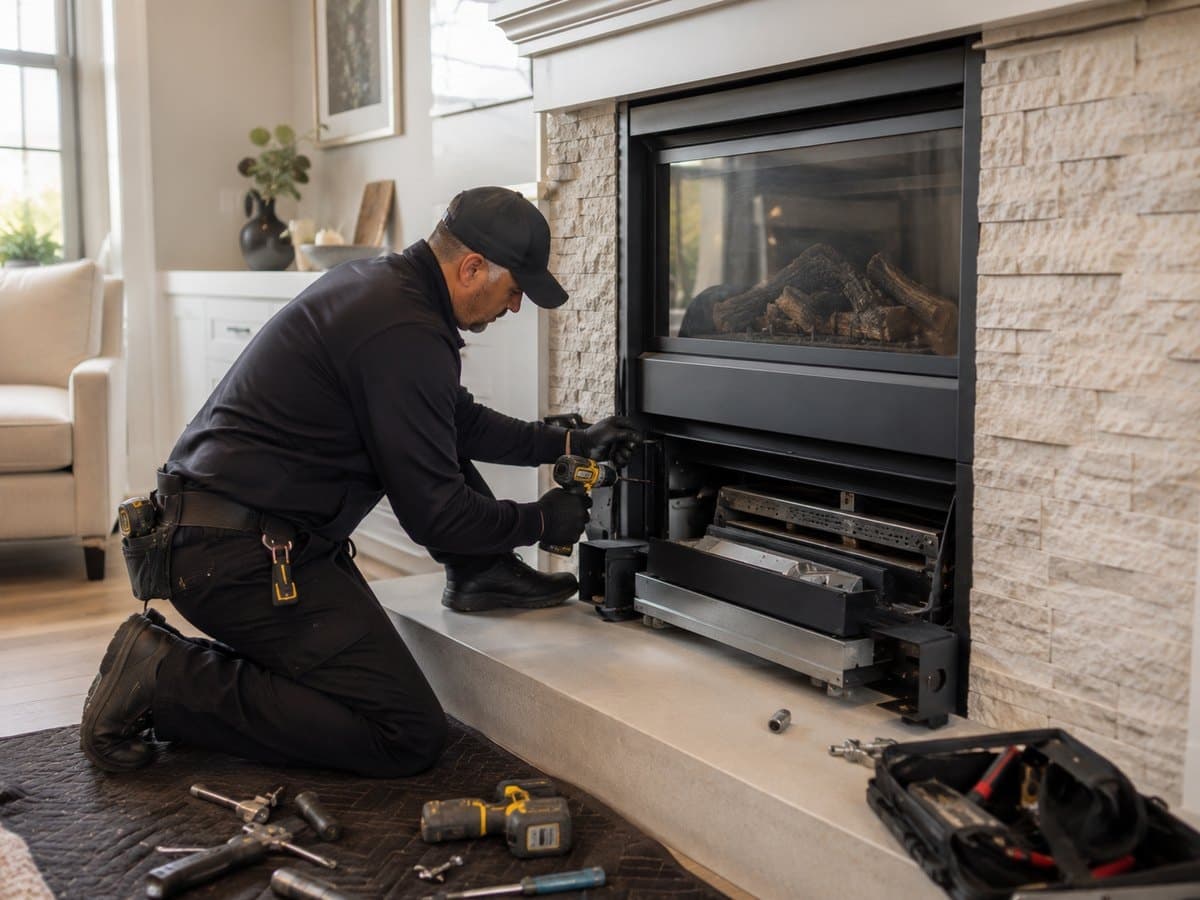
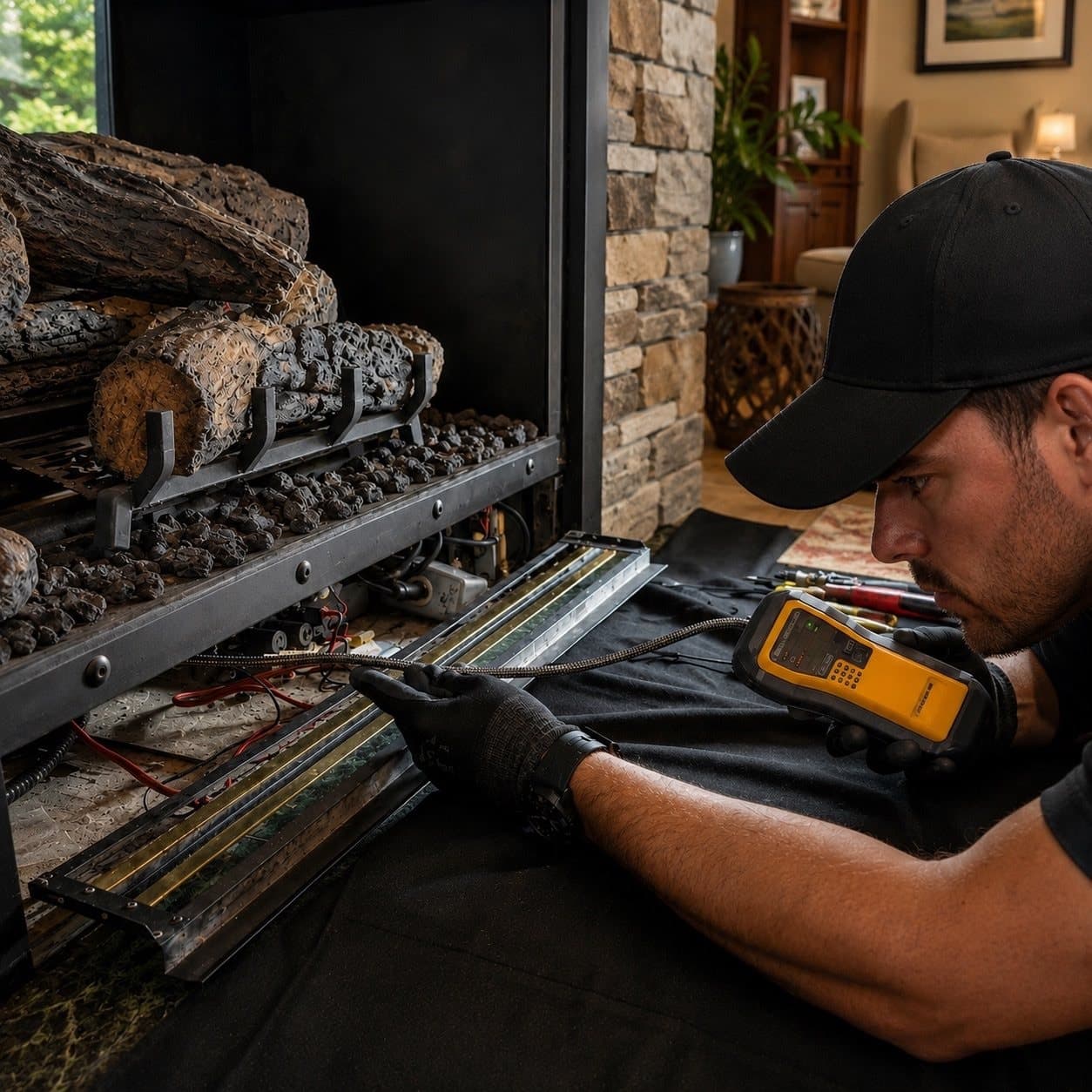
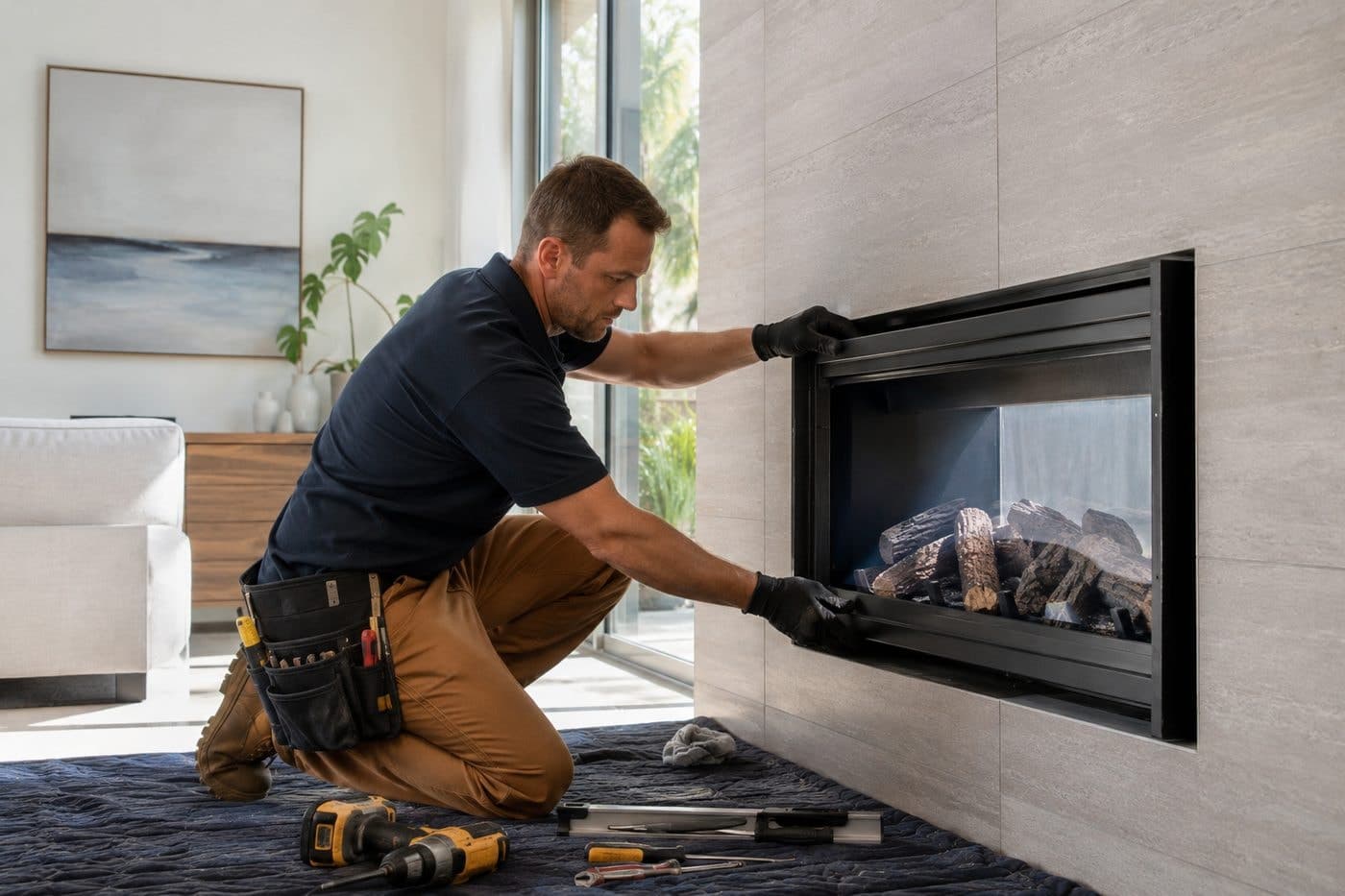
Every gas fireplace follows the same sequence. Gas arrives through a shutoff valve to the appliance’s control valve. An ignition system lights a pilot or lights the burner directly. A flame sensor proves the flame is there before the valve lets full gas flow to the burner. The burner and its logs or media shape the flame, and a vent (or, on vent-free units, the room) takes the exhaust. When something fails, it fails at one link in that chain, which is how troubleshooting works; see the gas fireplace problems guide.
Types of gas fireplace
| Type | Combustion air | Exhaust | Notes |
|---|---|---|---|
| Direct-vent | From outside, through the outer pipe of a coaxial vent | Outside, through the inner pipe | Sealed glass front; the most common modern type |
| Natural-vent (B-vent) | From the room | Up a vertical B-vent pipe by natural draft | Often has an open or louvered front; relies on draft |
| Vent-free (ventless) | From the room | Into the room | Oxygen depletion sensor required; room size and use limits apply |
| Gas logs in a wood fireplace | From the room | Up the existing chimney | Damper typically must be fixed open; mostly decorative |
| Gas insert | Usually outside (direct-vent) | Outside, through a liner in the old chimney | Converts a wood fireplace; see fireplace inserts |
The Florida Fuel Gas Code has specific sections for decorative appliances, vented fireplaces and unvented appliances, including requirements for gas logs installed in solid-fuel fireplaces (UpCodes, Florida Fuel Gas Code Chapter 6). Decorative gas log sets for wood-burning fireplaces are built to their own product standard (Rumford: ANSI Z21.60).
Ignition: standing pilot vs electronic
| Feature | Standing pilot (millivolt) | Electronic ignition (IPI) |
|---|---|---|
| Pilot | Burns continuously | Lit only when heat is called for |
| Power | The thermopile generates its own small voltage; works in a power outage | Needs house power or batteries (many have battery backup) |
| Flame proving | Thermocouple holds the pilot valve open; thermopile powers the main valve | Flame sensor confirms the pilot before the burner opens |
| Typical issues | Pilot going out, weak thermopile | Control module faults, igniter wear, lockouts |
Pilot
- Standing pilot (millivolt)
- Burns continuously
- Electronic ignition (IPI)
- Lit only when heat is called for
Power
- Standing pilot (millivolt)
- The thermopile generates its own small voltage; works in a power outage
- Electronic ignition (IPI)
- Needs house power or batteries (many have battery backup)
Flame proving
- Standing pilot (millivolt)
- Thermocouple holds the pilot valve open; thermopile powers the main valve
- Electronic ignition (IPI)
- Flame sensor confirms the pilot before the burner opens
Typical issues
- Standing pilot (millivolt)
- Pilot going out, weak thermopile
- Electronic ignition (IPI)
- Control module faults, igniter wear, lockouts
Built-in safety features
- Thermocouple or flame sensor: shuts off gas if the pilot or flame goes out.
- Spill switch on some vented units: shuts the burner off if exhaust spills back into the room.
- High-limit switch: shuts off if the unit overheats.
- Oxygen depletion sensor (ODS) on vent-free units: shuts off gas if room oxygen drops.
- Sealed glass and gasket on direct-vent units: keep combustion separate from room air.
Never bypass a safety device
If a safety switch keeps shutting a gas fireplace off, it is responding to a problem. Leave the unit off and have it serviced. See a gas fireplace that turns off by itself. If you smell gas, leave the home and call from outside.
How to tell which one you have
- Find the rating plate, usually behind the lower grille or on a pull-out tag. It lists the model, fuel type and whether the unit is vented or vent-free.
- A sealed glass front with a vent cap on an outside wall or roof is almost always direct-vent.
- Logs sitting in a brick firebox with an open front and a chimney above are a gas log set.
- A unit with no vent at all is vent-free; the label will say so.
Annual service covers the burner, ignition, safety controls, glass and venting; see the gas fireplace maintenance guide. Repairs are under gas fireplace repair, routine visits under gas fireplace service, and new units under gas fireplace installation; gas-line work is a separate job from appliance service, and we carry that out too.
When one link in the chain fails, the symptom pages narrow it down: a gas fireplace that won’t light, a pilot that won’t stay lit and a low or weak flame. For choosing between fuels, gas vs wood fireplaces compares them. There are no city-specific gas fireplace pages; gas work is arranged through the service pages above across the service area.
References (3)
Facts and figures on this page come from these references.