Why a chimney needs flashing at all
A chimney and a roof are separate structures that meet at a hole in the roof deck. They expand, contract and settle at different rates, so they can’t simply be glued together. Flashing solves that with overlapping layers of metal that let the two move while shedding water in the right direction: from the chimney onto the roof, never behind it.
Masonry chimney and fireplace, cutaway
- 1Chimney cap. Metal lid with mesh sides over the flue opening. Keeps rain, debris and animals out.
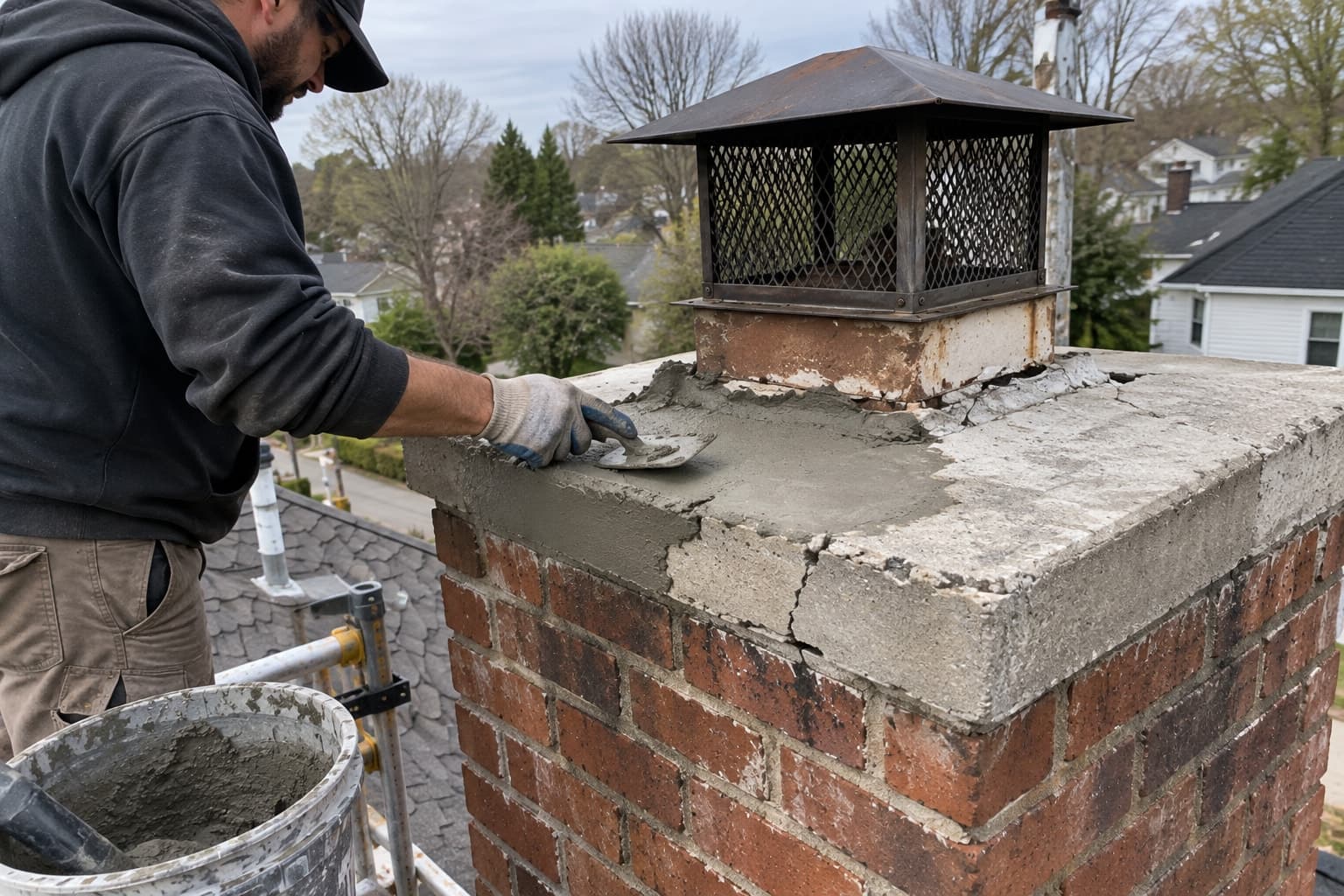
- 2Crown. The concrete or mortar top of the masonry, sloped to shed water away from the flue.
- 3Flue liner. Clay tile or metal lining that carries smoke up and protects the masonry from heat.
- 4Flashing. Metal that seals the joint between the chimney and the roof.
- 5Brick & mortar. The chimney structure. Mortar joints and brick faces absorb water when they wear.
- 6Smoke chamber. The sloped transition that funnels smoke from the firebox into the flue.
- 7Damper. Metal plate at the throat (or a sealing lid on top) that closes the flue when not in use.
- 8Firebox. Where the fire burns. Firebrick laid in heat-resistant mortar.
- 9Hearth. Non-combustible floor extension in front of the fireplace opening.
The pieces of a flashing system
| Piece | Where it goes | What it does |
|---|---|---|
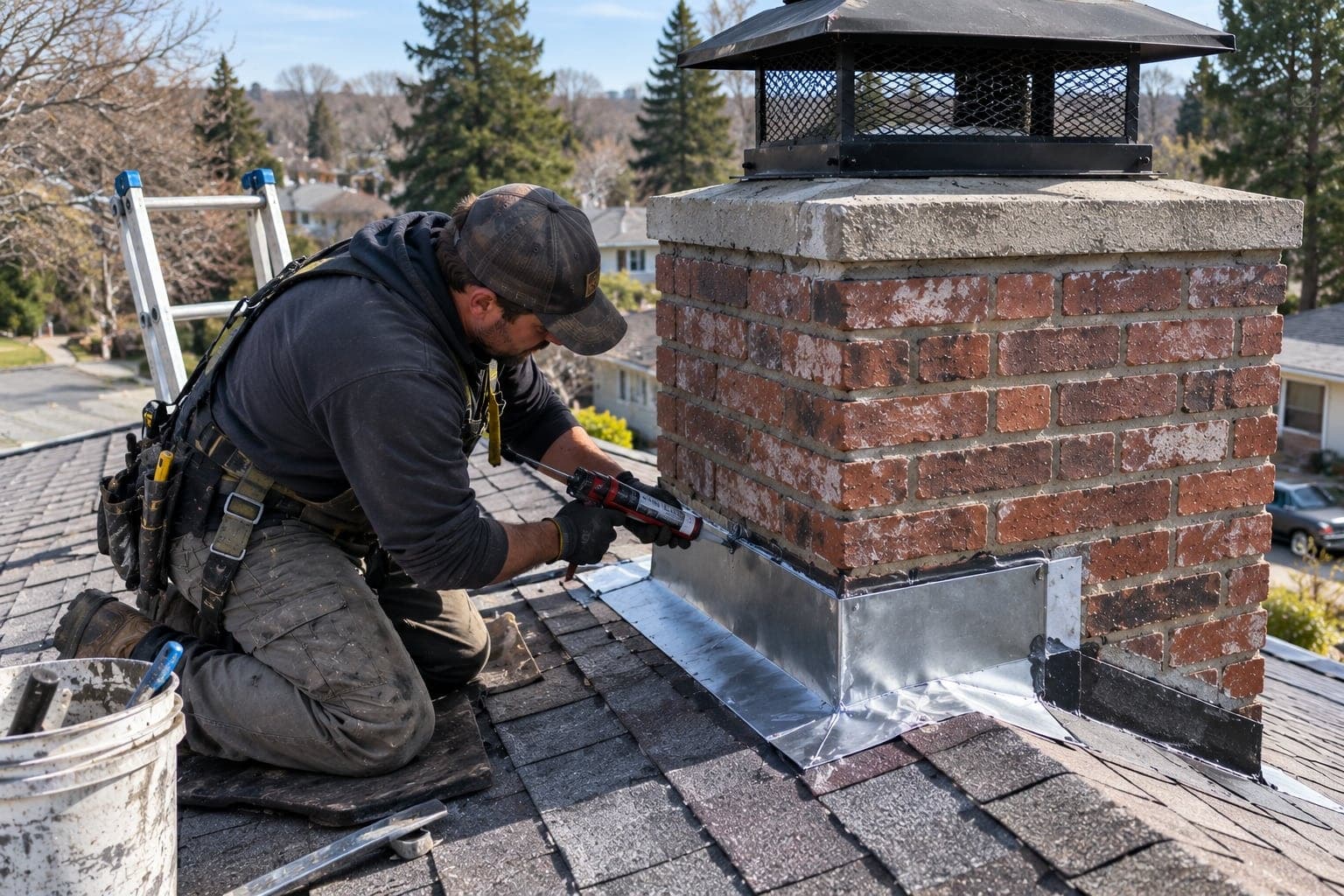
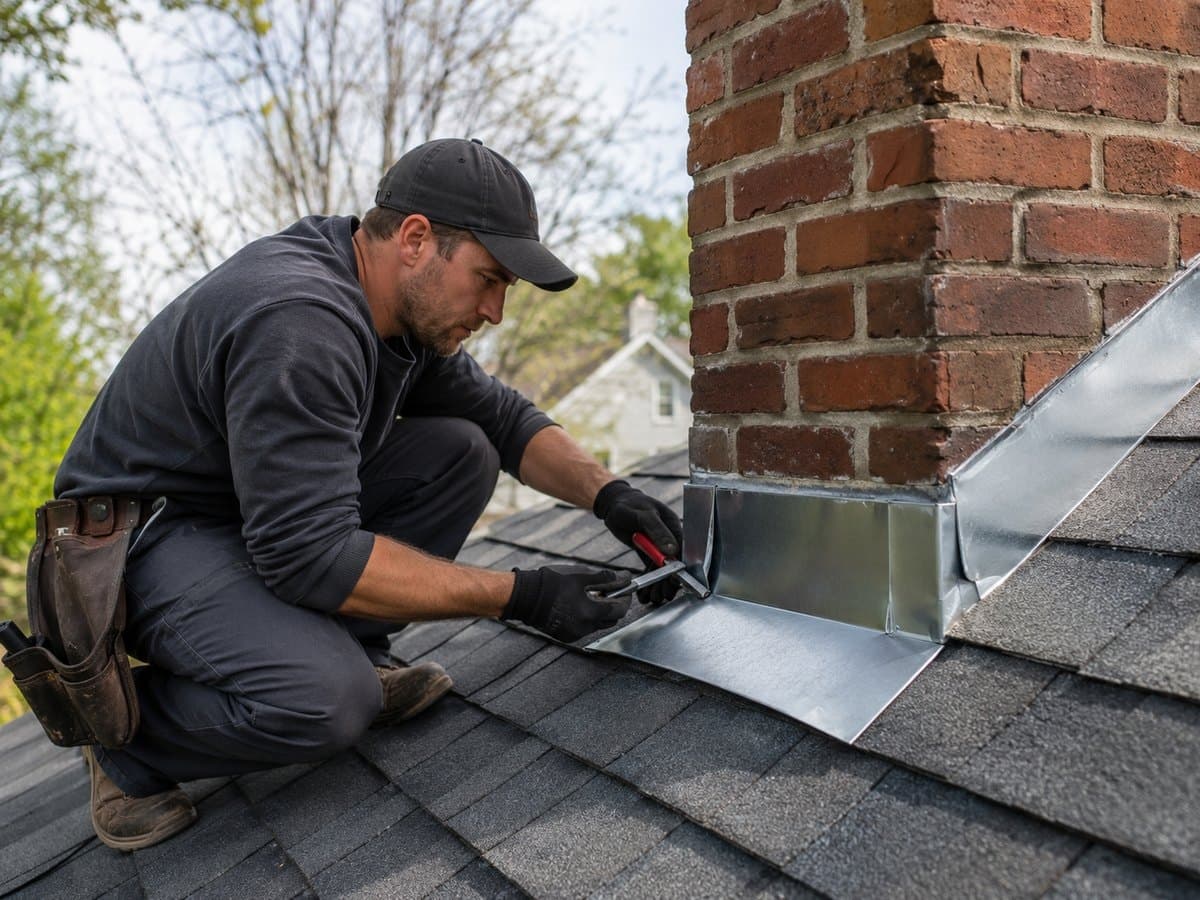
| Step flashing | Along the sides, one L-shaped piece woven under each course of shingles | Carries water that runs along the side of the chimney back onto the roof surface |
| Counterflashing | Set into a mortar joint (reglet) of the brick, lapping down over the step flashing | Covers the top edge of the step flashing so water running down the brick can’t get behind it |
| Apron (front) flashing | Across the downhill face of the chimney | One continuous piece that sheds water onto the shingles below |
| Back pan or cricket | Across the uphill face | Diverts water and debris around the chimney instead of letting it pool |
| Underlayment and ice-and-water membrane | Under the metal, against the roof deck | A secondary barrier if water gets past the metal |
Two details separate good flashing from poor flashing. Counterflashing should be let into the mortar joints, not screwed flat to the brick face and sealed with caulk. And a chimney wider than 30 inches, measured across the slope, needs a cricket unless it sits at the ridge (Florida Building Code, Residential, Chapter 10).
Flashing materials
| Material | Strengths | Trade-offs |
|---|---|---|
| Aluminum | Light, easy to form, common on shingle roofs | Reacts with fresh mortar and concrete unless coated; thinner gauges dent |
| Galvanized steel | Inexpensive and stiff | Rusts once the coating wears, faster in Florida humidity |
| Pre-painted steel or aluminum | Matches roof color | Paint weathers; cut edges can corrode |
| Copper | Very long life, easy to solder | Higher material cost; can stain nearby surfaces green |
| Lead or lead-coated copper | Soft enough to dress over tile profiles | Heavier and costlier; used mostly on tile roofs |
| Stainless steel | Corrosion resistant | Harder to form; less common on residential chimneys |
How the roof type changes the details
| Feature | Shingle roofs | Tile and metal roofs |
|---|---|---|
| Side flashing | Step flashing woven with each shingle course | Pan or channel flashing under the tile, or a formed flashing under metal panels |
| Top edge | Counterflashing into the mortar joint | Counterflashing plus a flexible or dressed flashing over the tile profile |
| Replacement | Usually renewed during every reroof | Often needs tiles lifted and reset carefully; coordinate with the roofer |
| Common failure | Caulk-only counterflashing, reused step flashing | Broken tiles at the chimney, mortar-set tiles cracking, lifted metal |
Side flashing
- Shingle roofs
- Step flashing woven with each shingle course
- Tile and metal roofs
- Pan or channel flashing under the tile, or a formed flashing under metal panels
Top edge
- Shingle roofs
- Counterflashing into the mortar joint
- Tile and metal roofs
- Counterflashing plus a flexible or dressed flashing over the tile profile
Replacement
- Shingle roofs
- Usually renewed during every reroof
- Tile and metal roofs
- Often needs tiles lifted and reset carefully; coordinate with the roofer
Common failure
- Shingle roofs
- Caulk-only counterflashing, reused step flashing
- Tile and metal roofs
- Broken tiles at the chimney, mortar-set tiles cracking, lifted metal
Tile roofs are common across Central Florida, and flashing work on them is slower because tiles crack underfoot and have to be lifted and reset. The reroofing guide explains how to sequence chimney and roof work.
Framed chases are flashed too
A factory-built chimney inside a framed chase meets the roof the same way a wall does. The chase is flashed with step flashing and the siding or stucco laps over it, rather than counterflashing set into brick. At the top, the chase cover does the job the crown does on a masonry chimney; see chimney cap vs chase cover.
Signs flashing needs attention
- Stains on the ceiling, wall or attic framing right beside the chimney.
- Metal lifting away from the brick or chase, visible from the ground with binoculars.
- A thick layer of roofing cement or caulk over the joint: evidence of earlier patching.
- Rust streaks on galvanized flashing, or broken tiles around the chimney.
- Leaves collecting on the uphill side of a wide chimney with no cricket.
If you are already seeing water, the symptom guide on leaking chimney flashing walks through how to tell flashing from other entry points. Rebuilding the system is covered under chimney flashing repair.
Who installs which piece during a new roof is covered in the reroofing guide, and why chimneys leak in Florida storms explains why flashing leaks often show up only in wind-driven rain. If a stain has already appeared beside the chimney, compare it with water stains around a chimney. For how flashing work is handled on older brick chimneys in one town, see chimney repair for Sanford homes.
References (2)
Facts and figures on this page come from these references.