Short answer
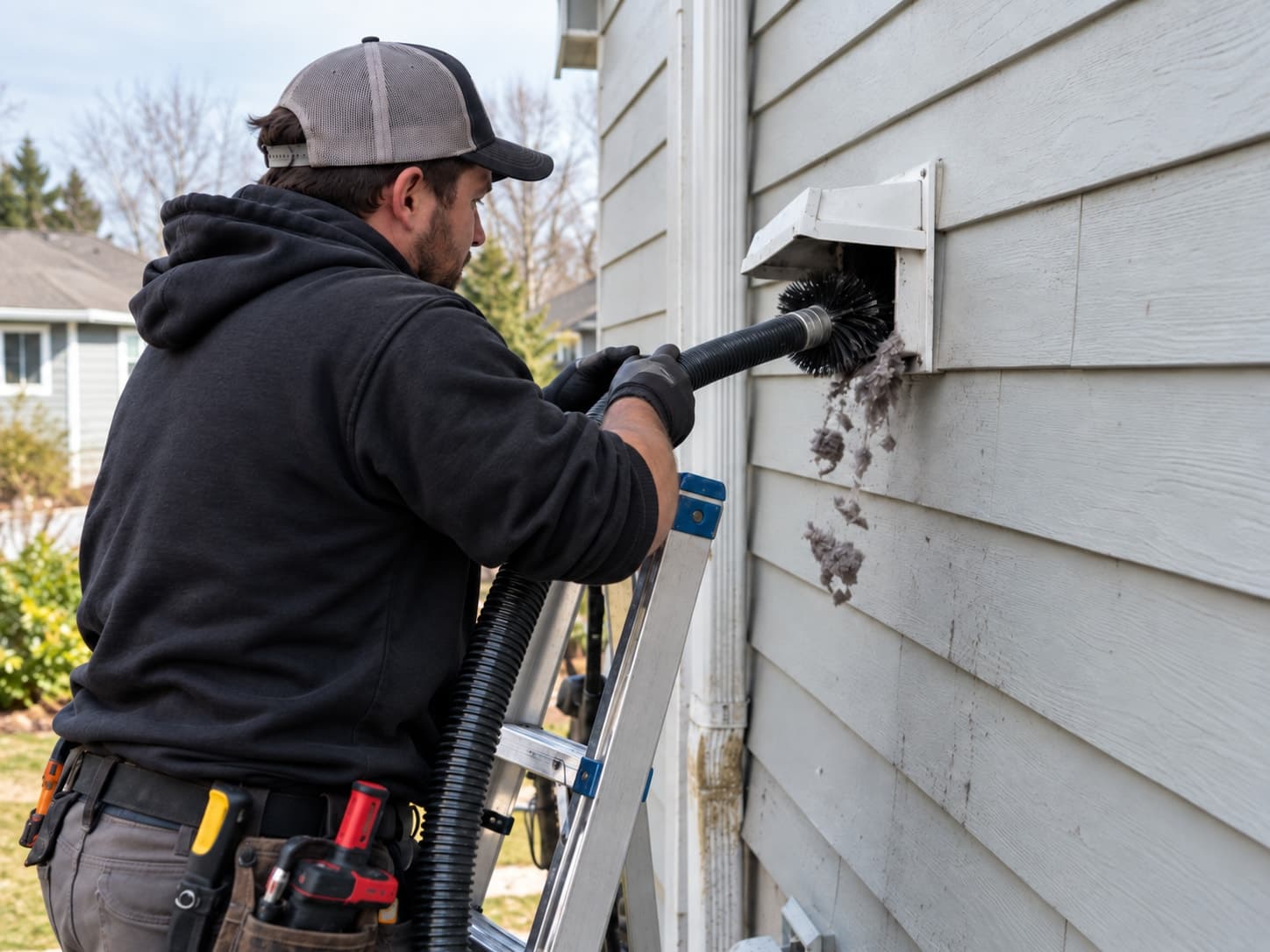
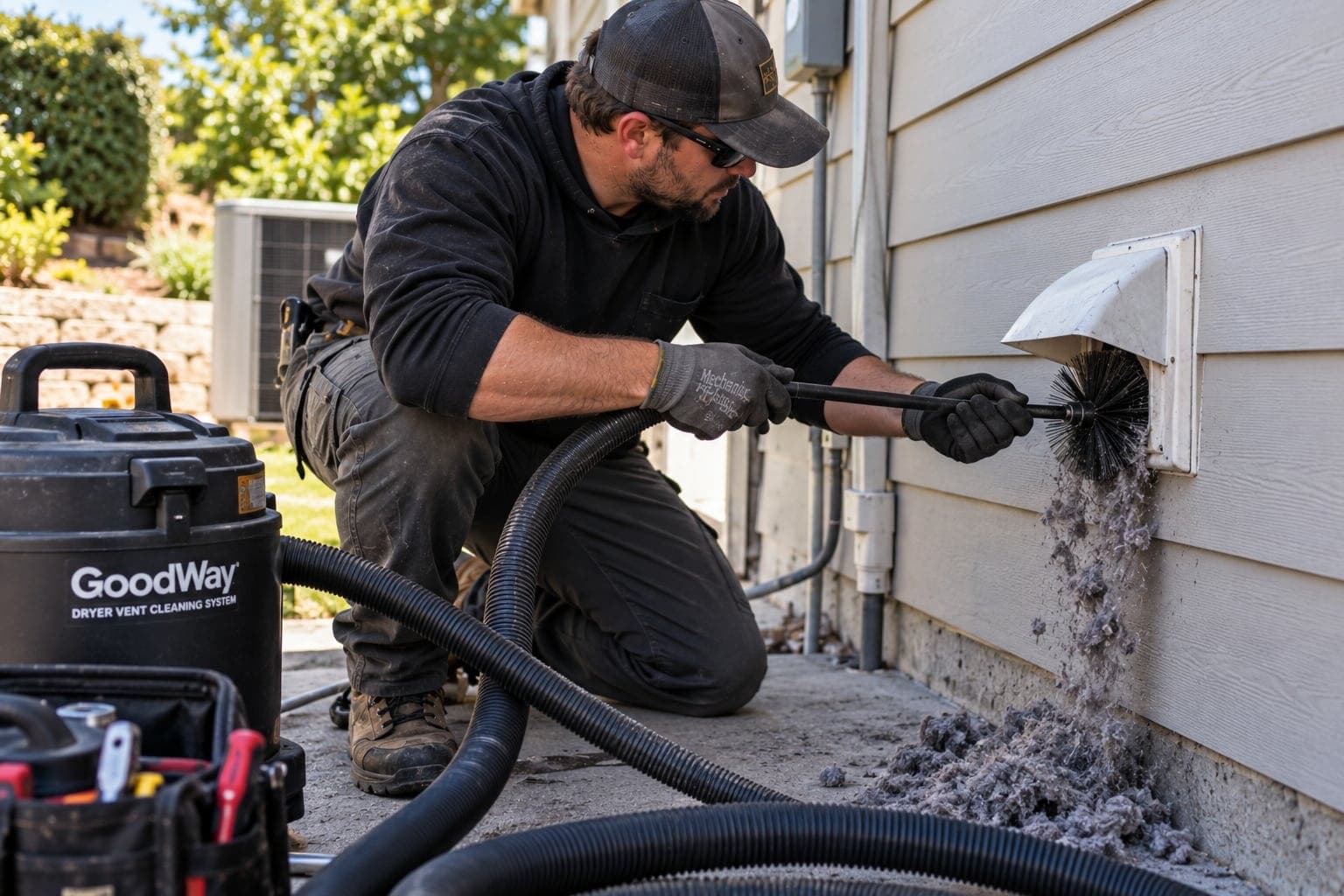
Rental dryers run far more loads than a family home, and nobody living there notices the early signs, so vents clog faster. Start each property with a cleaning and an airflow reading, set the next visit from how fast lint builds up, and give crews a short turnover check: lint screen, drying time, the hose behind the dryer and the outside hood.
Why rental vents clog faster
- Volume: towels and bedding shed a lot of lint, and turnovers mean several heavy loads in a short window.
- Nobody watches the dryer: guests don’t know how long it normally takes, and crews are focused on the clock.
- Lint screens get skipped between loads.
- Layouts: many rentals around Kissimmee, Davenport and the attractions corridor are townhomes and multi-story homes with long or roof-terminated runs; see clogged roof dryer vents.
Setting a cleaning interval
There isn’t a single right interval, because it depends on loads, vent length and termination. A practical approach is to have each property cleaned and its airflow measured, then set the next visit based on how much lint came out and how quickly airflow dropped. Heavily used rentals often need cleaning more often than the once-a-year guidance for typical homes. The dryer vent cleaning frequency guide explains the factors, and fire-safety agencies stress cleaning the lint filter before every load (USFA).
| Profile | Signs | Approach |
|---|---|---|
| Short wall run, moderate bookings | Normal drying times; little lint at the hood | Standard interval; turnover checks |
| High occupancy or large homes | Several loads every turnover | More frequent cleaning; airflow check each visit |
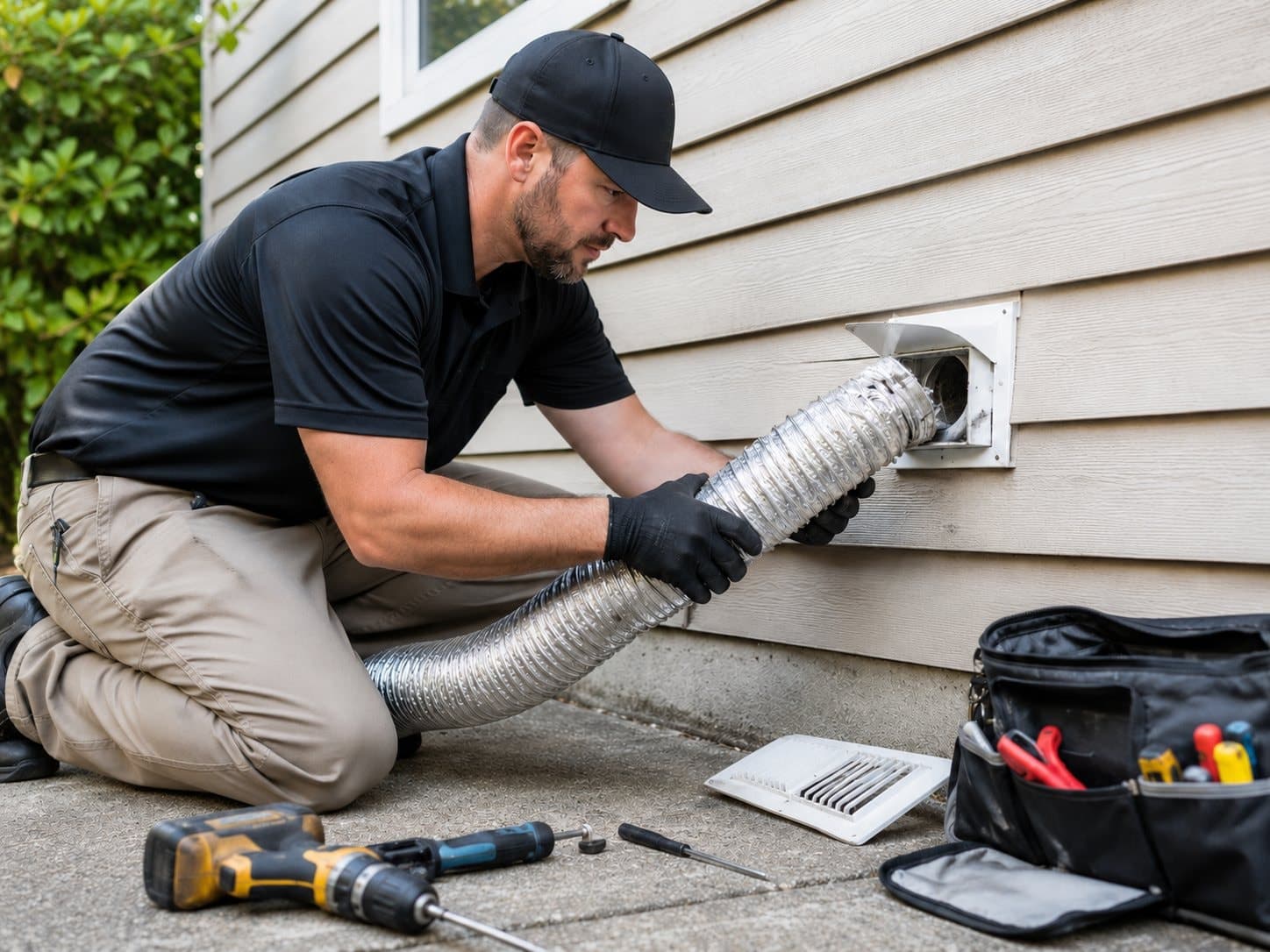
| Long or roof-terminated run | Slow drying soon after cleaning | Shorter interval; consider a dryer-rated roof cap or rerouting |
| Booster fan installed | Alarm or indicator light on the fan | Check the fan every visit; see booster fan problems |
Turnover checklist for cleaning crews
- Clean the lint screen before and after each load.
- Note the drying time for a standard load of towels; report if it grows.
- Check that the dryer isn’t too hot to touch on top during a cycle.
- Glance behind the dryer for a crushed or disconnected hose and lint on the floor.
- Once a month, check the outside hood for lint and a flap that opens and closes; dryer vent cover types shows what a good hood looks like.
- Report any burning smell right away and tag the dryer out of use.
A sign by the dryer helps
A short note asking guests to clean the lint screen before each load, and to report long drying times, costs nothing and catches problems between visits.
What to record for each property
- Vent route and termination (wall or roof), approximate length and number of elbows.
- Date of each cleaning and the airflow reading before and after.
- Any repairs: crushed hoses replaced, hoods replaced, disconnected joints resealed.
- Access notes: lockbox, gate codes, HOA rules on ladders and roof access.
Warning signs between visits
- Guest complaints about loads taking two cycles: see a dryer taking too long.
- A dryer that stops mid-cycle: see a dryer that overheats.
- A burning smell: see a dryer that smells like burning.
Scheduling across several properties, access arrangements and per-property records are part of our rental property dryer vent cleaning service.
The code side matters for older rentals: the Florida dryer vent code explains length limits and roof caps, and booster fans for long runs covers the rest. For rentals near the attractions, dryer vent cleaning in Kissimmee describes homes and vacation rentals in that area.
References (2)
Facts and figures on this page come from these references.