St. Cloud has grown quickly: the median home was built in 2003, 56.6% of homes date from 2000 or later and 71.9% are single-family detached. That’s the backdrop for most dryer vent calls here.
Why drying slows down
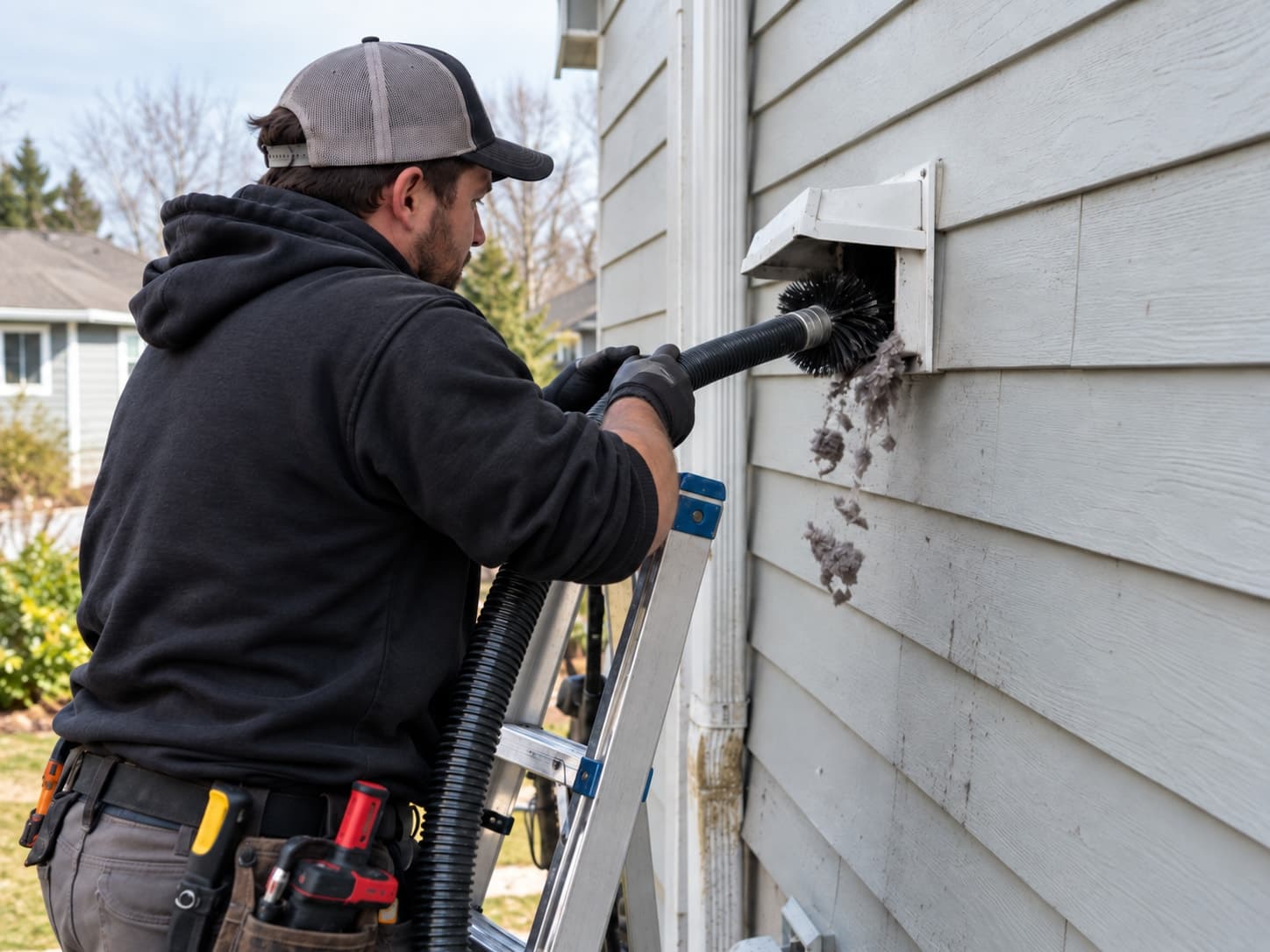
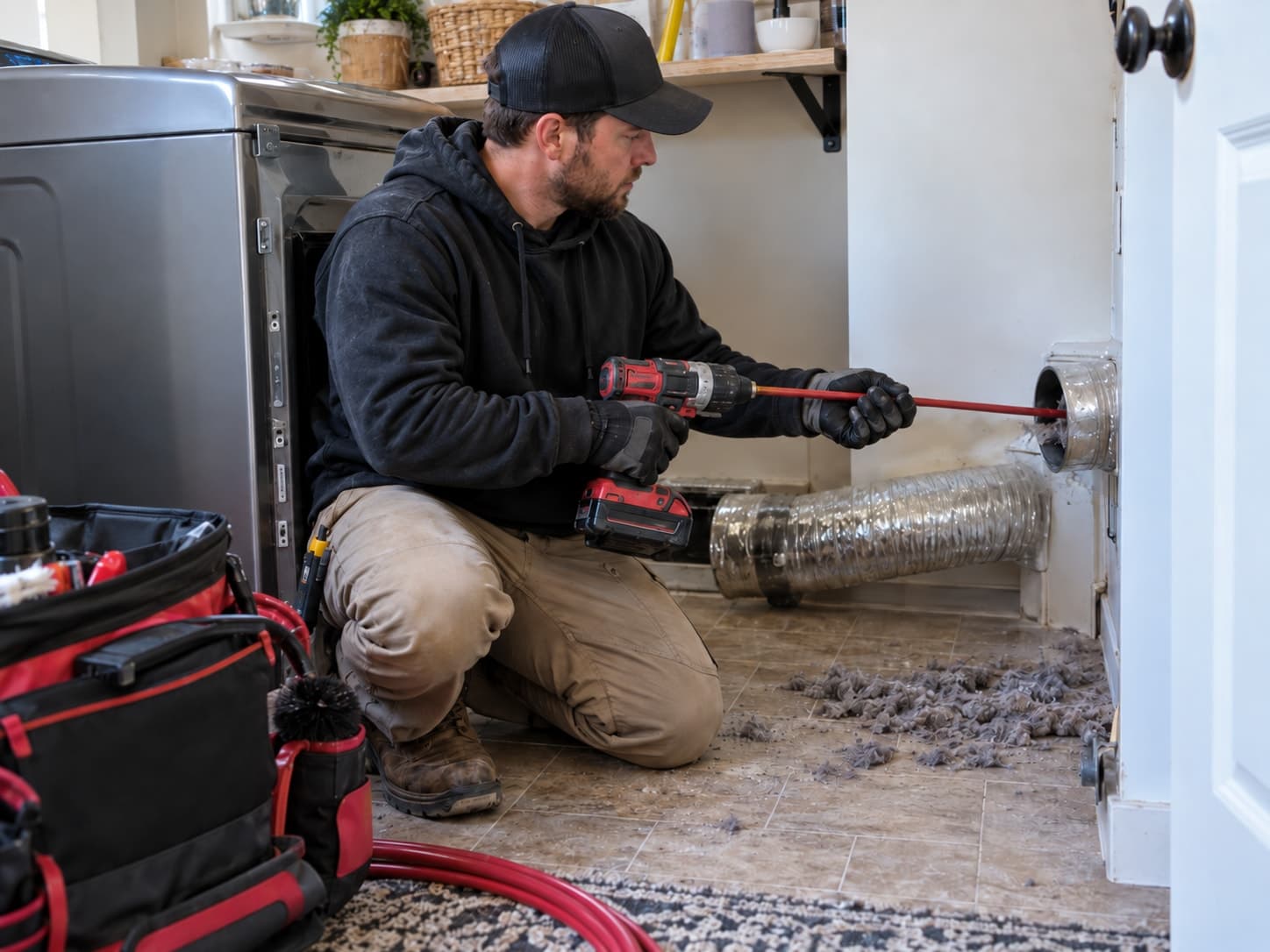
Every load pushes hot, wet air and fine lint down the duct. The screen catches most of the lint, not all of it, and the rest settles along the walls, gathers at elbows and packs behind the outside flap. As the airflow drops, clothes stay damp, cycles get longer and the dryer runs hotter. Clothes still damp after a full cycle is the classic sign; what slow drying usually means walks through the checks you can do first.
- Heat: a hot dryer cabinet or laundry room (an overheating dryer)
- Airflow: a flap that hardly lifts outside (little or no air leaving the vent)
- Lint: fluff on the hood, the siding or the roof around the cap
- Smell: a scorched odor means stop the dryer (a burning smell from the dryer)
What we see in St. Cloud
In newer communities such as Tohoqua and Stevens Plantation, laundry rooms are often inside the plan or upstairs, so the vent usually runs through the attic to the roof or across to a side wall. In the older part of the city, closer to downtown, garage laundry with a short wall run is more common.
What gets cleaned, and what gets checked
| Part | Cleaned | Checked |
|---|---|---|
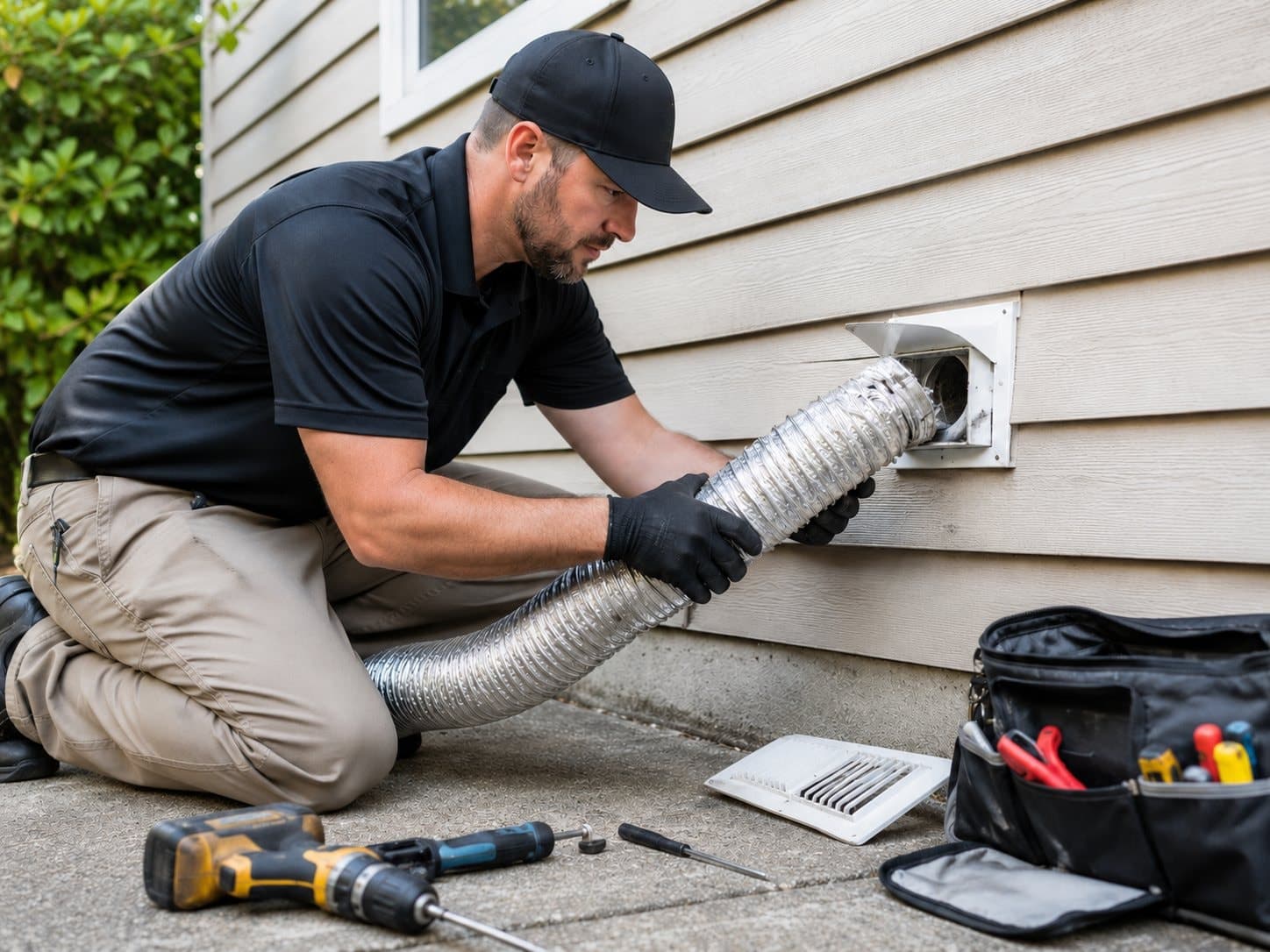
| Transition duct | Lint cleared | Kinks, crushing, foil or vinyl hose |
| Duct run and elbows | Brushed and vacuumed end to end | Resistance that suggests a crushed or loose section |
| Termination hood or roof cap | Lint cleared from the flap or cap | Damper opens and closes; no screen |
| Dryer outlet and lint-trap housing | Vacuumed | Lint escaping around the screen |
| Airflow | Read before and after | How much the cleaning restored |
Screens at a dryer exit aren’t allowed under the Florida code because they trap lint; see Florida’s dryer vent rules.
Roof caps, tile roofs and long runs
A long run from an interior laundry to the roof collects lint along the climb and under the cap, and the cap often sits where nobody sees it. Lint on the roof around the cap is the giveaway. The inside of the run is cleaned from the laundry, and the cap is opened from the roof when it’s safe; tile roofs need care underfoot. More on roof vent cleaning.
Either way, the backdraft damper has to open with the airflow and close when the dryer stops. If it doesn’t, vent cover replacement is the fix.
Cleaning vs. repair, blockage and inspection
| Feature | Dryer vent cleaning | Related services |
|---|---|---|
| Lint | Normal buildup along the duct and at the exit | Packed or escaped lint: removal of packed or escaped lint |
| Airflow | Restricted by lint | Stopped by a nest or plug: clearing a blocked or nested vent |
| The duct | Intact, just dirty | Crushed, loose or foil: repairing a crushed or loose duct |
| The route | Within the code’s length limit | Too long or too bent: moving the vent to a shorter route |
| The question | “Is it clean?” | “Is it right?”: a dryer vent inspection |
Lint
- Dryer vent cleaning
- Normal buildup along the duct and at the exit
- Related services
- Packed or escaped lint: removal of packed or escaped lint
Airflow
- Dryer vent cleaning
- Restricted by lint
- Related services
- Stopped by a nest or plug: clearing a blocked or nested vent
The duct
- Dryer vent cleaning
- Intact, just dirty
- Related services
- Crushed, loose or foil: repairing a crushed or loose duct
The route
- Dryer vent cleaning
- Within the code’s length limit
- Related services
- Too long or too bent: moving the vent to a shorter route
The question
- Dryer vent cleaning
- “Is it clean?”
- Related services
- “Is it right?”: a dryer vent inspection
Homes, rentals and timing
| Household | Typical interval |
|---|---|
| Small household, short wall run | About once a year, or longer if airflow holds |
| Large family, pets or daily loads | More often than once a year |
| Long attic run or roof exit | Sooner than a short wall vent |
| Rental or vacation home | By occupancy, not the calendar (cleaning scheduled around tenants and guests) |
Rental homes and condos follow the same logic, with laundry volume set by tenants or guests. The full schedule is in how often a vent needs cleaning, and whether it’s the vent or the dryer helps when you’re not sure the vent is the cause.
Dryer vent service around St. Cloud
- Anywhere in St. Cloud, including Stevens Plantation: mention where the vent exits and the dryer type
- Nearby: vent cleaning for Kissimmee homes, dryer vents in Orlando and Belle Isle dryer duct cleaning
- Everything else for the house: everything we handle in St. Cloud
More detail: how dryer vent cleaning works, plus which duct materials are allowed.
References (3)
Where the St. Cloud numbers and code references come from.