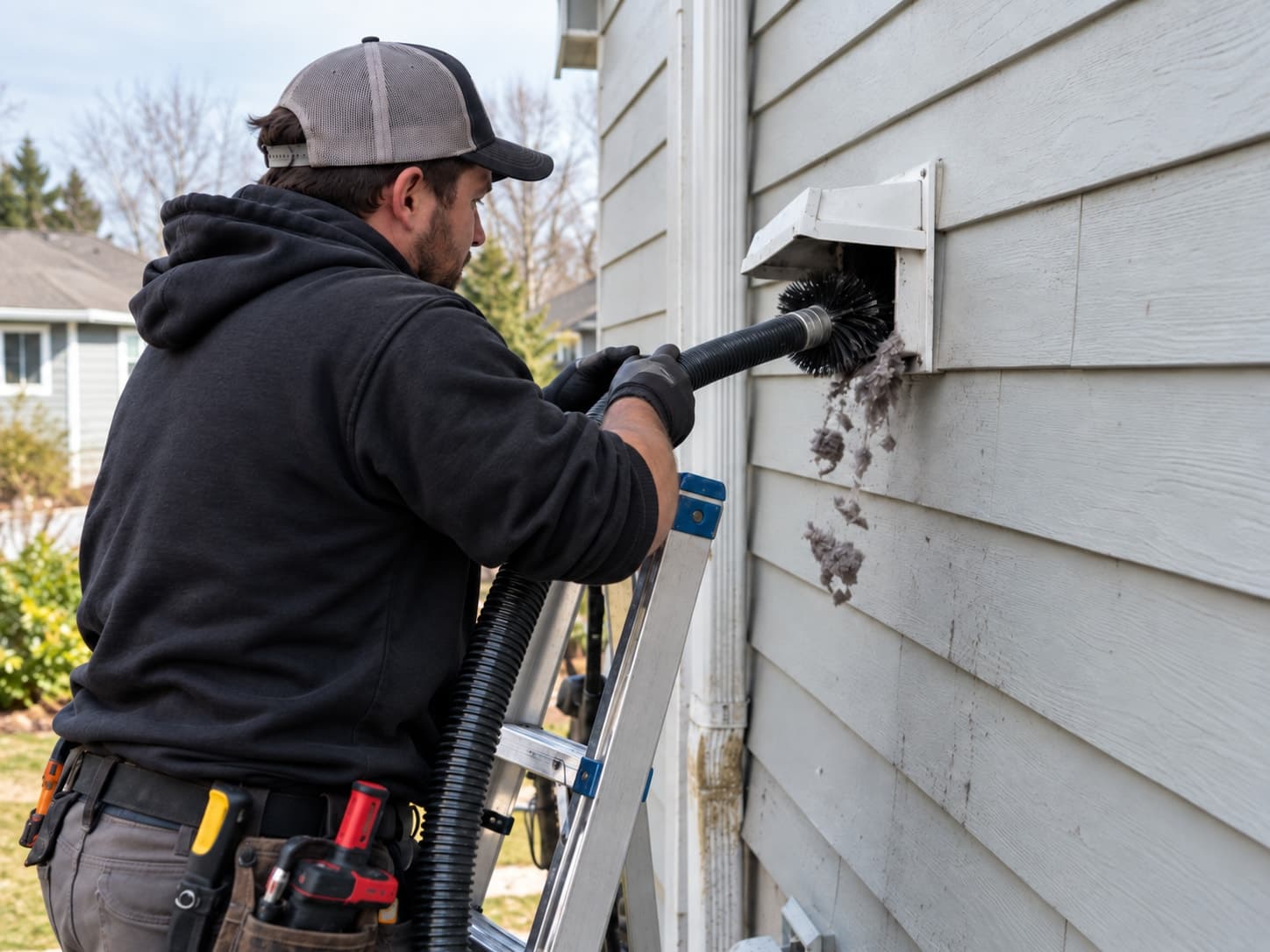
Edgewood is a small city whose median home was built in 1978, with 57% of homes predating 1980 and 61.4% single-family detached. Most dryer vents here are roughly as old as the houses. That decides where the lint usually collects.
Why drying slows down
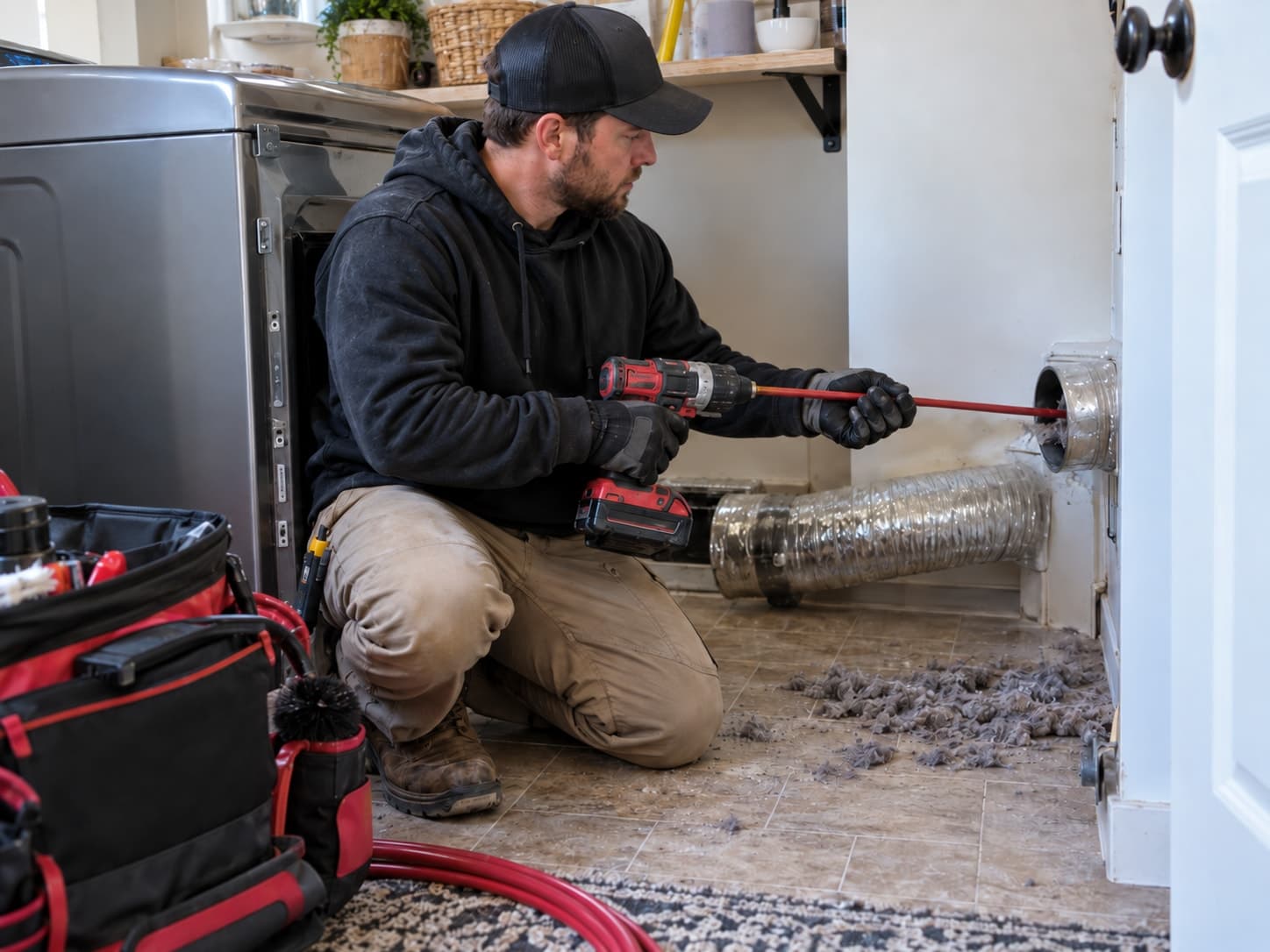
Every load pushes hot, wet air and fine lint down the duct. The screen catches most of the lint, not all of it, and the rest settles along the walls, gathers at elbows and packs behind the outside flap. As the airflow drops, clothes stay damp, cycles get longer and the dryer runs hotter. Clothes still damp after a full cycle is the classic sign; clothes that stay damp after a full cycle walks through the checks you can do first.
- Heat: a hot dryer cabinet or laundry room (a dryer that shuts off mid-cycle)
- Airflow: a flap that hardly lifts outside (what low airflow points to)
- Lint: fluff on the hood, the siding or the roof around the cap
- Smell: a scorched odor means stop the dryer (a burning smell from the dryer)
What we see in Edgewood
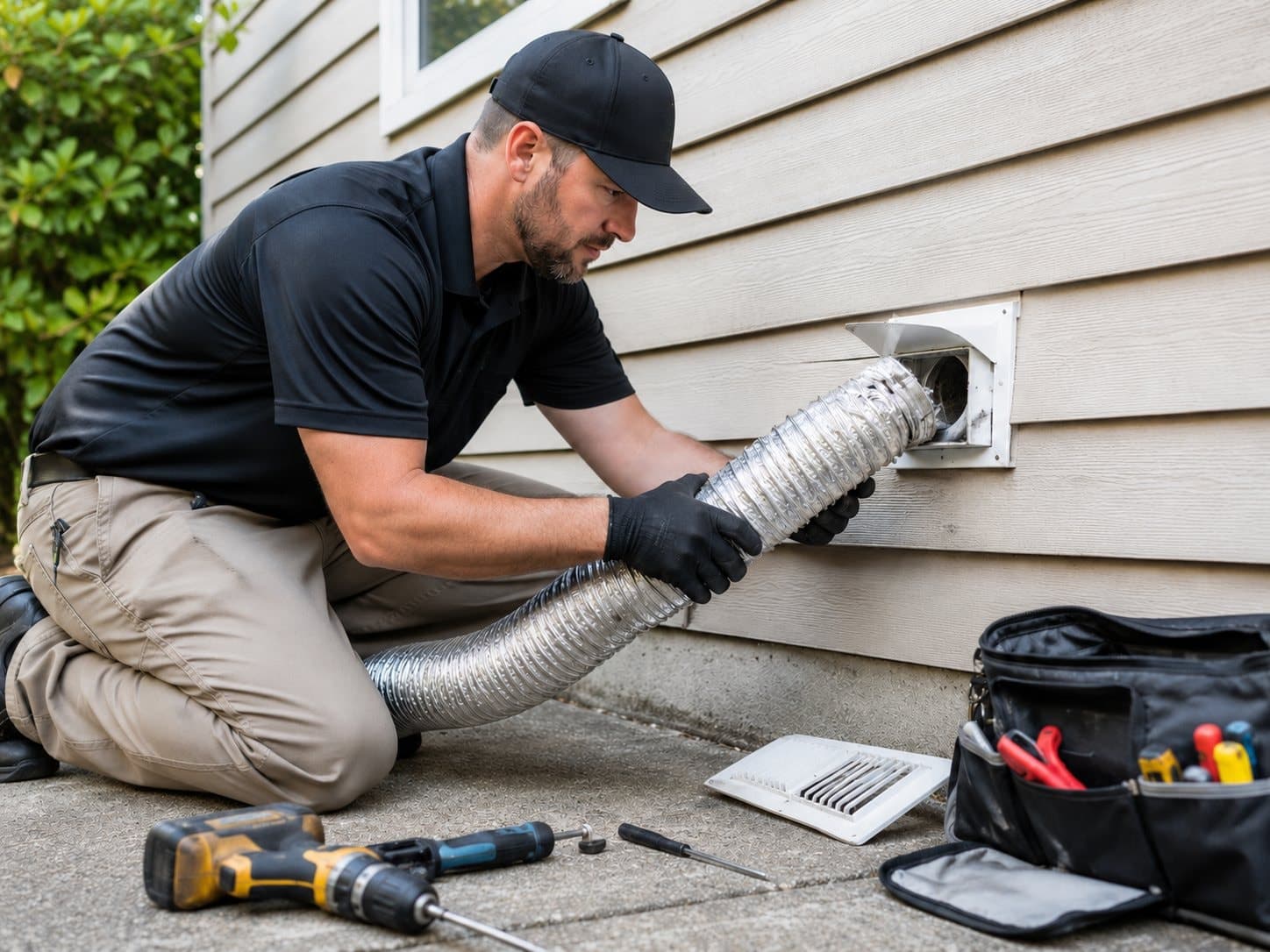
In neighborhoods such as Lake Jessamine Estates and Granada Woods, laundry is typically in a garage or utility room with a short run to a side wall. After this many years, the duct itself is often fine, but the connector behind the dryer has usually been swapped at least once, and not always for the right kind.
From the dryer to the outside
A dryer vent has three parts, and lint collects in all of them. Behind the dryer is the transition duct, the short connector that gets pushed against the wall and crushed. Inside the house is the duct run itself, through a wall, a floor or the attic, with elbows where the air slows and lint drops out. Outside is the termination, a wall hood or roof cap with a backdraft damper that should open with the airflow and close when the dryer stops.
Cleaning covers all three, with airflow read before and after at the same point so the numbers can be compared honestly. Florida’s code also sets limits on the duct itself, summarized in Florida’s dryer vent rules.
Where your vent ends matters
A first-floor laundry on an outside wall usually has a short run to a wall hood; lint collects behind the flap, and a stuck exterior flap is a common result. An upstairs or interior laundry more often climbs through the attic to a roof cap, where lint slows down and packs under the cap. Roof ends are cleared from the roof when it’s safe to get up there, and tile needs care underfoot.
For roof-specific work, see cleaning a vent that exits through the roof; for a broken, screened or wrong hood, a new vent cover with a working damper.
When the airflow doesn’t come back
- Good recovery after cleaning: lint was the restriction; nothing more is needed
- Weak reading, duct clear: a crushed section or loose joint (a duct that has come apart), handled by fixing the duct itself
- Lint in the attic or laundry room: the heavy lint removal service
- Almost no air at all, or a nest: removing a blockage from the duct
- Refills within months: often a run that’s too long (why some vents refill quickly); inspection and airflow testing measures it against the code, and a shorter, straighter vent route shortens it
Keeping the vent clear between cleanings
- Empty the lint screen before every load
- Leave room behind the dryer so the connector isn’t crushed
- Check that the outside flap opens when the dryer runs
- Book a cleaning when drying times start to creep up, or about once a year
Rental homes and condos follow the same logic, with laundry volume set by tenants or guests. Landlords and managers can schedule several homes through cleaning scheduled around tenants and guests. Intervals by household type are in how often a vent needs cleaning.
Dryer vent cleaning across Edgewood
Cleaning is available throughout Edgewood, from Lake Jessamine Estates to the newest streets. When you book, tell us where the vent seems to end, whether the dryer is gas or electric, and whether it’s stacked or in a closet. For other work on the house, see other work on Edgewood homes. Nearby, the same service covers dryer vents in Belle Isle, Orlando dryer duct cleaning and lint and airflow work in Winter Park.
Background reading: what a full dryer vent cleaning covers and vent or appliance: how to tell.
References (3)
Figures for Edgewood and the references used on this page.