Oviedo’s dryer vents are getting old along with the houses
Oviedo was built mostly in three waves. According to Census estimates for 2020–2024, 23.0% of its homes date from the 1980s, 28.6% from the 1990s and 24.1% from 2000 to 2009, with a median year built of 1997. Almost four in five homes (78.1%) are single-family detached houses (Census ACS via Census Reporter).
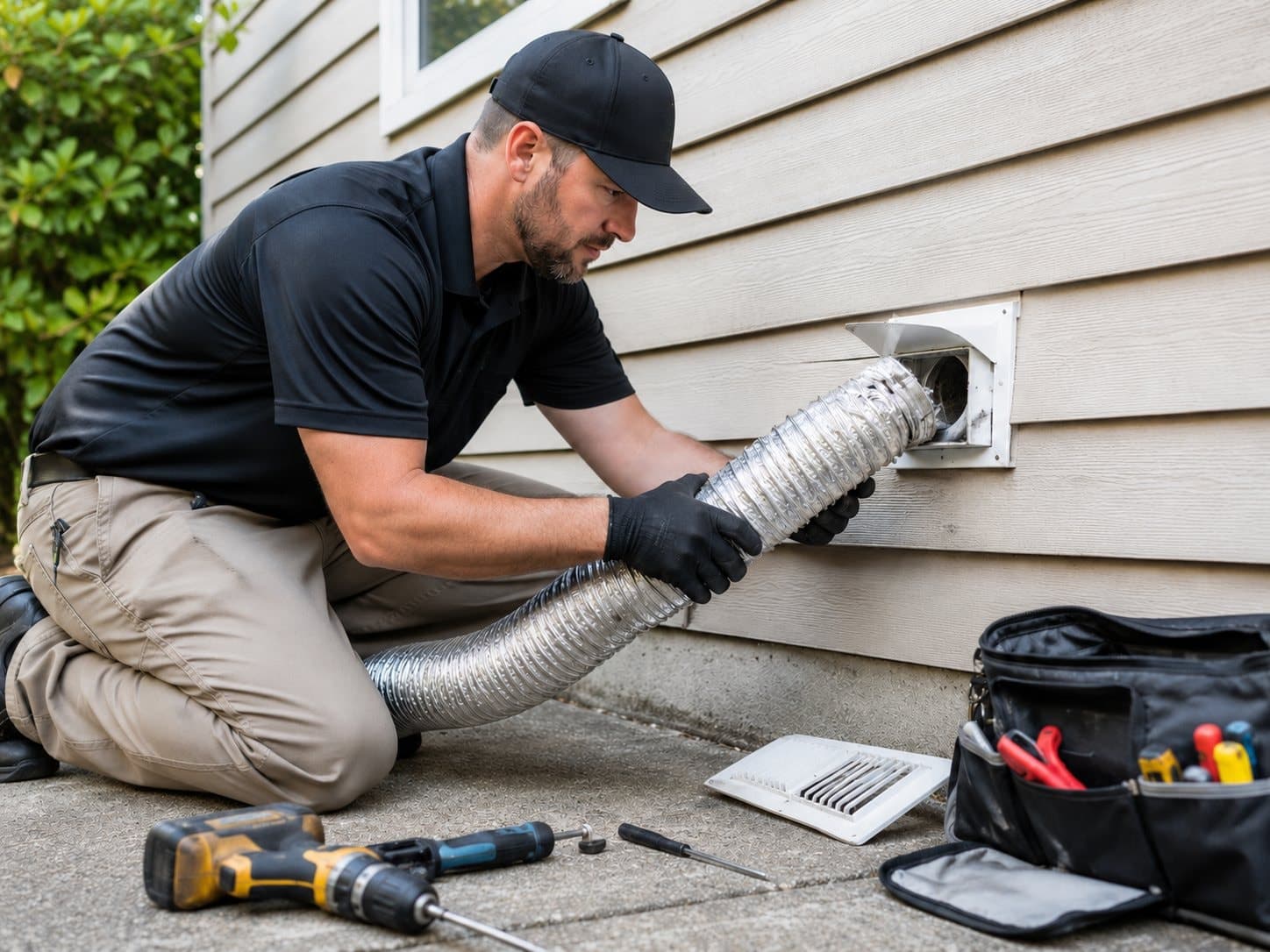
Unless someone has replaced it, the duct inside the walls and attic of those houses is original. A rigid metal duct doesn’t come with a set lifespan, and we won’t invent one. What does change over a quarter century is everything around it: the tape at the joints, the connector behind the dryer (which owners may have replaced more than once), the outside hood or roof cap that has sat in the sun since the house was new, and attic sections that have been stepped on, bumped or disconnected during other work.
Signs and what the cleaning covers
- Loads that need a second cycle (clothes that stay damp after a full cycle)
- A hot laundry room or a dryer cabinet hot to the touch
- A wall-hood flap that barely lifts, or lint on the roof around the cap
- A vent warning on the dryer, or a year or more since the last cleaning
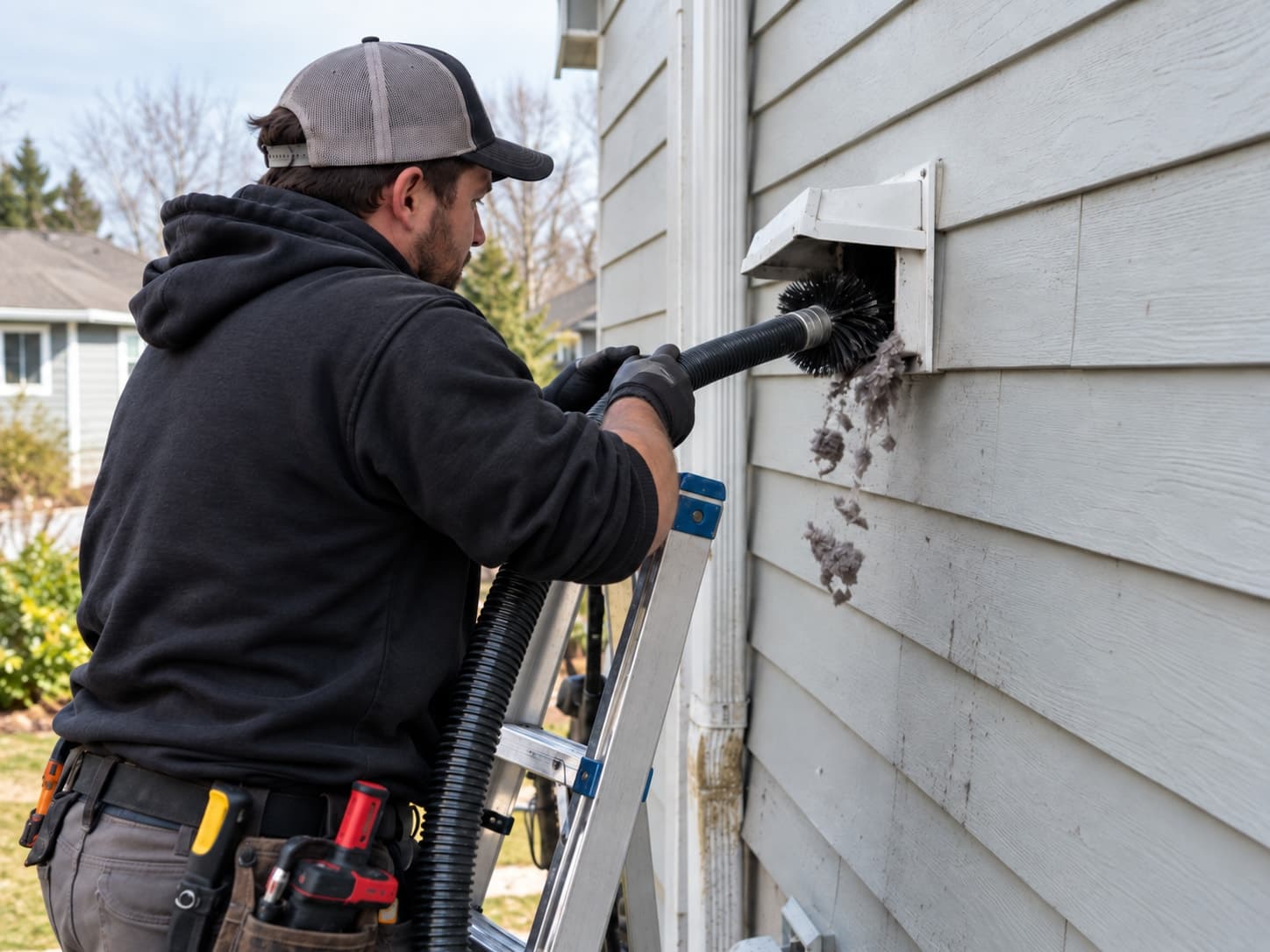
The visit starts with an airflow reading at the exit. The dryer is pulled out and the transition duct checked, the dryer duct is brushed and vacuumed end to end through every elbow, the hood or roof cap is cleared and its damper checked, and airflow is read again at the end. The service is described in full on what a full dryer vent cleaning covers.
Bigger households, more loads
Oviedo households are larger than the state average: 2.99 people on average against 2.51 for Florida, and 3.15 in owner-occupied homes (Oviedo; Florida). We don’t have a local figure for loads of laundry per week and won’t guess one, but more people in a house generally means more washing, and more washing means more lint through a duct that has already been in service for decades. A household of five shouldn’t assume the interval that suits a couple next door.
What 25 to 30 years does to a dryer vent
| Part | What time tends to do | Cleaning fixes it? |
|---|---|---|
| Lint in the duct | Builds up gradually, faster with a large household | Yes |
| Transition connector behind the dryer | Swapped for foil or vinyl hose at some point, crushed when the dryer was pushed back | No: replace with a listed transition duct |
| Foil tape at duct joints | Can dry out and let go, so a joint separates or leaks lint | No: reseal or reconnect the joint |
| Wall hood flap | Plastic can turn brittle in sun; flaps crack, warp or stick | Sometimes, if lint is the only problem |
| Roof cap | Hinges seize, damper flaps stick, metal can rust at the base | Sometimes; a failed cap needs replacing |
| Attic run | Knocked loose by AC, insulation or roofing work over the years | No: reconnect or replace the section |
A worn part changes how you should read a slow dryer. In a newer home, slow drying is mostly a lint question. In a 1990s home, the same symptom might be lint, a crushed connector or a joint that came apart in the attic years ago, and a vent that fills up again soon after cleaning is often the clue that it is more than lint.
Wall or roof: how two-story Oviedo homes vent
Whether your vent ends on a wall or on the roof depends on where the builder put the laundry. A first-floor laundry on an outside wall usually gets a short run to a wall hood. An upstairs laundry or one in the middle of the plan often goes up through the attic to a roof cap. You can usually tell from the yard.
| Feature | Wall termination | Roof termination |
|---|---|---|
| How to spot it | A hood with a flap on an outside wall, often low, near the laundry | A low cap on the roof slope, separate from the plumbing vent pipes |
| Where lint gathers | Behind the flap and in the last few feet of duct | At the top of the climb and under the cap |
| Age-related trouble | Brittle or broken flaps, hoods hidden or crushed by landscaping | Seized dampers, rusted bases and worn sealant at the roof jack |
| What cleaning involves | Brushing from the laundry end and the wall end | Brushing from inside plus clearing the cap on the roof |
How to spot it
- Wall termination
- A hood with a flap on an outside wall, often low, near the laundry
- Roof termination
- A low cap on the roof slope, separate from the plumbing vent pipes
Where lint gathers
- Wall termination
- Behind the flap and in the last few feet of duct
- Roof termination
- At the top of the climb and under the cap
Age-related trouble
- Wall termination
- Brittle or broken flaps, hoods hidden or crushed by landscaping
- Roof termination
- Seized dampers, rusted bases and worn sealant at the roof jack
What cleaning involves
- Wall termination
- Brushing from the laundry end and the wall end
- Roof termination
- Brushing from inside plus clearing the cap on the roof
Roof vents are cleaned and checked from the top as well as from inside; that work is described on the roof dryer vent cleaning page. If an older roof cap has leaked, water can also show up inside the duct, which the water in the dryer vent page explains.
When a cleaning turns into a repair or reroute
Cleaning comes first because it is the only way to know what is left once the lint is out. The airflow reading after cleaning is what decides the next step. These findings point past cleaning:
- Airflow barely improves after a thorough cleaning. Something other than lint is restricting the duct: a crushed section, a separated joint or a stuck damper.
- Lint or moisture is showing up where it shouldn’t, such as on attic insulation or around the dryer’s wall box, which suggests a leak in the run.
- The connector behind the dryer is foil or vinyl hose, or is longer than it needs to be. The code allows only a listed transition duct of up to 8 feet, and it can’t be hidden in a wall (FBC-R 2023, M1502.4.3).
- The outside hood or roof cap no longer has a working damper, or has had a screen added to keep animals out, which the code does not allow.
- The run is long and still clogs within months, even with regular cleaning. Shortening it or moving the termination may be the lasting answer.
Repair, reroute or leave it alone?
A single bad joint or connector is a small dryer vent repair. Changing the path of the duct, for example moving a roof termination to a closer wall, is a bigger job covered on the rerouting page, and it only makes sense if the new route is genuinely shorter and straighter. If the duct is intact and the airflow recovers after cleaning, the original vent can keep doing its job.
Reroofing is a good moment to check the dryer cap
On a 25- to 30-year-old house, the roof may already have been replaced once, or may be due. If your dryer vents through the roof, the roofer will remove and reset or replace the cap. Ask them to use a cap made for dryer exhaust, with a backdraft damper and no screen, rather than a generic roof vent, and have the vent cleaned before or right after the new roof goes on so the new cap starts clean. Chimneys raise similar questions during a reroof, covered in our guide to reroofing around a chimney.
Two findings point to other services entirely: a duct packed solid, or lint escaping into the attic, is a job for heavy lint removal, and a nest or near-total blockage for clearing a blocked or nested vent. A worn hood is replaced through vent cover replacement, and when you want the whole run measured against the code, a dryer vent inspection does that without a cleaning. The fire risk from neglected vents is laid out in what makes a dryer vent a fire risk.
Booking a dryer vent cleaning in Oviedo
Cleaning is available throughout Oviedo, from Alafaya Woods to Twin Rivers and the historic center. Tell us whether the vent ends on a wall or the roof, if you know, and when it was last cleaned. Rental homes are handled the same way; owners of several can use cleaning scheduled around tenants and guests. For other work on the house, see services for homes across Oviedo. Nearby, the same service covers dryer vents in Winter Springs, Casselberry dryer duct cleaning and lint and airflow work in Winter Park.