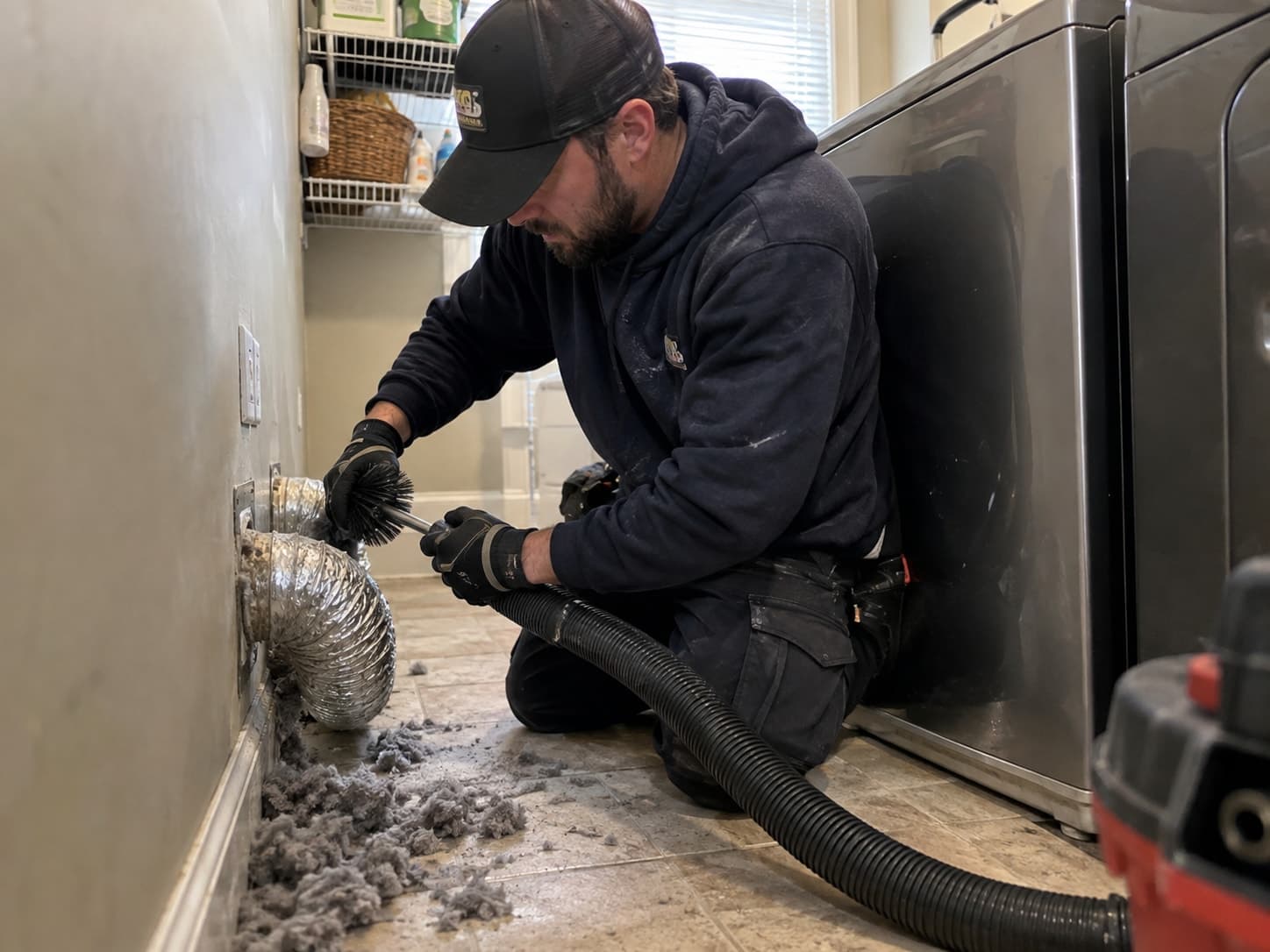
Minneola’s median home was built in 2007, 74.2% of homes date from 2000 or later and 90.6% are single-family detached. Here’s how that shapes a dryer vent cleaning.
What a restricted dryer vent looks like
| What you notice | What it usually means |
|---|---|
| Loads need two cycles | Lint is restricting airflow somewhere in the duct (clothes that stay damp after a full cycle) |
| Dryer or laundry room runs hot | Heat and moisture can’t leave fast enough (a dryer that shuts off mid-cycle) |
| Weak air at the outside exit | A packed elbow, a stuck flap or a crushed section (what low airflow points to) |
| Lint around the hood or roof cap | Lint is packing at the termination and escaping around it |
| Burning or scorched smell | Stop the dryer; lint near a heat source is the concern (a burning smell from the dryer) |
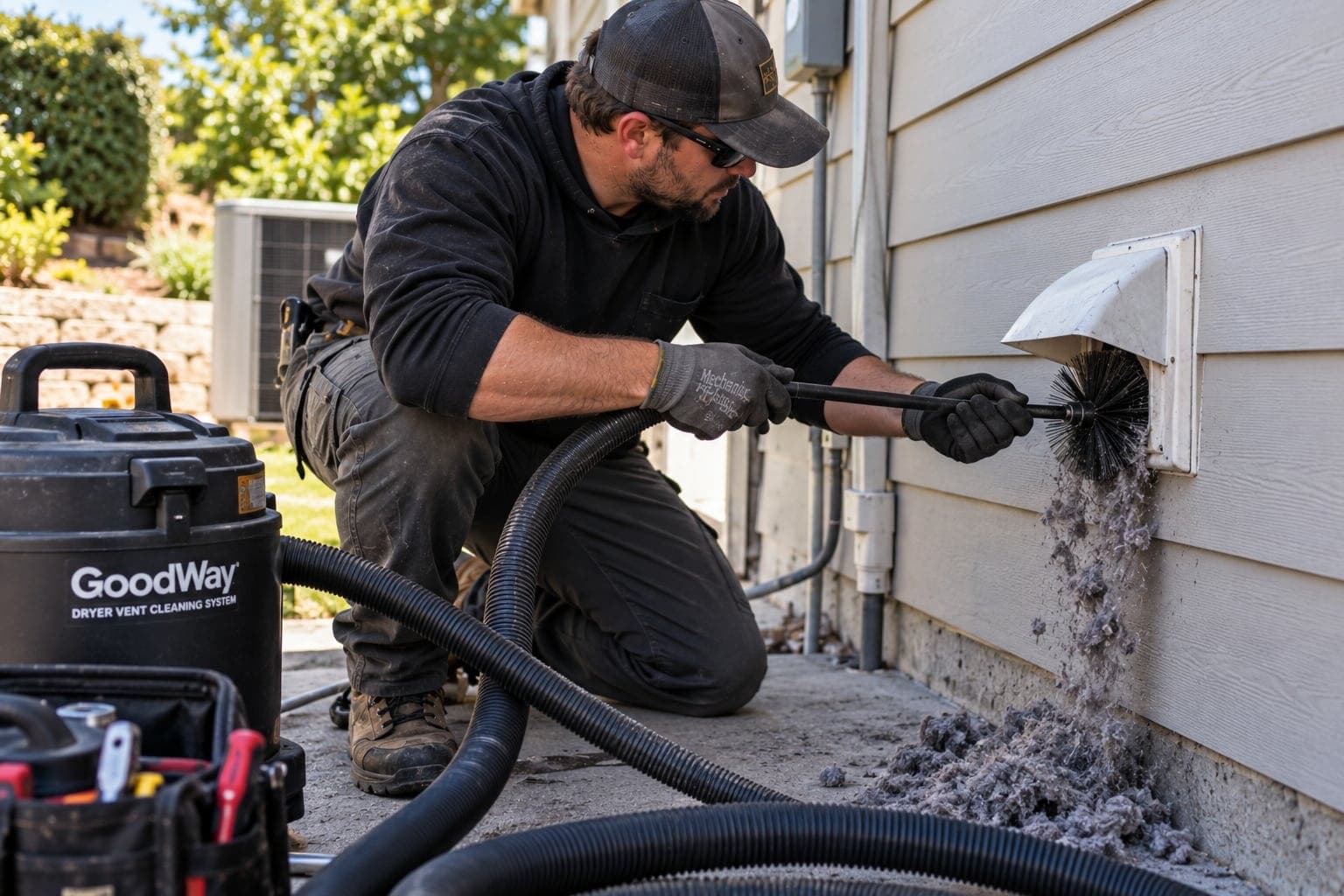
Lint is highly flammable, and a clogged duct makes the dryer run hotter. That’s why slow drying is worth acting on, not just living with.
The local picture in Minneola
In communities such as the Villages at Minneola Hills and Ardmore Reserve, homes with an interior or upstairs laundry often vent up through the attic to a roof cap. Long runs with several elbows collect lint at each turn, and the cap on the roof is often where it packs first.
What dryer vent cleaning covers
- Airflow reading at the outside exit before anything is touched
- The transition duct behind the dryer: checked for kinks, crushing and the right material
- The full duct run through the wall, floor or attic, brushed and vacuumed end to end
- Elbows and joints, where lint piles up first
- The termination: hood or roof cap cleared, the backdraft damper checked to open and close
- The lint-trap housing and the dryer’s exhaust outlet
- A second airflow reading to confirm the difference
Roof caps, tile roofs and long runs
A long run from an interior laundry to the roof collects lint along the climb and under the cap, and the cap often sits where nobody sees it. Lint on the roof around the cap is the giveaway. The inside of the run is cleaned from the laundry, and the cap is opened from the roof when it’s safe; tile roofs need care underfoot. More on roof-terminated dryer vent cleaning.
Either way, the backdraft damper has to open with the airflow and close when the dryer stops. If it doesn’t, replacing the vent hood is the fix.
What cleaning can and can’t fix
Cleaning removes lint and restores airflow lost to buildup. It can’t straighten a crushed duct inside a wall, reconnect a joint that has come apart in the attic, or shorten a run that was too long from the start. When the after reading stays weak, the answer is duct repair or replacement or moving the vent to a shorter route, not another cleaning next year.
A duct packed solid or lint escaping into the house calls for lint removal for badly packed ducts; a nest or near-total blockage, for dryer vent blockage removal. If you want the whole run checked against the code without a cleaning, book a full vent inspection against the code.
How often Minneola dryer vents need cleaning
Once a year suits most households with a reasonably short run. Long runs, roof exits, big families, pets and rentals need it sooner, and the before-and-after readings from the first visit are the best guide for your house. The guide on how often a vent needs cleaning goes into detail, and doing it yourself versus hiring it out covers what you can do yourself.
Rental homes and condos follow the same logic, with laundry volume set by tenants or guests. Owners with several properties can use cleaning scheduled around tenants and guests.
Dryer vent service around Minneola
- Anywhere in Minneola, including Villages at Minneola Hills: mention where the vent exits and the dryer type
- Nearby: Clermont dryer duct cleaning, lint and airflow work in Montverde and vent cleaning for Groveland homes
- Everything else for the house: everything we handle in Minneola
For the full background, see the dryer vent cleaning service in depth and dryer exhaust rules in Florida.
References (3)
Where the Minneola numbers and code references come from.