Umatilla is a small city with 31.8% of homes built before 1970 and 35.7% built in 2000 or later. Knowing that helps plan the visit.
Why drying slows down
Every load pushes hot, wet air and fine lint down the duct. The screen catches most of the lint, not all of it, and the rest settles along the walls, gathers at elbows and packs behind the outside flap. As the airflow drops, clothes stay damp, cycles get longer and the dryer runs hotter. Clothes still damp after a full cycle is the classic sign; slow drying and its causes walks through the checks you can do first.
- Heat: a hot dryer cabinet or laundry room (why the dryer gets so hot)
- Airflow: a flap that hardly lifts outside (a vent that barely pushes air)
- Lint: fluff on the hood, the siding or the roof around the cap
- Smell: a scorched odor means stop the dryer (a hot or burning odor during drying)
Dryer vents in Umatilla homes
In older houses, the laundry is often in a utility room or on a back porch with a wall vent. Newer subdivisions such as Magnolia Pointe and Twin Lakes Estates follow modern plans. Rural lots mean hoods near vegetation, so debris and nests at the exit come up more often than in denser towns.
How a dryer duct cleaning visit works in Umatilla
Find the route
Where the vent ends (wall, soffit area or roof) and roughly how the duct gets there.
Before reading
Airflow at the exit with the dryer on a no-heat setting.
Pull the dryer out
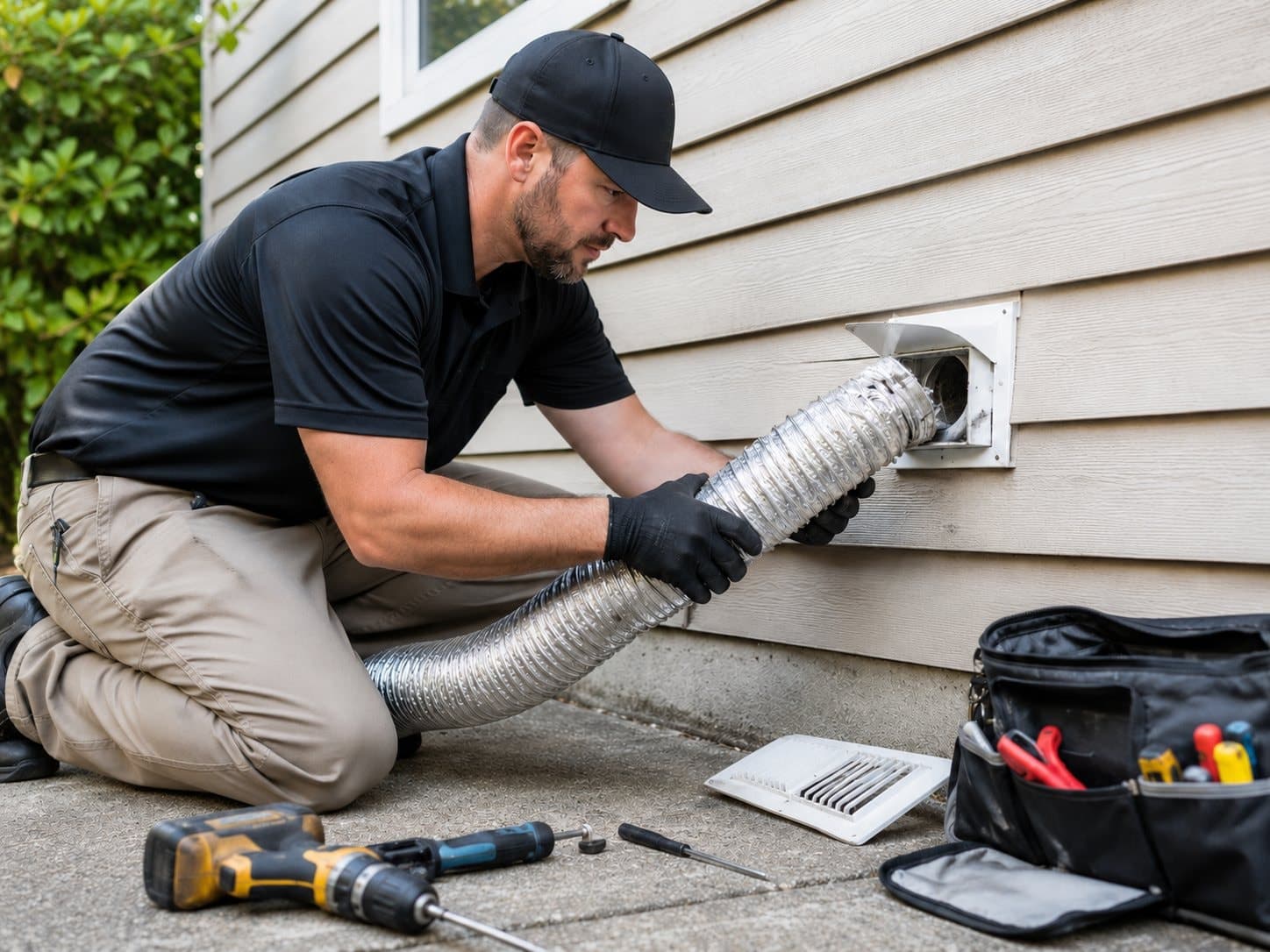
The transition duct is disconnected and checked for crushing; lint is vacuumed from the dryer outlet.
Brush and vacuum the run
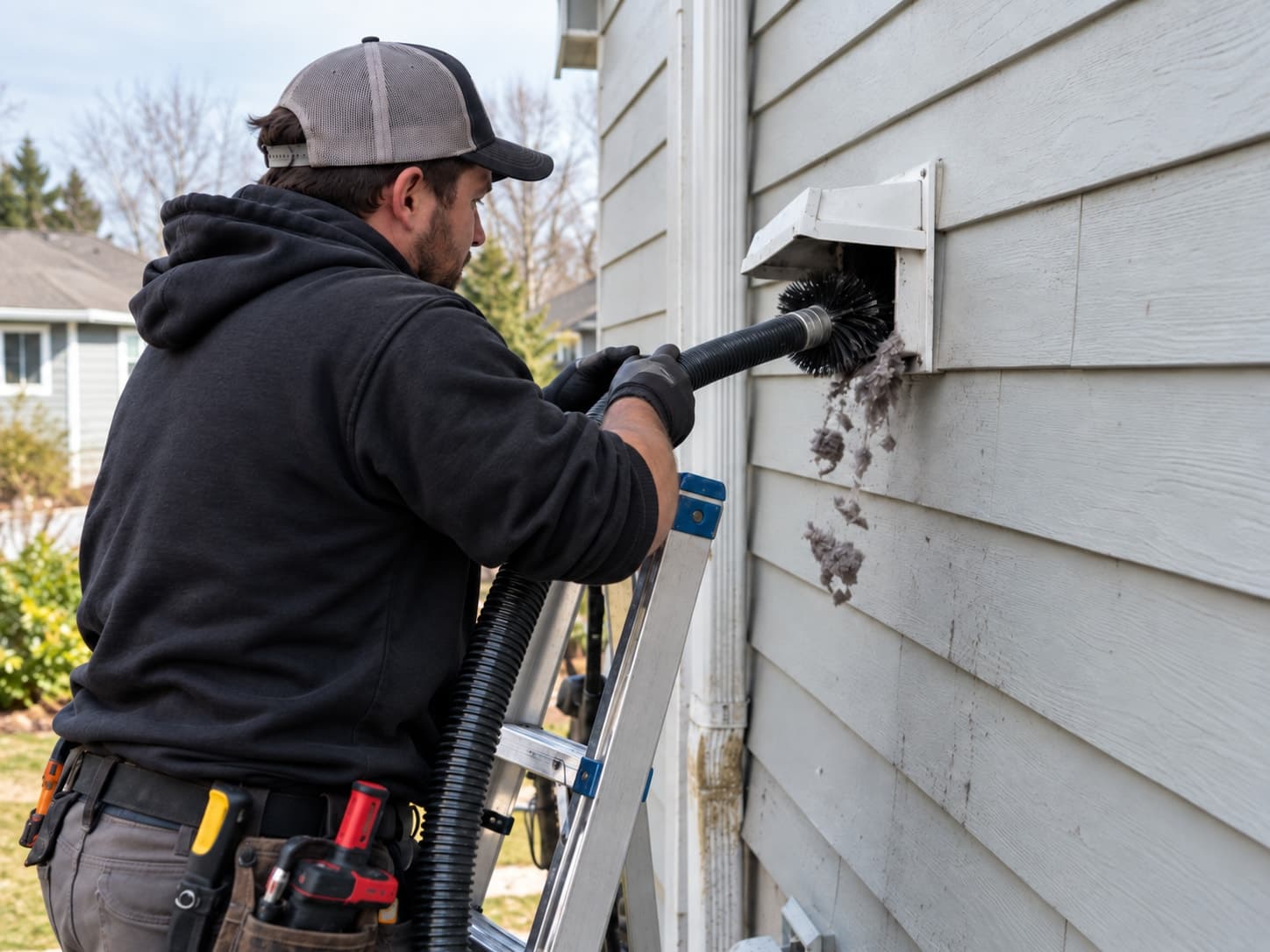
Rotary brushes on flexible rods work through the exhaust duct while a vacuum pulls the lint out.
Clear the exit
Lint behind the flap or under the cap is removed and the damper is checked.
Reconnect and re-test
The dryer goes back without crushing the hose, and airflow is read again.
Low wall hoods and outside flaps
A wall hood sits low, often behind plants, mulch or an AC unit, and its flap takes rain, sun and paint. When the flap sticks, lint packs behind it and airflow drops even if the duct is fairly clean. Roof-terminated vents are the other common layout; see roof-terminated dryer vent cleaning.
Either way, the backdraft damper has to open with the airflow and close when the dryer stops. If it doesn’t, replacing the vent hood is the fix.
When the airflow doesn’t come back
- Good recovery after cleaning: lint was the restriction; nothing more is needed
- Weak reading, duct clear: a crushed section or loose joint (signs of a disconnected or crushed duct), handled by repairing a crushed or loose duct
- Lint in the attic or laundry room: heavy lint removal
- Almost no air at all, or a nest: blocked-vent clearing
- Refills within months: often a run that’s too long (a vent that keeps clogging); an inspection with airflow testing measures it against the code, and rerouting to a shorter path shortens it
Gas dryers
A gas dryer’s exhaust carries combustion products, including carbon monoxide, so a blocked or disconnected vent matters more. Keep working CO alarms. We work on the exhaust side only; gas-line work is a separate job from appliance service, and we carry that out too.
How often Umatilla dryer vents need cleaning
Once a year suits most households with a reasonably short run. Long runs, roof exits, big families, pets and rentals need it sooner, and the before-and-after readings from the first visit are the best guide for your house. The guide on how often a vent needs cleaning goes into detail, and DIY kits versus a professional cleaning covers what you can do yourself.
Rental homes and condos follow the same logic, with laundry volume set by tenants or guests. Owners with several properties can use cleaning scheduled around tenants and guests.
Dryer vent service around Umatilla
- Anywhere in Umatilla, including Magnolia Pointe: mention where the vent exits and the dryer type
- Nearby: Eustis dryer duct cleaning, lint and airflow work in Mount Dora and vent cleaning for Tavares homes
- Everything else for the house: other work on Umatilla homes
More detail: what a full dryer vent cleaning covers, plus which duct materials are allowed.